

Phase 1: Empathy (Immersive Opening)
Hello! I’m your Daily Hangul Editor.
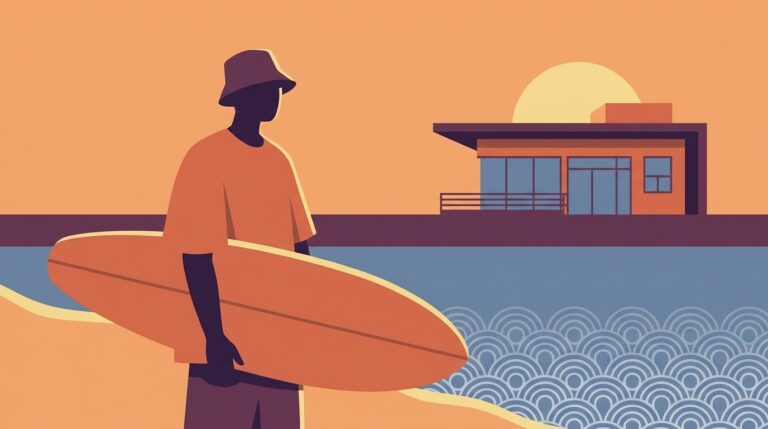
Imagine this: The sun is setting, painting the sky in vibrant shades of pink and orange. You are sitting on a surfboard in the cool waters of Yangyang (양양)—the undisputed surfing mecca of South Korea. EDM is thumping from a beach club in the distance, and the lineup is filled with local surfers. Suddenly, a massive set of waves approaches. The surfer next to you shouts, “말릴 뻔했네! (I almost got wiped out!)” The subtitles in your head might just say, “I almost fell,” but is that what they really mean?
If you’re an advanced learner (C1), you know that Korean isn’t just about literal translations. The vocabulary used in the water isn’t confined to the ocean; it flows directly into everyday Korean life, business, and K-Drama dialogues. Knowing how to “read the waves” in Korean will not only help you catch the perfect wave at Surfyy Beach but also help you navigate the complex currents of Korean social dynamics.
Everything in this post is based on real experiences of my foreign friends who paddled out into the Korean lineup—and into Korean society. Let’s dive in!
Phase 2: In-Depth Analysis of Core Expressions
If you want to sound like a local surfer—and a sophisticated Korean speaker—you need to master these expressions. They are surfing terms, but they are heavily used as metaphors in daily life.
1. 파도를 타다 (Catching the wave)
- Pronunciation: pado-reul tada [Sounds like: pah-doh-reul tah-dah]
- Meaning: Literal: To ride a wave / Real nuance: To ride a trend; to take advantage of good momentum.
- K-Culture Moment: You’ll hear this constantly in the K-Pop industry. When an idol group’s song suddenly goes viral on TikTok or YouTube (like a “reverse run” on the music charts), entertainment companies will say, “물 들어올 때 노 저어야죠, 지금 파도 타야 합니다! (We have to row when the water comes in, we need to ride this wave now!)”
- Editor’s Insight: This expression feels dynamic and opportunistic. It’s about seizing the moment.
- Situation Spectrum:
- Casual with friends: ✅
- Semi-formal at work (discussing market trends): ✅
- Formal: ⚠️ (Depends on the context; “흐름을 타다” might be slightly more formal).
- 🤔 Think About It: Why does a peninsular country like Korea rely so heavily on water and ocean metaphors for societal trends? How does your culture describe “riding a trend”?
2. (파도에) 말리다 (Getting wiped out / Losing your pace)
- Pronunciation: (pado-e) mallida [Sounds like: mahl-lee-dah]
- Meaning: Literal: To be rolled up (in a wave) / Real nuance: To get wiped out; to be overwhelmed or lose control of your own pace because of someone or something else.
- K-Culture Moment: In a K-Drama, when the protagonist is negotiating with a cunning villain and starts losing the argument, their sidekick will whisper, “완전 말렸어… (We totally got rolled/We lost our pacing…)” In surfing, it’s the exact feeling of getting caught in the “washing machine” of a wave.
- Editor’s Insight: This is a crucial C1 vocabulary word. It perfectly captures the psychological feeling of losing your ground in a conversation or a difficult situation.
- Situation Spectrum:
- Casual with friends: ✅
- Semi-formal: ⚠️
- Formal: 🚫
- 🤔 Think About It: “말리다” (passive of 말다 – to roll) shows a state of helplessness. Does your language have a word specifically for losing your mental footing to someone else’s rhythm?
3. 장판이다 (It’s a linoleum floor)
- Pronunciation: jangpan-ida [Sounds like: jahng-pahn-ee-dah]
- Meaning: Literal: It is a linoleum floor. / Real nuance: The ocean is completely flat, with no waves at all.
- K-Culture Moment: You wake up at 5 AM at your surf guesthouse, look out the window, and sigh. The sea is completely flat. Local surfers call this “장판” (Jangpan).
- Editor’s Insight: Jangpan refers to the smooth, yellowish linoleum floors traditionally used in Korean houses (especially over Ondol heating). It’s incredibly flat and smooth. Using this word instantly proves you’re an insider in the Korean surfing community.
- Situation Spectrum:
- Casual with friends: ✅
- Semi-formal: 🚫
- Formal: 🚫
- 🤔 Think About It: Metaphors reflect daily life. The fact that Koreans look at a flat ocean and see their living room floor shows how deeply ingrained housing culture is in their worldview.
Phase 3: Textbook vs. Real Korean
[Situation 1: Describing bad wave conditions]
* 📖 Textbook Korean: 오늘은 파도가 별로 없습니다. (There are not many waves today.)
* 🗣️ Real Korean: 아, 오늘 완전 장판이네. 파도 하나도 안 들어와. (Ah, it’s totally a linoleum floor today. No waves are coming in at all.)
* 💡 Why the difference?: Advanced speakers use highly visual slang (“장판”) and active verbs (“안 들어와” – not coming in) rather than static existence verbs (“없습니다”).
[Situation 2: Warning someone about a dangerous wave]
* 📖 Textbook Korean: 파도가 커서 위험합니다. 조심하세요. (The waves are big and dangerous. Please be careful.)
* 🗣️ Real Korean: 세트 들어온다! 말리지 않게 꽉 잡아! (A set is coming in! Hold on tight so you don’t get wiped out!)
* 💡 Why the difference?: In action sports, efficiency and speed are key. English terms like “세트” (set of waves) are heavily integrated into Korean action sports jargon.
Bottom Note for C1 Learners: Don’t just rely on standard vocabulary like “크다” (big) or “작다” (small). Incorporate action verbs and sensory metaphors to make your Korean sound vivid and authentic.
Phase 4: Cultural Context — K-Culture Deep Dive
4-1. Non-Verbal Elements: Nunchi in the Lineup
Surfing is a global sport, but doing it in Korea requires a heavy dose of 눈치 (Nunchi). When you paddle out into a crowded lineup at Jukdo Beach, eye contact is key. Before catching a wave, you don’t just look at the wave; you read the room. If a local “언니” (older sister/experienced female surfer) or “형” (older brother) is already paddling, you quietly pull back. It’s a delicate dance of respect and hierarchy, even in wetsuits.
4-2. K-Travel Connection: The Yangyang Surf Culture
Yangyang is often dubbed the “Ibiza of Korea.” During the day, it’s all about “라인업 눈치싸움” (the nunchi game in the lineup). But once the sun goes down, it transitions into K-Party culture. Guest houses host massive BBQ parties (바비큐 파티) where strangers become friends.
- Critical Viewpoint: The rapid gentrification of Yangyang has created a fascinating contrast. You have trendy surfers drinking craft beer on one side of the beach, while traditional “해녀” (haenyeo – female divers) and local fishermen are working just a few meters away. It’s a visual representation of Korea’s hyper-fast modernization.
Phase 5: Real-Life Roleplay Scenario
Setting: Saturday morning, 8 AM at Yangyang Jukdo Beach. You are sitting on your board in the lineup. The water is a bit chilly. Next to you is Min-su, a local surfer you met at the guesthouse last night.
Characters:
– YOU: An expat who has been surfing for a year. You want to catch a good wave but don’t want to drop in on anyone.
– Min-su (30s): Friendly local surfer, deeply tanned, knows the waves here like the back of his hand.
Dialogue:
Min-su: 어제 게하(게스트하우스) 파티에서 달렸더니 아직도 피곤하네요. 🌊
(eoje geha patieseo dallyeotdeoni ajikdo pigonhaneyo.)
[I drank so much at the guesthouse party yesterday, I’m still tired.]
YOU: 저도요. 근데 오늘 차트 보니까 오후에는 파도 좀 들어오겠던데요?
(jeodoyo. geunde oneul chateu bonikka ohueneun pado jom deureoogetdeondeyo?)
[Me too. But looking at the chart today, looks like some waves will come in this afternoon?]
Min-su: 맞아요. 지금은 완전 장판인데, 이따가 세트 들어올 거예요.
(majayo. jigeumeun wanjeon jangpaninde, ittaga sete deureool geoyeyo.)
[Right. It’s completely flat right now, but a set will come in later.]
(🎭 Stage Direction: Min-su points toward the horizon as a dark lump of water approaches)
Min-su: 오, 저기 온다. 저 파도 탈래요?
(o, jeogi onda. jeo pado tallaeyo?)
[Oh, here comes one. Do you want to catch that wave?]
🔀 Your Turn! How should you respond?
– A) 네, 제가 탈게요. 비키세요. (Yes, I’ll ride it. Move.)
– B) 아, 저는 아직 실력이 부족해서요. 먼저 타세요!
– C) 눈치싸움 시작인가요? 렛츠고!✅ Best Choice: B — “Ah, my skills aren’t quite there yet. You go first!” (a jeoneun ajik sillyeogi bujokaeseoyo. meonjeo taseyo!) It shows humility (겸손) and respects the lineup etiquette.
⚠️ Choice A Analysis: Telling someone to “move” (비키세요) is incredibly rude and will ruin your reputation in the local surf community.
Min-su: 에이, 아니에요. 위치 딱 좋네요. 패들링 하세요! 밀어줄게요.
(ei, anieyo. wichi ttak jonneyo. paedeulling haseyo! mireojulgeyo.)
[Hey, no way. Your position is perfect. Start paddling! I’ll push you.]
YOU: 우와, 감사합니다! 말리지 않게 조심할게요!
(uwa, gamsahamnida! malliji anke josimhalgeyo!)
[Wow, thank you! I’ll be careful not to get wiped out!]
Phase 6: 10-Second Shadowing Drill
Let’s practice the rhythm of advanced Korean. Pay attention to the pauses (/) and the emotional tags!
- 😤 단호하게 (Determinedly):
오늘 / 파도 차트 보니까 / 무조건 / 라인업 나가야 돼요!
(oneul / pado chateu bonikka / mujogeon / raineop nagaya dwaeyo!)
[Looking at the wave chart today, we absolutely have to go out to the lineup!] -
😢 아쉽게 (Regretfully):
아... / 아까 그 파도 / 완전 좋았는데 / 제대로 말렸어요.
(a… / akka geu pado / wanjeon joanneunde / jedaero mallyeosseoyo.)
[Ah… that wave earlier was so good, but I got completely wiped out.]
Phase 7: K-Culture Mini Dictionary
Here are some essential surfing and beach culture terms in Korea:
1. 게하 (Ge-ha)
* Romanization: geha
* English: Guesthouse (abbreviation)
* Context: The epicenter of youth travel culture in places like Yangyang or Jeju. Staying at a “geha” implies you are ready for nighttime BBQ parties and making new friends.
2. 차트 (Chart)
* Romanization: chateu
* English: Wave forecast chart
* Context: Korean surfers obsessively check apps like WSB Farm or Windfinder. Mentioning “the chart” makes you sound like a pro.
3. 라인업 (Lineup)
* Romanization: raineop
* English: The lineup (where surfers wait for waves)
* Context: Often used in business too! “새로운 프로젝트 라인업이 어떻게 되나요?” (What is the lineup for the new projects?)
4. 말리다 (Mallida)
* Romanization: mallida
* English: To get wiped out / To lose control
* Context: As discussed, a crucial verb for both the ocean and psychological situations where you lose your pacing.
Phase 8: Traveler Survival Kit
Heading to a Korean surf beach? Save these essential phrases!
🆘 Survival Phrases for Surf Shops & Beaches
– 🇰🇷 “보드 렌탈 반납은 몇 시까지인가요?” (bodeu rental bannabeun myeot sikkajiingayo?)
– 🗣️ English: What time do I need to return the rental board?
– 📍 Where to use: At the surf shop.
– 💡 Pro Tip: Most shops close around sunset, but always confirm. Korean shops are very strict about return times!
- 🇰🇷 “오늘 입문자 강습 파도 괜찮은가요?” (oneul ipmunja gangseup pado gwaenchanneungayo?)
- 🗣️ English: Are the waves okay for beginner lessons today?
- 📍 Where to use: Calling the surf school before booking.
📌 Editor’s Travel Note:
– App to use: Naver Map (Google Maps doesn’t work well for walking/driving in Korea).
– Payment: Surfyy Beach and most modern spots are almost entirely Cashless. Bring your credit card or set up Apple Pay/Samsung Pay.
– Showers: Public beach showers usually cost around 2,000~3,000 KRW, and you often need physical cash or account transfer (계좌이체) for them!
Phase 9: Critical Thinking Corner — “One Step Deeper”
Language & Power: The Global Era of Korean Surfing
🧠 Think Deeper:
Have you noticed how much English is used in Korean surfing? Words like 패들링 (paddling), 라인업 (lineup), and 테이크오프 (take-off) are standard. However, the way they are used is deeply Korean. For example, adding the Korean verb “하다” to make “패들링 하다” (to do paddling). This reflects how the Korean language absorbs foreign concepts while forcing them to comply with Korean grammatical structures. It’s a perfect example of globalization meeting local identity (Glocalization). But at the same time, native slang like “장판” (linoleum floor) holds its ground perfectly.💬 Your Turn: Does your native language borrow heavy amounts of English terminology for modern sports, or do you invent your own native words? Let us know in the comments!
Phase 10: FAQ & Avoiding Mistakes
Q: Can I use “말렸어요” (I got wiped out/lost my pace) with my boss?
* A: Maybe, but tread carefully. If you say “과장님 페이스에 말렸어요” (I got swept up in your pace, manager), it can sound slightly informal or like you are complaining. It’s safer to use with close colleagues.
Q: Is it okay to surf in just a swimsuit?
* A: In Korea, “Rash guards” (래쉬가드) and wetsuits are the norm. While wearing bikinis or board shorts is becoming more common in places like Yangyang, a rash guard protects you from the sun and the rough texture of foam boards.
❌ Common Mistake #1: Saying “바다 (ocean) 가 작다” to mean the waves are small.
✅ Do this instead: Say “파도가 작다” (The waves are small) or “파도가 안 들어오다” (The waves aren’t coming in).
Phase 11: Summary & Action Items
One-Liner Summary: Surfing in Korea isn’t just about catching waves (파도를 타다); it’s about navigating social currents, respecting the lineup etiquette, and knowing when the ocean is as flat as a linoleum floor (장판)!
Action Mission:
– 🥉 Bronze: Say “아, 오늘 파도 완전 장판이네!” out loud 3 times with maximum disappointment.
– 🥈 Silver: Leave a comment on this post using the word “말리다” in a sentence about your daily life.
– 🥇 Gold: Next time you go to the beach (or a surf shop), ask about the wave conditions using: “오늘 파도 좀 들어오나요?”
K-Culture Mission: Go to Instagram and search the hashtag #양양서핑 (Yangyang surfing). Look at the captions—can you spot any of the words we learned today?
How did you like today’s lesson? Have you ever “gotten wiped out” (말리다) in a conversation in Korean? Share your story below!
Phase 12: Quiz — Interactive Challenge
1. Situational Judgment:
You are at a business meeting, and the opposing company keeps changing the topic faster than you can keep up. You whisper to your colleague:
* A) “저기요, 장판이네요.”
* B) “우리 지금 저쪽 페이스에 완전 말렸어요.”
* C) “파도를 잘 타시네요.”
2. True or False – K-Culture Edition:
* T/F: In Yangyang, it is culturally expected that you surf completely alone and ignore the “Nunchi” of older surfers.
👀 Click here for answers!
1. Answer: B. “We are completely getting wiped out (losing our pace) to their rhythm.” (A means it’s flat/boring, C is a compliment meaning they are riding the trend well).
2. Answer: False. Reading the room (Nunchi) and respecting the lineup hierarchy is crucial in Korean surfing etiquette!
Frequently Asked Questions (FAQ)
Q: What does "파도를 타다 (Catching the wave)" mean in Korean and how do you pronounce it?
A: In Korean, "파도를 타다 (Catching the wave)" is pronounced [pado-reul tada [Sounds like: pah-doh-reul tah-dah] and means: Literal: To ride a wave / Real nuance: To ride a trend; to take advantage of good momentum.
Q: What does "(파도에) 말리다 (Getting wiped out / Losing your pace)" mean in Korean and how do you pronounce it?
A: In Korean, "(파도에) 말리다 (Getting wiped out / Losing your pace)" is pronounced [pado-e] and means: Literal: To be rolled up (in a wave) / Real nuance: To get wiped out; to be overwhelmed or lose control of your own pace because of someone or something else.
Q: What does "장판이다 (It's a linoleum floor)" mean in Korean and how do you pronounce it?
A: In Korean, "장판이다 (It's a linoleum floor)" is pronounced [jangpan-ida [Sounds like: jahng-pahn-ee-dah] and means: Literal: It is a linoleum floor. / Real nuance: The ocean is completely flat, with no waves at all.







