

Hello! I’m the Lead Editor at Daily Hangul.
Picture this: You are on a company workshop, famously known as an MT (Membership Training), or perhaps you are relaxing in the shared sleeping quarters of a pristine Korean Jimjilbang (sauna). You’ve had a long day of K-BBQ and team-building, and you finally lay your head on the warm Ondol floor. Suddenly, the tranquility is shattered. Next to you, your beloved Korean colleague or a random stranger starts roaring like a revved-up tractor.
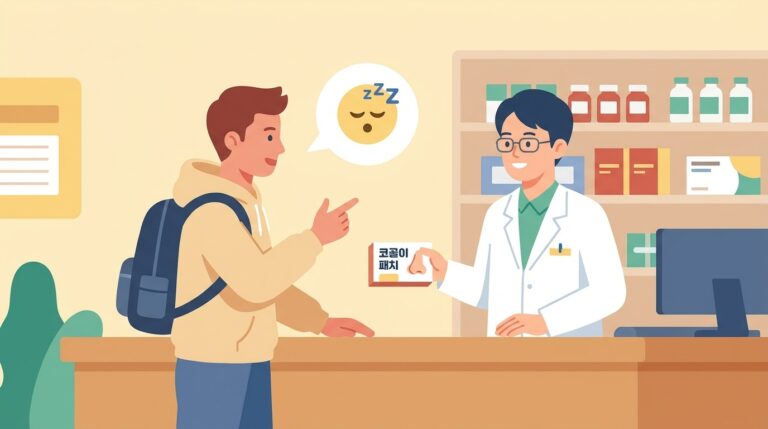
In K-Dramas, sleeping scenes are always peaceful, accompanied by a soft OST. But in reality? Korea’s intense work culture, frequent ‘hoesik’ (company dinners), and chronic fatigue mean snoring is a national pastime. At a C2 proficiency level, you don’t just say ‘You are loud.’ You need to navigate the delicate balance of Korean ‘Nunchi’ (reading the room), express concern for their health, and maybe even navigate a local pharmacy (Yakguk) to buy an anti-snoring device.
Let’s dive into the advanced real-world Korean you need when the sleep apnea gets real, based on actual questions from our top-tier students!
Phase 2: Core Expressions Deep Dive
1. 수면 무호흡증 (Sleep Apnea)
- Pronunciation: [sumyeon muhoheupjeung] / (soo-myun moo-ho-heup-jeung). Tip: The ‘eu’ in ‘heup’ sounds like the disgusted sound you make when stepping in gum.
- Meaning: Literal: Sleep Non-breathing Symptom. / Real Nuance: Sleep Apnea.
- K-Culture Moment: You will often hear this discussed seriously among middle-aged characters in modern K-Dramas or on wellness variety shows. Koreans are hyper-aware of health trends, and diagnosing sleep issues is a hot topic.
- Editor’s Insight: This is a highly clinical, advanced term. Using this shows you aren’t just a tourist; you are integrated into Korean adult conversations about wellness.
- Situation Spectrum:
- Close Friends (Casual): ✅
- Co-workers (Semi-formal): ✅ (With polite endings)
- Boss/Elders (Formal): ⚠️ (Only if you are very close, otherwise it’s overstepping)
- 🤔 Think About It: Why are Koreans so comfortable discussing medical conditions with colleagues? In a high-context, collective society, your health impacts the group’s harmony.
2. 코골이 방지 기구 (Anti-snoring Device)
- Pronunciation: [kogori bangji gigu] / (ko-go-ree bang-jee gee-goo)
- Meaning: Literal: Snoring Prevention Instrument. / Real Nuance: Snoring strips, mouthpieces, or CPAP accessories.
- K-Culture Moment: Walking into an Olive Young or a green-cross Pharmacy (약국). You’ll see shelves dedicated to sleep health, reflecting Korea’s fast-paced, sleep-deprived society.
- Editor’s Insight: ‘방지’ (prevention) is a versatile C2-level hanja word. You can use it for anything: 졸음 방지 (preventing sleepiness while driving), 주름 방지 (anti-wrinkle).
- Situation Spectrum:
- Close Friends (Casual): ✅
- Co-workers (Semi-formal): ✅
- Boss/Elders (Formal): 🚫 (Do not buy this for your boss!)
- 🤔 Think About It: Does your home country have pharmacies on every corner where you can walk in and consult the pharmacist directly without a prescription?
3. 양압기 (CPAP Machine)
- Pronunciation: [yangapgi] / (yang-ap-gee)
- Meaning: Literal: Positive Pressure Machine. / Real Nuance: CPAP Machine.
- K-Culture Moment: Often brought up in self-deprecating humor among male friends in their 30s and 40s after they get married and their wives force them to visit a sleep clinic (수면클리닉).
- Editor’s Insight: If you know this word, you are officially a fluent adult in Korean. It’s the ultimate ‘I live here and know real life’ vocabulary.
- Situation Spectrum:
- Close Friends (Casual): ✅
- Co-workers (Semi-formal): ✅
- Boss/Elders (Formal): ⚠️
Phase 3: Textbook vs Real Korean
[Situation 1: Pointing out someone’s snoring]
* 📖 Textbook Korean: 어제 코를 너무 심하게 골았습니다. (You snored very severely yesterday.)
* 🗣️ Real Korean: 어제 탱크 몰고 오신 줄 알았어요! (I thought you drove a tank in here yesterday!) / 코골이 장난 아니시던데요? (Your snoring was no joke!)
* 💡 Why the difference?: Koreans use humor and exaggeration (‘driving a tank’) to soften the blow of criticism, maintaining ‘Kibun’ (mood) while delivering the message.
[Situation 2: Suggesting medical help]
* 📖 Textbook Korean: 병원에 가보세요. (Please go to the hospital.)
* 🗣️ Real Korean: 수면다원검사 한 번 받아보는 게 어때요? 요즘 실비(보험) 다 되잖아요. (How about getting a polysomnography test? It’s all covered by private insurance these days anyway.)
* 💡 Why the difference?: Real adult conversations in Korea almost always involve mentioning ‘실비보험’ (private medical insurance) when suggesting a doctor’s visit, showing practical care.
Phase 4: Cultural Context — K-Culture Deep Dive
4-1. Non-Verbal Elements
When addressing a sensitive topic like sleep apnea or snoring, Nunchi is everything. You never bring it up in front of a large group. You take the person aside, perhaps while offering them an iced Americano (아아) or a hangover drink (숙취해소제) the morning after a company dinner, and lower your voice. Handing them a physical remedy while speaking softens the embarrassment.
4-2. The K-Travel & Wellness Connection
The Korean Pharmacy (약국) is an experience in itself. Unlike massive Western drugstores where you browse alone, Korean pharmacies require you to step up to the counter and describe your symptoms directly to the pharmacist (약사님). If you or your travel partner has a snoring issue, you must be able to explain the situation explicitly. Furthermore, in Jimjilbangs, if someone is snoring too loudly, the unspoken rule is either quiet endurance, moving your mat to another floor, or very lightly tapping the floor near them to break their sleep rhythm—never shouting across the room.
Phase 5: Real-World Roleplay Scenario
Setting: 8:00 AM. A hotel room in Busan. You are on a domestic business trip with your Korean team. You shared a twin room with your affable colleague, Min-su (32). After last night’s heavy K-BBQ and Soju ‘hoesik’, Min-su’s snoring was apocalyptic. You got zero sleep.
Characters:
– YOU: Exhausted foreigner, running on pure caffeine.
– Min-su: Your Korean colleague. Waking up fresh and oblivious.
Dialogue:
Min-su: 아유, 잘 잤다! OO씨는 푹 쉬셨어요?
(Ayu, jal jatda! OO-ssineun puk swisyeosseoyo?)
[Ah, I slept great! Did you rest well, OO?]
YOU: 아… 네. 뭐… 하하.
(A… ne. mwo… haha.)
[Ah… yes. Well… haha.]
Min-su: 얼굴이 엄청 피곤해 보이는데? 어디 아파요?
(Eolguri eomcheong pigonhae boineunde? Eodi apayo?)
[Your face looks super tired though? Are you sick?]
YOU: 사실 어제 민수 씨가 탱크를 몰고 오셔서…
(Sasil eoje Minsu-ssiga taengkeureul molgo osyeoseo…)
[Actually, because you drove a tank yesterday…]
Min-su: 헉, 저 코 골았어요? 미쳐 진짜, 제가 술만 마시면 코를 골아서…
(Heok, jeo ko gorasseoyo? Michyeo jinjja, jaega sulman masimyeon koreul goraseo…)
[Gasp, did I snore? Oh I’m crazy, whenever I drink alcohol I snore…]
🔀 Your Turn! How do you respond?
– A) 네. 수면 무호흡증 같아요. 병원 가세요. (Yes. It looks like sleep apnea. Go to the hospital.)
– B) 코골이 방지 기구라도 하나 사드릴까요? ㅋㅋㅋ 수면다원검사 받아보셔야 할 것 같아요.
– C) 너무 시끄러웠어요. 다음엔 방 따로 써요.✅ Best Choice: B — Reason: Choice B uses advanced C2 vocabulary (수면다원검사) while keeping the tone light and joking (ㅋㅋㅋ). It shows high empathy and cultural fluency.
⚠️ Choice A & C Analysis: Both A and C are too direct and borderline aggressive in Korean work culture, violating Nunchi and potentially ruining the Kibun for the rest of the business trip.
Min-su: 아유, 부끄러워라. 이따 약국 가서 코골이 방지 밴드라도 하나 사야겠어요.
(Ayu, bukkeureowora. Itta yakguk gaseo kogori bangji baendeurado hana sayagesseoyo.)
[Ah, so embarrassing. Later I should go to the pharmacy and at least buy an anti-snoring band.]
Phase 6: 10-Second Shadowing Drill
Master the rhythm and intonation! Follow the slashes (/) for pauses.
🥺 약사님, / 혹시 / 코골이 방지 기구 / 있나요?
(Yaksa-nim, / hoksi / kogori bangji gigu / innayo?)
[Pharmacist, / by any chance / do you have an anti-snoring device?]
😤 어제 / 숨을 안 쉬시던데, / 수면 무호흡증 / 검사받아보세요!
(Eoje / sumeul an swisideonde, / sumyeon muhoheupjeung / geomsa badaboseyo!)
[Yesterday / you weren’t breathing, / you should get a sleep apnea test!]
Phase 7: K-Culture Mini Dictionary
1. 눈치
* Romanization: nunchi
* English: Situational awareness / Reading the room
* Context: The quintessential Korean social skill. In health matters, nunchi dictates when and how you tell someone they have a problem without embarrassing them.
2. 약국
* Romanization: yakguk
* English: Pharmacy
* Context: A crucial hub in Korean healthcare. Pharmacists (약사) hold a respected position, and many over-the-counter devices for sleep and wellness are kept directly behind their counter.
3. 수면다원검사
* Romanization: sumyeondawongeomsa
* English: Polysomnography (Sleep Study)
* Context: A highly trending medical test in modern Korea due to the rising awareness of sleep quality. Health insurance policies frequently cover it.
4. 오지랖
* Romanization: ojirap
* English: Being meddlesome / Unsolicited involvement
* Context: Giving someone health advice (like suggesting a CPAP machine) walks a fine line between caring (정 – Jeong) and overstepping boundaries (오지랖).
Phase 8: Traveler’s Survival Kit
Navigating a Korean pharmacy for sleep issues requires specific phrases.
🆘 Survival Expression #1: Pharmacy Savior
– 🇰🇷 ‘코골이 방지 밴드 있나요?’ (kogori bangji baendeo innayo?)
– 🗣️ English Guide: Do you have anti-snoring strips?
– 📍 Where to use: 약국 (Pharmacy), 올리브영 (Olive Young).
– 💡 Pro Tip: If you need earplugs for yourself because of someone else, ask for ‘귀마개’ (gwimagae).📌 Editor’s Travel Note
– Pharmacy Hours: Most local pharmacies close by 7 or 8 PM, but you can search for ‘심야약국’ (late-night pharmacy) on Naver Maps.
– Direct Consultation: Don’t be afraid to point to your nose and mimic snoring to the pharmacist if you forget the words. Koreans appreciate the effort and will quickly hand you the right product!
Phase 9: Critical Thinking — ‘Going Deeper’
Language & Power (Care vs. Intrusion)
In Western cultures, discussing someone’s sleep apnea or suggesting they use a CPAP machine might be considered a severe invasion of medical privacy. However, in Korean culture, health is often treated as a collective concern. The evolution of greetings from ‘밥 먹었어?’ (Did you eat rice?) to modern equivalents like ‘비타민 챙겨 먹어’ (Make sure to take your vitamins) or ‘수면다원검사 받아봐’ (Get a sleep test) shows that giving medical advice is a powerful expression of ‘Jeong’ (정 – affection). When a senior colleague tells you to fix your snoring, it’s not just a complaint about noise; it’s an exertion of hierarchical care.
💬 Your Turn: In your culture, if you noticed a roommate or colleague exhibiting signs of sleep apnea during a trip, how would you bring it up? Would it be considered rude? Let us know in the comments!
Phase 10: FAQ & Avoiding Misunderstandings
- ‘Can I tell my boss he snores and should buy a device?’
- NO! 🚫 Unless you have a remarkably close, almost familial relationship with your boss, pointing out a superior’s bodily functions or habits is a massive breach of protocol. If it’s absolutely necessary, frame it entirely around their health: ‘요즘 피곤해 보이십니다’ (You look tired lately).
- ‘Do Olive Young staff know about sleep apnea?’
- Olive Young is great for lifestyle sleep items (steam eye masks, basic nose strips), but for serious ‘수면 무호흡증’ (sleep apnea) inquiries, always go to a ‘약국’ (Pharmacy) to speak with a professional.
❌ Common Mistake #1: Saying ‘당신은 코를 곱니다’ (You snore).
✅ Do This Instead: Never use ‘당신’ (you) in spoken Korean unless you are picking a fight. Use their name or title: ‘민수 씨, 코골이가 좀 있으시더라고요’ (Minsu, it seems you have a bit of snoring).
Phase 11: Summary & Action Items
One-Liner Summary: Mastering advanced sleep health vocabulary like ‘수면 무호흡증’ (sleep apnea) not only helps you survive K-Travel sleeping arrangements but also integrates you into deep, culturally nuanced conversations about wellness.
Action Mission 3 Steps:
– 🥉 Bronze (Solo): Read the shadowing drill sentences out loud in front of a mirror, focusing on the sympathetic ‘🥺’ facial expression.
– 🥈 Silver (Online): Go to a Korean forum or your learning community and write: ‘어제 룸메이트가 탱크를 몰고 왔어요’ and see who understands the joke!
– 🥇 Gold (Real World): Walk into a Korean pharmacy or Olive Young and ask the staff: ‘코골이 방지 기구는 어디 있나요?’
K-Culture Mission:
Open Naver Maps and search for ‘수면의원’ or ‘수면클리닉’ (Sleep Clinic) near your favorite neighborhood in Seoul (like Gangnam or Hongdae). Notice how many there are—it’s a testament to Korea’s hyper-focus on productivity and recovery!
Phase 12: Interactive Quiz
1. Situational Judgment: You are at a company MT. You woke up early because Deputy Manager Kim was snoring loudly. He wakes up and asks if you slept well. What is the most culturally appropriate response?
A) 김 대리님 코골이 때문에 한 숨도 못 잤어요.
B) 네, 잘 잤습니다. 대리님은 피곤하지 않으세요?
C) 대리님, 양압기 좀 사세요.
(Answer: B. It preserves his Kibun (mood) and politely pivots to checking on his health. A and C are too aggressive for a junior to say to a senior.)
2. Fill in the Blank:
‘약사님, 남편이 자꾸 숨을 안 쉬어요. ________ 검사를 받아야 할까요?’
(Answer: 수면다원 / sumyeondawon)
3. True or False – K-Culture Edition:
In a Korean pharmacy, you can just grab an anti-snoring device off the shelf without speaking to anyone. (T/F)
(Answer: False. While some basic strips are on outer shelves, most specialized devices and medical advice require you to ask the pharmacist directly behind the counter.)
Frequently Asked Questions (FAQ)
Q: What does "수면 무호흡증 (Sleep Apnea)" mean in Korean and how do you pronounce it?
A: In Korean, "수면 무호흡증 (Sleep Apnea)" is pronounced [sumyeon muhoheupjeung] and means: Literal: Sleep Non-breathing Symptom. / Real Nuance: Sleep Apnea.
Q: What does "코골이 방지 기구 (Anti-snoring Device)" mean in Korean and how do you pronounce it?
A: In Korean, "코골이 방지 기구 (Anti-snoring Device)" is pronounced [kogori bangji gigu] and means: Literal: Snoring Prevention Instrument. / Real Nuance: Snoring strips, mouthpieces, or CPAP accessories.
Q: What does "양압기 (CPAP Machine)" mean in Korean and how do you pronounce it?
A: In Korean, "양압기 (CPAP Machine)" is pronounced [yangapgi] and means: Literal: Positive Pressure Machine. / Real Nuance: CPAP Machine.







