

Phase 1: Empathy & Immersion
Hello! I’m your lead editor and resident local navigator at Daily Hangul.
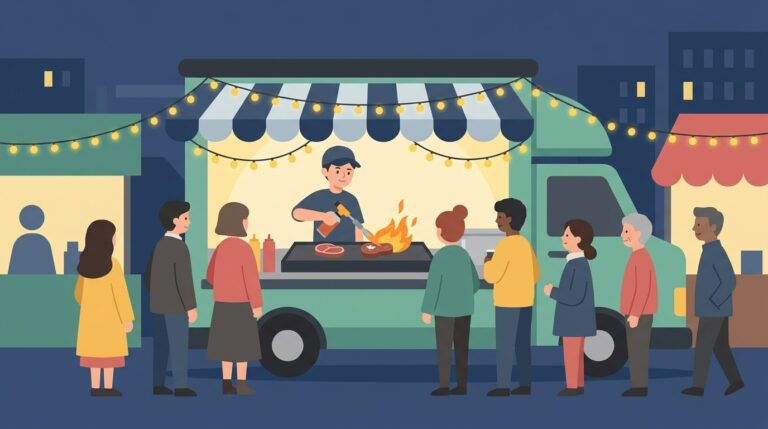
Close your eyes for a second. Imagine you are at the Bamdokkaebi Night Market along the Han River, or maybe a bustling Cheongnyeon-mol (Youth Mall) in Jeonju. Fairy lights are strung up above, indie music is playing in the background, and the mesmerizing sizzle of a chef blowtorching cube steak fills the air. You’ve been standing in line for 20 minutes. You finally reach the front, feeling confident because you memorized “How much is it?” from your textbook.
But then, the owner points to a small handwritten sign and says something really fast ending in “…sojin-dwaeseoyo.” Panic sets in. Wait, is it closed? Do I pay now? Did I do something wrong?
For C1-level learners, the textbook phrases just won’t cut it anymore, especially in the fast-paced, trendy environment of Korean night markets and youth malls. You need the real, unfiltered street Korean—the kind that makes the food truck owner give you an extra piece of fried shrimp just because they’re impressed. Let’s dive in.
Phase 2: Core Expressions – Deep Dive
Here are the top advanced expressions you absolutely need to survive and thrive at a Korean night market.
1. 재료 소진됐나요?
- Pronunciation: Jaeryo sojindwaennayo? [Jae-ryo so-jin-dwaen-na-yo]
- Meaning: Are you out of ingredients? (Real nuance: Are you sold out for the night?)
- K-Culture Moment: You’ll see this sign taped over menus at popular food trucks around 9 PM. In K-Dramas like Itaewon Class, running out of ingredients (재료 소진) is portrayed as the ultimate badge of honor for a successful restaurant.
- Editor’s Insight: Textbooks teach “매진 (maejin)” for “sold out.” But in the food industry, Koreans almost exclusively use “재료 소진” (ingredients exhausted) or the Konglish “솔드아웃” (sold out). It sounds much more natural and empathetic to the chef’s hard work.
- Situation Spectrum:
- Casual with friends: ✅ (야, 여기 재료 소진이래!)
- Semi-formal (Asking the owner): ✅ (사장님, 혹시 재료 소진됐나요?)
- Formal: ⚠️ (A bit too casual for high-end dining, but perfect for markets)
- 🤔 Think About It: Why do Koreans focus on “ingredients running out” rather than just saying “we are done selling”? How does this reflect the Korean cultural appreciation for fresh, daily prep?
2. 웨이팅 얼마나 걸려요?
- Pronunciation: We-i-ting eolmana geollyeoyo? [Way-ee-ting uhl-ma-na gull-yuh-yo?]
- Meaning: How long does it take to wait? (Real nuance: How long is the wait/line?)
- K-Culture Moment: Watch any Korean vlog on YouTube about visiting hot spots. You’ll hear the word “웨이팅” (waiting) constantly. It’s become a standard noun in modern Korean culture.
- Editor’s Insight: Instead of asking “줄이 길어요?” (Is the line long?), asking about the “웨이팅” shows you are a true insider.
- Situation Spectrum:
- Casual: ✅
- Semi-formal: ✅
- Formal: 🚫 (Use “대기 시간이 어떻게 되나요?” in formal settings)
- 🤔 Think About It: Koreans love speed (Pbali-Pbali culture), yet they will gladly stand in a “웨이팅” line for two hours for trendy food. Why do you think this paradoxical culture exists?
3. 계좌 이체해 드릴게요.
- Pronunciation: Gyejwa iche-hae deurilgeyo. [Gye-jwa ee-che-hae deu-ril-ge-yo]
- Meaning: I will do a bank transfer for you.
- K-Culture Moment: In traditional markets and food trucks, card machines might be broken or absent. You’ll see small signs with a bank name and a 14-digit number. Buyers quickly type it into their banking app and show the screen to the owner.
- Editor’s Insight: This is the ultimate C1 flex. It shows you live like a local. If you don’t have a Korean bank account, you can confidently ask: “혹시 카카오페이 되나요?” (Do you take KakaoPay?)
- Situation Spectrum:
- Casual: 🚫 (You don’t say this to friends)
- Semi-formal (To vendor): ✅
- Formal: ⚠️
- 🤔 Think About It: Korea is nearly a cashless society. How has digital banking transformed the way traditional markets operate?
Phase 3: Textbook vs. Real Korean
Let’s upgrade your vocabulary from the classroom to the streets of Seoul.
[Situation 1: Ordering Half-and-Half]
* 📖 Textbook Korean: 두 가지 맛을 섞어 주실 수 있나요? (Can you mix two flavors for me?)
* 🗣️ Real Korean: 사장님, 이거 혹시 반반도 되나요? (Boss, by any chance, is half-and-half possible?)
* 💡 Why the difference?: “반반” (Half-and-half) is deeply rooted in Korean food culture (think Banban Chicken: half fried, half spicy). It’s efficient and universally understood.
[Situation 2: Asking for less spice]
* 📖 Textbook Korean: 맵지 않게 요리해 주세요. (Please cook it so it’s not spicy.)
* 🗣️ Real Korean: 덜 맵게 해 주세요. or 신라면 맵기 정도인가요? (Is it about the spice level of Shin Ramyun?)
* 💡 Why the difference?: Shin Ramyun is the universal standard of spiciness in Korea. Asking to compare it to Shin Ramyun instantly clarifies exactly how spicy it is.
Phase 4: Cultural Context — K-Culture Deep Dive
4-1. Non-Verbal Nunchi (눈치) at the Night Market
At a food truck, Nunchi is everything. Once you get your food, do not stand right in front of the truck to eat. Move to a designated eating area (취식 구역) or stand slightly away to let the next person order. Also, when doing a bank transfer (계좌 이체), it’s customary to hold up your phone screen slightly toward the owner so they can see the “Transfer Complete” (이체 완료) screen without having to ask.
4-2. The “Cheongnyeon-mol” (Youth Mall) Phenomenon
Why are traditional markets suddenly full of young chefs making fusion tacos and blowtorch steaks? It’s a government-backed trend! To save dying traditional markets, young entrepreneurs are given stalls at a discount. This creates a fascinating blend of the old (Halmeoni selling fermented soybean paste) and the new (a 20-something selling Kimchi Carnitas Fries). Because of this, you’ll hear a mix of deep traditional dialects and trendy Konglish in the same alleyway.
Phase 5: Roleplay Scenario
Setting: Friday, 8:30 PM. Yeouido Hangang Park Night Market. The smell of butter garlic shrimp is intoxicating. You and your Korean friend, Min-su (30, energetic, loves food), are staring at a massive line.
Characters:
* YOU: A confident C1 Korean learner, ready to eat.
* Min-su: Your Korean local friend.
* Owner: A busy, fast-talking food truck chef.
Dialogue:
Min-su: 와, 사람 진짜 많다. 우리 저거 버터 갈릭 새우 먹을래?
(Wa, saram jinjja manta. Uri jeogeo beoteo gallik saeu meogeullae?)
[Wow, there are so many people. Do you want to eat that butter garlic shrimp?]
YOU: 좋아! 근데 줄이 너무 긴데? 가서 웨이팅 얼마나 걸리는지 물어보고 올게.
(Joa! Geunde juri neomu ginde? Gaseo we-i-ting eolmana geollineunji mureobogo olge.)
[Sounds good! But the line is too long. I’ll go ask how long the wait is.]
(🎭 Stage Direction: You walk to the front of the truck)
YOU: 사장님, 혹시 지금 웨이팅 얼마나 걸려요?
(Sajangnim, hoksi jigeum we-i-ting eolmana geollyeoyo?)
[Boss, how long is the wait right now?]
Owner: 아유, 죄송해요. 지금 새우는 재료 소진이고, 큐브 스테이크만 가능해요. 스테이크는 10분 정도 대기하셔야 돼요.
(Ayu, joesonghaeyo. Jigeum saeuneun jaeryo sojin-igo, kyubeu seuteikeuman ganeunghaeyo. Seuteikeuneun 10-bun jeongdo daegi-hasyeoya dwaeyo.)
[Oh, I’m sorry. The shrimp is sold out (ingredients exhausted), and only the cube steak is available. For the steak, you’ll have to wait about 10 minutes.]
YOU: 아, 스테이크요? 스테이크는 좀 매운 편인가요?
(A, seuteikeuyo? Seuteikeuneun jom maeun pyeon-ingayo?)
[Ah, the steak? Is the steak on the spicy side?]
Owner: 네, 저희 특제 소스가 들어가서 신라면보다 조금 더 매워요.
(Ne, jeohui teukje soseuga deureogaseo sillamyeonboda jogeum deo maewoyo.)
[Yes, our special sauce goes in, so it’s a bit spicier than Shin Ramyun.]
🔀 Your Turn! How do you respond to show off your natural Korean?
– A) “아… 저는 매운 것을 잘 못 먹습니다.” (Ah… I cannot eat spicy things well.)
– B) “제가 맵찔이라서요. 혹시 소스 따로 주실 수 있나요?” (I’m a spice-wimp. By any chance, could you give me the sauce on the side?)
– C) “대박 매워요? 그럼 안 먹을래요.” (Super spicy? Then I won’t eat it.)✅ Best Choice: B. “맵찔이” (Maep-jjiri) is a highly common, endearing slang for someone with a low spice tolerance. Asking for the sauce on the side (소스 따로) is the smartest C1 survival tactic in Korea!
⚠️ Choice A Analysis: Grammatically flawless, but too robotic for a lively night market.
YOU: (Choosing B) 아, 제가 완전 맵찔이라서요! 혹시 소스는 따로 주실 수 있나요?
(A, jega wanjeon maepjjiriraseoyo! Hoksi soseuneun ttaro jusil su innayo?)
[Ah, I’m a total spice-wimp! By any chance, could you give the sauce on the side?]
Owner: (Smiling) 네, 그럼 소스는 따로 챙겨 드릴게요! 결제는 어떻게 도와드릴까요?
(Ne, geureom soseuneun ttaro chaenggyeo deurilgeyo! Gyeoljeneun eotteoke dowadeurilkkayo?)
[Yes, then I’ll pack the sauce separately for you! How would you like to pay?]
YOU: 계좌 이체해 드릴게요! 번호가 어떻게 되나요?
(Gyejwa iche-hae deurilgeyo! Beonhoga eotteoke doenayo?)
[I’ll do a bank transfer! What is the account number?]
Phase 6: 10-Second Shadowing Drill
Time to practice your rhythm. Speak at a normal, confident pace.
😊 사장님! / 저희 / 계좌 이체 / 해드릴게요! (Sajangnim! / jeohui / gyejwa iche / haedeurilgeyo!)
🥺 아... / 혹시 / 재료 소진 / 됐나요...? (A... / hoksi / jaeryo sojin / dwaennayo...?)
😤 오늘 무조건 / 불맛 나는 거 / 먹을 거야! (Oneul mujogeon / bulmat naneun geo / meogeul geoya!)
Phase 7: K-Culture Mini Dictionary
Here are 4 words you will constantly hear at a Korean night market.
1. 불맛
* Romanization: bulmat
* English: Fire flavor / Wok hei
* Context: The smoky, charred flavor from a blowtorch or high-heat wok. Koreans are obsessed with “bulmat” for meats and stir-fries.
2. 맵찔이
* Romanization: maepjjiri
* English: Spice wimp / Someone with zero spice tolerance
* Context: A very popular portmanteau of 매운 것 (spicy thing) + 찌질이 (loser/wimp). It’s used affectionately.
3. 청년몰
* Romanization: cheongnyeon-mol
* English: Youth Mall
* Context: Areas within older traditional markets taken over by young entrepreneurs to sell trendy, fusion foods and indie crafts.
4. 길맥
* Romanization: gil-maek
* English: Street beer
* Context: Drinking beer on the street (길 + 맥주). Very common near food trucks and the Han River.
Phase 8: Traveler Survival Kit
If you are visiting a Seoul night market, you MUST know these.
🆘 Survival Phrases TOP 3
– 🇰🇷 “쓰레기통 어디 있어요?” (sseuregitong eodi isseoyo?) – Where is the trash can?
– 🇰🇷 “물티슈 좀 주실 수 있나요?” (multisyu jom jusil su innayo?) – Could you give me some wet wipes?
– 🇰🇷 “포장해 주세요.” (pojang-hae juseyo) – Please pack it to go. (Takeout)
📌 Editor’s Travel Note:
* Trash Etiquette: Night markets in Korea are strict about trash. Do not throw food wrappers in regular street bins. There are usually designated “분리수거” (Recycling) zones at the ends of the food truck lines.
* Cash vs. Card: While Korea is 99% card-friendly, night markets are the exception. Having about 20,000 to 30,000 KRW in physical cash is highly recommended if you don’t have a Korean bank account for “계좌 이체”.
* No Tipping!: Tipping the food truck owner will result in them chasing you down the street to return your money!
Phase 9: Critical Thinking Corner — “One Step Deeper”
🧠 Think Deeper: Global Era Korean (언어의 세계화)
Have you noticed how much English is used in Korean traditional markets now? Words like 웨이팅 (waiting), 솔드아웃 (sold out), 픽업 (pickup), and 커스텀 (custom) are everywhere. This reflects a massive shift in Korean society. Young entrepreneurs in Youth Malls intentionally use English loanwords to brand their stalls as “hip” and “modern,” distancing themselves from the old-fashioned image of traditional markets. Some linguists worry about the loss of pure Korean, but others argue it’s a natural evolution of a hyper-globalized society.
💬 Your Turn: Does your native language borrow heavily from other languages to sound “trendy”? Share your thoughts in the comments!
Phase 10: FAQ & Common Mistakes
Q: Can I haggle at a food truck?
No. Unlike buying clothes in Dongdaemun, food prices at night markets and youth malls are fixed. Haggling (깎아 주세요) here will make things very awkward!
Q: Is it rude to eat while walking around the market?
Maybe. While “street food” implies eating on the go, Koreans generally prefer to stand in one spot to eat, rather than walking and eating simultaneously, to avoid bumping into people and spilling sauces.
❌ Common Mistake #1: Saying “매진됐나요?” (Mae-jin-dwaen-nayo?) for food.
✅ Do this instead: Use “재료 소진됐나요?” (Jae-ryo so-jin…) or “다 팔렸나요?” (Da pal-lyeot-nayo?). “매진” is usually reserved for movie tickets or concert seats.
Phase 11: Summary & Action Items
One-Liner Summary: Ditch the textbook and use terms like 웨이팅, 재료 소진, and 계좌 이체 to navigate Korea’s trendy night markets like a true local.
Action Mission:
* 🥉 Bronze: Stand in front of your mirror and practice saying “사장님, 계좌 이체해 드릴게요!” with a confident smile.
* 🥈 Silver: Leave a comment below telling us what your favorite Korean street food is using the word “웨이팅”. (e.g., “호떡을 위해서라면 1시간 웨이팅도 괜찮아요!”)
* 🥇 Gold: Next time you are at a Korean restaurant or market, ask “신라면 맵기 정도인가요?” to check the spice level!
K-Culture Mission:
Go to YouTube and search for “광장시장 브이로그” (Gwangjang Market Vlog) or “밤도깨비 야시장”. Listen carefully. I guarantee you will hear the word “재료 소진” or “웨이팅” within the first 5 minutes!
Phase 12: Interactive Quiz
1. You are at a Taco Food Truck. You want to know if they accept KakaoPay. What is the most natural way to ask?
A) 카카오페이 결제를 허락하십니까?
B) 카카오페이 되나요?
C) 카카오페이로 주시겠어요?
2. Fill in the blank: Ah, I can’t eat spicy food at all. I am a total ______!
“아, 저 매운 거 진짜 못 먹어요. 완전 [________]이거든요!”
3. True or False: If you get excellent service at a Youth Mall food stall, you should leave a 10% tip on the counter.
(Scroll down for answers!)
Answers:
1. B (A is extremely formal like a robot, C means ‘please give me KakaoPay’).
2. 맵찔이 (maepjjiri).
3. False. Korea does not have a tipping culture. A big smile and saying “너무 맛있어요!” (It’s so delicious!) is the best tip.
Frequently Asked Questions (FAQ)
Q: What does "재료 소진됐나요?" mean in Korean and how do you pronounce it?
A: In Korean, "재료 소진됐나요?" is pronounced [Jaeryo sojindwaennayo? [Jae-ryo so-jin-dwaen-na-yo] and means: Are you out of ingredients? (Real nuance: Are you sold out for the night?)
Q: What does "웨이팅 얼마나 걸려요?" mean in Korean and how do you pronounce it?
A: In Korean, "웨이팅 얼마나 걸려요?" is pronounced [We-i-ting eolmana geollyeoyo? [Way-ee-ting uhl-ma-na gull-yuh-yo?] and means: How long does it take to wait? (Real nuance: How long is the wait/line?)
Q: What does "계좌 이체해 드릴게요." mean in Korean and how do you pronounce it?
A: In Korean, "계좌 이체해 드릴게요." is pronounced [Gyejwa iche-hae deurilgeyo. [Gye-jwa ee-che-hae deu-ril-ge-yo] and means: I will do a bank transfer for you.







