

Hello! I am the Head Editor of Daily Hangul, your premium Korean tutoring brand.
Imagine this: You are watching a K-Drama, and the main characters meet in a beautiful, quiet indie bookstore. The male lead picks up a poetry book, reads a line, and the music swells. Fast forward to your trip to Seoul. You walk into the massive Kyobo Bookstore in Gwanghwamun. You want that exact poetry book (or maybe the novel recommended by your favorite K-Pop idol!). You find the poetry section, but… the shelf is empty.
You see a busy clerk sorting books. You want to ask them to order it for you, but your mind goes blank. Should you just leave? Absolutely not!
If you don’t know how to order an out-of-stock book, you might miss out on the perfect souvenir. Today, as your veteran tutor and local culture navigator, I’ll teach you exactly how to order a book in a Korean bookstore like a true insider. Let’s dive in!
Phase 2: Core Expressions Deep Dive
Here are the three life-saving phrases you need when the book you want is nowhere to be found.
1. 이 책 주문할 수 있나요?
- Pronunciation: i chaek jumunhal su innayo? [ee chaek joo-moon-hal soo in-na-yo?]
- Meaning: Can I order this book? (Literal: This book, order to do, is it possible?)
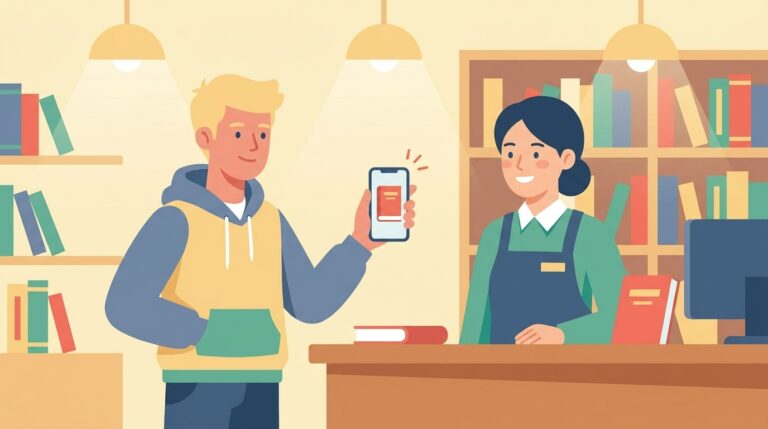
- K-Culture Moment: You proudly show your phone screen to the clerk. On the screen is a photo of RM from BTS reading a specific art history book. You use this phrase to secure your copy!
- Editor’s Insight: This is the most polite, standard, and fail-proof way to ask for a special order. The word ‘주문’ (jumun) means ‘order’, and you’ll use this word EVERYWHERE in Korea—cafes, restaurants, and online shopping.
- Situation Spectrum:
- Casual (Friends): 🚫 (Too formal for friends)
- Semi-formal (Clerks, Strangers): ✅ (Perfect!)
- Formal (Bosses, Elders): ✅
- 🤔 Think About It: Why do Koreans often say “Can it be done?” (수 있나요?) instead of “I want this”? It shows respect for the listener’s situation, gently asking for their capability rather than making a direct demand.
2. 언제쯤 들어와요?
- Pronunciation: eonje-jjeum deureowayo? [uhn-je-jjeum deu-ruh-wa-yo?]
- Meaning: When will it be restocked? (Literal: Around when does it come in?)
- K-Culture Moment: You are flying back home on Friday. You need to know if the script book of your favorite K-Drama will arrive before you head to Incheon Airport.
- Editor’s Insight: Instead of the difficult word for ‘restock’ (재입고), Koreans naturally say “들어오다” (to come in). It feels much more native and conversational.
- Situation Spectrum:
- Casual (Friends): ✅ (If asking a friend when something arrives)
- Semi-formal (Clerks, Strangers): ✅ (Very common)
- Formal (Bosses, Elders): ⚠️ (Use ‘들어올까요?’ to be safer)
- 🤔 Think About It: Notice the word ‘쯤’ (jjeum), meaning ‘around’ or ‘about’. Korean culture values flexibility and harmony. Adding ‘쯤’ softens the question, so the clerk doesn’t feel pressured to give an exact, guaranteed minute.
3. 도착하면 연락해 주세요.
- Pronunciation: dochak-hamyeon yeollakhae juseyo. [do-chak-ha-myun yuhl-lak-hae joo-se-yo.]
- Meaning: Please contact me when it arrives. (Literal: If it arrives, contact please do.)
- K-Culture Moment: The clerk asks for your details. In Korea, speed is everything (빨리빨리 culture!). Bookstores will usually text your phone the moment the book hits the sorting room.
- Editor’s Insight: ‘연락하다’ (to contact) is a magic word. It covers calling, texting, and KakaoTalk.
- Situation Spectrum:
- Casual (Friends): 🚫 (You’d use ‘연락해’ without ‘주세요’)
- Semi-formal (Clerks, Strangers): ✅
- Formal (Bosses, Elders): ⚠️ (Say ‘연락 부탁드립니다’ instead)
- 🤔 Think About It: Customer service in Korea is incredibly fast and proactive. Does your home country have an SMS notification system for small bookstore orders?
Phase 3: Textbook vs. Real Korean
Let’s look at how textbook Korean differs from what you’ll actually hear in the aisles of a bustling bookstore.
[Asking if they have a book]
* 📖 Textbook: 이 책을 예약하고 싶습니다. (I would like to reserve this book.)
* 🗣️ Real Korean: 이거 주문 되나요? (Can this be ordered?) / 이거 재고 있어요? (Is this in stock?)
* 💡 Why the difference?: Real spoken Korean drops object markers (을/를) and loves the verb ‘되다’ (to work/to be possible) for efficiency.
[When the clerk replies]
* 📖 Textbook: 성함과 전화번호를 적어 주시겠습니까? (Would you please write down your name and phone number?)
* 🗣️ Real Korean: 번호 남겨주시면 문자 드릴게요. (If you leave your number, I’ll text you.)
* 💡 Why the difference?: Texting (문자) or KakaoTalk is the default communication method in Korea. Clerks use quick, polite service language.
Bottom Note: As an A2 learner, stick to “이거 주문할 수 있나요?” It’s the perfect balance of polite and natural!
Phase 4: Cultural Context — K-Culture Deep Dive
4-1. Non-Verbal Elements: The ‘Two-Handed’ Rule & Phone Etiquette
When interacting with a bookstore clerk, remember that physical gestures speak volumes. If you don’t know the Korean title, simply show them a picture of the book on your phone. However, never toss your phone on the counter. Hand your phone (or a slip of paper) to the clerk using both hands, or with your right hand supported by your left hand. It’s a small sign of respect that immediately makes you look like a culturally aware traveler!
4-2. K-Travel Connection: The Mega-Bookstore Experience
In Korea, bookstores like Kyobo (교보문고) or Youngpoong (영풍문고) are not just shops; they are massive cultural complexes. You’ll find cafes, K-Pop album sections, stationery (문구), and huge seating areas where people sit on the floor and read for hours for free. It is a perfect place to rest your legs during a long day of touring Seoul.
Phase 5: Real-Life Roleplay Scenario
Setting: Saturday afternoon at Kyobo Bookstore in Gangnam. It’s crowded. You are looking for a beautiful photo essay book you saw your favorite actor reading on Instagram. You tried searching on the store’s computer, but the paper receipt says “재고: 0” (Stock: 0).
Characters:
– YOU: A passionate K-Culture fan on a one-week trip to Seoul.
– Clerk (직원 – Jik-won): 20-something, polite but speaking a bit fast because there’s a line.
Dialogue:
YOU: 저기요, 이 책 주문할 수 있나요? 📱
(jeogiyo, i chaek jumunhal su innayo?)
[Excuse me, can I order this book?]
(🎭 Stage Direction: You politely show your phone screen with the book cover)
Clerk: 아, 네. 잠시만요… 아, 지금 품절이네요. 주문하시면 3일 정도 걸려요. 괜찮으세요?
(a, ne. jamsimanyo… a, jigeum pumjeorineyo. jumunhasimyeon samil jeongdo geollyeoyo. gwaenchaneuseyo?)
[Ah, yes. One moment… Ah, it’s currently sold out. If you order it, it will take about 3 days. Is that okay?]
YOU: 네, 괜찮아요. 수요일에 올게요.
(ne, gwaenchanayo. suyoire olgeyo.)
[Yes, that’s fine. I will come on Wednesday.]
Clerk: 성함이랑 전화번호 남겨주세요. 책 도착하면 문자 드릴게요.
(seonghamirang jeonhwabeonho namgyeo-juseyo. chaek dochakhamyeon munja deurilgeyo.)
[Please leave your name and phone number. I will text you when the book arrives.]
🔀 Your Turn! How should you reply if you DON’T have a Korean phone number?
– A) “저 한국 번호 없어요.” (I don’t have a Korean number.)
– B) “제 인스타그램 팔로우 하실래요?” (Do you want to follow my Instagram?)
– C) “한국 번호 없는데, 수요일에 그냥 와도 되나요?” (I don’t have a Korean number, can I just come on Wednesday?)✅ Best Choice: C — You state your situation (“I don’t have a Korean number”) and propose a practical solution. The clerk will usually print a special reservation receipt for you to bring back!
⚠️ Choice A Analysis: It’s correct, but it leaves the conversation hanging. The clerk might be confused about what to do next.
🚫 Choice B Analysis: Funny, but definitely a no-go in a Korean retail setting! 😂
Phase 6: 10-Second Shadowing Drill
Let’s practice the rhythm! Pay attention to the pauses (/) and the mood.
😊 저기요, / 이 책 / 주문할 수 / 있나요?
(jeo-gi-yo / i chaek / ju-mun-hal su / in-na-yo?)
🤔 언제쯤 / 들어와요?
(eon-je-jjeum / deu-reo-wa-yo?)
Pro-Tip: Say “jeogiyo” (excuse me) with a bright, slightly raised tone to gently get the clerk’s attention!
Phase 7: K-Culture Mini-Dictionary
Here are 4 words you will definitely see inside a Korean bookstore:
1. 재고
* Romanization: jaego
* English: Stock / Inventory
* Context: You will see this on the book search computers. “재고: 2” means there are 2 copies left in the store!
2. 품절
* Romanization: pumjeol
* English: Sold out
* Context: The saddest word for a shopper. If a book has a “품절” sticker, you must order it or find another store.
3. 베스트셀러
* Romanization: beseuteuselleo
* English: Bestseller
* Context: A direct loanword from English. The bestseller section is usually right at the main entrance.
4. 문구
* Romanization: mungu
* English: Stationery
* Context: Korean bookstores have massive stationery sections selling cute stickers, diaries, and pens. A perfect place for souvenirs.
Phase 8: Traveler’s Survival Kit
Even if you’re nervous about speaking, these quick phrases will save you.
🆘 Survival Phrase #1
– 🇰🇷 “이거 재고 있어요?” (igeo jaego isseoyo?)
– 🗣️ English Pronunciation: [ee-guh jae-go is-suh-yo?]
– 📍 Where to use: Bookstore counter, clothing stores, cosmetic shops.
– 💡 Pro Tip: Point to your phone screen while saying this!🆘 Survival Phrase #2
– 🇰🇷 “어디에 있어요?” (eodie isseoyo?)
– 🗣️ English Pronunciation: [uh-di-e is-suh-yo?]
– 📍 Where to use: Asking where the book, the bathroom, or the checkout is.📌 Editor’s Travel Note
– Self-Search Computers (도서검색대): You don’t actually need to talk to a clerk to find a book! Bookstores have computers everywhere. Search the title, and it will print a tiny map showing you exactly which shelf (e.g., Section A, Shelf 3) holds your book.
– Payment: If you order an out-of-stock book, you usually pay for it when you pick it up, not in advance.
Phase 9: Critical Thinking — “One Step Deeper”
🧠 Think Deeper: Media vs. Reality in Korean Bookstores
In many K-Dramas, bookstores are portrayed as small, dusty, romantic spaces where the main characters accidentally bump hands while reaching for the same book. While independent bookstores (독립서점) in neighborhoods like Yeonnam-dong do exist and have this vibe, the reality for most Koreans is the mega-bookstore.
Korean society is fast-paced and highly digitized, but physical mega-bookstores thrive because they serve as “cultural shelters.” In a densely populated city like Seoul, a mega-bookstore offers a rare, quiet, air-conditioned public space where reading a book on the floor for three hours without buying anything is perfectly socially acceptable.💬 Your Turn: In your culture, are bookstores viewed just as retail shops, or are they communal hangout spots? Let me know in the comments!
Phase 10: FAQ & Avoiding Common Mistakes
Q: Do I have to pay right away when I order a book?
Usually, no! You pay when the book arrives and you pick it up at the counter. Just tell them your name when you return.
Q: What if I can’t read the Korean title to search on the computer?
Just find a clerk, smile, show them the picture on your phone, and say “이 책 찾아요” (I’m looking for this book). They are incredibly helpful!
❌ Common Mistake #1: Expecting the clerk to call an international phone number.
✅ Do This Instead: Korean SMS systems cannot send messages to foreign numbers (+1, +44, etc.). If you don’t have a Korean SIM card starting with 010, explicitly agree on a date to return (e.g., “수요일에 올게요” – I’ll come on Wednesday).
Phase 11: Summary & Action Items
One-Liner Summary: To order a missing book like a pro, simply show a picture and ask politely, “이 책 주문할 수 있나요?”
Your Action Missions:
– 🥉 Bronze (Solo): Stand in front of a mirror, hold up your phone, and practice asking “이 책 주문할 수 있나요?” 3 times.
– 🥈 Silver (Online): Find the Korean title of your favorite book. Write it in your notes app so you’re ready for your Korea trip!
– 🥇 Gold (Real Life): Next time you are in Korea, go to Kyobo Bookstore, find a book, and successfully ask a clerk about it!
Special K-Culture Mission:
Go to a K-Pop idol’s social media or a K-Drama fan page, find a book they recommend, and practice saying today’s phrases while looking at the cover!
Phase 12: Interactive Quiz Challenge
1. Situational Judgment:
You finally found the K-Drama script book you wanted, but the computer says “재고: 0” (Stock: 0). You walk up to the clerk. What is the most natural way to ask if they can get it for you?
* A) 이거 주세요. (Give me this.)
* B) 이 책 주문할 수 있나요? (Can I order this book?)
* C) 책 왜 없어요? (Why is there no book?)
👉 Click to see the answer!
Answer: B. Choice A implies you are holding the book. Choice C sounds aggressive and rude! B is the perfect, polite request.
2. True or False — K-Culture Edition:
“In Korean mega-bookstores, it is considered rude to sit on the floor and read books without buying them.”
👉 Click to see the answer!
Answer: False! It is entirely acceptable and very common. Mega-bookstores even provide large reading tables and steps specifically for people to sit and read for hours. Just be careful not to damage the books!
Frequently Asked Questions (FAQ)
Q: What does "이 책 주문할 수 있나요?" mean in Korean and how do you pronounce it?
A: In Korean, "이 책 주문할 수 있나요?" is pronounced [i chaek jumunhal su innayo? [ee chaek joo-moon-hal soo in-na-yo?] and means: Can I order this book? (Literal: This book, order to do, is it possible?)
Q: What does "언제쯤 들어와요?" mean in Korean and how do you pronounce it?
A: In Korean, "언제쯤 들어와요?" is pronounced [eonje-jjeum deureowayo? [uhn-je-jjeum deu-ruh-wa-yo?] and means: When will it be restocked? (Literal: Around when does it come in?)
Q: What does "도착하면 연락해 주세요." mean in Korean and how do you pronounce it?
A: In Korean, "도착하면 연락해 주세요." is pronounced [dochak-hamyeon yeollakhae juseyo. [do-chak-ha-myun yuhl-lak-hae joo-se-yo.] and means: Please contact me when it arrives. (Literal: If it arrives, contact please do.)







