

Hello there! I’m your Head Editor at Daily Hangul, your veteran tutor and local Seoul navigator.
Imagine this: You’re wandering through the trendy alleys of Seongsu-dong (성수동). Your map app says you’ve arrived at the hottest new cafe, but all you see is an abandoned-looking printing factory with rusted doors. Just as you think you’re lost, you spot a line of stylishly dressed people waiting outside a tiny, unmarked door.
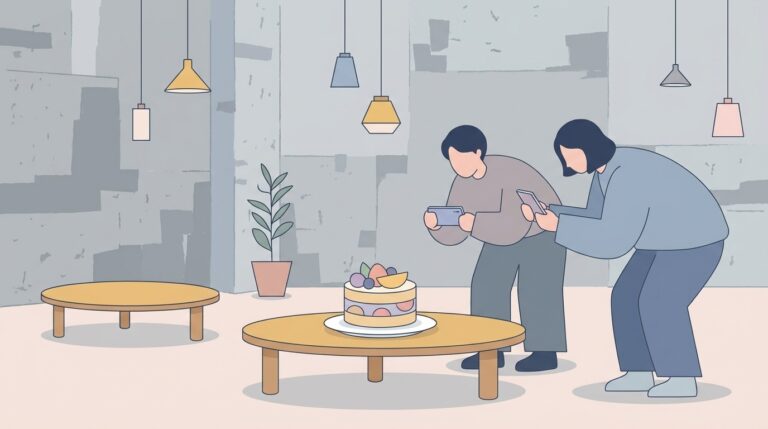
You step inside. The tables are practically at knee height. The walls are exposed, unfinished concrete. The coffee is served in a cup the size of a thimble, yet it’s the most beautifully crafted beverage you’ve ever seen. Welcome to the pinnacle of Korean cafe culture: the ‘Insta-aesthetic’ (인스타 감성) cafe.
At the C2 level, you already know how to order an Americano. But understanding the meta-language of these spaces, reading the unspoken social cues (눈치), and casually dropping the latest cafe slang? That’s what separates a textbook learner from a true Seoul insider.
This guide is crafted from the actual experiences of my advanced students who survived the extreme waiting lines and knee-high tables of Seoul’s cafe scene. Let’s dive deep into the marketing magic and hidden language of Korea’s independent cafes!
Phase 2: Core Expressions Deep Dive
To master the Instagram cafe scene, you need to understand the vocabulary that built it.
1. 인스타 감성 (Insta-gamsung)
- Pronunciation: [in-seu-ta gam-seong] / ‘gam’ sounds like ‘calm’ with a G, ‘seong’ rhymes with ‘sung’.
- Meaning: Literal: Instagram emotion/sensibility. Real nuance: The “Insta-aesthetic” or “Insta-worthy vibe.”
- K-Culture Moment: You walk into a dimly lit room with vintage posters, a single beam of sunlight hitting a monstera plant, and indie music playing. Your friend sighs and says, “와, 여기 완전 인스타 감성이다.” (Wow, this place is totally Insta-aesthetic.)
- Editor’s Insight: ‘감성’ (gamsung) is a powerful word in modern Korean marketing. It doesn’t just mean emotion; it means a curated, slightly melancholic, highly stylized mood. It’s the driving force behind modern Korean interior design.
- Situation Spectrum:
- Casual with friends: ✅
- Semi-formal (colleagues): ✅ (Very common in trendy marketing discussions)
- Formal (Boss/Elders): ⚠️ (They might not fully grasp the nuance)
- 🤔 Think About It: Why do Koreans place so much value on ‘gamsung’ (mood/vibe) over pure utility? Does your culture have a specific word for this highly curated digital aesthetic?
2. 가오픈 (Gaopeun)
- Pronunciation: [ga-o-peun] / ‘ga’ sounds like ‘gah’, ‘o-peun’ is just the English word ‘open’ read with a Korean accent.
- Meaning: Literal: Fake/Temporary open. Real nuance: Soft opening.
- K-Culture Moment: Finding a “gaopeun” cafe is a flex in Korea. It means you are so trendy that you visit places before they officially launch. Influencers love posting: “성수동 신상 가오픈 카페 다녀왔어요!” (Visited a new soft-opening cafe in Seongsu-dong!)
- Editor’s Insight: The prefix ‘가-‘ (ga) means temporary or provisional. Cafe owners intentionally use ‘가오픈’ as a marketing strategy to create exclusivity and urgency.
- Situation Spectrum:
- Casual: ✅
- Semi-formal: ✅
- Formal: ✅
- 🤔 Think About It: “Soft openings” exist everywhere, but in Korea, it’s used as an active marketing buzzword to attract trend-hunters. How does exclusivity drive consumer culture in your country?
3. 사진 맛집 / 뷰 맛집 (Sajin matjip / Byu matjip)
- Pronunciation: [sa-jin mat-jip] / ‘mat’ sounds like ‘mat’, ‘jip’ sounds like ‘jeep’ but shorter.
- Meaning: Literal: Photo delicious restaurant. Real nuance: A place that takes fantastic photos / A place with an amazing view.
- K-Culture Moment: You’re looking for a place to go this weekend. Your friend sends you a link saying, “여기 가자. 완전 햇살 맛집이래.” (Let’s go here. They say it’s a total sunlight hot-spot.)
- Editor’s Insight: ‘맛집’ originally means a restaurant with delicious food. But modern Koreans attached it to anything that provides a high-quality experience. If a cafe has great lighting? 햇살 맛집 (Sunlight matjip). Great view? 뷰 맛집 (View matjip). Great music? 음악 맛집 (Music matjip).
- Situation Spectrum:
- Casual: ✅
- Semi-formal: ✅
- Formal: 🚫 (Too slangy for formal reports)
- 🤔 Think About It: The evolution of the word ‘맛집’ shows how food terminology dominates Korean cultural expressions.
Phase 3: Textbook vs Real Korean
Let’s upgrade your vocabulary from textbook-stiff to Seoul-street-smart.
[Describing a Beautiful Cafe]
* 📖 Textbook Korean: 이 카페는 정말 예쁘네요. 사진 찍기 좋아요. (This cafe is very pretty. It is good for taking pictures.)
* 🗣️ Real Korean: 여기 완전 분위기 깡패네요. 인스타 감성 장난 아니에요. (This place is a total mood-gangster. The Insta-vibe is no joke.)
* 💡 Why it’s different: ‘분위기 깡패’ (Atmosphere gangster) is a popular hyperbole meaning the atmosphere is overwhelmingly good. Koreans love using extreme words (like gangster, crazy, no joke) to express positive excitement.
[Asking for the Cafe’s Specialty]
* 📖 Textbook Korean: 가장 인기 있는 커피가 무엇입니까? (What is the most popular coffee?)
* 🗣️ Real Korean: 여기 시그니처 메뉴가 뭐예요? (What’s the signature menu here?)
* 💡 Why it’s different: Trendy cafes rarely use the word ‘인기’ (popular). They rely on English loanwords like ‘시그니처’ (signature) to sound more premium and artisanal.
[Complaining About the Wait]
* 📖 Textbook Korean: 기다리는 사람이 너무 많아요. (There are too many waiting people.)
* 🗣️ Real Korean: 와, 여기 웨이팅 실화예요? (Wow, is this waiting line real life?)
* 💡 Why it’s different: ‘실화’ means ‘true story/real life’. It’s used when something is so extreme (good or bad) that it’s hard to believe.
Bottom Note: At the C2 level, fluently mixing English loanwords (웨이팅, 시그니처, 핫플) with Korean grammar is key to sounding like a native in metropolitan settings.
Phase 4: Cultural Context — K-Culture Deep Dive
4-1. The Non-verbal Etiquette of the ‘Insta-Cafe’
Understanding the language is only half the battle. The other half is 눈치 (Nunchi)—reading the room.
* The “Low Table” Posture: Many trendy cafes feature tables lower than the chairs. You have to lean forward awkwardly to drink. It’s an unspoken rule that you don’t complain about this; it’s the price of ‘gamsung’.
* The Silent Shutter: Taking hundreds of photos is expected, but causing a scene is not. Keep your voice low, and never take photos where other patrons’ faces are clearly visible (Korea has strict portrait rights / 초상권 laws).
* The Rotation 눈치: If people are standing in the ‘waiting zone’, it is a massive breach of nunchi to open your laptop and study. These cafes are for socializing and snapping photos, not for studying (카공족 – cafe studiers are often banned here).
4-2. K-Culture Connection: Space as a Commodity in Seoul
Have you ever noticed in K-Dramas how the leads always meet in cafes with impossibly perfect interiors? In reality, Seoul is incredibly densely populated. Most young people live in small apartments or studios (원룸).
Therefore, buying a $6 coffee isn’t just about the caffeine; it’s about renting a beautifully curated space for two hours. The cafes sell the experience of space, which is why “인스타 감성” marketing is so fiercely competitive.
Phase 5: Real-Life Roleplay Scenario
Setting: Saturday, 2 PM. Yeonnam-dong (연남동). You and your Korean friend Ji-eun have just managed to get a table at a “gaopeun” cafe after a 40-minute wait on the CatchTable app. The cafe looks like an unfinished construction site, but in an artsy way. The table is literally a cinder block.
Characters:
– YOU: A foreign professional living in Seoul, trying to embrace the local trends.
– 지은 (Ji-eun): 28, your Korean friend. A trend-hunter who takes her Instagram grid very seriously.
Dialogue:
지은: 와, 드디어 들어왔다! 여기 웨이팅 진짜 장난 아니네.
(Wa, deudieo deureowatda! Yeogi weiting jinjja jangnan anine.)
[Wow, we’re finally in! The waiting here is seriously no joke.]
YOU: 내 말이. 그래도 내부 보니까 왜 줄 서는지 알겠다. 분위기 깡패인데?
(Nae mari. Geuraedo naebu bonikka wae jul seoneunji algetda. Bunwigi kkangpaeinde?)
[Tell me about it. But looking at the inside, I see why people line up. The atmosphere is killer, right?]
지은: 그치? 나 이거 인스타 스토리에 올려야지. 아, 주문 먼저 할까? 여기 흑임자 라떼가 시그니처래.
(Geuchi? Na igeo inseuta seutorie ollyeoyaji. A, jumun meonjeo halkka? Yeogi heugimja rattega sigeunicheorae.)
[Right? I need to post this on my Insta story. Ah, should we order first? They say the black sesame latte is the signature here.]
YOU: 좋아. 나는 아이스 아메리카노 마실게. 디저트도 하나 시킬까?
(Joa. Naneun aiseu amerokano masilge. Dijeoteudo hana sikilkka?)
[Sounds good. I’ll have an iced Americano. Should we order a dessert too?]
(🎭 Stage Direction: Ji-eun returns with a tray. She places it on the cinder block table. The drinks look like modern art.)
지은: 짠! 디저트는 벌써 솔드아웃이라 음료만 시켰어. 잠깐, 먹기 전에 사진 먼저!
(Jjan! Dijeoteuneun beolsseo soldeuausira eumnlyoman sikyeosseo. Jamkkan, meokgi jeone sajin meonjeo!)
[Ta-da! The desserts were already sold out, so I only got the drinks. Wait, photos first before we drink!]
YOU: 아, 맞다. 인스타 감성 낭낭하게 찍어봐.
(A, matda. Inseuta gamseong nangnanghage jjigeobwa.)
[Ah, right. Take it with plenty of Insta-vibes.]
(🎭 Stage Direction: Ji-eun takes 20 photos from different angles. She finally sits down, but bumps the cinder block, spilling a tiny bit of coffee.)
🔀 Your Turn! How do you react?
– A) “테이블이 왜 이렇게 낮아? 너무 불편해!” (Why is this table so low? It’s so uncomfortable!)
– B) “조심해! 감성 챙기려다 허리 디스크 오겠다.” (Careful! We’re gonna get herniated discs trying to maintain this aesthetic.)
– C) “직원 불러서 닦아달라고 할게.” (I’ll call the staff to wipe it.)✅ Best Choice: B — Reason: It uses a witty, self-deprecating humor that perfectly captures the irony of modern cafe culture. Koreans often joke about getting ‘거북목’ (turtle neck) or ‘허리 디스크’ from Insta-cafes.
⚠️ Choice A Analysis: While true, complaining too directly kills the ‘gamsung’ mood you both waited 40 minutes for.
Bonus K-Culture Roleplay: The ‘Sold Out’ Tragedy
You go to the counter to ask about the famous pastry.
YOU: 저기요, 바질 크로플 혹시 더 안 나오나요?
(Jeogiyo, bajil keuropeul hoksi deo an naonayo?)
[Excuse me, are the basil croffles not coming out anymore?]
직원: 아, 죄송합니다 고객님. 금일 준비된 수량이 모두 소진되었습니다.
(A, joesonghamnida gogaengnim. Geumil junbideon suryangi modu sojindoeeotseumnida.)
[Ah, I’m sorry customer. All prepared quantities for today have been exhausted.]
(Pro tip: ‘소진되었습니다’ is the formal, polite way staff say ‘Sold Out’.)
Phase 6: 10-Second Shadowing Drill
Practice capturing the perfect balance of excitement and trendy vocabulary. Read aloud, minding the pauses (/) and intonation!
😲 와, / 여기 분위기 / 진짜 깡패네요.
(Wa, / yeogi bunwigi / jinjja kkangpaeneyo.)
Wow, the atmosphere here is seriously killer.
😊 가오픈 기간이라 / 웨이팅이 / 좀 길어요.
(Gaopeun giganira / weitingi / jom gireoyo.)
The wait is a bit long because it’s the soft opening period.
🥺 아... / 시그니처 디저트는 / 벌써 품절이에요?
(A… / sigeunicheo dijeoteuneun / beolsseo pumjeorieyo?)
Ah… is the signature dessert already sold out?
Phase 7: K-Culture Mini Dictionary
1. 감성 (Gamsung)
* Romanization: gam-seong
* English: Vibe / Aesthetic sensibility
* Context: The holy grail of Korean marketing. It dictates that things don’t just need to look good; they need to evoke a specific, trendy mood.
2. 핫플 (Hat-peul)
* Romanization: hat-peul
* English: Hot place
* Context: A portmanteau of “Hot Place.” Used to describe any currently trending location, cafe, or neighborhood (e.g., “Seongsu is a total hat-peul right now”).
3. 카공족 (Kagong-jok)
* Romanization: ka-gong-jok
* English: Cafe-studying tribe
* Context: People who study in cafes. Insta-aesthetic cafes actively discourage them to maintain fast table turnover, often by omitting Wi-Fi or having low tables.
4. 얼죽아 (Eol-juk-a)
* Romanization: eol-juk-a
* English: Iced Americano even if I freeze to death
* Context: An acronym for “얼어 죽어도 아이스 아메리카노”. It proves the absolute dominance of the Iced Americano in Korea, regardless of the freezing winter weather.
Phase 8: Traveler’s Survival Kit
Navigating trendy Korean cafes as a traveler requires more than just saying “Coffee, please.”
🆘 Survival Phrases for the Cafe Hopper
– 🇰🇷 “여기 웨이팅 줄인가요?” (Yeogi weiting juringayo?)
– 🗣️ Meaning: Is this the waiting line?
– 📍 Where to use: Outside any cafe in Yeonnam, Seongsu, or Hannam.
- 🇰🇷 “디카페인으로 변경 되나요?” (Dikapeineuro byeongyeong doenayo?)
- 🗣️ Meaning: Can I change this to decaf?
- 📍 Where to use: When ordering those heavily caffeinated signature lattes.
🇰🇷 “콘센트 있는 자리 있나요?” (Konsenteu inneun jari innayo?)
- 🗣️ Meaning: Are there any seats with power outlets?
- 📍 Where to use: Crucial if your phone battery is dying from taking too many photos.
📌 Editor’s Travel Note
– The Waiting Apps: You often can’t just stand in line. You need to input your phone number into a tablet by the door (using apps like CatchTable or Tabling). If you don’t have a Korean number, look for the English menu on the tablet or politely ask the staff: “외국인인데 어떻게 웨이팅 하나요?” (I’m a foreigner, how do I wait?).
– Leaving Belongings: In Korea, it is incredibly common to “reserve” your table by leaving your smartphone, wallet, or bag on the seat while you go order. It won’t get stolen. Welcome to the high-trust society!
Phase 9: Critical Thinking Corner — “One Step Deeper”
🧠 Think Deeper: Media vs Reality & Social Identity
Why do young Koreans willingly wait an hour to sit on a cinder block and drink a tiny, expensive coffee? It’s deeply tied to the concept of 소확행 (Small but Certain Happiness) and the digital culture of “showing” (보여주기 문화). In a hyper-competitive society where buying a house in Seoul is increasingly out of reach for the youth, curating a beautiful, aesthetic lifestyle on Instagram through affordable luxuries (like a $6 premium latte in an architecturally stunning cafe) becomes a powerful form of self-expression and stress relief. The “Insta-gamsung” is not just vanity; it’s a micro-vacation from the intense pressures of Korean urban life.💬 Your Turn: Does your culture have a concept similar to “Insta-gamsung”? How do young people in your country find their “small but certain happiness”?
Phase 10: FAQ & Avoiding Mistakes
Q: “Can I ask the staff to change the music if it’s too loud?”
No. In an Insta-cafe, the music is curated by the owner as part of the ‘gamsung’. Asking to lower the volume is seen as deeply violating the atmosphere they’ve created.
Q: “If the cafe is full, can I share a large communal table with strangers?”
Yes! 합석 (Hapseok – sharing a table) is very common at the large, central tables (often called ‘쉐어 테이블’ – share table) in trendy cafes. Just give a slight nod and take a seat.
❌ Common Mistake #1: Trying to pay at the table.
✅ Do this instead: In Korea, you always order and pay at the counter (선불 – prepay). You will receive a vibrating buzzer (진동벨), and you must fetch your coffee yourself.❌ Common Mistake #2: Asking “테이크아웃 돼요?” (Can I take out?) after drinking half your coffee in a glass cup, without paying extra.
✅ Do this instead: Due to environmental laws, cafes are strict about indoor/outdoor cups. If you want to leave with your drink, ask “남은 거 포장해 주실 수 있나요?” (Could you pack the rest to go?).
Phase 11: Summary & Action Items
One-Liner Summary: Surviving Korea’s Insta-cafe scene requires embracing ‘gamsung’, mastering English loanwords like ‘gaopeun’ and ‘signature’, and accepting that your table might just be a beautifully curated rock.
Action Mission:
– 🥉 Bronze (Solo): Look at a photo of a beautiful cafe online and say out loud, “와, 여기 완전 사진 맛집이네!”
– 🥈 Silver (Online): Go to Instagram, search the hashtag #가오픈카페 or #성수핫플, and read the captions to spot the vocabulary we learned today.
– 🥇 Gold (Real Life): Visit an independent cafe, ask “시그니처 메뉴가 뭐예요?” and successfully order their most aesthetic drink!
K-Culture Mission:
Next time you watch a K-Drama and characters meet at a cafe, look closely at the table height and the interior. Is it a corporate franchise (like Subway or Ediya) for product placement, or a hidden ‘Insta-gamsung’ cafe used to show the character’s trendy lifestyle?
Did you enjoy this deep dive into cafe aesthetics? Let me know in the comments if you prefer comfortable franchise cafes or trendy aesthetic spots! 👇
Phase 12: Quiz — Interactive Challenge
1. Situational Judgment:
You walk into a new cafe. There’s a sign on the door, but you still see some people inside. You want to ask your friend if the cafe is in its ‘soft opening’ phase. What is the most natural Korean expression?
* A) 여기 임시로 열었어?
* B) 여기 가오픈이야?
* C) 여기 오픈 거짓말이야?
2. Fill in the Blank:
Your friend takes an amazing photo of you by the window. You want to compliment the cafe’s lighting.
“와, 여기 진짜 햇살 ( _____ )이네!”
3. True or False – K-Culture Edition:
If the cafe has a long waiting line, it is perfectly acceptable to stay for 4 hours to study on your laptop because you bought a drink. (T/F)
Click to see answers!
1. B) 여기 가오픈이야? (‘가오픈’ is the exact trendy word for a soft opening.)
2. 맛집 (matjip) (Using ‘맛집’ for anything high-quality, like ‘햇살 맛집’, is peak C2 level fluency.)
3. False. If there is a waiting line, ‘눈치’ dictates you shouldn’t stay for hours to study. You should finish your conversation, take your photos, and free up the table.
Frequently Asked Questions (FAQ)
Q: What does "인스타 감성 (Insta-gamsung)" mean in Korean and how do you pronounce it?
A: In Korean, "인스타 감성 (Insta-gamsung)" is pronounced [in-seu-ta gam-seong] and means: Literal: Instagram emotion/sensibility. Real nuance: The "Insta-aesthetic" or "Insta-worthy vibe."
Q: What does "가오픈 (Gaopeun)" mean in Korean and how do you pronounce it?
A: In Korean, "가오픈 (Gaopeun)" is pronounced [ga-o-peun] and means: Literal: Fake/Temporary open. Real nuance: Soft opening.
Q: What does "사진 맛집 / 뷰 맛집 (Sajin matjip / Byu matjip)" mean in Korean and how do you pronounce it?
A: In Korean, "사진 맛집 / 뷰 맛집 (Sajin matjip / Byu matjip)" is pronounced [sa-jin mat-jip] and means: Literal: Photo delicious restaurant. Real nuance: A place that takes fantastic photos / A place with an amazing view.







