

안녕하세요! 매일한글(Daily Hangul) 수석 에디터입니다.
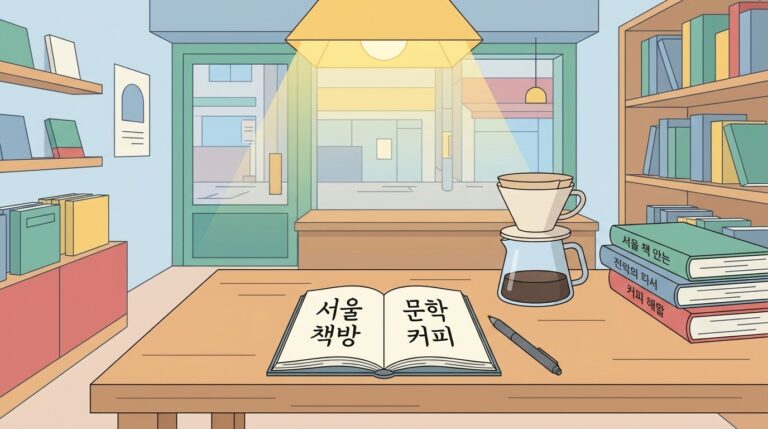
Imagine this: You’re sitting in a softly lit indie bookstore in Seochon, Seoul. You’ve just finished reading an award-winning Korean novel—perhaps Han Kang’s latest masterpiece or a poignant winner of the Yi Sang Literary Award. The final page is turned, and you are overwhelmed with emotion. But when you try to share your thoughts at a local book club (독서모임, dokseomoim), all that comes out is, “이 책은 아주 슬프고 재미있어요” (This book is very sad and interesting).
Sound familiar? As a C1-level learner, your thoughts are complex, but your Korean vocabulary might feel stuck at B1 when it comes to literary criticism. In K-Dramas like Romance is a Bonus Book (로맨스는 별책부록), characters eloquently debate literature over coffee. You deserve to sound just as sophisticated.
Today, we’re diving into the deep end of Korean literature. Let’s learn how to express those profound, lingering feelings and critically analyze award-winning works like a true Seoul intellectual.
Phase 2: 핵심 표현 심층 분석 (Core Expressions for Literary Criticism)
1. 여운이 짙게 남다
- Pronunciation: [yeouni jitge namda] + [yuh-oon-ee jit-geh nam-da]
- Meaning: (Literal) A dark/thick afterglow remains. (Real nuance) The book leaves a deep, lingering emotional resonance.
- K-Culture Moment: Picture a quiet cafe after watching an emotional indie film or finishing a heavy novel. No one speaks immediately. They just stare at their coffee. That silent, heavy emotional hangover? That’s 여운.
- Editor’s Insight: English speakers often say “It resonated with me” or “It left a lasting impression.” In Korean, we treat this emotion like an echo or a scent that refuses to fade. Use “짙게” (thickly/deeply) or “길게” (long) to emphasize it.
- Situation Spectrum:
- 친구 사이(Casual): ✅ (여운 쩔어…)
- 독서모임/동료(Semi-formal): ✅ (여운이 짙게 남네요.)
- 공식 리뷰/비평(Formal): ✅ (깊은 여운을 남기는 작품입니다.)
- 🤔 Think About It: Why does Korean have a specific word (여운) for the “unspoken emotion left behind”? Does this reflect the Korean cultural appreciation for silence and things left unsaid (여백의 미, the beauty of empty space)?
2. 시대의 아픔을 관통하다
- Pronunciation: [sidaeui apeumeul gwantonghada] + [shee-dae-eui ah-peum-eul gwan-tong-ha-da]
- Meaning: (Literal) To pierce through the pain of the era. (Real nuance) To capture and reflect the historical trauma or societal struggles of a generation perfectly.
- K-Culture Moment: Korean literature is deeply intertwined with its turbulent modern history (colonial period, war, democratization). When reviewing books that win major awards (like the Man Booker International), critics love this phrase because it highlights how personal tragedies represent national trauma.
- Editor’s Insight: This is a top-tier C1/C2 phrase. Use this in a book club, and native speakers will literally drop their jaws. It shows you don’t just read the words; you understand the history behind them.
- Situation Spectrum:
- 친구 사이(Casual): ⚠️ (A bit too academic for over a beer)
- 독서모임(Semi-formal): ✅
- 공식 비평(Formal): ✅
- 🤔 Think About It: “아픔” means physical pain, but here it means “historical sorrow.” Does your language use physical pain to describe national history?
3. 문체가 섬세하고 흡입력이 대단하다
- Pronunciation: [munchega seomsehago heubimnyeogi daedanhada] + [moon-che-ga sum-seh-ha-go heup-ip-nyuh-gi dae-dan-ha-da]
- Meaning: (Literal) The writing style is delicate and the suction power is huge. (Real nuance) The prose is beautifully detailed, and the book is an absolute page-turner.
- K-Culture Moment: You know those K-Drama thriller scripts where you can’t stop watching? That’s 흡입력 (absorbing power). Combine it with 문체 (writing style) to describe authors who write beautifully but keep you on the edge of your seat.
- Editor’s Insight: Instead of saying “흥미진진하다” (exciting), which sounds a bit juvenile, “흡입력이 있다” proves you are an advanced reader evaluating the author’s skill.
- Situation Spectrum:
- 친구 사이(Casual): ✅ (야, 이 책 흡입력 미쳤어!)
- 독서모임(Semi-formal): ✅
- 공식 리뷰(Formal): ✅
- 🤔 Think About It: Korean often uses physical metaphors for abstract concepts (suction power = engaging). Can you think of other Korean expressions that work this way?
Phase 3: 교과서 vs 진짜 한국어 (Textbook vs. Real Korean)
[Expressing Emotional Heaviness]
* 📖 교과서 한국어: 다 읽고 나서 아주 슬펐습니다. (I was very sad after reading it.)
* 🗣️ 진짜 한국어: 다 읽고 나서 마음이 너무 먹먹했어요. (My heart felt so heavy/stuffed after reading it.)
* 💡 왜 다를까?: “먹먹하다” describes a state where your emotions are so overwhelming that your chest feels blocked. It’s a more nuanced, sophisticated way to express profound sadness than just “슬프다.”
[Praising the Author’s Insight]
* 📖 교과서 한국어: 작가가 생각을 잘 썼습니다. (The author wrote their thoughts well.)
* 🗣️ 진짜 한국어: 인간의 내면을 정말 날카롭게 파고들었더라고요. (They really pierced sharply into the inner depths of human nature.)
* 💡 왜 다를까?: Advanced Korean criticism heavily relies on sensory verbs (파고들다 – to burrow/dig into) to vividly depict the author’s psychological analysis.
Phase 4: 문화적 맥락 — K-Culture 딥다이브
4-1. 비언어적 요소: The Art of the “Thoughtful Pause”
When analyzing deep literature in Korea, blurting out your opinion instantly can sometimes seem shallow. Embrace the Nunchi (눈치) of the room. A subtle nod, looking slightly downward, and starting with a quiet “어… (Umm…)” or a gentle sigh before saying, “여운이 참 길게 남네요…” creates an atmosphere of shared intellectual empathy.
4-2. K-Culture 연결 고리: The “Dokseomoim” (독서모임) Phenomenon
In recent years, indie bookstores and private book clubs (독서모임) like Trevari have exploded in Seoul. It’s not just about reading; it’s a sophisticated social networking event. Young professionals gather to debate social issues, feminism, and historical trauma reflected in literature. In these spaces, using words like “시대상” (zeitgeist) or “서사” (narrative) is the ultimate flex. Just like in the K-Drama My Liberation Notes, expressing your inner “Han” (한) through literature is a profound cultural bonding experience.
Phase 5: 실전 롤플레이 시나리오
Setting: 금요일 저녁 8시. 망원동의 한 독립서점 (Friday 8 PM. An indie bookstore in Mangwon-dong). The air smells of old paper and hand-drip coffee. You are attending your first Korean book club, discussing a recent award-winning novel with local members.
Characters:
– YOU: An expat who loves Korean literature. A bit nervous but prepared.
– 지은 (Ji-eun, 29): The passionate book club leader.
– 민수 (Min-su, 34): A regular member who likes deep philosophical debates.
Dialogue:
지은: 다들 오셨네요! 오늘 다룰 수상작, 다들 어떻게 읽으셨어요? 📚
(Dadeul osyeonneyo! Oneul darul susangjak, dadeul eotteoke ilgeusyeosseoyo?)
[Welcome everyone! How did you all find today’s award-winning book?]
(🎭 Stage Direction: Ji-eun smiles and takes out a notebook filled with highlights)
YOU: 저는 주말 내내 이 책만 붙잡고 있었어요.
(Jeoneun jumal naenae i chaengman butjapgo isseosseoyo.)
[I was glued to this book all weekend.]
민수: 오, 흡입력이 대단했나 보네요? 저는 사실 초반엔 좀 읽기 힘들었거든요.
(O, heubimnyeogi daedanhaenna boneyo? Jeoneun sasil chobanen jom ilgi himdeureotgeodeunyo.)
[Oh, the absorbing power must have been great? Honestly, I found it a bit hard to read at first.]
YOU: 맞아요, 초반은 문체가 좀 건조하죠. 하지만 중반부터는…
(Majayo, chobaneun munchega jom geonjohajo. Hajiman jungbanbuteoneun…)
[Right, the writing style is a bit dry at the beginning. But from the middle…]
지은: 중반부터 주인공의 서사가 폭발하잖아요! 눈물 날 뻔했어요.
(Jungbanbuteo juingongui seosaga pokbalhajannayo! Nunmul nal ppeonhaesseoyo.)
[The protagonist’s narrative explodes from the middle! I almost cried.]
YOU: 다 읽고 나니 정말 마음이 먹먹하더라고요. 여운이 짙게 남는 작품이에요.
(Da ilgo nani jeongmal maeumi meongmeokadeoragoyo. Yeouni jitge namneun jakpumieyo.)
[After finishing it, my heart felt so heavy. It’s a work that leaves a deep resonance.]
민수: 정확해요. 특히 1980년대 한국 사회의 아픔을…
(Jeongwakaeyo. Teuki cheongubaekpalsimnyeondae hanguk sahoeui apeumeul…)
[Exactly. Especially the pain of Korean society in the 1980s…]
🔀 당신의 차례! 어떻게 대답할까요? (Decision Point)
– A) “네, 아주 슬픈 역사입니다.” (Yes, it is a very sad history. – Grammatically perfect, but overly textbook.)
– B) “맞아요. 그 시대의 아픔을 너무나 예리하게 관통했더라고요.” (Right. It pierced through the pain of that era so sharply. – 🏆 Literary flex!)
– C) “대박 슬퍼요. 완전 레알.” (Super sad. Like, for real. – 🚫 Mood killer in a serious literary discussion.)✅ Best Choice: B — 이유: You are at a book club discussing an award-winning novel. Using “관통하다” (to pierce through) elevates your critique to a native C1 level, showing deep cultural empathy.
YOU: (B 선택) 맞아요. 그 시대의 아픔을 너무나 예리하게 관통했더라고요.
(Majayo. Geu sidaeui apeumeul neomuna yerihage gwantonghaetdeoragoyo.)
지은: 와, 표현력이 엄청나신데요? 한국어 원서로 그 감정을 다 느끼시다니 대단해요!
(Wa, pyohyeonnyeogi eomcheongnasindeyo? Hangugeo wonseoro geu gamjeongeul da neukkisidani daedanhaeyo!)
[Wow, your expressive power is amazing! It’s incredible you felt all those emotions through the Korean original text!]
Phase 6: 10초 섀도잉 드릴
Practice this literary critique to build your muscle memory!
😌 이 작품은 / 시대의 아픔을 / 너무나 섬세하게 / 그려냈어요.
(i jakpumeun / sidaeui apeumeul / neomuna seomsehage / geuryeonaesseoyo.)
Emotion Tag: 😌 진지하고 감성적으로 (Thoughtful and emotional). Slightly lower your pitch on “아픔을” to emphasize the depth of the work.
Phase 7: K-Culture 미니 사전
1. 독서모임 (Dokseomoim)
* Romanization: dokseomoim
* 영어: Book club / Reading group
* 맥락 설명: A highly popular intellectual and social networking trend among Korean Millennials and Gen Z.
2. 여백의 미 (Yeobaegui mi)
* Romanization: yeobaegui mi
* 영어: The beauty of empty space
* 맥락 설명: A traditional aesthetic concept in Korean art and literature, emphasizing what is not said or painted. Crucial for understanding “여운” (lingering resonance).
3. 등단 (Deungdan)
* Romanization: deungdan
* 영어: Literary debut (usually via an award or journal)
* 맥락 설명: In Korea, becoming a recognized author officially often requires passing a highly competitive literary contest (신춘문예). It carries massive prestige.
4. 서사 (Seosa)
* Romanization: seosa
* 영어: Narrative / Epic
* 맥락 설명: A trendy word in K-Pop and K-Lit. Fans use it to describe the deep, complex backstory of a character, an idol group, or a novel.
Phase 8: 여행자 서바이벌 키트 (Bookstore Edition)
Even if you aren’t attending a book club, navigating a giant Korean bookstore (like Kyobo) or a local indie shop requires specific survival phrases!
🆘 서바이벌 표현 #1
– 🇰🇷 “혹시 올해 문학상 수상작 코너는 어디에 있나요?”
– 🗣️ (hoksi olhae munhaksang susangjak koneoneun eodie innayo?)
– 📍 쓰는 곳: 교보문고, 영풍문고 (Large bookstores)
– 💡 Pro Tip: Large bookstores in Korea always have dedicated, beautifully decorated sections for “Award Winners” (수상작) and “Bestsellers” (베스트셀러).🆘 서바이벌 표현 #2
– 🇰🇷 “이 책 재고 혹시 남아있을까요?”
– 🗣️ (i chaek jaego hoksi namaisseulkkayo?)
– 📍 쓰는 곳: 독립서점 (Indie bookstores)
– 💡 Pro Tip: Award-winning books sell out fast in Korea (the Han Kang effect!). Always ask about “재고” (stock) if you can’t find it on the shelf.
📌 Editor’s Travel Note
– App to use: Download the “교보문고” (Kyobo) app. You can search for a book, and it will give you the exact bookshelf location (e.g., A-15-2) in any branch!
– Cafe Culture: Most large Korean bookstores have cafes inside, and independent bookstores often serve hand-drip coffee. It’s perfectly normal to grab a drink and read a sample before buying.
Phase 9: 비판적 사고 코너 — “한 발 더 깊이”
언어와 권력 & 번역의 한계 (Language, Power & The Limits of Translation)
🧠 Think Deeper:
When Korean literature wins global awards, the spotlight often falls on the translation. Words like 한 (Han – collective sorrow/resentment) or 정 (Jeong – deep emotional attachment) carry centuries of historical weight and social hierarchy that are nearly impossible to translate directly into English or French. For instance, in an award-winning Korean novel, the shift from 존댓말 (polite language) to 반말 (casual language) between two characters can signify a dramatic shift in power dynamics or intimacy—a nuance often lost in translation. As a C1 learner reading the original text, you possess the key to unlocking these hidden layers of societal hierarchy and emotional depth that translated readers miss.💬 Your Turn: Have you ever read a translated book where you felt the cultural nuance of your native language was completely lost? Share it in the comments!
Phase 10: FAQ & 오해 방지
Q: Can I use “여운이 짙게 남다” for movies or music too?
Yes! It is widely used for films, musicals, and even an incredibly emotional K-Pop concert. Any art form that leaves an emotional hangover qualifies.
Q: I want to sound smart. Can I use “흡입력이 대단하다” to my boss about a company report?
No! 😂 It’s strictly for creative media (books, dramas, movies). If you tell your boss their quarterly financial report has “great suction power,” they will think you are being sarcastic.
❌ 흔한 실수 #1: Confusing “지루하다” (boring) with “잔잔하다” (calm/tranquil).
✅ 이렇게 하세요: If an award-winning indie book is slow-paced but beautiful, do NOT say “이 책은 지루해요” (This book is boring). Say “분위기가 참 잔잔하네요” (The atmosphere is very tranquil/calm). It shows respect for the aesthetic.
Phase 11: 요약 및 액션 아이템
- One-Liner Summary: Elevate your literary critiques by using sensory and profound expressions like 여운 (resonance) and 시대의 아픔 (sorrow of the era).
🎯 Action Mission 3단계:
– 🥉 Bronze (혼자서): Look at your favorite book on your shelf and say aloud: “이 책은 정말 여운이 짙게 남아요.”
– 🥈 Silver (온라인): Go to a Korean book review site or Instagram (#북스타그램) and leave a comment using “흡입력이 대단하네요!” on a book recommendation.
– 🥇 Gold (실전): Visit a Korean bookstore, ask for an award-winning novel, and join a local Dokseomoim to debate it!
🌟 K-Culture Mission:
Search for “한강 노벨상 수상 소감” (Han Kang Nobel Prize acceptance speech) or any Korean author’s interview on YouTube. Listen closely to see if you can catch them using words like “서사,” “아픔,” or “여운”!
Phase 12: 퀴즈 — 인터랙티브 챌린지
1. [상황 판단] You just watched a heartbreaking, masterpiece indie film with your Korean friends. As the credits roll in silence, what is the best thing to whisper?
A) 와, 진짜 재밌다! (Wow, so fun!)
B) 주인공이 예뻐요. (The main character is pretty.)
C) 여운이 참 짙게 남네요… (The resonance lingers deeply…)
2. [빈칸 채우기] 이 소설은 1990년대 한국 사회의 ( _______ )을/를 너무나 예리하게 관통했습니다.
A) 아픔 (Pain/Sorrow)
B) 기쁨 (Joy)
C) 식당 (Restaurant)
3. [True or False – K-Culture Edition]
독립서점 (Indie bookstores) in Korea usually forbid you from talking and serve strictly as silent libraries. (T/F)
(정답: 1. C (It matches the heavy, emotional mood) / 2. A / 3. False. Many indie bookstores in Seoul host vibrant book clubs, serve alcohol or coffee, and encourage quiet but passionate discussions!)
Frequently Asked Questions (FAQ)
Q: What does "여운이 짙게 남다" mean in Korean and how do you pronounce it?
A: In Korean, "여운이 짙게 남다" is pronounced [yeouni jitge namda] and means: (Literal) A dark/thick afterglow remains. (Real nuance) The book leaves a deep, lingering emotional resonance.
Q: What does "시대의 아픔을 관통하다" mean in Korean and how do you pronounce it?
A: In Korean, "시대의 아픔을 관통하다" is pronounced [sidaeui apeumeul gwantonghada] and means: (Literal) To pierce through the pain of the era. (Real nuance) To capture and reflect the historical trauma or societal struggles of a generation perfectly.
Q: What does "문체가 섬세하고 흡입력이 대단하다" mean in Korean and how do you pronounce it?
A: In Korean, "문체가 섬세하고 흡입력이 대단하다" is pronounced [munchega seomsehago heubimnyeogi daedanhada] and means: (Literal) The writing style is delicate and the suction power is huge. (Real nuance) The prose is beautifully detailed, and the book is an absolute page-turner.






