

Phase 1: Empathy (Immersive Opening)
Hello! I’m your Lead Editor at Daily Hangul.
Imagine this: You’re watching the latest hit K-Drama—maybe My Name, Narco-Saints, or Strong Girl Nam-soon. Instead of the usual romantic walks under cherry blossoms, the protagonist is infiltrating a high-stakes narcotics ring. The news anchor in the background solemnly declares, “South Korea is no longer a drug-free nation.”
Wait, didn’t Korea used to be one of the strictest, safest countries in the world when it came to narcotics?
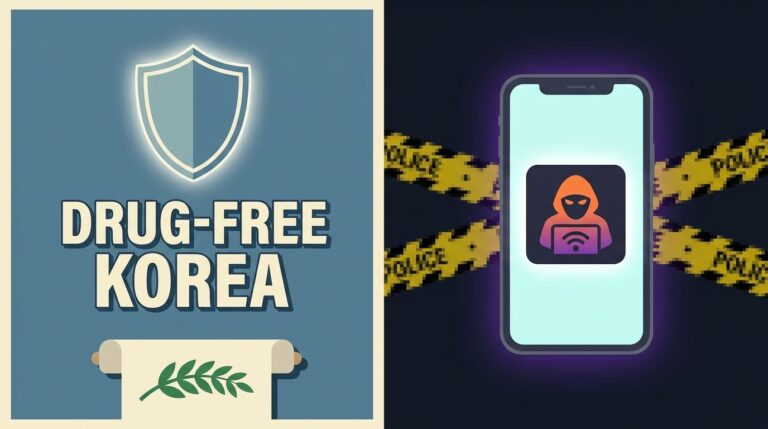
As a C2-level Korean learner, your goal isn’t just to order street food anymore; it’s to engage in deep, meaningful conversations about the societal shifts happening in Korea right now. The loss of the 마약 청정국 (Drug-Free Nation) status is one of the most hotly debated topics in Korean society today. Behind the glittering facade of K-Pop and safe midnight strolls, there is a complex web of digital crime, public stigma, and a severe lack of 재활 치료 (Rehabilitation) infrastructure.
If you want to understand Korean news, discuss K-Drama plots with locals, or just know what’s really going on behind the scenes, you need this vocabulary. Let’s dive in together.
Phase 2: Core Expressions Deep Dive
1. 마약 청정국 (Loss of the “Drug-Free Nation” Status)
- Pronunciation: [mayag cheongjeong-guk] (Sounds like: ma-yak chung-jung-gook. Make the ‘gg’ a hard, tense sound!)
- Meaning:
- Literal: Drug-clean country.
- Real Nuance: A nation with less than 20 drug offenders per 100,000 people. It’s often used ironically or nostalgically now in the media to highlight how much things have changed.
- K-Culture Moment: You’ll hear this in every news report or K-Crime documentary when discussing how dark web and Telegram drug sales have surged among people in their 20s.
- Editor’s Insight: Koreans took immense pride in this title. Losing it feels like a blow to the national identity of safety. When locals use it now, it’s usually followed by a sigh and a comment about “the youth these days.”
- Situation Spectrum:
- Casual debate with friends: ✅
- Discussing news with coworkers: ✅
- Making light of it: 🚫 (It is considered a very serious societal issue.)
- 🤔 Think About It: Why is “purity” (청정 – clean/pure) such a recurring theme in Korean social vocabulary? How does this reflect the societal pressure to maintain a flawless public image?
2. 솜방망이 처벌 (A Slap on the Wrist)
- Pronunciation: [sombangmang-i cheobeol] (Sounds like: som-bang-mang-ee chuh-bul)
- Meaning:
- Literal: Cotton-club punishment.
- Real Nuance: A disgracefully light sentence. Used when the public feels the justice system has failed to adequately punish a criminal, often resulting in probation (집행유예).
- K-Culture Moment: When a chaebol heir or a celebrity is caught with illegal substances and only receives a suspended sentence, the comment sections on Naver News will be flooded with “또 솜방망이 처벌이네” (Another cotton-club punishment).
- Editor’s Insight: This phrase captures the absolute frustration of the Korean public. It’s an essential C2 phrase for expressing political or social dissatisfaction.
- Situation Spectrum:
- Casual/Friends: ✅
- Professional Debate: ✅
- Addressing a Judge (Obviously): 🚫
- 🤔 Think About It: In your culture, is the justice system viewed as too harsh or too lenient? Why do you think Koreans often feel their courts give “cotton-club” sentences to the wealthy?
3. 재활 인프라 (Rehabilitation Infrastructure)
- Pronunciation: [jaehwal inpeura] (Sounds like: jae-hwal in-peu-ra)
- Meaning:
- Literal/Real Nuance: Facilities and systems for drug rehabilitation.
- K-Culture Moment: This is the crux of the modern debate. While K-Dramas show dramatic arrests, reality shows a massive lack of rehab centers because society views addiction purely as a crime rather than a disease.
- Editor’s Insight: Bringing this up in a conversation shows you aren’t just consuming Korean pop culture, but you actually understand the structural flaws of the society.
- Situation Spectrum:
- Formal discussions: ✅
- Academic/News contexts: ✅
- Casual small talk: ⚠️ (A bit too heavy for a first date!)
- 🤔 Think About It: The concept of NIMBY (Not In My Back Yard) prevents rehab centers from being built in Korea. How does the concept of “Nunchi” and saving face contribute to families hiding addiction rather than seeking public rehab?
Phase 3: Textbook vs. Real Korean
[Describing the Drug Problem in Korea]
* 📖 Textbook Korean: 최근 마약 범죄가 많이 증가했습니다. (Recently, drug crimes have increased a lot.)
* 🗣️ Real Korean: 한국도 이제 마약 청정국은 옛말이에요. (Korea being a drug-free nation is a thing of the past now.)
* 💡 Why the difference?: Real Korean heavily relies on cultural context. “청정국은 옛말이다” (The pure nation is an old saying) instantly conveys both the fact that crime increased and the lament over the loss of national pride.
[Reacting to a Light Sentence for a Celebrity]
* 📖 Textbook Korean: 형량이 너무 가볍습니다. (The sentence is too light.)
* 🗣️ Real Korean: 맨날 초범이라고 집유(집행유예) 주고, 완전 솜방망이 처벌이네요. (They always give probation because it’s a first offense, it’s a total slap on the wrist.)
* 💡 Why the difference?: Koreans love abbreviating legal terms in everyday anger. “집유” is short for 집행유예 (probation/suspended sentence), commonly used by netizens.
[Discussing Solutions]
* 📖 Textbook Korean: 치료 시설이 필요합니다. (Treatment facilities are needed.)
* 🗣️ Real Korean: 처벌만 능사가 아니죠. 재활 인프라 확충이 시급해요. (Punishment isn’t the only solution. Expanding rehab infrastructure is urgent.)
* 💡 Why the difference?: Advanced C2 speakers use four-character idioms or fixed phrases like “~가 능사가 아니다” (doing X isn’t the only/best solution) to sound highly educated and persuasive.
Phase 4: Cultural Context — K-Culture Deep Dive
4-1. The Non-Verbal “Photo Line” Apology
In Korea, the justice system includes a unique cultural element: the 포토라인 (Photo Line). When a high-profile figure (politician, chaebol, celebrity) is summoned by the police for drug offenses, they are forced to stand on a specific line of tape in front of hundreds of flashing cameras.
– The Non-verbal cue: They must wear a solemn, dark suit, look devastated, and bow a full 90 degrees.
– The Nunchi factor: If they look annoyed, wear luxury brands, or refuse to bow deeply enough, the public outrage will multiply, and the judge might literally factor their “lack of remorse” into the sentencing.
4-2. K-Drama Tropes vs. Harsh Reality
K-Drama Tropes: Dramas like My Name or The Fiery Priest often portray drug lords as glamorous, powerful villains in penthouse suites, while the “hero” uses their fists to bring them down.
The Critical View: In reality, modern drug offenses in Korea often involve stressed students seeking “study pills” (ADHD meds) on Telegram, or young people at clubs. K-Media glorifies the cat-and-mouse chase, but largely ignores the heartbreaking reality of addicts who want to get clean but have literally nowhere to go because Korean society deeply stigmatizes them. Getting caught doesn’t just mean jail; it means a total, irreversible social death (사회적 매장).
Phase 5: Real-Life Roleplay Scenario
Setting: A Friday night, 8 PM. A loud, smoky craft beer pub in Euljiro (힙지로). You are having drinks with two Korean coworkers. The news playing on the pub TV shows a famous actor apologizing at the police photo line for drug use.
Characters:
– YOU: A foreign expat who has lived in Korea for a few years, highly fluent (C2).
– Ji-hoon (34, Coworker): Cynical, reads the news a lot, very opinionated.
– Min-ah (29, Coworker): Empathetic, focuses on the human side of issues.
Dialogue:
Ji-hoon: 아휴, 또 마약이야? 요즘 연예인들 왜 저러냐 진짜.
(Ahyu, tto mayagiya? Yojeum yeonyeindeul wae jeoreonya jinjja.)
[Sigh, drugs again? What is wrong with celebrities these days, seriously.]
Min-ah: 그러게요. 근데 연예인뿐만 아니라 요즘은 일반인들도 쉽게 구한다면서요. 한국도 이제 마약 청정국은 옛말이죠 뭐.
(Geureogeyo. Geunde yeonyeinppunman anira yojeumeun ilbanindeuldo swipge guhandamyeonseoyo. Hangukdo ije mayak cheongjeonggugeun yenmarijo mwo.)
[I know. But they say it’s not just celebrities, normal people can get it easily now too. Korea being a drug-free nation is totally a thing of the past.]
Ji-hoon: 내 말이! 근데 어차피 초범이라고 또 집유 뜰 걸? 완전 솜방망이 처벌이잖아.
(Nae mari! Geunde eochapi chobeomirago tto jibyu tteul geol? Wanjeon sombangmang-i cheobeorijana.)
[That’s what I’m saying! But they’ll probably just get probation again since it’s a first offense. It’s a total slap on the wrist.]
Min-ah: 맞아요. 처벌도 강화해야 하지만, 저는 재활 인프라가 너무 부족한 게 더 큰 문제 같아요. 숨기기만 바쁘니까요.
(Majayo. Cheobeoldo ganghwahaeya hajiman, jeoneun jaehwal inpeuraga neomu bujokan ge deo keun munje gatayo. Sumgigiman bappeunikkayo.)
[Right. We need stricter punishments, but I think the extreme lack of rehab infrastructure is a bigger problem. Everyone is just busy hiding it.]
Ji-hoon: (Turns to you) OO씨네 나라는 어때요? 거긴 처벌이 세요, 아니면 재활 위주예요?
(OO-ssine naraneun eottaeyo? Geogin cheobeori seyo, animyeon jaehwal wijuyeyo?)
[How is it in your country? Are punishments strict, or is it more rehab-focused?]
🔀 Your Turn! How do you respond?
– A) 저희 나라는 처벌이 아주 강합니다. (Our country has very strong punishments.)
– B) 나라마다 다르지만, 처벌만으로는 한계가 있어서 재활과 예방 교육에 투자를 많이 하는 편이에요. (It varies, but since punishment alone has its limits, we tend to invest a lot in rehab and preventive education.)
– C) 마약은 절대 안 되죠! 감옥에 평생 가둬야 해요! (Drugs are an absolute no! They should be locked in jail forever!)✅ Best Choice: B — Why? It perfectly utilizes C2-level discourse phrasing (“~만으로는 한계가 있어서” – having limits with just X) and addresses Min-ah’s point about infrastructure.
⚠️ Choice C Analysis: While strongly anti-drug, it lacks the nuance expected of a high-level intellectual conversation and sounds a bit dramatic for a casual debate.
Phase 6: 10-Second Shadowing Drill
Let’s practice delivering this C2-level opinion like a native news anchor or a highly educated local.
😤 한국은 / 이제 더 이상 / 마약 청정국이 아니에요. / 처벌 강화도 중요하지만, / 실질적인 재활 인프라 확충이 / 시급합니다.
(Hangugeun / ije deo isang / mayak cheongjeonggugi anieyo. / Cheobeol ganghwado jungyohajiman, / siljiljeogin jaehwal inpeura hwakchungi / sigeuphamida.)
[Korea / is no longer / a drug-free nation. / Strengthening punishments is important, but / expanding practical rehab infrastructure / is urgent.]
Phase 7: K-Culture Mini Dictionary
1. 포토라인 (Photo line)
* Romanization: potorain
* English: The press photo line.
* Context: The physical line drawn by the press at police stations. Standing here is the ultimate form of public shaming in Korea.
2. 집유 (Jibyu)
* Romanization: jibyu
* English: Probation / Suspended sentence.
* Context: Slang/abbreviation for 집행유예 (jibhaeng-yuye). You will see this everywhere in Korean news comment sections when netizens are angry about lenient sentencing.
3. 낙인 (Nag-in)
* Romanization: nag-in
* English: Stigma / Branding.
* Context: The “scarlet letter.” In Korea, a drug charge isn’t just a legal issue; it’s a social “낙인” that destroys careers and family reputations permanently.
4. 님비 현상 (NIMBY hyeonsang)
* Romanization: nimbi hyeonsang
* English: NIMBY (Not In My Back Yard) phenomenon.
* Context: Widely used in Korean sociology. It explains why the government struggles to build drug rehab centers or public housing—local residents aggressively protest to protect their property values.
Phase 8: Traveler Survival Kit
Even as a traveler, Korea’s strict stance on drugs affects you directly, especially at customs and in nightlife districts like Hongdae or Itaewon.
🆘 Survival Expression #1: Bringing Medication into Korea
– 🇰🇷 “이 약은 제 처방전이 있는 의료용 약입니다.” (I yageun je cheobangjeoni inneun uiryoyong yagimnida.)
– 🗣️ Pronunciation: Ee yak-eun je chuh-bang-jun-ee in-neun eui-ryo-yong yak-im-ni-da.
– 📍 Where to use: Airport Customs.
– 💡 Pro Tip: ADHD medications (like Adderall) that contain amphetamines are strictly illegal in Korea, even with a prescription, unless you get prior approval from the Korean Ministry of Food and Drug Safety. Don’t risk it!🆘 Survival Expression #2: Nightlife Safety
– 🇰🇷 “제 화장실 갈 동안 제 잔 좀 봐주실래요?” (Je hwajangsil gal dongan je jan jom bwajusillaeyo?)
– 🗣️ Pronunciation: Je hwa-jang-shil gal dong-an je jan jom bwa-ju-shil-lae-yo?
– 📍 Where to use: Clubs, bars.
– 💡 Pro Tip: Due to the rise of “퐁당 마약” (pongdang mayak – secretly dropping drugs into someone’s drink), Koreans are becoming much more cautious at clubs. Always watch your drink.
📌 Editor’s Travel Note:
– CBD Oil is ILLEGAL in Korea. Do not bring CBD gummies, oils, or vapes. Ignorance of the law is not accepted as an excuse at Korean customs, and you will be treated as a drug smuggler.
Phase 9: Critical Thinking — “One Step Deeper”
🧠 Think Deeper: Media vs. Reality & The Social Stigma
Korean media has a fascinating double standard when it comes to the justice system. In global hits like The Glory or My Name, drug addiction is used as a flashy narrative tool to show how corrupt the wealthy elite are. It looks cinematic and thrilling. However, the reality of Korea’s loss of the “Drug-Free Nation” status is much darker and quieter.
Because of the extreme social pressure to maintain a perfect image, Korean society heavily leans into the 낙인 (Stigma) of addiction. Addiction isn’t viewed as a public health crisis; it is viewed as a severe moral failure. This means addicts hide in the shadows, families disown them to save face, and local neighborhoods protest the building of rehab centers (NIMBY). As you learn Korean, noticing how often the word “처벌” (punishment) outnumbers “치료” (treatment) in news headlines reveals a society that still prefers to excise its problems rather than heal them.
💬 Your Turn: How does the media in your country portray drug addiction versus the reality? Is the focus more on the “crime” or the “health crisis”? Share your thoughts in the comments using today’s Korean vocabulary!
Phase 10: FAQ & Mistake Prevention
Q: “Can I ask my Korean friends if they’ve ever tried weed (대마초)?”
– No. Absolutely not. In Korea, smoking weed is a serious crime that carries heavy prison time. Asking a Korean this is like asking if they’ve committed a felony. It will kill the mood instantly.
Q: “Is it okay to use the word ‘솜방망이 처벌’ with older people?”
– Yes! Older Koreans are often the most vocal critics of the justice system. Using this phrase when watching the news with an older person will make them nod vigorously and say, “외국인인데 한국을 참 잘 아네!” (You’re a foreigner but you know Korea so well!)
❌ Common Mistake #1: Assuming “legal in my country” means “legal for me in Korea.”
✅ Do this instead: Korea has the “Personal Jurisdiction” law (속인주의). If a Korean citizen smokes weed in Canada (where it’s legal), they can still be arrested upon returning to Korea. As a foreigner in Korea, Korean law applies to you completely (Territorial Principle – 속지주의).
Phase 11: Summary & Action Items
🎯 One-Liner Summary: Korea is transitioning from the pride of being a 마약 청정국 (Drug-free nation) to facing the urgent need for 재활 인프라 (Rehab infrastructure) to combat rising issues.
Action Mission 3 Steps:
– 🥉 Bronze (Solo): Read the shadowing sentence (Phase 6) out loud three times, focusing on pausing at the slash marks.
– 🥈 Silver (Online): Go to Naver News (사회/Social section), find an article about a court sentencing, and see if you can spot the word “집행유예” or “솜방망이” in the comments.
– 🥇 Gold (Real World): The next time you discuss K-Dramas with a Korean friend, ask them: “요즘 한국 드라마에 마약 얘기가 많이 나오는데, 진짜 옛날보다 심각해졌어요?” (There’s a lot about drugs in K-dramas lately, has it really gotten more serious than before?)
🎬 K-Culture Mission:
Watch one episode of a K-Crime drama (My Name, Vincenzo, etc.) and pay attention to how the police and the justice system are portrayed. Are they competent, or are they shown giving “slap on the wrist” punishments to the rich?
Did you learn something new today? Let me know in the comments which vocabulary word surprised you the most!
Frequently Asked Questions (FAQ)
Q: What does "마약 청정국 (Loss of the "Drug-Free Nation" Status)" mean in Korean and how do you pronounce it?
A: In Korean, "마약 청정국 (Loss of the "Drug-Free Nation" Status)" is pronounced [mayag cheongjeong-guk] and means: Literal: Drug-clean country.
Q: What does "솜방망이 처벌 (A Slap on the Wrist)" mean in Korean and how do you pronounce it?
A: In Korean, "솜방망이 처벌 (A Slap on the Wrist)" is pronounced [sombangmang-i cheobeol] and means: Literal: Cotton-club punishment.
Q: What does "재활 인프라 (Rehabilitation Infrastructure)" mean in Korean and how do you pronounce it?
A: In Korean, "재활 인프라 (Rehabilitation Infrastructure)" is pronounced [jaehwal inpeura] and means: Literal/Real Nuance: Facilities and systems for drug rehabilitation.







