

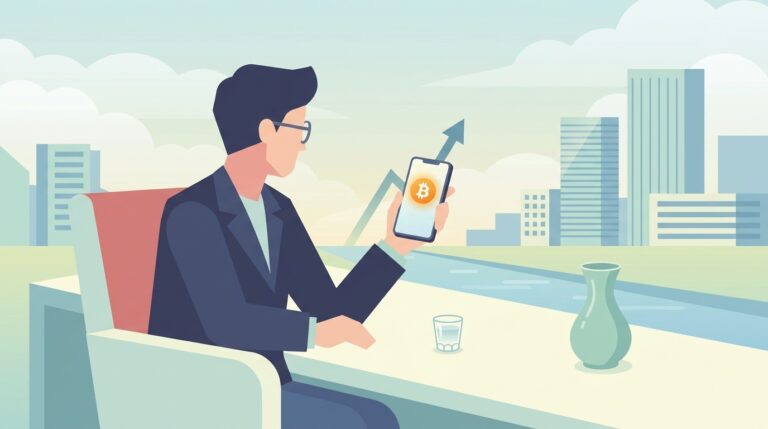
Decoding the Bitcoin ETF in Korea: Yeouido’s Secret Crypto Lingo & Business Korean
Phase 1: Empathy
Hello! I’m your Daily Hangul Editor.
Picture this: It’s a Friday evening in Yeouido, the bustling “Wall Street” of Seoul. You are sitting at a crowded Samgyeopsal (pork belly) restaurant with your Korean colleagues. The air is thick with smoke, Soju glasses are clinking, and the atmosphere is electric. The news just broke: The US SEC has approved the Bitcoin Spot ETF.
In a K-Drama, this is the exact moment the ambitious fund manager loosening his tie says something cryptic, leaving the subtitles to simply read, “This changes everything.” But what are they really saying? If you’re an advanced learner or a professional working in Korea, knowing how to discuss global financial shifts like the Bitcoin ETF isn’t just about translating English terms. It’s about tapping into the cultural psyche of Korean investors.
Without these nuanced expressions, you might sound like a textbook or a news anchor. But master them, and you’ll instantly earn “Insider” (인싸) status at any corporate dinner. Let’s dive into the high-stakes, fast-paced Korean used in the epicenter of K-Finance.
Phase 2: Core Expressions Deep Dive
1. 제도권 진입 (Institutionalization / Entering the mainstream)
- Pronunciation: jeodogwon jinip [Jae-do-gwon jee-neep] (The ‘gwon’ sounds like the ‘Gwen’ in Gwen Stacy, but with an ‘o’).
- Meaning: Literal: Entering the institutional sphere. Real nuance: Achieving mainstream, legal, and institutional acceptance.
- K-Culture Moment: You’ll hear this on every Korean financial YouTube channel right now. In a business meeting, when a director says, “이제 비트코인도 제도권 진입이네요” (Bitcoin has finally entered the institutional sphere), it’s accompanied by a solemn nod, signaling that the wild west days are over.
- Editor’s Insight: This isn’t just about “legality” (합법화). Korea has a strong divide between what the government protects (제도권) and what it doesn’t. Using this word shows you deeply understand Korean socio-economic structures.
- Situation Spectrum:
- Casual with friends: ⚠️ (A bit too stiff, unless you’re acting like analysts)
- Colleagues (Semi-formal): ✅
- Boss/Seniors (Formal): ✅
- 🤔 Think About It: Why is “entering the system” (제도권) such a monumental phrase in Korea? It reflects a society that highly values government validation and institutional safety. How does your culture view government intervention in new assets?
2. 엄청난 호재 (A massive favorable catalyst)
- Pronunciation: eomcheongnan hojae [Uhm-chung-nan ho-jae] (‘ho’ like Santa’s laugh, ‘jae’ like the letter J).
- Meaning: Literal: A huge good material. Real nuance: A massive bullish catalyst or unprecedented good news.
- K-Culture Moment: In a KakaoTalk group chat (단톡방) dedicated to crypto, someone drops a news link about the ETF approval and types “대박, 엄청난 호재네요!” The chat instantly explodes with rocket emojis.
- Editor’s Insight: The opposite is “악재” (akjae – bad news/bearish catalyst). In Korean trading culture, everything is categorized as either a hojae or an akjae. It’s a binary, emotionally charged way of viewing the market.
- Situation Spectrum:
- Casual with friends: ✅
- Colleagues (Semi-formal): ✅
- Boss/Seniors (Formal): ✅ (Very common in professional finance)
- 🤔 Think About It: Koreans love categorizing events strictly into “good material” or “bad material.” Does this binary linguistic habit affect the famously high volatility of the Korean crypto market?
3. 관망세 (Wait-and-see attitude)
- Pronunciation: gwanmangse [Gwan-mang-seh] (‘Gwan’ rhymes with swan).
- Meaning: Literal: An attitude of observing. Real nuance: The market is holding its breath; investors are staying on the sidelines.
- K-Culture Moment: When the ETF is approved, but the price temporarily dips (a “sell the news” event), a senior trader might sip their coffee, look at the red charts, and say, “당분간은 짙은 관망세가 이어지겠네요” (A heavy wait-and-see attitude will continue for a while).
- Editor’s Insight: It sounds incredibly professional. If someone asks for your opinion on the market and you don’t want to commit, say “저는 일단 관망세입니다” (I’m taking a wait-and-see approach for now). It’s the perfect diplomatic answer.
- Situation Spectrum:
- Casual with friends: ⚠️ (Sounds a bit pretentious)
- Colleagues (Semi-formal): ✅
- Boss/Seniors (Formal): ✅
- 🤔 Think About It: The concept of “Nunchi” (reading the room) applies to the market too. Gwanmangse is essentially the entire market exercising Nunchi.
Phase 3: Textbook vs. Real Korean
[Situation 1: Describing a massive price surge due to the ETF]
* 📖 Textbook Korean: 비트코인 가격이 크게 상승할 것입니다. (Bitcoin’s price will rise significantly.)
* 🗣️ Real Korean: 이번 ETF 승인으로 비트코인 완전 떡상 각이네요. (With this ETF approval, it looks like a total moon/pump.)
* 💡 Why the difference?: “떡상” (Ddeok-sang) originally meant a sharp rise, comparing the soaring chart to a rising rice cake. It perfectly captures the aggressive, high-energy internet culture of Korean retail investors.
[Situation 2: Warning someone about market volatility]
* 📖 Textbook Korean: 시장 변동성이 크니 조심하십시오. (The market volatility is high, so please be careful.)
* 🗣️ Real Korean: 지금 변동성 장난 아니니까, 일단 멘탈 꽉 잡으세요. (The volatility is no joke right now, so hold onto your mental sanity.)
* 💡 Why the difference?: Koreans frequently use “멘탈” (Mental) to describe psychological resilience. In a volatile crypto market, maintaining one’s “mental” is considered a survival skill.
[Situation 3: Discussing institutional money]
* 📖 Textbook Korean: 기관 투자자들의 자금이 시장에 유입될 것입니다. (Funds from institutional investors will enter the market.)
* 🗣️ Real Korean: 이제 기관 스마트 머니 들어오면 판이 바뀔 겁니다. (Once the institutional ‘smart money’ comes in, the game will change completely.)
* 💡 Why the difference?: Using Konglish terms like “스마트 머니” (Smart money) and expressions like “판이 바뀌다” (the board/game changes) adds a dramatic, K-Drama-esque business flair to your speech.
Phase 4: Cultural Context — K-Culture Deep Dive
4-1. Non-Verbal Cues: The Corporate Nunchi
When discussing investments with Korean colleagues, Nunchi (눈치) is crucial. If the market is crashing, avoid overly enthusiastic body language. In Korea, asking someone “수익률 어때요?” (How are your returns?) can be as sensitive as asking their salary. Always read the room. If a colleague is staring blankly at their phone screen with a sigh, it’s a cue to offer a silent shot of Soju, not financial advice.
4-2. The “FOMO” Culture and K-Dramas
Have you noticed how recent K-Dramas often feature a side character who is obsessed with their phone’s stock or crypto app? This reflects a real socio-economic phenomenon in Korea. The rapid rise of real estate and crypto birthed the term 벼락거지 (Byeorak-geoji – Sudden Beggar). It refers to people who didn’t necessarily lose money, but became relatively poor because they didn’t invest while everyone else got rich.
When the Bitcoin ETF was approved, the Fear Of Missing Out (FOMO) hit the Korean working class hard. Discussing crypto isn’t just about technology in Korea; it’s a desperate ladder for class mobility. Understanding this underlying anxiety will give your Korean a profound depth of empathy.
Phase 5: Real-Life Roleplay Scenario
Setting: Friday night, 8:00 PM. A high-end Izakaya in Yeouido. You and your Korean colleague, Minsu, have just finished a long week of analyzing the US SEC’s Bitcoin ETF approval. You are both slightly tipsy, and the conversation turns to personal investments.
Characters:
– YOU: An expat financial analyst working in Seoul. You are knowledgeable but trying to navigate Korean corporate social norms.
– Minsu (35): Your senior colleague (선배). Sharp, a bit cynical, but treats you well. He loves using trendy crypto slang.
Dialogue:
Minsu: 아, 이번 SEC 승인 때문에 주말 내내 차트만 보게 생겼네요. 🍺
(Ah, ibeon SEC seung-in ttaemune jumal naenae chateuman boge saenggyeonneyo.)
[Ah, thanks to this SEC approval, looks like I’ll be staring at charts all weekend.]
YOU: 맞아요. 드디어 완벽한 제도권 진입이네요.
(Majayo. Deudieo wanbyeokan jeodogwon jinibineyo.)
[Right. It’s finally a perfect entry into the institutional sphere.]
Minsu: 솔직히 엄청난 호재인 건 맞는데, 지금 들어가는 건 좀 위험하지 않아요?
(Soljiki eomcheongnan hojaein geon manneunde, jigeum deureoganeun geon jom wiheomhaji anayo?)
[Honestly, it is a massive catalyst, but isn’t it a bit dangerous to enter now?]
YOU: 그렇죠. 소문에 사서 뉴스에 팔라는 격언도 있잖아요.
(Geureochyo. Somune saseo nyuseue pallaneun gyeogeondo itjanayo.)
[True. There’s the old saying: buy the rumor, sell the news.]
Minsu: (Sighs) 근데 제 친구 놈은 어제 풀매수 때렸대요. 나만 벼락거지 되는 거 아닌가 몰라.
(Geunde je chingu nomeun eoje pulmaesu ttaeryeotdaeyo. Naman byeorakgeoji doeneun geo aninga molla.)
[(Sighs) But my buddy went all-in (full buy) yesterday. I wonder if I’m the only one who’s going to end up a sudden beggar.]
🔀 Your Turn! How do you respond to Minsu’s anxiety?
– A) “선배님, 지금이라도 당장 사세요!” (Senior, buy right now!)
– B) “에이, 일단 관망세가 낫습니다. 한 잔 하시죠!” (Hey, a wait-and-see approach is better for now. Let’s have a drink!)
– C) “저도 어제 다 샀어요. 수고하세요!” (I bought everything yesterday too. Good luck!)✅ Best Choice: B — Reason: It uses advanced vocabulary (관망세) while showing emotional intelligence (Nunchi) by comforting him and changing the subject with a drink (한 잔 하시죠).
⚠️ Choice A & C Analysis: Choice A is dangerous financial advice. Choice C is a subtle brag that will make him feel worse, and “수고하세요” sounds completely unnatural and rude here.
Minsu: (Laughs) 역시 멘탈 잡는 건 당신이 최고네. 짠 합시다!
(Yeoksi mental jamneun geon dangsini choegone. Jjan hapsida!)
[(Laughs) As expected, you’re the best at keeping your mental sanity. Let’s cheers!]
(🎭 Stage Direction: Minsu raises his Soju glass with a relieved smile.)
Phase 6: 10-Second Shadowing Drill
Master the rhythm and intonation of a professional crypto analyst! Follow the pauses (/) and the emotion tags.
😤 단호하게 (Firmly):
이번 ETF 승인은 / 단순한 호재가 아니라 / 제도권 진입이라는 / 패러다임의 변화입니다.
(ibeon ETF seung-ineun / dansunhan hojaega anira / jeodogwon jinip-iraneun / paereodaim-ui byeonhwaimnida.)
[This ETF approval is not just a simple favorable factor, but a paradigm shift of entering the institutional sphere.]
Phase 7: K-Culture Mini Dictionary
Here are 4 essential K-Culture keywords to survive the Korean crypto/finance scene:
1. 눈치
* Romanization: nunchi
* English: Situational awareness / Reading the room
* Context: In investing, “눈치 게임” (Nunchi game) refers to investors trying to guess each other’s moves to buy or sell at the exact right moment.
2. 여의도
* Romanization: Yeouido
* English: Yeouido (Seoul’s Financial District)
* Context: Often referred to as the Wall Street of Korea. If someone says “여의도 찌라시” (Yeouido jjirasi), they mean an unverified financial rumor circulating among stockbrokers.
3. 벼락거지
* Romanization: byeorakgeoji
* English: Sudden Beggar
* Context: A socio-economic buzzword for someone who feels relatively impoverished because their income remained static while others amassed wealth through crypto or real estate.
4. 단톡방
* Romanization: dantokbang
* English: Group Chat (KakaoTalk)
* Context: The lifeblood of Korean retail investing. “코인 단톡방” (Coin dantokbang) is where rumors, news, and extreme emotional reactions are shared 24/7.
Phase 8: Traveler Survival Kit
Are you visiting Seoul for Korea Blockchain Week or a crypto conference? Here is your survival kit.
🆘 Survival Expression #1: Networking at a Conference
– 🇰🇷 “명함 하나 주실 수 있나요?” (myeongham hana jusil su innayo?)
– 🗣️ Pronunciation: [Myung-ham ha-na joo-shil soo in-na-yo?]
– 📍 Where to use: Coex, DDP, or after-parties.
– 💡 Pro Tip: When receiving a business card (명함), ALWAYS take it with two hands and read it for a few seconds before putting it away. Do not shove it straight into your pocket!🆘 Survival Expression #2: Asking about payment
– 🇰🇷 “카카오페이 되나요?” (kakaopei doenayo?)
– 🗣️ Pronunciation: [Ka-ka-o-pei doe-na-yo?]
– 📍 Where to use: Convenience stores, cafes, taxis.
– 💡 Pro Tip: Korea is rapidly moving toward a cashless society. While Bitcoin isn’t accepted at cafes yet, local digital wallets like KakaoPay or Samsung Pay are ubiquitous.📌 Editor’s Travel Note
– Navigating: Google Maps doesn’t work well for walking/driving in Korea due to security laws. Download Naver Map or KakaoMap.
– Language: Download Papago for translations. It understands Korean honorifics and financial context much better than Google Translate.
– Crypto ATMs: Do not expect to find Bitcoin ATMs on the streets of Seoul. Korean exchanges (Upbit, Bithumb) require strict KYC and local bank accounts.
Phase 9: Critical Thinking Corner — “One Step Deeper”
Korean in the Global Era (Konglish & Financial Jargon)
🧠 Think Deeper:
Have you noticed how much English is used in Korean crypto discussions? Words like “멘탈” (Mental), “풀매수” (Full-buy), and “스마트 머니” (Smart money) dominate the space. In the global era, the Korean language rapidly absorbs English financial terms, often mutating them into “Konglish” that native English speakers might not instantly recognize. This creates a fascinating linguistic barrier: a Korean crypto trader and a Wall Street broker might use the exact same English words, but with entirely different cultural connotations and emotional weight. Is this a corruption of the pure Korean language, or an evolutionary necessity to survive in the hyper-fast global market?💬 Your Turn: Does your native language borrow heavily from English in the tech or finance sectors? Do people invent hybrid slang words like “풀매수” (Full + 매수(buy))? Share your thoughts in the comments!
Phase 10: FAQ & Avoiding Mistakes
Q: Can I use “떡상” (Ddeok-sang / Mooning) with my boss?
A: NO. Unless you and your boss are close drinking buddies, “떡상” is internet slang and highly informal. Stick to “급등” (geup-deung / rapid rise) in official settings.
Q: If a Korean asks me what coins I hold, do I have to answer?
A: NO. Koreans often ask personal financial questions (like stock holdings or rent prices) to build rapport, not to be nosy. You can politely dodge it by saying, “저는 그냥 비트코인만 조금 가지고 있어요” (I just hold a little bit of Bitcoin).
❌ Common Mistake #1: Saying “당신” (You) to a colleague in a business setting.
✅ Do this instead: Never say “당신”. Use their title. E.g., “민수 대리님은 어떻게 생각하세요?” (What do you think, Assistant Manager Minsu?)❌ Common Mistake #2: Translating “You’re welcome” literally to “천만에요” when someone thanks you for a good crypto tip.
✅ Do this instead: “천만에요” sounds like a dubbed 1990s movie. Say “아니에요, 도움 되셨다니 다행이네요” (No at all, I’m glad it helped).
Phase 11: Summary & Action Items
One-Liner Summary: To master Korean crypto culture, understand the institutional shift (제도권 진입), the emotional weight of a catalyst (호재), and the art of reading the market’s Nunchi (관망세).
Action Mission:
– 🥉 Bronze (Solo): Read the 10-Second Shadowing sentence out loud three times, focusing on the assertive “C2 professional” tone.
– 🥈 Silver (Online): Go to a Korean YouTube video about the Bitcoin ETF and leave a comment: “완벽한 제도권 진입이네요!” (It’s a perfect institutional entry!)
– 🥇 Gold (Real-world): Next time you discuss investments with a Korean friend or colleague, ask them: “요즘 관망세인데, 어떻게 생각하세요?” (It’s a wait-and-see market lately, what do you think?)
K-Culture Mission: Watch an episode of a Korean corporate drama (like Misaeng or Numbers) and see how many times you hear the word “호재” (favorable factor) or “악재” (bad news)!
Phase 12: Interactive Quiz
1. Situational Judgment: Your Korean boss asks for your opinion on the market directly after the ETF approval, but the market is acting unpredictably. What is the most sophisticated (C2) response?
* A) 비트코인 떡상할 겁니다! (Bitcoin will moon!)
* B) 지금은 짙은 관망세가 필요한 시점입니다. (Right now is the time that requires a heavy wait-and-see attitude.)
* C) 몰라요. 제 멘탈이 나갔어요. (I don’t know. My mental is gone.)
2. True or False – K-Culture Edition:
* “In Korea, asking a coworker if they invest in stocks or crypto is considered a massive taboo and an HR violation.” (T/F)
3. Fill in the Blank:
* 이번 SEC 승인으로 비트코인이 드디어 ( _________ )에 진입했습니다.
(Answers: 1. B, 2. False – It’s a very common small-talk topic, though asking exact amounts is rude. 3. 제도권)
Frequently Asked Questions (FAQ)
Q: What does "제도권 진입 (Institutionalization / Entering the mainstream)" mean in Korean and how do you pronounce it?
A: In Korean, "제도권 진입 (Institutionalization / Entering the mainstream)" is pronounced [jeodogwon jinip [Jae-do-gwon jee-neep] and means: Literal: Entering the institutional sphere. Real nuance: Achieving mainstream, legal, and institutional acceptance.
Q: What does "엄청난 호재 (A massive favorable catalyst)" mean in Korean and how do you pronounce it?
A: In Korean, "엄청난 호재 (A massive favorable catalyst)" is pronounced [eomcheongnan hojae [Uhm-chung-nan ho-jae] and means: Literal: A huge good material. Real nuance: A massive bullish catalyst or unprecedented good news.
Q: What does "관망세 (Wait-and-see attitude)" mean in Korean and how do you pronounce it?
A: In Korean, "관망세 (Wait-and-see attitude)" is pronounced [gwanmangse [Gwan-mang-seh] and means: Literal: An attitude of observing. Real nuance: The market is holding its breath; investors are staying on the sidelines.






