

Phase 1: Empathy (Immersive Opening)
Hello! I’m the lead editor of Daily Hangul.
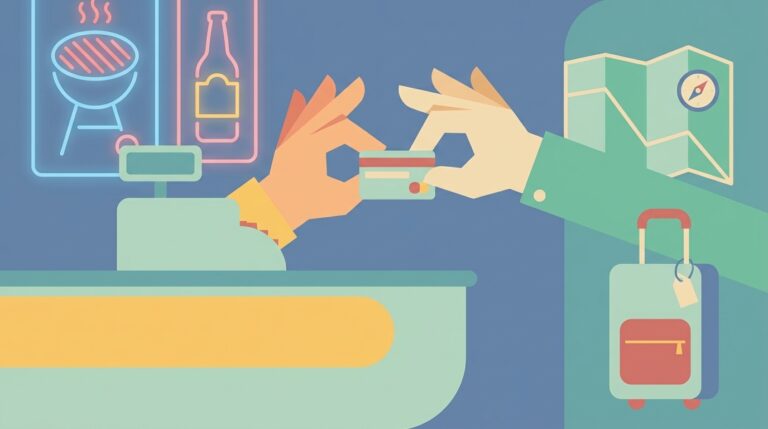
Picture this: You’re watching your favorite K-Drama. The main characters just finished a massive meal of Samgyeopsal (pork belly) and Soju. Suddenly, a mini-war breaks out at the cashier. They are physically blocking each other, practically wrestling to hand their credit card to the bewildered restaurant owner. The subtitles simply say, “I’ll pay!” but the intensity looks like a life-or-death situation. Have you ever wondered what’s really going on there?
If you travel to Korea with friends or make local friends here, you will inevitably face the “paying the bill” moment. In the past, Korean culture dictated that one person (usually the oldest or the one who invited the others) paid for everything. But today? The MZ generation in Seoul has perfected the art of the “Dutch Pay” (splitting the bill) down to the exact Korean Won.
If you don’t know the rules of this game, you might end up either feeling guilty for never paying, or accidentally offending a senior who genuinely wanted to treat you. Today, we’re going to dive into the real, street-level Korean expressions for settling travel expenses and splitting bills. This guide is based on the actual panic moments my foreign students have experienced at Hongdae cafes and Gangnam BBQ joints. Let’s make you a true cultural insider!
Phase 2: In-Depth Analysis of Core Expressions
1. 내가 쏠게! / 제가 살게요!
- Pronunciation: naega ssolge! / jega salgeyo!
- Sound-alike guide: ‘ssolge’ sounds like ‘soul-gay’ but with a very tight, tense ‘ss’ like a snake hissing.
- Meaning:
- Literal: “I will shoot!” / “I will buy.”
- Real nuance: “It’s my treat today! Put your wallets away!”
- K-Culture Moment: You will hear “내가 쏠게!” (naega ssolge) everywhere in K-Dramas, usually declared with a proud chest thump. It literally means “to shoot” (like a gun), but in slang, it means “to treat.” If a Korean friend says this, they are showing affection and hospitality.
- Editor’s Insight: “살게요” is the standard, polite way to say “I’ll pay.” But “쏠게” has a fun, generous, almost celebratory vibe. You use it when you got a promotion, it’s your birthday, or you just really appreciate your friends.
- Situation Spectrum:
- Casual (Friends): ✅ (내가 쏠게!)
- Semi-formal (Co-workers): ⚠️ (제가 살게요 is safer)
- Formal (Boss/Elders): 🚫 (Never use 쏠게 to elders; stick to 제가 계산하겠습니다)
- 🤔 Think About It: Why does Korean use the aggressive verb “to shoot” (쏘다) for treating someone to a meal? Some say it originates from the military, where “shooting” something big meant making a huge impact. How do you express “it’s my treat” in your culture? Is it a quiet gesture or a loud announcement?
2. 우리 N빵 하자 / 더치페이 해요
- Pronunciation: uri en-bbang haja / deochipei haeyo
- Sound-alike guide: ‘en’ is the English letter N. ‘bbang’ sounds like the ‘b’ in ‘bang’, but tense and explosive.
- Meaning:
- Literal: “Let’s do N-bread” / “Let’s do Dutch pay.”
- Real nuance: “Let’s split the bill evenly.”
- K-Culture Moment: After a fun night of Chimaek (chicken and beer), someone has to pay. Instead of fighting over the bill, young Koreans will quickly say “N빵 하자!” It comes from the mathematical concept of dividing something by ‘N’ (number of people).
- Editor’s Insight: While “더치페이” (Dutch pay) is universally understood, “N빵” is the ultimate slang for Millennials and Gen Z. It sounds incredibly natural and practical.
- Situation Spectrum:
- Casual (Friends): ✅ (N빵 하자)
- Semi-formal (Co-workers): ✅ (더치페이 하시죠)
- Formal (Boss/Elders): 🚫 (Do not ask your boss to split the bill unless they suggest it first!)
- 🤔 Think About It: “N빵” treats everyone as an equal variable (N). It reflects the shift in Korean society from group-oriented hierarchical treating to individualistic, fair sharing. Have you noticed similar shifts in your own language?
3. 따로 결제해 주세요 / 나눠서 계산할게요
- Pronunciation: ddaro gyeoljaehae juseyo / nanwoseo gyesanhalgeyo
- Sound-alike guide: ‘ddaro’ (dda sounds like the ‘d’ in ‘dad’ but very tense, almost halfway to a ‘t’).
- Meaning:
- Literal: “Please process payment separately” / “We will divide and calculate.”
- Real nuance: “We’d like to pay on separate cards.”
- K-Culture Moment: You are at a trendy cafe in Seongsu-dong with three friends. When you get to the cashier, you hand over three different credit cards and say this phrase. The cashier will expertly swipe each card for the exact divided amount without breaking a sweat.
- Editor’s Insight: This is an absolute survival phrase. In many Western countries, restaurants hate splitting the bill on multiple cards. In Korea, as long as it’s not a crazy busy lunch rush, cashiers are perfectly fine with it. Just tell them this before they ring up the total!
- Situation Spectrum:
- Universal: ✅ (This is a polite request to the staff, suitable for all situations).
- 🤔 Think About It: Korea is arguably the most advanced credit card society in the world. The language has evolved to reflect this digital convenience.
Phase 3: Textbook vs Real Korean
Let’s see how the phrases you learned in your textbook sound compared to what actual Koreans say on the streets of Seoul.
[Situation 1: Asking to split the bill with friends]
* 📖 Textbook Korean: 각자 계산합시다. (Let us calculate individually.)
* 🗣️ Real Korean: N빵 하자! / 카카오페이로 보낼게. (Let’s split it! / I’ll send it via KakaoPay.)
* 💡 Why the difference?: The textbook version sounds like a robot or a politician. Real friends use slang (N빵) or simply refer to the dominant mobile payment app (KakaoPay, Toss) because transferring money takes literally two seconds in Korea.
[Situation 2: Telling the cashier you want to pay separately]
* 📖 Textbook Korean: 우리는 몫을 나누어 지불하겠습니다. (We will divide our shares and pay.)
* 🗣️ Real Korean: 따로 결제해 주세요. / 반반 나눠서 해주세요. (Please charge separately. / Please split it half-and-half.)
* 💡 Why the difference?: Efficiency is key in Korea (the “Palli-Palli” culture). Cashiers need short, direct instructions, not long, poetic sentences.
Bottom Note: For B2 level learners, “따로 결제해 주세요” is perfect for cafes, while “N빵” is the perfect casual slang to drop with your new Korean friends to sound like a local.
Phase 4: Cultural Context — K-Culture Deep Dive
4-1. Non-Verbal Elements: The Art of Handing Over the Card
Language isn’t just words; it’s body language. In Korea, when you hand your credit card to the cashier, do not just toss it on the counter or hand it with one hand. Use two hands, or if you’re holding something in one hand, lightly support your right elbow with your left hand while handing over the card. It’s a sign of respect. Also, the Korean “Nunchi” (눈치 – the subtle art of reading the room) is crucial during the “paying phase.” If an older Korean insists on paying three times, graciously accept and say “잘 먹겠습니다!” (I will eat well!). Fighting them too much becomes rude.
4-2. K-Travel & K-Food Connection: The Mobile Transfer Revolution
If you travel to Korea, you’ll notice that physical cash is almost extinct. At a traditional market (like Gwangjang Market), you might need cash, but everywhere else, Koreans use cards or mobile transfers.
When traveling in a group, one person usually pays for the KTX train tickets, the Airbnb, and the big restaurant meals. Then, someone will say, “내가 정산해서 단톡방에 올릴게” (I’ll calculate it and post it in the group chat). They will share their bank account number, and everyone instantly transfers the exact amount. If you don’t have a Korean bank account as a traveler, you should offer to pay for the next meal or coffee, saying, “아까 밥 사주셨으니까, 커피는 제가 살게요!” (Since you bought food earlier, I’ll buy the coffee!).
Phase 5: Interactive Roleplay Scenario
Setting: It’s Friday night, 9 PM. You and your Korean friend Minho just finished eating at a noisy BBQ restaurant in Myeongdong. The bill is 50,000 KRW. You both walk up to the cashier.
Characters:
– YOU: A B2 Korean learner, traveling in Seoul.
– Minho (28): Your Korean local friend. Generous but sometimes stubborn about treating guests.
Dialogue:
Minho: 사장님, 여기 계산이요! 카드로 할게요.
(sajangnim, yeogi gyesaniyo! kadeuro halgeyo.)
[Boss, the bill here please! I’ll pay by card.]
(🎭 Stage Direction: Minho quickly pulls out his card before you even realize what’s happening.)
YOU: 어? 민호 씨, 잠깐만요! 같이 내요.
(eo? minho ssi, jamkkanmanyo! gachi naeyo.)
[Huh? Minho, wait! Let’s pay together.]
Minho: 에이, 아니에요. 한국까지 놀러 왔는데 제가 쏴야죠!
(ei, anieyo. hangukkaji nolleo wanneunde jega sswayajo!)
[Hey, no. You came all the way to Korea to visit, I have to treat you!]
YOU: 지난번 카페에서도 민호 씨가 냈잖아요. 이번엔 더치페이 해요.
(jinanbeon kapeeseodo minho ssiga naetjanayo. ibeonen deochipei haeyo.)
[You paid at the cafe last time too. Let’s do Dutch pay this time.]
Minho: 괜찮아요! 진짜 괜찮아요.
(gwaenchanayo! jinjja gwaenchanayo.)
[It’s okay! Really, it’s okay.]
🔀 Your Turn! How should you respond to Minho?
– A) “알겠어요. 안녕!” (Okay. Bye!)
– B) “그럼 이번엔 민호 씨가 내고, 2차는 제가 살게요!” (Then you pay this time, and I’ll buy the 2nd round!)
– C) “아니요! 무조건 N빵 해요!” (No! We must split it evenly!)✅ Best Choice: B — Why? In Korea, “2차” (the 2nd round, usually drinks or dessert) is a huge part of the culture. If someone insists on paying for the 1st round (1차), letting them pay and offering to buy the 2nd round is the smoothest, most polite way to balance the relationship without hurting their pride.
⚠️ Choice C Analysis: Forcing “N빵” when someone sincerely wants to treat a guest can ruin the warm mood.
Minho: 오, 좋아요! 그럼 2차는 치맥 어때요?
(o, joayo! geureom ichaneun chimaek eottaeyo?)
[Oh, sounds good! Then how about Chimaek for the 2nd round?]
YOU: 콜! 가시죠!
(kol! gasijyo!)
[Deal! Let’s go!]
Bonus K-Culture Scenario: Splitting the Taxi Fare
You and your friend shared a Kakao Taxi back to the hotel.
Friend: 택시비 12,000원 나왔어.
(taeksibi manicheon-won nawasseo. / The taxi fare was 12,000 won.)
YOU: 오케이, 내가 절반 송금할게. 계좌번호 알려줘.
(okei, naega jeolban songgeumhalge. gyejwabeonho allyeojwo. / Okay, I’ll transfer half. Give me your account number.)
Friend: 카톡으로 보냈어!
(katogeuro bonaesseo! / Sent it via KakaoTalk!)
Phase 6: 10-Second Shadowing Drill
Practice these lines out loud. Pay attention to the pauses (/) and the emotion tags!
- 😤 Playfully assertive: 야! / 이번엔 / 내가 쏠게! (ya! / ibeonen / naega ssolge!)
- 😊 Polite and bright: 사장님, / 반반 / 따로 결제해 주세요. (sajangnim, / banban / ddaro gyeoljaehae juseyo.)
- 🥺 Apologetic but practical: 제가 / 현금이 없어서 그러는데, / N빵 해서 / 계좌이체 해줄게요! (jega / hyeongeumi eopseoseo geureoneunde, / en-bbang haeseo / gyejwa-iche haejulgeyo!)
Phase 7: K-Culture Mini Dictionary
1. 눈치 (Nunchi)
* Romanization: nunchi
* Meaning: The subtle art of reading the room and sensing others’ feelings.
* Context: Knowing when to let someone pay and when to insist on splitting the bill requires high-level nunchi.
2. 2차 (Icha)
* Romanization: icha
* Meaning: 2nd round (of a gathering).
* Context: Korean socializing rarely ends at one location. Moving to a cafe or a pub for a “2nd round” is standard, and it’s a great way to split expenses naturally (Person A buys 1차, Person B buys 2차).
3. 한턱내다 (Hanteok-naeda)
* Romanization: hanteok-naeda
* Meaning: To treat someone to a meal/drinks (a slightly more formal/traditional version of ‘쏘다’).
* Context: Used when celebrating good news. “승진했으니까 내가 한턱낼게!” (I got promoted, so I’ll treat!).
4. 정산 (Jeongsan)
* Romanization: jeongsan
* Meaning: Settlement of accounts / calculating the split bill.
* Context: The official word for figuring out who owes what after a group trip or dinner.
Phase 8: Traveler’s Survival Kit
If you remember nothing else from this lesson, save these phrases to your phone!
🆘 Survival Phrases for the Cashier
– 🇰🇷 “따로 결제할게요.” (ddaro gyeoljaehalgeyo) – We will pay separately.
– 🇰🇷 “이거 반반 나눠서 결제해 주세요.” (igeo banban nanwoseo gyeoljaehae juseyo) – Please split this half and half.
– 🇰🇷 “영수증 버려주세요.” (yeongsujeung beoryeojuseyo) – Please throw away the receipt. (You will hear cashiers ask “영수증 드릴까요?” a lot. Use this!)📌 Editor’s Travel Note
– The Apps You Need: To easily calculate routes and subway fares, use KakaoMap or Naver Map.
– Cash vs Card: Korea is a “Card-First” society. You can use a credit card to pay for a 1,000 KRW pack of gum at a convenience store. Don’t worry about minimum charges. However, always carry a little cash (around 10,000~20,000 KRW) for street food stalls or charging your T-Money transit card!
– Tipping Culture: DO NOT TIP. There is absolutely no tipping culture in Korea. If you leave money on the table, the waiter will likely run down the street to return it to you, thinking you forgot your change!
Phase 9: Critical Thinking — “One Step Deeper”
🧠 Think Deeper: Food & Community Spirit vs. Individualism
In traditional Korean culture, food is strongly tied to “Jeong” (정 – a deep, shared bond). Sharing stews from the same pot and having elders pay for the whole table were symbols of a tight-knit community. However, as Korea modernized and Western individualistic values blended with the digital age, “Dutch Pay” and “N빵” became the norm among the younger generations. It reflects a desire for fairness, independence, and avoiding the burden of owing someone a favor. The evolution from “I’ll buy today, you buy tomorrow” to “Let me KakaoPay you 13,500 won right now” shows a fascinating shift in Korean social dynamics.💬 Your Turn: How does your culture handle splitting bills? Does asking to split the bill precisely make people uncomfortable, or is it expected? Share your thoughts in the comments!
Phase 10: FAQ & Avoiding Mistakes
Q: Is it okay to say “N빵 하자” to my boss at a company dinner (회식)?
No! Absolutely not. Company dinners are almost always paid for by the company credit card (법인카드) or the boss. Suggesting slang like “N빵” to superiors is considered overly casual and slightly disrespectful.
Q: Can we give the cashier 4 different credit cards to split one meal?
Yes! Just say “4명 나눠서 결제해 주세요” (Please split the payment for 4 people). Korean POS systems are built for this. However, avoid doing this if there is a massive line behind you.
❌ Common Mistake #1: Forcing Dutch Pay out of guilt.
Foreigners often feel terrible when a Korean friend pays for an expensive meal. But if you fiercely insist on paying them back with cash right there, it can make the Korean friend feel like you are rejecting their friendship (Jeong).
✅ Do This Instead: Accept gracefully with a big smile, say “와, 진짜 감사합니다!” and firmly insist on buying the coffee/dessert afterward.
Phase 11: Summary & Action Items
- One-Liner Summary: Use “내가 쏠게” to generously treat your friends, and “N빵 하자” or “따로 결제할게요” to smartly split the travel expenses!
Action Mission 3 Steps:
* 🥉 Bronze (Solo): Stand in front of a mirror and practice handing over an invisible credit card with two hands while saying, “따로 결제해 주세요.”
* 🥈 Silver (Online): Message a Korean speaking partner or post in a language app: “우리 다음에 만나면 더치페이 해요!”
* 🥇 Gold (Real World): Next time you are at a cafe with friends, go to the counter and successfully ask to split the bill in Korean.
K-Culture Travel Mission:
Next time you watch a K-Drama set in modern-day Seoul, pay close attention to the scenes in restaurants. Watch how the characters fight over the bill or pull out their phones to scan a QR code/transfer money. You’ll notice the non-verbal cues we talked about!
Phase 12: Quiz — Interactive Challenge
1. Situational Judgment: You are traveling in Busan with two Korean friends of the same age. The seafood meal was amazing but pricey. You want to suggest splitting the cost equally. What is the most natural thing to say?
– A) 각자 지불합시다.
– B) 제가 쏠게요!
– C) 우리 N빵 하자.
(Answer: C. Since you are same-age friends, N빵 is the most natural and practical slang!)
2. Fill in the Blank:
You want to pay for your own iced americano, and your friend will pay for their latte. You hand the cashier your card and say:
“사장님, _____ 결제해 주세요.” (Hint: separately)
(Answer: 따로)
3. True or False — K-Culture Edition:
“If a Korean restaurant owner gives you excellent service during your trip, you should leave a 10% tip on the table.”
(Answer: False! Korea has a strict no-tipping culture. Leaving money will only cause confusion. A heartfelt “잘 먹었습니다!” – I ate well – is the best tip!)
4. Roleplay Application:
Your Korean language partner (older than you) bought you a nice lunch. You didn’t pay for anything. According to Phase 5, what is the best cultural response?
(Answer: Offer to take them to a cafe and pay for the “2차” (2nd round)!)
Good luck on your Korean learning journey, and see you in the next lesson of Daily Hangul! Don’t forget to leave your answers to the ‘Think Deeper’ question below!
Frequently Asked Questions (FAQ)
Q: What does "내가 쏠게! / 제가 살게요!" mean in Korean and how do you pronounce it?
A: In Korean, "내가 쏠게! / 제가 살게요!" is pronounced [naega ssolge! / jega salgeyo!] and means: a key conversational Korean expression covered in this lesson.
Q: What does "우리 N빵 하자 / 더치페이 해요" mean in Korean and how do you pronounce it?
A: In Korean, "우리 N빵 하자 / 더치페이 해요" is pronounced [uri en-bbang haja / deochipei haeyo] and means: a key conversational Korean expression covered in this lesson.
Q: What does "따로 결제해 주세요 / 나눠서 계산할게요" mean in Korean and how do you pronounce it?
A: In Korean, "따로 결제해 주세요 / 나눠서 계산할게요" is pronounced [ddaro gyeoljaehae juseyo / nanwoseo gyesanhalgeyo] and means: a key conversational Korean expression covered in this lesson.







