

Master the Art of Korean ‘Muna’: How to Give and Get Free Stuff Like a Local
Phase 1: Empathy (Immersive Open)
Hello! Daily Hangul Editor here.
Picture this: You are walking down a quiet residential alley in Seoul at 9 PM. You spot a perfectly good desk lamp sitting on a low brick wall. Attached to it is a cute Post-it note. Is this a dramatic K-Drama scene where the heroine is sadly moving out? Not quite! Welcome to the real-life magic of Korean second-hand apps, specifically the beautiful culture of ‘Muna’ (무료 나눔 – Free Sharing).
If you live in Korea, you’ve probably heard of Karrot Market (당근마켓). But when you are moving out, trying to declutter your tiny studio apartment, or maybe trying to get rid of duplicate K-Pop photocards, selling them isn’t always the goal. Sometimes, you just want to give them away to a good home.
But how do you say “Hey, take this for free” without sounding suspicious? Knowing these phrases will not only help you declutter your space but will instantly give you major ‘Insider (인싸)’ points with the locals. This guide is based on real questions from our B2 students who wanted to navigate the Korean digital flea market safely and politely. Let’s dive in!
Phase 2: Deep Dive into Core Expressions
1. 무료 나눔합니다 (무나해요)
- Pronunciation: muryo nanumhamnida [moo-ryo na-num-ham-ni-da] / munahaeyo [moo-na-hae-yo]
- Sound Analogy: The ‘ryo’ sounds like a quick flap of the tongue, similar to the ‘tt’ in the American pronunciation of ‘butter’.
- Meaning: Literal: “I am doing a free share.” Real nuance: “Giving this away for free!”
- K-Culture Moment: You will see this everywhere—from college dorm message boards at the end of the semester to K-Pop concert venues where fans hand out free fan-made banners and stickers to anyone passing by.
- Editor’s Insight: Notice that Koreans use the word ‘나눔’ (sharing) instead of ‘공짜’ (free stuff). ‘공짜’ sounds a bit cheap or transactional. ‘나눔’ brings a warm, community-focused vibe. It says, “I respect this item, and I want someone else to value it.”
- Situation Spectrum:
- Casual (Online apps, Fandoms): ✅
- Semi-formal (Coworkers): ⚠️ (Better to use “필요하시면 드릴게요”)
- Formal (Boss/Elders): 🚫
- 🤔 Think About It: Why does Korean society prefer the word ‘sharing’ over ‘free’? How does this reflect the traditional Korean concept of Jeong (정 – affection/community bonding)?
2. 문고리 거래 원해요
- Pronunciation: mungori georae wonhaeyo [moon-go-ri geo-rae won-hae-yo]
- Meaning: Literal: “I want a doorknob trade.” Real nuance: “Let’s do a contactless pick-up.”
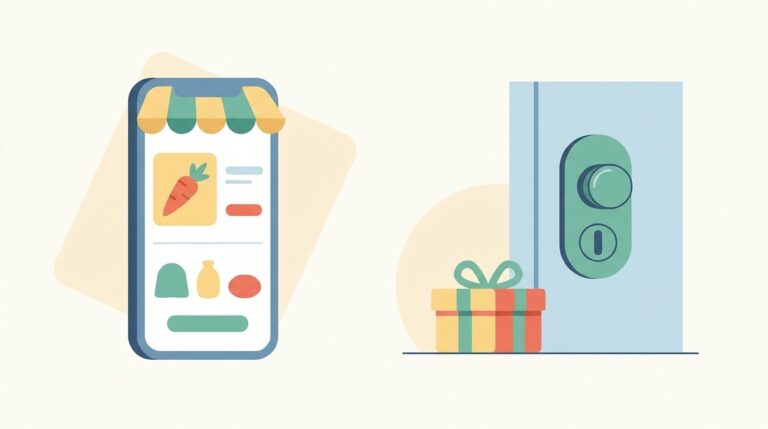
- K-Culture Moment: In modern Korea, especially post-pandemic and with so many single-person households, privacy and convenience are key. You just hang the shopping bag on your front doorknob, and the buyer picks it up quietly. No awkward small talk needed!
- Editor’s Insight: This is the ultimate introverts’ survival phrase. If you don’t feel confident speaking Korean face-to-face, ‘Doorknob trade’ is your best friend.
- Situation Spectrum:
- Casual (Second-hand apps): ✅
- Semi-formal: 🚫
- Formal: 🚫
- 🤔 Think About It: How does high-density living in cities like Seoul make a ‘doorknob trade’ physically and socially possible without the fear of theft?
3. 먼저 오시는 분께 드릴게요
- Pronunciation: meonjeo osineun bunkke deurilgeyo [meon-jeo o-shi-neun boon-kke deu-ril-ge-yo]
- Meaning: Literal: “I will give it to the person who comes first.” Real nuance: “First come, first served.”
- K-Culture Moment: The “Ppalli-Ppalli (빨리빨리 – Hurry up)” culture shines here. When a good item drops for free, people will message you in seconds. This phrase prevents arguments over who claimed it first.
- Editor’s Insight: Using ‘분 (bun – polite counter for people)’ and ‘드릴게요 (deurilgeyo – polite form of giving)’ shows that even in an anonymous app, Koreans maintain a baseline of polite respect.
- Situation Spectrum:
- Casual (Second-hand apps): ✅
- Semi-formal (Office group chat): ✅
- Formal: ⚠️
- 🤔 Think About It: In your culture, do people use honorifics when talking to anonymous strangers on the internet?
Phase 3: Textbook vs. Real Korean
[Situation 1: Offering an item for free online]
* 📖 Textbook Korean: 이것을 공짜로 주겠습니다. (I will give this for free.)
* 🗣️ Real Korean: 스탠드 무나해요~ 필요하신 분 챗 주세요. (Giving away a desk lamp~ Chat me if you need it.)
* 💡 Why the difference?: “공짜로 주겠다” sounds condescending, like a king bestowing a gift. “무나 (abbreviation of 무료 나눔)” is the standard internet slang that feels friendly and equal.
[Situation 2: Arranging a contactless handover]
* 📖 Textbook Korean: 제 집 문 앞에 두고 가겠습니다. (I will leave it in front of my house door.)
* 🗣️ Real Korean: 비대면 선호해요. 문고리 할게요. (I prefer contactless. Let’s do doorknob.)
* 💡 Why the difference?: Efficiency! Second-hand apps have created their own micro-language to save typing time.
Bottom Note: For B2 learners, mastering abbreviations like ‘무나’ (Muna) or ‘챗’ (Chat – short for chatting/messaging) is crucial. It immediately makes your Korean sound natural and integrated.
Phase 4: Cultural Context — K-Culture Deep Dive
4-1. Non-verbal Cues & Nunchi (눈치)
Even when an item is 100% free, Korean Nunchi culture dictates a hidden rule: the “Manner Tip”. When picking up a ‘Muna’ item, especially from someone’s doorknob, it is highly common for the receiver to leave a tiny token of appreciation in exchange. A single Yakult, a small bag of jelly, or a canned coffee. You don’t have to, but doing so boosts your ‘Manner Temperature’ (user rating) and leaves both parties smiling.
4-2. The K-Pop Connection: Fandom ‘Muna’
If you are part of a K-Pop fandom, “무나 (Muna)” takes on a whole new scale. Outside concert venues (like KSPO Dome), you will see fans with huge bags yelling, “포카 무나해요! (Giving away photocards!)” To receive them, you usually need to prove your Nunchi and loyalty. They might ask you to show your fandom app membership or a streaming screen to prove you are a real fan and not a reseller.
Critical View: The language used here drops all formalities. Fans call each other ‘Nims’ but speak in a rapid, highly specific internet dialect that you won’t find in any Korean textbook.
Phase 5: Practical Roleplay Scenario
Scenario A: The Moving Out App Chat
- Setting: It’s Sunday afternoon in your studio apartment in Sinchon. You are moving out tomorrow and need to get rid of a perfectly fine desk fan. You post it on ‘Karrot’ as a free share.
- Characters:
- YOU: Foreign student/worker moving out, busy packing.
- Minsu (NPC): Local college student who desperately needs a fan.
Dialogue:
Minsu: 안녕하세요! 선풍기 아직 있나요?
(annyeonghaseyo! seonpunggi ajik innayo?)
[Hello! Is the fan still available?]
YOU: 네, 아직 있어요.
(ne, ajik isseoyo.)
[Yes, it’s still available.]
Minsu: 다행이네요! 제가 지금 바로 가도 될까요?
(dahaengineyo! jaega jigeum baro gado doelkkayo?)
[That’s a relief! Can I go there right now?]
YOU: 네, 가능해요. 무료 나눔이니까 편하게 오세요.
(ne, ganeunghaeyo. muryo nanuminikka pyeonhage oseyo.)
[Yes, that works. It’s a free share, so come comfortably.]
Minsu: 감사합니다! 혹시 신촌역 근처에서 뵐 수 있을까요?
(gamsahamnida! hoksi sinchonnyeok geuncheoeseo boel su isseulkkayo?)
[Thank you! Could we meet near Sinchon station?]
YOU: 아, 제가 지금 이사 짐 정리를 하고 있어서요.
(a, jaega jigeum isa jim jeongrireul hago isseoseoyo.)
[Ah, I’m currently packing my moving boxes right now.]
🔀 Your Turn! How should you respond to ensure a contactless trade?
– A) 얼굴 보기 싫어요. 혼자 가져가세요. (I don’t want to see your face. Take it yourself.)
– B) 문고리 거래 할게요. 주소 남겨드릴게요. (Let’s do a doorknob trade. I’ll leave you the address.)
– C) 택배로 보낼게요. 착불입니다. (I’ll send it by delivery. Cash on delivery.)✅ Best Choice: B — Reason: It perfectly communicates your boundary politely using the exact cultural terminology.
⚠️ Choice A Analysis: This is incredibly rude and aggressive. Choice C defeats the purpose of a quick, local free share.
YOU: (Choice B) 문고리 거래 할게요. 주소 남겨드릴게요.
(mungori georae halgeyo. juso namgyeodeurilgeyo.)
[Let’s do a doorknob trade. I’ll leave you the address.]
Minsu: 아, 네! 문고리 좋아요. 도착하면 챗 드릴게요.
(a, ne! mungori joayo. dochakhamyeon chaet deurilgeyo.)
[Ah, yes! Doorknob is good. I’ll chat you when I arrive.]
YOU: 네, 현관문 앞에 걸어둘게요.
(ne, hyeongwanmun ape georeodulgeyo.)
[Yes, I will hang it on the front door.]
Minsu: 쿨거래 감사합니다! 이따 뵐게요!
(kulgeorae gamsahamnida! itta boelgeyo!)
[Thank you for the cool trade! See you later!]
Scenario B: Bonus Roleplay (The Concert Venue)
- Setting: Outside a K-Pop concert venue. A fan is handing out free custom stickers.
- Fan: 지민 포카 무나하고 있어요! 받아가세요~ (Giving away Jimin photocards! Come get them~)
- YOU: 헉, 저 하나 받아도 될까요? (Gasp, may I have one?)
- Fan: 네! 혹시 아미밤(응원봉) 있으신가요? (Yes! Do you happen to have an ARMY Bomb / lightstick?)
- YOU: 네, 여기요! 너무 예뻐요, 감사합니다! (Yes, here it is! It’s so pretty, thank you!)
Phase 6: 10-Second Shadowing Drill
Practice these natural rhythms. Pay attention to the pauses (/) and the emotion tags!
- 😊 친절하게 (Friendly): 저기요, / 이거 / 무료 나눔 / 하는 거예요?
(jeogiyo, / igeo / muryo nanum / haneun geoyeyo?) - 😤 단호하게 (Firmly): 죄송하지만, / 문고리 거래만 / 합니다.
(joesonghajiman, / mungori georaeman / hamnida.) - 🥺 애교 섞어서 (Cute/Appreciative): 무나 / 정말 / 감사합니다! / 잘 쓸게요~
(muna / jeongmal / gamsahamnida! / jal sseulgeyo~)
Phase 7: K-Culture Mini Dictionary
Here are the essential vocabulary words you need for Korean second-hand trading:
1. 당근
* Romanization: danggeun
* English: Carrot (Literally) / The Karrot Market App
* Context: It has become a verb! “당근이세요? (Are you Danggeun?)” is the universal greeting when meeting someone on the street for a trade.
2. 쿨거
* Romanization: kulgeo
* English: Cool Trade
* Context: Short for ‘쿨거래’. It means a smooth transaction without annoying haggling, endless questions, or ghosting.
3. 네고
* Romanization: nego
* English: Negotiation (Haggling)
* Context: Derived from English. Often you’ll see “네고 불가” (No haggling allowed) on listings.
4. 매너 온도
* Romanization: maeneo ondo
* English: Manner Temperature
* Context: The trust metric on the Karrot app. It starts at 36.5°C (human body temp). Good manners raise it; bad manners drop it.
Phase 8: Traveler’s Survival Kit
Even if you are just visiting Korea, second-hand markets (like Dongmyo Flea Market) or idol-merch sharing events are huge tourist activities.
🆘 Survival Phrases for Travelers
– 🇰🇷 “이거 깎아주실 수 있나요?” (igeo kkakajusil su innayo?) -> Can you give me a discount?
– 🇰🇷 “하자 있나요?” (haja innayo?) -> Are there any defects/scratches?
– 🇰🇷 “계좌이체 할게요.” (gyejwaiche halgeyo.) -> I will do a bank transfer.
– 📍 Where to use: Flea markets, vintage shops in Hongdae, Twitter (X) merch trading.
– 💡 Pro Tip: In physical vintage markets (like Dongmyo), cash or local bank transfers are king. If you don’t have a Korean bank account, always carry 10,000 KRW bills!📌 Editor’s Travel Note
For digital second-hand trading, the Karrot app requires a Korean phone number to verify your local neighborhood. If you are a short-term tourist without an ARC (Alien Registration Card), you might have to rely on Twitter (X) or physical flea markets instead of local apps.
Phase 9: Critical Thinking Corner — “One Step Deeper”
🧠 Think Deeper: Trust & Community in the Digital Era
Why did ‘Karrot’ and the culture of ‘Muna’ explode in a hyper-modern, individualistic city like Seoul? Unlike global platforms like eBay, Korean second-hand apps restrict you to trading only with people within a few kilometers of your GPS location. This brilliant system forces a sense of “Hyper-Local Community.” Even in massive apartment complexes where you don’t know your neighbor’s name, the ‘Manner Temperature’ creates a digital reputation. You trust the stranger at your door because the app proves they belong to your neighborhood. The digital space actually revived traditional village trust.
💬 Your Turn: Does your country have a localized app for giving things away, or is everything shipped by mail? How do people build trust with strangers in your culture? Share in the comments!
Phase 10: FAQ & Avoiding Misunderstandings
- Q: Can I use “무나 (Muna)” with an older person?
- A: No. “무나” is internet slang. If you are offering something to a boss or an elder, say “혹시 이거 필요하시면 쓰실래요?” (Would you like to use this if you need it?).
- Q: I left an item on my doorknob for a free share. The person took it but didn’t leave a “Manner Tip.” Should I be mad?
- A: No. A Manner Tip (like a candy) is a nice surprise, not an obligation.
- Q: Can I resell an item I got for free through ‘Muna’?
- A: Absolutely not. This is considered the ultimate betrayal of trust in Korean second-hand culture. If you are caught reselling a ‘Muna’ item, your account will likely be reported and banned.
❌ Common Mistake: Saying “당신” (You) to the buyer/seller on the app.
✅ Do This Instead: Koreans rarely use “You”. Instead, use “구매자님” (Buyer-nim) or “판매자님” (Seller-nim), or simply drop the subject entirely. “(구매자님) 언제 오세요?” (When are [you] coming?)
Phase 11: Summary & Action Items
- One-Liner Summary: To give things away like a local, ditch the word ‘free’ (공짜) and embrace the culture of ‘sharing’ (무나) and ‘doorknob trades’ (문고리 거래).
-
Action Mission 3 Steps:
- 🥉 Bronze (Solo): Look around your room right now. Point to 3 items and say, “이거 무나해요!” to the mirror.
- 🥈 Silver (Online): Go to Twitter or Instagram and search the hashtag #무나 or #무료나눔. See what K-Pop fans are giving away today!
- 🥇 Gold (Real Life): If you are in Korea, download Karrot (당근) and successfully complete one ‘Doorknob Trade’ free share!
- K-Culture Mission: Next time you watch a K-Drama set in modern Seoul, look closely at the doors of the apartments. You’ll likely see a shopping bag hanging on a doorknob—now you know exactly what’s happening!
Phase 12: Interactive Challenge — Quiz Time!
1. Situational Judgment:
You are giving away your old microwave. The buyer messages: “제가 지금 차가 없어서요. 집 안까지 들어와서 옮겨주실 수 있나요?” (I don’t have a car right now. Can you come inside my house and move it for me?)
How should you politely decline and enforce boundaries?
* A) 싫어요. 문고리 거래 원해요.
* B) 죄송하지만, 비대면 거래나 문 밖 거래만 가능합니다.
* C) 무나 안 할게요.
(Check Answer: B is the best. A is too blunt, C is canceling the trade entirely. B politely insists on contactless/outside trade.)
2. Fill in the Blank:
You want to avoid endless back-and-forth messaging and just want someone to take the item quickly without complaining.
“질문 안 받습니다. ____ 하실 분만 연락주세요.”
(Answer: 쿨거 – kulgeo – cool trade)
3. True or False – K-Culture Edition:
“If you receive a ‘Muna’ item, you must pay the person at least 1,000 KRW as a sign of respect.”
(Answer: False. It is truly free! Though bringing a small snack is a cute cultural touch, money is never expected.)
Frequently Asked Questions (FAQ)
Q: What does "무료 나눔합니다 (무나해요)" mean in Korean and how do you pronounce it?
A: In Korean, "무료 나눔합니다 (무나해요)" is pronounced [muryo nanumhamnida [moo-ryo na-num-ham-ni-da] and means: Literal: "I am doing a free share." Real nuance: "Giving this away for free!"
Q: What does "문고리 거래 원해요" mean in Korean and how do you pronounce it?
A: In Korean, "문고리 거래 원해요" is pronounced [mungori georae wonhaeyo [moon-go-ri geo-rae won-hae-yo] and means: Literal: "I want a doorknob trade." Real nuance: "Let's do a contactless pick-up."
Q: What does "먼저 오시는 분께 드릴게요" mean in Korean and how do you pronounce it?
A: In Korean, "먼저 오시는 분께 드릴게요" is pronounced [meonjeo osineun bunkke deurilgeyo [meon-jeo o-shi-neun boon-kke deu-ril-ge-yo] and means: Literal: "I will give it to the person who comes first." Real nuance: "First come, first served."







