

Phase 1: Empathy (Welcome to the Real Korean Experience)
Hello there! I’m your Daily Hangul Editor.
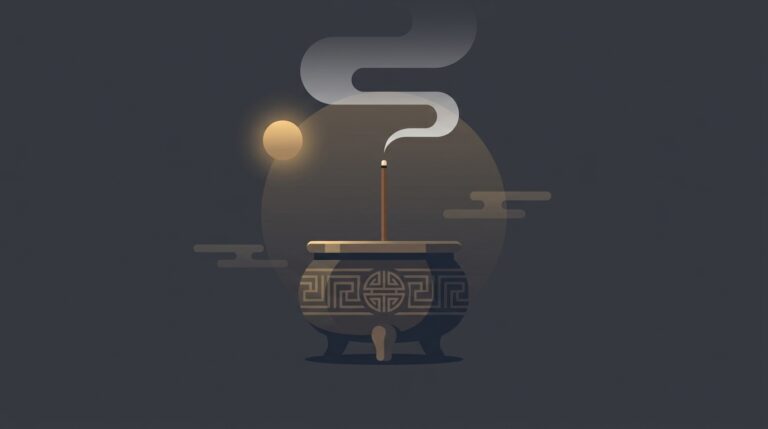
Imagine this: You are watching a poignant K-Drama, like My Mister. The protagonist walks into a quiet room filled with white chrysanthemums. Everyone is wearing black. The smell of burning incense is in the air. People are crying over a bowl of spicy red soup, and silence hangs heavy.
Suddenly, you get a message in real life. Your Korean co-worker’s parent has passed away, and you are invited to the funeral (장례식장 – jangnyesikjang).
Your heart drops. “What do I wear? What do I say? Do I say ‘Hello’ (안녕하세요)? How do I light the incense?”
Don’t panic. Attending a Korean funeral is highly ritualistic, and for a beginner, it can feel like navigating a minefield of etiquette. But here is a secret from my years of tutoring: at a Korean funeral, your actions matter much more than your words.
Today, I will guide you through the exact steps of burning incense (향 피우기) and the few, essential A1-level Korean phrases you need to show your deep respect.
Let’s step inside.
Phase 2: Core Expressions Deep Dive
At an A1 level, the goal is not to have a long conversation. It’s to show genuine sympathy. Here are the most essential “phrases”—including the most important one: Silence.
1. 삼가 고인의 명복을 빕니다
- Pronunciation: Samga goin-ui myeongbogeul bimnida. [Sounds like: sahm-gah go-een-euy myung-bohk-eul beem-nee-dah]
- Meaning: May the deceased rest in peace. (Literal: I respectfully pray for the bliss of the deceased in the afterlife.)
- K-Culture Moment: You will see this phrase written on white envelopes (containing condolence money) or on large flower wreaths sent by companies. If you are too nervous to speak, writing this on your envelope is perfect.
- Editor’s Insight: This is heavy, formal, and deeply respectful. It’s a mouthful, so don’t worry about perfect pronunciation. A slow, quiet delivery is what counts.
- Situation Spectrum:
- Casual (Friends): ⚠️ (Even with close friends, this formal phrase is used in writing)
- Semi-formal (Co-workers): ✅
- Formal (Elders/Boss): ✅
- 🤔 Think About It: Notice how long and formal this phrase is? In Korean culture, showing respect to the dead requires our highest, most elevated language. Does your native language change its formality when speaking about the deceased?
2. 위로의 말씀을 드립니다
- Pronunciation: Wiro-ui malsseumeul deurimnida. [Sounds like: wee-ro-euy mal-sseum-eul deu-reem-nee-dah]
- Meaning: I offer my words of comfort (I am so sorry for your loss).
- K-Culture Moment: When you hold your grieving friend’s hand at the funeral hall, looking them in the eye and saying this softly brings immense comfort.
- Editor’s Insight: This is slightly easier to say than expression #1 and feels very empathetic.
- Situation Spectrum:
- Casual (Friends): ✅
- Semi-formal (Co-workers): ✅
- Formal (Elders/Boss): ✅
- 🤔 Think About It: The verb ‘드리다’ (deurida) means ‘to humbly give.’ By using this, you are lowering yourself to offer comfort.
3. (침묵 – Silence)
- Pronunciation: Chim-muk
- Meaning: Silence, a deep nod, and a gentle pat on the shoulder.
- K-Culture Moment: In many K-Dramas, the truest friends don’t say a word. They just arrive, bow, hold hands, and sit together eating in silence.
- Editor’s Insight: In Korean funeral culture, words often fail. If you freeze and forget your Korean, simply holding the person’s hands and giving a sad, deep nod is 100% culturally appropriate and understood.
Phase 3: Textbook vs. Real Korean
When going to a funeral, the things you should not say are more important than what you do say. Let’s compare.
[Situation 1: Greeting the grieving family]
* 📖 Textbook Korean: 안녕하세요? (Annyeong haseyo? / Hello?)
* 🗣️ Real Korean: (Silence, or a deep bow) / “얼마나 상심이 크십니까” (How great your sorrow must be).
* 💡 Why the difference?: “Annyeong” literally means “peace and well-being.” It is deeply inappropriate to ask if someone is “at peace” when their loved one just died.
[Situation 2: Leaving the funeral hall]
* 📖 Textbook Korean: 안녕히 계세요! (Annyeonghi gyeseyo! / Goodbye!)
* 🗣️ Real Korean: 조심히 들어가세요 (Josimhi deureogaseyo / Please get home safely) or 들어가겠습니다 (Deureogagetseumnida / I will be leaving now).
* 💡 Why the difference?: A funeral is not a social gathering. You do not cheerfully say “Goodbye!” You quietly excuse yourself.
(Bottom Note: As an A1 learner, stick to silence or a soft “위로의 말씀을 드립니다” to be safe!)
Phase 4: Cultural Context — K-Culture Deep Dive
4-1. Non-verbal Element: The Art of Burning Incense (향 피우기)
This is the most critical moment. When you approach the altar, you will see incense sticks (향 – hyang). Here is how you use them using Korean Nunchi (social tact):
1. Approach the altar and bow your head slightly.
2. Pick up one incense stick with your right hand.
3. Support your right wrist/elbow with your left hand (this shows immense respect in Korea).
4. Light the incense using the candle provided.
5. NEVER blow it out with your mouth. Gently wave it with your hand to put out the flame so only the smoke remains.
6. Place it in the incense burner.
7. Take a step back and perform two and a half deep, traditional bows (절 – jeol) to the portrait, then one bow to the family.
4-2. K-Drama Connection: The 3-Day Funeral
If you watch K-Dramas, you’ll notice funerals don’t happen in a church hours later. They happen in a hospital basement for three straight days and nights. The family (상주 – sangju) stays awake, wearing black, greeting guests 24/7. Guests sit on the floor, drink Soju, and eat spicy beef soup (육개장). It is believed that keeping the hall loud and full of people comforts the family and prevents them from feeling lonely in their grief.
Phase 5: Real-Life Roleplay Scenario
Setting: It’s 9:00 PM on a Thursday. You are at the funeral hall of a university hospital. The room smells of incense. You are wearing a black suit. You approach the altar to pay your respects to the father of your Korean co-worker, Min-su.
Characters:
– YOU (The Reader): An A1 Korean learner, very nervous about making a mistake.
– Min-su (32, Co-worker): Wearing a traditional black funeral suit with an armband. He looks exhausted.
Dialogue:
(You walk up to the altar. You pick up the incense with your right hand, supporting it with your left, and light it.)
You: (Mind speaking) Okay, it’s lit. Now, how do I put the flame out?
🔀 Your Turn! What do you do?
– A) Blow on it like a birthday candle. (Puff!)
– B) Shake it vigorously like a magic wand.
– C) Gently wave your hand over it to fan out the flame.✅ Best Choice: C — Never blow on incense at a funeral. In Korean culture, human breath is considered “impure” for the spirits. Gently wave it out.
(You safely wave it out, place it in the sand, and bow deeply. Min-su approaches you.)
Min-su: 와 주셔서 감사합니다…
(Wa jusyeoseo gamsahamnida…)
[Thank you for coming…]
You: 위로의 말씀을 드립니다.
(Wiro-ui malsseumeul deurimnida.)
[I offer my words of comfort.]
Min-su: (Nods with teary eyes) 저쪽으로 가서 식사라도 하세요.
(Jeojjogeuro gaseo siksarado haseyo.)
[Please go over there and at least have a meal.]
You: 네, 감사합니다. 기운 내세요.
(Ne, gamsahamnida. Giun naeseyo.)
[Yes, thank you. Please stay strong.]
Phase 6: 10-Second Shadowing Drill
Let’s practice the most important phrase. Speak it slowly, with a soft, respectful voice.
😢 삼가 / 고인의 / 명복을 / 빕니다. (samga / goin-ui / myeongbogeul / bimnida.)
Tip: Drop your pitch slightly at the end. Do not smile while saying this!
Phase 7: K-Culture Mini Dictionary
1. 장례식 (Jangnyesik)
* Romanization: jangnyesik
* English: Funeral
* Context: Most modern Korean funerals take place in special halls attached to large hospitals.
2. 상주 (Sangju)
* Romanization: sangju
* English: Chief Mourner
* Context: Usually the eldest son or closest family member. They wear a special armband or a hairpin and stand by the altar to greet guests.
3. 육개장 (Yukgaejang)
* Romanization: yukgaejang
* English: Spicy Beef Soup
* Context: The standard meal served to all funeral guests. The red color is traditionally believed to ward off evil spirits.
4. 조의금 (Jouigeum)
* Romanization: jouigeum
* English: Condolence Money
* Context: Guests bring “condolence money” in a white envelope to help the family cover the massive costs of the 3-day funeral. Usually, it starts at 50,000 KRW.
Phase 8: Traveler’s Survival Kit
If you are traveling or working in Korea and suddenly need to attend a funeral, here is your emergency survival kit.
🆘 Survival Phrase #1
– 🇰🇷 “조의금 봉투 있나요?” (Jouigeum bongtu innayo?)
– 🗣️ Pronunciation: jo-euy-geum bong-too een-nah-yo?
– 📍 Where to use: Convenience stores (CU, GS25, 7-Eleven)
– 💡 Pro Tip: If you don’t have an envelope, you can buy “condolence envelopes” at any convenience store. Look for the white envelopes with Chinese characters on them!📌 Editor’s Travel Note
– Dress Code: If you don’t have a suit, dark and neat clothing (navy, dark grey) is acceptable. Avoid flashy jewelry, bright colors, and bare legs (wear black socks or stockings).
– Cash: You must put your condolence money in cash inside the envelope. Write your name vertically on the back, bottom-left corner.
Phase 9: Critical Thinking Corner — “One Step Deeper”
🧠 Think Deeper: Food & Identity (음식과 정체성)
Have you ever wondered why Korean families serve a full, warm meal of Yukgaejang (spicy beef soup), rice, and side dishes to every single guest at a funeral? In Korea, eating together (식구 – sikgu, meaning ‘mouths that eat together’) is the ultimate form of solidarity. At the saddest moment in life, Korean culture dictates that no one should cry on an empty stomach. The community gathers, eats, and shares the burden of grief. The physical warmth of the spicy soup is meant to heal the emotional coldness of loss.
💬 Your Turn: Does your culture serve a specific food at funerals? How do you comfort a grieving family in your home country? Share with us in the comments!
Phase 10: FAQ & Common Mistakes
Q: “I am not good at doing the deep Korean bow on the floor. What should I do?”
A: Don’t worry! For foreigners (or those with physical limitations, or depending on one’s religion), a silent, deep standing bow (bending at the waist for a few seconds) is completely acceptable and deeply respected.
Q: “Can I clink glasses with my friends while drinking Soju at the funeral hall?”
A: Absolutely NOT. This is a massive taboo. You can drink at a funeral, but you never say “Cheers” (짠 – jjan) or clink glasses.
❌ Common Mistake #1: Saying “안녕하세요” (Hello/Are you in peace) to the grieving family.
✅ Do this instead: Give a silent, respectful bow. Silence is golden here.
Phase 11: Summary & Action Items
- One-Liner Summary: At a Korean funeral, use both hands, never blow out the incense, and remember that respectful silence is your best Korean vocabulary.
-
Action Mission:
- 🥉 Bronze (Solo): Stand in front of a mirror and practice bowing your head silently and respectfully.
- 🥈 Silver (Online): Write “삼가 고인의 명복을 빕니다” in your notebook to practice the spelling.
- 🥇 Gold (Action): Next time you watch a K-Drama with a funeral scene, spot the characters holding their right arm with their left hand while lighting the incense!
Phase 12: Quiz — Interactive Challenge
1. Situational Judgment: You light the incense stick at the altar. It has a small flame. How do you put it out?
– A) Blow on it gently.
– B) Wave it gently with your hand.
– C) Dip it in the soup.
2. True or False – K-Culture Edition:
“It is perfectly fine to say ‘안녕하세요 (Annyeong haseyo)’ when greeting the grieving family at a funeral.”
– True / False
(Answers below!)
Click to reveal answers
1. B – Never blow it out with your mouth! Waving it with your hand is the correct etiquette.
2. False – ‘Annyeong’ implies peace and wellness, which is inappropriate for someone who just lost a loved one. Use silence or formal condolences instead.
Frequently Asked Questions (FAQ)
Q: What does "삼가 고인의 명복을 빕니다" mean in Korean and how do you pronounce it?
A: In Korean, "삼가 고인의 명복을 빕니다" is pronounced [Samga goin-ui myeongbogeul bimnida. [Sounds like: sahm-gah go-een-euy myung-bohk-eul beem-nee-dah] and means: May the deceased rest in peace. (Literal: I respectfully pray for the bliss of the deceased in the afterlife.)
Q: What does "위로의 말씀을 드립니다" mean in Korean and how do you pronounce it?
A: In Korean, "위로의 말씀을 드립니다" is pronounced [Wiro-ui malsseumeul deurimnida. [Sounds like: wee-ro-euy mal-sseum-eul deu-reem-nee-dah] and means: I offer my words of comfort (I am so sorry for your loss).
Q: What does "(침묵 - Silence)" mean in Korean and how do you pronounce it?
A: In Korean, "(침묵 - Silence)" is pronounced [Chim-muk] and means: Silence, a deep nod, and a gentle pat on the shoulder.







