

Phase 1: Empathy (Immersive Opening)
Hello! Daily Hangul Editor here.
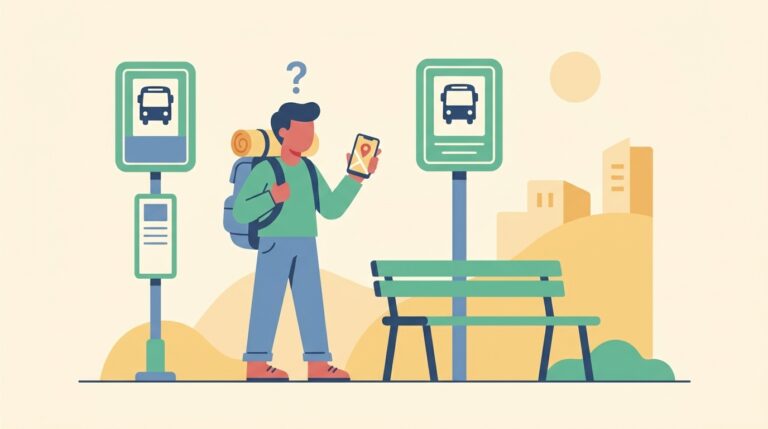
Imagine this: You are standing at a bustling intersection in Gangnam. You’ve just watched your favorite K-Drama where the protagonist dramatically catches the last bus, staring romantically out the window. Now, it’s your turn to ride the famous Seoul bus to get to a K-Pop pop-up store. You look at the bus stop sign, and… pure panic. There are blue buses, green buses, red buses, and numbers ranging from 01 to 9401. Your map app tells you to take a bus, but the screen is confusing, and the buses are zooming by like Formula 1 race cars!
You turn to a friendly-looking local waiting next to you. You want to ask, “Which bus do I take?” but the textbook Korean you learned suddenly vanishes from your brain.
Don’t worry! This is a survival moment every single traveler faces in Korea. Knowing how to ask for the right bus number won’t just save you from ending up on the opposite side of Seoul—it will make you look like a total insider.
This guide is built from the real-life “bus-stop-panic” moments of my A1 students. Let’s learn the magic phrase that will get you to your destination safely!
Phase 2: Core Expression Deep Dive
1. 몇 번 버스 타요? (Which bus do I take?)
- Pronunciation: [Myeot beon beo-seu ta-yo?]
- Myeot sounds like “Me” + “Yacht” said very fast.
- beon sounds like a hamburger “bun”.
- beo-seu is just the English word “bus” but spoken with a Korean accent (no sharp ‘s’ sound, end with that ‘eu’ sound—like the disgusted noise you make when stepping in gum: “eugh”).
- Meaning: Literal: “What number bus do you ride?” / Real nuance: “Which bus should I take?”
- K-Culture Moment: In K-Dramas, when friends are wrapping up a late-night drinking session (회식) and waiting at the station together, one friend might casually ask the other, “너 몇 번 타?” (Which number are you taking?) to see if they can ride together.
- Editor’s Insight: Koreans organize their bus system strictly by numbers. Nobody asks, “Does this go to the Han River?” First, they ask for the number. This phrase is short, sweet, and gets straight to the point.
- Situation Spectrum:
- Friends (Casual): ✅ (Drop the ‘yo’: 몇 번 타?)
- Strangers/Colleagues (Semi-formal): ✅ (몇 번 타요?)
- Formal/Elders (Formal): ⚠️ (Better to use polite openers, which we’ll cover!)
- 🤔 Think About It: Why does the Korean language drop the subject “I” so often? In English, you must say “Which bus do I take?” But in Korean, the context (you standing there looking lost) makes it obvious. How often do you drop pronouns in your native language?
2. 이거 [장소] 가요? (Does this go to [Place]?)
- Pronunciation: [I-geo (Jang-so) ga-yo?]
- I-geo sounds like “Ego” (but with a short ‘o’).
- ga-yo sounds like “guy-yo”.
- Meaning: Literal: “This [Place] go?” / Real nuance: “Does this bus go to [Place]?”
- K-Culture Moment: Picture a busy street food market (like Gwangjang Market). You have your spicy rice cakes (Tteokbokki) in hand, but you need to get to Seoul Station. You point at the approaching bus and urgently ask the person next to you, “이거 서울역 가요?” (Does this go to Seoul Station?).
- Editor’s Insight: This is your ultimate survival phrase. Just point at the bus, say “Igeo” (This), add your destination, and say “ga-yo?” (go?). It works 100% of the time.
- Situation Spectrum:
- Friends (Casual): ✅
- Strangers/Colleagues (Semi-formal): ✅
- Formal/Elders (Formal): ⚠️
Phase 3: Textbook vs. Real Korean
[Situation 1: Asking which bus to take]
* 📖 Textbook Korean: 어떤 버스를 타야 합니까? (Eotteon beoseureul taya hamnikka? – Which bus must I ride?)
* 🗣️ Real Korean: 몇 번 타요? (Myeot beon tayo? – What number do I ride?)
* 💡 Why so different?: Textbooks teach full, grammatically perfect sentences. Real Koreans prioritize speed and efficiency (the famous ‘Ppalli-Ppalli’ culture). If you are at a bus stop, the word “bus” is already implied!
[Situation 2: Getting someone’s attention at the bus stop]
* 📖 Textbook Korean: 실례합니다. (Sillyehamnida – Excuse me.)
* 🗣️ Real Korean: 저기요! (Jeogiyo! – Over there! / Excuse me!)
* 💡 Why so different?: “Sillyehamnida” is quite formal and a bit stiff. “Jeogiyo” literally means “Over there,” but in Korea, it is the universal, culturally accepted way to say “Excuse me, please look at me, I need help/want to order!”
Bottom Note: As an A1 beginner, don’t worry about complex honorifics at the bus stop. Just start with “저기요” (Jeogiyo) and use the simple “-요” (-yo) endings. It’s perfectly polite!
Phase 4: Cultural Context — K-Culture Deep Dive
4-1. Non-Verbal Elements: The Art of the Map Point
When you ask “몇 번 버스 타요?” to a stranger, non-verbal cues are your best friend.
* Do: Hold up your phone showing the map (Naver Map or Kakao Map). Look slightly confused but eager.
* Don’t: Stare intensely into their eyes. Koreans appreciate a softer gaze when asking for favors.
* Nunchi (눈치) Tip: If the person has both earphones in and is deeply focused on their K-Drama, it might be better to ask someone else. Reading the room is key!
4-2. The Reality of the “K-Bus” Experience
If you’ve watched K-Dramas, you might think Korean buses are peaceful places where protagonists sit at the very back, listening to acoustic indie music while looking out the window at the Han River.
The Reality? Seoul bus drivers are incredibly skilled, but they drive fast. This reflects Korea’s ‘빨리빨리’ (Ppalli-ppalli / Hurry-hurry) culture. You must flag the bus down by stepping slightly forward and looking at the driver. As soon as you get on, hold onto a handle immediately! The bus will not wait for you to find a cozy seat before it starts moving. And when your stop is coming up, you must press the bell and stand near the door before the bus completely stops.
Phase 5: Real-Life Roleplay Scenario
Setting: Friday evening, 6:30 PM. A crowded bus stop in Hongdae. The street is buzzing with indie buskers and students. You want to go to a K-Pop album store in Myeongdong, but your map app is confusing. You decide to ask a university student standing next to you.
Characters:
* YOU: A K-Culture fan on your first trip to Seoul.
* Minji (20s): A friendly local student holding an iced Americano.
Dialogue:
YOU: 저기요!
(Jeogiyo!)
[Translation] Excuse me!
(Stage Direction: You politely hold up your phone showing the map)
Minji: 네?
(Ne?)
[Translation] Yes?
YOU: 명동 가요. 몇 번 버스 타요?
(Myeongdong gayo. Myeot beon beoseu tayo?)
[Translation] I’m going to Myeongdong. Which bus do I take?
Minji: 아, 명동이요? 음… 604번 타세요.
(Ah, Myeongdong-iyo? Eum… yug-gong-sa-beon taseyo.)
[Translation] Ah, Myeongdong? Hmm… Take number 604.
YOU: 604번이요? 여기서 타요?
(Yug-gong-sa-beon-iyo? Yeogiseo tayo?)
[Translation] Number 604? Do I take it here?
Minji: 네, 여기서 타요.
(Ne, yeogiseo tayo.)
[Translation] Yes, you take it here.
(Stage Direction: Suddenly, a green bus zooms toward the stop. Minji points at it.)
Minji: 앗, 버스 와요! 저거 타세요!
(At, beoseu wayo! Jeogeo taseyo!)
[Translation] Oh, the bus is coming! Take that one!
🔀 Your Turn! How do you reply before running to the bus?
* A) “안녕히 계세요!” (Annyeonghi gyeseyo! – Goodbye!)
* B) “진짜요? 대박!” (Jinjjayo? Daebak! – Really? Awesome!)
* C) “아, 감사합니다!” (Ah, gamsahamnida! – Ah, thank you!)
✅ Best Choice: C — It’s the most natural and polite way to quickly thank a stranger who helped you.
⚠️ Choice B Analysis: “Daebak” is fun and very K-Drama, but usually reserved for talking to yourself or close friends when you’re shocked. It might sound a bit funny to a stranger in a rushed situation!
Phase 6: 10-Second Shadowing Drill
Practice this out loud so your mouth muscles get used to the rhythm!
🥺 저기요! / 명동 가려면 / 몇 번 버스 / 타요?
(Jeogiyo! / Myeongdong garyeomyeon / myeot beon beoseu / tayo?)
Translation: Excuse me! To go to Myeongdong, which bus do I take?
Editor’s tip: Pause slightly at the slashes (/). Put the emphasis on “Myeot beon” (Which number)!
Phase 7: K-Culture Mini Dictionary
1. T-money (티머니)
* Pronunciation: ti-meo-ni
* English: Transportation Card
* Context: The holy grail of Korean travel. You can use it for buses, subways, and even to buy snacks at convenience stores. Tap it on the reader (단말기) when you get on AND when you get off!
2. 환승 (Hwanseung)
* Pronunciation: hwan-seung
* English: Transfer
* Context: Korea offers a magical free transfer system. If you tap off the bus and get on a subway (or another bus) within 30 minutes, the transfer is free or heavily discounted.
3. 눈치 (Nunchi)
* Pronunciation: nun-chi
* English: Social situational awareness
* Context: When waiting in line for the bus, having “nunchi” means noticing where the invisible line forms and not cutting in front of grandmas.
4. 빨리빨리 (Ppalli-ppalli)
* Pronunciation: ppal-li-ppal-li
* English: Hurry hurry
* Context: The driving force of Korean society. It’s why buses arrive precisely on time and why you shouldn’t block the bus door while searching for your T-money card in your bag.
Phase 8: Traveler Survival Kit
If you are riding the bus in Korea, save these expressions to your phone right now!
🆘 Survival Expression #1
* 🇰🇷 “내려주세요!”
* 🗣️ Pronunciation: Naeryeo-juseyo!
* 📍 Meaning: Please let me off!
* 💡 Pro Tip: Sometimes the bus is too crowded to reach the stop bell, or the driver doesn’t see you at the back door. Shout this loudly, and the driver will open the doors.
🆘 Survival Expression #2
* 🇰🇷 “버스 정류장이 어디예요?”
* 🗣️ Pronunciation: Beoseu jeongnyujang-i eodiyeyo?
* 📍 Meaning: Where is the bus stop?
🆘 Survival Expression #3
* 🇰🇷 “이거 서울역 가요?”
* 🗣️ Pronunciation: Igeo Seoul-yeok gayo?
* 📍 Meaning: Does this go to Seoul Station? (Replace ‘Seoul-yeok’ with your destination).
📌 Editor’s Travel Note:
* Must-Have Apps: Google Maps is notoriously unreliable for walking/transit in Korea. Download Naver Map or KakaoMap. They even show you exactly where the bus is in real-time!
* Bus Colors:
* Blue (Main city routes)
* Green (Shorter routes connecting to subways)
* Red (Express buses to the suburbs)
* Yellow (Circular routes within downtown)
Phase 9: Critical Thinking Corner — “One Step Deeper”
🧠 Think Deeper: Media vs Reality (The Empty Bus Illusion)
In almost every romantic K-Drama, there is a scene where the main characters sit side-by-side on the back row of a completely empty bus at night, having a deep conversation while Seoul’s neon lights reflect on their faces. While late-night buses can be quiet, the reality of daytime Seoul transit is very different. It’s fast-paced, highly efficient, and usually packed with commuters. This difference highlights a contrast between the idealized, slow-paced romance we crave in media, and the intense, high-speed reality of modern South Korean city life.
💬 Your Turn: Does public transportation in your country look exactly like it does in your local movies? Let me know in the comments!
Phase 10: FAQ & Mistake Prevention
- Q: Can I just show them my phone screen instead of speaking?
- A: Yes! Pointing to your screen and saying “여기로 가요?” (Yeogiro gayo? – Does it go here?) is incredibly common and perfectly fine.
- Q: Should I say “Hello” and “Thank you” to the bus driver?
- A: It’s not strictly required because they are very focused on driving, but many locals do say a quick “안녕하세요” (Annyeonghaseyo) when tapping their card. It’s a nice touch!
❌ Common Mistake #1: Forgetting to tap OFF the bus.
✅ Do This Instead: Always tap your T-money card on the machine near the back door before you exit. If you don’t, you’ll be charged a penalty fee on your next ride, and you’ll lose the free transfer discount!
❌ Common Mistake #2: Standing at the bus stop and expecting the bus to stop automatically.
✅ Do This Instead: If you are the only person at the stop, step slightly forward and make eye contact with the driver, or give a tiny nod. If they think nobody is waiting, they might just zoom past!
Phase 11: Summary & Action Items
One-Liner Summary: To find your way, just point at your map and ask, “몇 번 버스 타요?” (Myeot beon beoseu tayo?).
Action Mission:
* 🥉 Bronze (Solo): Stand in front of your mirror and practice saying “저기요! 몇 번 버스 타요?” 3 times with confidence.
* 🥈 Silver (Online): Find a photo of a Seoul bus stop online. Comment on our community board with the number of the bus you would “virtually” take today!
* 🥇 Gold (Real Life): The next time you are in Korea (or at a Korean supermarket), approach a staff member with “저기요!” before asking a question.
🎬 K-Culture Mission:
Watch one episode of a K-Drama set in modern Seoul. Can you spot a Blue or Green bus in the background? Bonus points if you see a character running after one!
Phase 12: Quiz — Interactive Challenge
1. Situational Judgment:
You are at a bus stop, and you want to know if the approaching blue bus goes to Gangnam. You catch the eye of a student. What do you say?
* A) 버스가 빠릅니다. (Beoseuga ppareumnida – The bus is fast.)
* B) 이거 강남 가요? (Igeo Gangnam gayo? – Does this go to Gangnam?)
* C) 저는 버스를 좋아해요. (Jeoneun beoseureul joahaeyo – I like buses.)
2. True or False — K-Culture Edition:
* “If you pay for the bus with cash, you still get a free transfer to the subway.” (True / False)
3. Fill in the Blank:
When you need to get someone’s attention politely in Korea, you shouldn’t shout “Hey!”. Instead, you say: “________! 몇 번 버스 타요?”
(Answers: 1: B, 2: False – You need a T-money card for transfers!, 3: 저기요 (Jeogiyo))
Frequently Asked Questions (FAQ)
Q: What does "몇 번 버스 타요? (Which bus do I take?)" mean in Korean and how do you pronounce it?
A: In Korean, "몇 번 버스 타요? (Which bus do I take?)" is pronounced [Myeot beon beo-seu ta-yo?] and means: a key conversational Korean expression covered in this lesson.
Q: What does "이거 [장소] 가요? (Does this go to [Place]?)" mean in Korean and how do you pronounce it?
A: In Korean, "이거 [장소] 가요? (Does this go to [Place]?)" is pronounced [I-geo (Jang-so] and means: a key conversational Korean expression covered in this lesson.







