

Phase 1: Empathy
Hello, C2 learners! It’s your lead editor from Daily Hangul.
Let’s set the scene: You’re watching an intense Korean office drama like Misaeng or My Liberation Notes. The protagonist is standing in front of their boss, getting yelled at for something completely outside their job description—like picking up the boss’s dry cleaning. The subtitles simply read, “This isn’t fair.” But as an advanced learner living or working in Korea, you know the cultural weight in the air is much heavier than those three words.
In 2019, South Korea implemented the Workplace Anti-Bullying Law (직장 내 괴롭힘 금지법). It was a massive cultural shift in a society deeply rooted in hierarchy. If you are an expat working in a Korean company, navigating these waters requires more than just textbook Korean. You need to know the fine line between strict management and illegal harassment, and more importantly, how to articulate your boundaries without destroying your career.
This guide isn’t just about vocabulary; it’s a survival manual based on real questions from expats who have sat in Seoul corporate offices wondering, “Wait, is this normal, or is this illegal?”
Phase 2: Deep Dive into Core Expressions
At the C2 level, we move past “I am angry” and dive into the socio-legal vocabulary that defines modern Korean corporate culture.
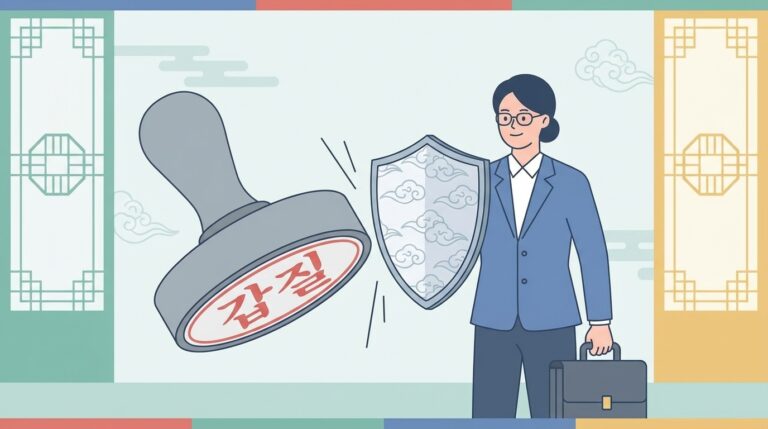
1. 갑질 (Gapjil)
- Pronunciation: [gapjil] – ‘Gap’ sounds like the sharp ‘gop’ in ‘gospel’, and ‘jil’ sounds like the chilling breeze of ‘chill’.
- Meaning: (Literal) ‘Gap’ behavior / (Real Nuance) Abuse of power, bossing someone around unjustly.
- K-Culture Moment: You’re at a company dinner (회식). A senior executive forces a junior employee to drink three shots of Soju in a row. The younger colleagues exchange meaningful glances and whisper, “Ah, another gapjil…”
- Editor’s Insight: The word comes from contracts where ‘Gap’ (갑) is the dominant party and ‘Eul’ (을) is the contractor. Adding ‘-jil’ (a slightly derogatory suffix for an action) creates a word so powerful it has been covered by international media like the BBC and NYT.
- Situation Spectrum:
- Close Friends (Casual): ✅ (Playfully: “야, 너 지금 갑질하냐?” – Hey, are you power-tripping right now?)
- Coworkers (Semi-formal): ⚠️ (Use carefully when venting behind closed doors)
- Boss/Seniors (Formal): 🚫 (Never say this to the perpetrator’s face unless you are ready for war!)
- 🤔 Think About It: Why did a technical contract term (Gap/Eul) become mainstream slang in Korea? What does this say about the power dynamics in Korean society compared to your home country?
2. 선을 넘다 (Seoneul neomda)
- Pronunciation: [seoneul neomda] – ‘Seon’ like ‘sun’, ‘neom’ like ‘num’ in number.
- Meaning: (Literal) To cross the line / (Real Nuance) Going too far, acting inappropriately beyond accepted boundaries.
- K-Culture Moment: A boss comments on your weight or asks why you aren’t married yet. In the past, people just smiled awkwardly. Now, Gen Z workers will text their friends: “부장님 오늘 선 세게 넘으시네” (The manager is crossing the line hard today).
- Editor’s Insight: This phrase is brilliant because it implies there is an invisible, socially agreed-upon boundary. It’s slightly less aggressive than accusing someone of ‘Gapjil’, but still clearly states a violation of respect.
- Situation Spectrum:
- Close Friends (Casual): ✅
- Coworkers (Semi-formal): ✅
- Boss/Seniors (Formal): 🚫
- 🤔 Think About It: In hierarchical cultures, the ‘line’ for the boss is much further out than the ‘line’ for the employee. How is the younger Korean generation redrawing these lines?
3. 업무상 적정 범위를 넘다 (Eobmusang jeokjeong beomwireul neomda)
- Pronunciation: [eommusang jeokjeong beomwireul neomda]
- Meaning: (Literal) Exceeding the appropriate scope of work.
- K-Culture Moment: This is the exact legal phrasing used when filing a report to the Ministry of Employment and Labor (고용노동부). If you write this in an official HR email, it sends a chilling signal that you know your legal rights.
- Editor’s Insight: This is pure C2 territory. It’s cold, objective, and legally binding. You don’t use this to vent; you use this when you are taking action.
- Situation Spectrum:
- HR / Legal Reports (Formal): ✅
- Daily Conversation: 🚫 (Too robotic)
Phase 3: Textbook vs. Real Korean
Let’s look at how language shifts from the HR manual to the company break room.
[Venting about Unfair Treatment]
* 📖 Textbook: 저는 부당한 대우를 받았습니다. (I received unfair treatment.)
* 🗣️ Real Korean: 아, 진짜 부장님 갑질 장난 아니에요. 노동청 각이야. (Ah, the manager’s power trip is no joke. It’s totally an angle for the labor board.)
* 💡 Why the difference?: The slang ‘각’ (angle/setup) comes from gaming/billiards, used by Millennials and Gen Z to mean “the conditions are right for [action].”
[Setting Boundaries]
* 📖 Textbook: 그것은 제 업무가 아닙니다. (That is not my job.)
* 🗣️ Real Korean: 죄송하지만, 그건 제 업무 범위를 벗어난 것 같습니다. (I’m sorry, but it seems that falls outside the scope of my duties.)
* 💡 Why the difference?: In Korea, flatly saying “Not my job” is considered incredibly rude (싸가지 없다). Wrapping the refusal in “It seems” (것 같습니다) softens the blow while maintaining a firm boundary.
(Bottom Note: As a C2 learner, mastering the art of the ‘soft refusal’ using indirect phrasing is crucial for surviving Korean office politics without making enemies.)
Phase 4: K-Culture Deep Dive
4-1. Non-Verbal Elements: The Art of the ‘Sigh’ and ‘Recording’
In a Korean office, silence is a language. When a boss is crossing the line, a junior might not argue back; instead, they will let out a highly calibrated, barely audible sigh (한숨), accompanied by downcast eyes.
However, here is a critical, real-world tip: 녹취록 (Voice Recordings). Under Korean law, recording a conversation is completely legal as long as you are a participant in that conversation. If you are experiencing Gapjil, the most culturally authentic (and legally sound) thing you can do is discreetly hit ‘record’ on your Galaxy phone. It’s so common that “recording evidence” is a major plot point in almost every Korean office and legal drama.
4-2. The “Saida” (사이다) Evolution in K-Dramas
If you watch early 2000s K-Dramas, the protagonist usually endures harassment silently, eventually winning the boss’s respect through sheer hard work. Fast forward to recent hits like The Glory or Agency. Today’s audiences demand 사이다 (Saida)—named after the clear, fizzy Sprite-like drink. It means a refreshing, satisfying moment of justice. When a character brilliantly uses the Anti-Bullying Law to take down a toxic manager, the viewership ratings skyrocket. It reflects the MZ generation’s absolute refusal to tolerate the toxic loyalty their parents endured.
Phase 5: Real-Life Roleplay Scenario
Setting: Tuesday, 10:30 AM. The company pantry. You are grabbing a mix-coffee. Your Korean colleague, Minji, walks in looking exhausted. Her phone keeps buzzing.
Characters:
* YOU: An expat manager who has been working in Seoul for 2 years.
* Minji (28): A junior colleague. Hardworking, but severely stressed by the team leader.
Dialogue:
Minji: 하아… 대리님, 저 진짜 퇴사할까 봐요. 주말에도 팀장님이 카톡으로 업무 지시를 하세요.
(Haa… Daerinim, jeo jinjja toesahalkka bwayo. Juumaredo timjangnimi katogeuro eommu jisireul haseyo.)
[Sigh… Manager, I think I really might quit. The Team Leader keeps giving me work instructions via KakaoTalk on weekends too.]
YOU: 주말에요? 그건 좀 선 넘으셨네요. 급한 일이었어요?
(Juumareyo? Geugeon jom seon neomeusyeonneyo. Geupan irieosseoyo?)
[On the weekend? That’s crossing the line a bit. Was it urgent?]
Minji: 아니요, 그냥 월요일에 해도 되는 서류 정리요. 안 하면 눈치 주시니까 미치겠어요.
(Aniyo, geunyang woryoire haedo doeneun seoryu jeongriyo. An hamyeon nunchi jusinikka michigesseoyo.)
[No, just document filing that could be done on Monday. It drives me crazy because he gives me nunchi (judging looks) if I don’t do it.]
🔀 Your Turn! How do you advise Minji?
– A) “한국 회사가 다 그렇죠. 그냥 참으세요.” (That’s how all Korean companies are. Just endure it.)
– B) “팀장님께 업무 외 시간 연락은 자제해 달라고 직접 말씀하세요.” (Tell the team leader directly to refrain from contacting you outside work hours.)
– C) “그거 직장 내 괴롭힘이에요. 일단 카톡 다 캡처해 두세요.”✅ Best Choice: C — “That’s workplace harassment. First, take screenshots of all the KakaoTalk messages.”
Reason: Choice A is outdated and unhelpful. Choice B is structurally impossible in Korea; a junior cannot easily dictate rules to a senior without massive backlash. Choice C provides practical, legally sound advice (evidence gathering) while validating her struggle.
Phase 6: 10-Second Shadowing Drill
Channel your inner confident professional. You are standing your ground politely but firmly.
😤 죄송하지만 / 이 지시는 / 업무상 적정 범위를 / 넘은 것 같습니다.
(Joesonghajiman / i jisineun / eobmusang jeokjeong beomwireul / neomeun geot gatseumnida.)
Director’s Note: Don’t yell. Keep your voice steady, slightly lower pitch. Pause exactly at the slashes (/). The power comes from your calm confidence, not volume.
Phase 7: K-Culture Mini Dictionary
| 한국어 | Romanization | English | Cultural Context |
|---|---|---|---|
| 직장 내 괴롭힘 | jikjang nae goerophim | Workplace harassment | Legally defined in 2019, covering everything from verbal abuse to exclusion. |
| 갑질 | gapjil | Abuse of power | From contract terms; describes anyone using their higher status to exploit others. |
| 사이다 | saida | Refreshing feeling | Slang for a satisfying resolution to an unfair situation. |
| 눈치를 주다 | nunchireul juda | To silently pressure/judge | Creating a hostile environment through glares, sighs, or passive-aggressive behavior. |
| 노동청 | nodongcheong | Labor Board | The ultimate boss fight for HR disputes in Korea. |
Phase 8: Expat & Traveler Survival Kit
Even if you aren’t in a corporate office, understanding these boundary-setting concepts is vital. If you face aggressive service, an unfair landlord, or a hostile encounter, you need to assert your rights.
🆘 Survival Phrases for Establishing Boundaries
– 🇰🇷 “이건 좀 아니지 않나요?” (Igeon jom aniji annayo?)
– 🗣️ Meaning: Isn’t this a bit much? / This isn’t right. (A culturally natural way to express strong disagreement without swearing).
– 🇰🇷 “말씀 함부로 하지 마세요.” (Malsseum hamburo haji maseyo.)
– 🗣️ Meaning: Watch your language / Don’t speak to me so disrespectfully.
– 📍 Where to use: With a rude taxi driver, an aggressive landlord, or a scammy vendor.📌 Editor’s Real-Life Note
– Recording Evidence: Just like in the office, if you feel threatened or scammed (e.g., real estate disputes), start voice recording on your phone immediately. It is your strongest shield in Korea.
– The Power of “CCTV”: If an incident occurs on the street or in a shop, mention checking the CCTV. South Korea is heavily blanketed by CCTVs, and simply mentioning it usually diffuses false accusations.
Phase 9: Critical Thinking — “One Step Deeper”
🧠 Think Deeper: Language & Power (언어와 권력)
Korean honorifics (높임말) and casual speech (반말) are beautiful reflections of respect, but they also inherently encode a strict hierarchy into every breath you take. Historically, this linguistic imbalance made Gapjil incredibly easy—a boss speaks down, the junior must speak up. It created a psychological barrier to fighting back. The implementation of the Anti-Bullying Law was revolutionary because it was a structural, legal intervention attempting to override centuries of linguistic and cultural hierarchy. By defining “crossing the appropriate scope of work,” the law gave juniors a sword to fight back when the language itself only gave them a shield.
💬 Your Turn: Does your native language have built-in hierarchies? How does your culture address the imbalance of power between employers and employees? Let me know in the comments!
Phase 10: FAQ & Avoiding Common Mistakes
Q: Can I just tell my boss “부장님 갑질하지 마세요!” (Manager, stop your Gapjil!)?
A: NO! While it might feel like a Saida moment in your head, using the word ‘갑질’ directly to a superior will instantly paint you as aggressive and disrespectful, undermining your own case. Instead, document everything and use objective terms like “업무 범위” (scope of work) when confronting them or reporting.
Q: Is it really okay to secretly record conversations in Korea?
A: Yes, with a caveat. Under the Protection of Communications Secrets Act, recording a conversation is legal only if you are an active participant in that conversation. If you leave your phone recording in a room and walk out, that is illegal wiretapping.
❌ Common Mistake #1: Threatening to sue right away.
✅ Do this instead: In Korean corporate culture, internal mediation (고충처리위원회 – Grievance Committee) is culturally preferred first. Going straight to external lawsuits without internal escalation can legally and culturally complicate your position.
Phase 11: Summary & Action Items
One-Liner Summary: Understanding the Anti-Bullying Law (직장 내 괴롭힘 금지법) and concepts like Gapjil allows you to navigate the complex power dynamics of Korean society safely and confidently.
Your Action Mission:
– 🥉 Bronze (Solo): Look up the phrase “업무상 적정 범위를 넘다” and read it aloud three times to get comfortable with the formal cadence.
– 🥈 Silver (Online): Find a YouTube clip of a Korean drama office scene (like Misaeng) and try to identify one instance of Gapjil in the comments.
– 🥇 Gold (Real Life): Check your own company’s intranet or HR portal for their specific “직장 내 괴롭힘 신고” (Workplace Harassment Reporting) procedures. Just knowing where it is gives you peace of mind!
K-Culture Mission: Watch the K-Drama The Glory or My Mister and observe how the characters navigate the invisible “lines” (선) of hierarchy. Notice when someone explicitly points out, “You crossed the line.”
Phase 12: Interactive Challenge (Quiz)
1. Situational Judgment: Your senior coworker tells you to cancel your weekend plans to help them move apartments. You want to subtly point out they are crossing the line. What is the most natural C2-level response?
A) 너 나한테 갑질해? (Are you doing gapjil to me?)
B) 선배님, 이건 부당한 대우입니다. (Senior, this is unfair treatment.)
C) 선배님, 퇴근 후 개인적인 부탁은 좀 선 넘으신 거 아닌가요? (Senior, isn’t asking for personal favors after work crossing the line a bit?)
2. True or False – K-Culture Edition:
In South Korea, it is strictly illegal to record a face-to-face conversation with your boss unless you ask for their permission first.
3. Fill in the blank:
When MZ generation workers feel a situation is perfectly set up to report to the labor board, they say: “이건 노동청 ( _____ )이야!”
(Click below or scroll down for answers!)
View Answers
- C (A is too aggressive and uses banmal. B sounds like a robot translating a textbook. C uses natural slang ‘선 넘다’ while maintaining polite form.)
- False (It is legal to record as long as YOU are part of the conversation. One-party consent is a huge part of Korean office survival!)
- 각 (gak) (Meaning ‘angle’ or ‘setup’).
Frequently Asked Questions (FAQ)
Q: What does "갑질 (Gapjil)" mean in Korean and how do you pronounce it?
A: In Korean, "갑질 (Gapjil)" is pronounced [gapjil] and means: (Literal) 'Gap' behavior / (Real Nuance) Abuse of power, bossing someone around unjustly.
Q: What does "선을 넘다 (Seoneul neomda)" mean in Korean and how do you pronounce it?
A: In Korean, "선을 넘다 (Seoneul neomda)" is pronounced [seoneul neomda] and means: (Literal) To cross the line / (Real Nuance) Going too far, acting inappropriately beyond accepted boundaries.
Q: What does "업무상 적정 범위를 넘다 (Eobmusang jeokjeong beomwireul neomda)" mean in Korean and how do you pronounce it?
A: In Korean, "업무상 적정 범위를 넘다 (Eobmusang jeokjeong beomwireul neomda)" is pronounced [eommusang jeokjeong beomwireul neomda] and means: (Literal) Exceeding the appropriate scope of work.







