

Survived the Korean Real Estate Maze? How to ‘Pay the Balance’ Like a Local!
Phase 1: Empathy (The K-Culture Cold Open)
Hello! This is your Daily Hangul Editor.
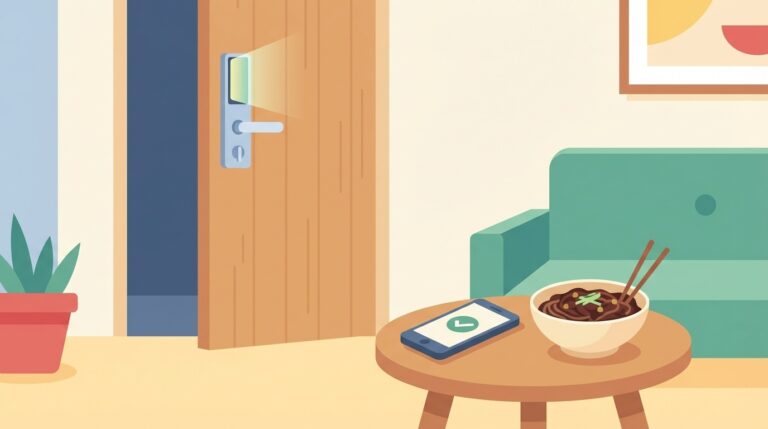
You’ve seen it in countless K-Dramas: the main character finally signs the contract for their cozy rooftop room. They open the door, smile at the Seoul skyline, and immediately order Jajangmyeon (black bean noodles) to celebrate.
But wait… the dramas always skip the most stressful part! Before you get the keys—or rather, the passcode—to your new Korean home, you have to face the ‘Final Boss’ of Korean real estate: Paying the Balance (잔금 치르기).
Imagine sitting in the real estate agent’s office, staring at your banking app with trembling thumbs. You need to transfer millions of Won, and the agent is looking at you expectantly. If you don’t know the right words, this simple transaction can turn into a sweaty, awkward silence.
Don’t worry! As someone who has helped dozens of expats navigate Seoul’s real estate jungle, I’m here to give you the exact survival phrases you need. Let’s make your moving day as smooth as a K-Drama montage!
Phase 2: Core Expressions Deep Dive
Here are the 3 lifesaver phrases you must know on moving day.
1. 잔금 보냈어요. (I sent the balance.)
- Pronunciation: [Jangeum bonaesseoyo] – ‘Jan’ sounds like the name Jan, and ‘geum’ rhymes with gum.
- Meaning: I transferred the remaining money.
- K-Culture Moment: You will say this while physically turning your smartphone screen to show the agent the “Transfer Complete” (이체 완료) screen. It’s a classic Korean gesture of transparency!
- Editor’s Insight: ‘잔금’ (Jangeum) means ‘remaining balance’. In Korea, you pay a deposit (계약금) first, and the rest (잔금) on the day you move in. Saying this confidently shows you understand the system.
- Situation Spectrum:
- Close Friends (Casual): ⚠️ (Friends don’t usually deal with your housing balance)
- Real Estate Agent (Semi-formal): ✅
- Landlord (Formal): ✅ (Usually, you add ‘확인 부탁드립니다’ – Please check)
- 🤔 Think About It: Why do Koreans prefer bank transfers for huge amounts rather than using bank checks? How do people pay for houses in your home country?
2. 현관 비밀번호가 뭐예요? (What is the front door password?)
- Pronunciation: [Hyeongwan bimilbeonhoga mwoyeyo?]
- Meaning: What’s the passcode for the door lock?
- K-Culture Moment: Welcome to the future! 99% of Korean homes use digital door locks. There are no physical keys to hand over. The agent will usually write the passcode on a sticky note for you.
- Editor’s Insight: ‘비밀번호’ (Bimilbeonho) literally means ‘secret number’. You’ll use this word everywhere in Korea—from your door lock to Wi-Fi passwords and banking apps.
- Situation Spectrum:
- Close Friends (Casual): ⚠️ (Asking for a friend’s house passcode is a bit invasive unless you’re dating!)
- Real Estate Agent (Semi-formal): ✅
- Landlord (Formal): ✅
- 🤔 Think About It: Why did physical keys disappear so quickly in South Korea? What does this say about the society’s trust level and love for technology?
3. 영수증 부탁드립니다. (Receipt, please.)
- Pronunciation: [Yeongsujeung butakdeurimnida]
- Meaning: Could I get a receipt, please?
- K-Culture Moment: Even though bank apps keep digital records, getting a physical paper receipt (영수증) from the real estate office for their commission fee (중개수수료) is standard procedure.
- Editor’s Insight: Instead of saying ‘주세요’ (Give me), using ‘부탁드립니다’ (I request of you / Please) makes you sound highly educated and polite. It’s the ultimate ‘adulting’ phrase in Korean.
- Situation Spectrum:
- Casual Stores / Cafes: ✅ (You can use the shorter ‘영수증 주세요’)
- Real Estate Agent / Business (Semi-formal): ✅
- Formal/Important transactions: ✅
- 🤔 Think About It: Why does adding ‘부탁드립니다’ completely change the power dynamic of a request in Korean culture?
Phase 3: Textbook vs. Real Korean
Let’s see how real people talk during a busy moving day.
[Confirming the Transfer]
* 📖 Textbook Korean: 나머지 돈을 계좌로 송금하였습니다. (I have remitted the remaining money to the account.)
* 🗣️ Real Korean: 방금 잔금 이체했어요. 확인해 주세요. (I just transferred the balance. Please check.)
* 💡 Why the difference?: Koreans love efficiency. “방금(Just now) + 이체했어요(transferred)” is the standard, modern way to speak rather than using formal banking terminology.
[Asking for the Password]
* 📖 Textbook Korean: 문의 비밀번호를 알려주시겠습니까? (Would you please inform me of the door’s secret number?)
* 🗣️ Real Korean: 비번이 뭐예요? (What’s the password?)
* 💡 Why the difference?: Koreans shorten everything! “비밀번호” (Bimilbeonho) becomes “비번” (Bibeon) in casual, everyday speech. (Note: Use the full word with landlords, but ‘비번’ is great for friends or cafes!)
Phase 4: Cultural Context — K-Culture Deep Dive
4-1. Non-verbal Nunchi (눈치) at the Real Estate Office
When you transfer a large amount of money, don’t just stare at the agent. The polite Korean way is to complete the transfer on your phone, lightly place the phone on the desk or turn it towards the agent, and say, “보냈습니다” (I sent it). This visual confirmation reassures them. Also, a slight bow of the head when receiving the contract shows great respect.
4-2. The K-Food Connection: Moving Day = Jajangmyeon!
Why did I mention Jajangmyeon earlier? In Korea, it is an unspoken law that you MUST eat Jajangmyeon (짜장면) and Tangsuyuk (탕수육 – sweet and sour pork) on moving day.
Why? In the past, moving was an exhausting, all-day event. Before kitchens were unpacked, people needed a quick, cheap, and easily deliverable meal. Chinese food delivery in Korea is incredibly fast (often arriving with real ceramic bowls that they come back to collect later!). So, once you get that ‘비밀번호’ (password), open up your delivery app and order a bowl. You’re officially a Seoulite now!
Phase 5: Real-Life Roleplay Scenario
Setting: A Friday morning. A bright, slightly cluttered real estate office (부동산) in Hongdae. Your suitcases are lined up by the door.
Characters:
– YOU: An expat moving into your first solo studio apartment (원룸) in Korea.
– Agent Kim (50s): A friendly but busy Korean real estate agent, typing rapidly on his computer.
Agent Kim: 계약서 여기 있습니다. 이제 잔금 보내주시면 됩니다.
(Gyeyakseo yeogi itseumnida. Ije jangeum bonaejusimyeon domnida.)
[Here is the contract. Now you just need to send the balance.]
(🎭 Stage Direction: Agent Kim hands you a post-it note with the landlord’s bank account number)
YOU: 네, 잠시만요. (You type on your phone). 다 보냈습니다!
(Ne, jamsimanyo. Da bonaesseumnida!)
[Yes, one moment. I sent it all!]
Agent Kim: 네~ 은행 앱으로 확인했습니다. 축하해요!
(Ne~ eunhaeng aebeuro hwaginhaetseumnida. Chukahaeyo!)
[Yes~ I confirmed it on the bank app. Congratulations!]
🔀 Your Turn! How do you ask for the door passcode?
– A) “비번 줘.” (Give me the password.)
– B) “현관 비밀번호가 뭐예요?” (What is the front door password?)
– C) “저기요, 문 어떻게 열어요?” (Excuse me, how do I open the door?)✅ Best Choice: B — It’s perfectly polite and clear for an A2 learner.
⚠️ Choice A Analysis: This is casual language (반말). Using this with an older professional will definitely shock them!
⚠️ Choice C Analysis: This makes it sound like you literally don’t know how a door works, rather than asking for the specific code.
YOU: (Choosing B) 현관 비밀번호가 뭐예요?
(Hyeongwan bimilbeonhoga mwoyeyo?)
Agent Kim: 아, 맞다! 여기 적어드릴게요. 1234* 입니다. 오늘 이사 잘 하세요!
(Ah, matda! Yeogi jeogeodeurilgeyo. 1234-star imnida. Oneul isa jal haseyo!)
[Ah, right! I’ll write it down here for you. It’s 1234*. Have a good move today!]
YOU: 감사합니다! 영수증 부탁드립니다.
(Gamsahamnida! Yeongsujeung butakdeurimnida.)
[Thank you! A receipt, please.]
Phase 6: 10-Second Shadowing Drill
Practice this until it flows naturally! (Pay attention to the pauses marked by ‘/’)
😊 방금 / 잔금 / 보냈어요. (bang-geum / jan-geum / bo-naes-seo-yo.)
🥺 현관 / 비밀번호가 / 뭐예요? (hyeon-gwan / bi-mil-beon-ho-ga / mwo-ye-yo?)
😤 영수증 / 부탁 / 드립니다! (yeong-su-jeung / bu-tak / deu-rim-ni-da!)
Phase 7: K-Culture Mini Dictionary
| 한국어 (Korean) | Romanization | English | Context |
|---|---|---|---|
| 잔금 | jangeum | Remaining balance | The final chunk of money you pay on moving day. |
| 계좌이체 | gyejwa iche | Bank transfer | The lifeline of Korean finance. Venmo/Zelle isn’t used; everyone just uses direct bank transfers. |
| 도어락 | doeorak | Digital door lock | Almost every home in Korea uses a keypad instead of a key. |
| 공인중개사 | gongin junggaesa | Real estate agent | They act as a strict middleman between you and the landlord. |
| 이삿날 | isatnal | Moving day | A big deal in Korea. Historically, people even picked ‘auspicious days’ with no evil spirits to move! |
Phase 8: Traveler / Expat Survival Kit
Even if you’re just booking a long-term Airbnb or staying in a guesthouse, you’ll need to know about payments and passwords!
🆘 Survival Phrases: Payments & Passwords
– 🇰🇷 “계좌이체 되나요?” (gye-jwa-i-che doe-na-yo?) – Can I pay by bank transfer?
– 🇰🇷 “와이파이 비번 뭐예요?” (wa-i-pa-i bi-beon mwo-ye-yo?) – What’s the Wi-Fi password?
– 🇰🇷 “영수증은 버려주세요.” (yeong-su-jeung-eun beo-ryeo-ju-se-yo.) – Please throw away the receipt. (Very common at convenience stores!)📌 Editor’s Real Estate Note (🚨 IMPORTANT!)
– The Transfer Limit Trap: Foreigners in Korea often have a daily bank transfer limit of 1,000,000 KRW on their accounts. Your housing balance will likely be much higher! Always visit your bank branch a few days before moving to temporarily increase your transfer limit (이체한도). I’ve seen students crying in the real estate office because their app blocked the transfer!
– Tipping: There is NO tipping culture in Korea. Do not tip your real estate agent. You will pay a legally calculated commission fee (수수료) instead.
Phase 9: Critical Thinking — “One Step Deeper”
Global Era of Korean (Speed and Trust)
In many Western countries, paying for an apartment involves certified bank checks, escrows, and days of processing. In Korea, thanks to the Pali-pali (hurry-hurry) culture and highly advanced digital infrastructure, transferring $10,000 via a smartphone app takes exactly 5 seconds. This isn’t just about technology; it’s about a high-trust society where digital verification is considered absolute. By handing over a digital passcode (비밀번호) instead of a heavy metal key, the whole concept of “ownership” and “access” in Korea feels incredibly modern and fluid.
💬 Your Turn: How long does it take to secure a rental property in your country? Are physical keys still the norm? Share your culture shock in the comments!
Phase 10: FAQ & Avoiding Misunderstandings
- Q: Can I pay my ‘잔금’ (balance) in physical cash?
- A: No, it’s highly discouraged. The amounts are usually too large, and landlords want a clean digital paper trail for tax purposes. Always use bank transfers.
- Q: Is it rude to ask the agent to help me change the door password?
- A: Not at all! In fact, it’s recommended. You can politely say, “비밀번호 바꾸는 것 좀 도와주세요” (Please help me change the password).
❌ Common Mistake #1: Forgetting the
#or*key.
✅ Do this instead: When punching in your new door password (비밀번호) in Korea, you usually have to press the*(별표) or#(우물정자) key at the end to unlock it. If you just type the numbers and stand there, the door will ignore you!
Phase 11: Summary & Action Items
One-Liner Summary: On moving day, show your transfer screen and say “잔금 보냈어요” (I sent the balance), then grab your “비밀번호” (password) to unlock your new life in Korea!
Action Mission 3 Steps:
– 🥉 Bronze (Solo): Look at your phone’s banking app and practice saying “잔금 보냈어요” three times out loud.
– 🥈 Silver (Online): Comment on this post with your favorite Korean delivery food you’d eat on moving day!
– 🥇 Gold (Real Life): Next time you pay for something with a friend, jokingly say “잔금 보냈어~” when you Venmo/transfer them your share of the bill.
K-Culture Mission:
Go to YouTube and search for “한국 이삿날 브이로그” (Korean Moving Day Vlog). Watch how they interact with the real estate agent and spot the moment they order Jajangmyeon!
Phase 12: Quiz — Interactive Challenge
1. Fill in the Blank:
You are at the real estate office. You just hit ‘send’ on your banking app.
You look up at the agent and say: “______ 보냈어요.”
(A) 현금 (Cash)
(B) 잔금 (Balance)
(C) 소금 (Salt)
2. True or False – K-Culture Edition:
In Korea, it is polite to give your real estate agent a tip of 10% on top of their commission fee after successfully paying the balance. (T / F)
3. Situational Judgment:
You finally arrive at your new apartment door, but the real estate agent’s text only says “Password is 1004”. You type 1004, but the door doesn’t open. What should you do?
(A) Kick the door.
(B) Press the * (star) or # (pound) key after the numbers.
(C) Call the police.
(Answers: 1. B, 2. False – no tipping in Korea!, 3. B – Most Korean door locks require a star or pound sign to execute the command!)
Did you enjoy today’s Daily Hangul guide? Let me know what other everyday Korean situations terrify you, and I’ll break them down in our next post!
Frequently Asked Questions (FAQ)
Q: What does "잔금 보냈어요. (I sent the balance.)" mean in Korean and how do you pronounce it?
A: In Korean, "잔금 보냈어요. (I sent the balance.)" is pronounced [Jangeum bonaesseoyo] and means: I transferred the remaining money.
Q: What does "현관 비밀번호가 뭐예요? (What is the front door password?)" mean in Korean and how do you pronounce it?
A: In Korean, "현관 비밀번호가 뭐예요? (What is the front door password?)" is pronounced [Hyeongwan bimilbeonhoga mwoyeyo?] and means: What's the passcode for the door lock?
Q: What does "영수증 부탁드립니다. (Receipt, please.)" mean in Korean and how do you pronounce it?
A: In Korean, "영수증 부탁드립니다. (Receipt, please.)" is pronounced [Yeongsujeung butakdeurimnida] and means: Could I get a receipt, please?







