

Phase 1: Empathy (The K-Culture Cold Open)
Hello! I’m the Lead Editor of Daily Hangul, your local friend and Korean tutor.
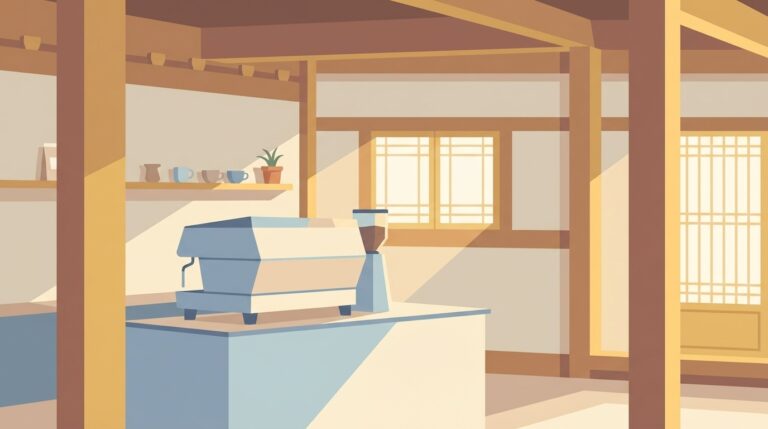
Picture this: You’re watching a hit K-Drama. The main character is walking down a narrow alleyway surrounded by beautiful, curved wooden roofs. They step through heavy antique wooden doors, but inside? A sleek, silver espresso machine is grinding beans, neon lights are glowing on the exposed brick walls, and indie K-Pop is playing softly in the background.
Welcome to the magic of modernized Hanok (traditional Korean houses). Whether you are wandering through Bukchon Hanok Village or exploring the hip alleys of Ikseon-dong, this blend of traditional architecture and modern lifestyle is the heartbeat of contemporary Korean culture. But when you get there, how do you express that overwhelming feeling of “Wow, this is so cool” in natural Korean? If you just say “예뻐요 (It’s pretty),” you’re missing out on the full local experience!
Today, we’re going to learn exactly how to describe this unique architectural harmony like a true Seoulite.
Phase 2: Deep Dive into Core Expressions
1. 고즈넉하다 (To be tranquil/peaceful)
- Pronunciation: [go-jeu-neok-ha-da]
- Sound-alike guide: ‘go’ (like go) + ‘jeu’ (like the ‘j’ in je ne sais quoi) + ‘neok’ (like knock but with an ‘uh’ sound) + ha-da.
- Meaning: Literal: To be quiet and peaceful. Real nuance: A deeply comforting, serene, and almost antique kind of quietness. It’s the ultimate “Hanok vibe” word.
- K-Culture Moment: When K-Pop idols go on a “healing trip” to the countryside in their reality shows and sit on the wooden porch (maru) of a Hanok looking at the rain, the caption almost always says: “고즈넉한 오후… (A tranquil afternoon…).”
- Editor’s Insight: You don’t use this for a quiet library. You use it when the atmosphere itself feels historical, calm, and soothing.
- Situation Spectrum:
- Casual (Friends): ✅ (With variations like “고즈넉하다~”)
- Semi-formal (Colleagues): ✅
- Formal (Elders/Boss): ✅
- 🤔 Think About It: Why do Koreans, who live in the hyper-fast “Pali-pali (빨리빨리)” culture of modern Seoul, crave the “고즈넉하다” feeling so much? Does your culture have a specific word for the peacefulness of old architecture?
2. 한옥을 개조한 카페 (Hanok-renovated cafe)
- Pronunciation: [ha-no-geul / gae-jo-han / ka-pe]
- Meaning: Literal: A cafe that renovated a Hanok. Real nuance: A trendy, Instagram-worthy spot where the exterior is traditional but the interior is modern.
- K-Culture Moment: Think of those aesthetic Seoul vlogs on YouTube. The vlogger will say, “오늘은 한옥을 개조한 카페에 왔어요 (Today I came to a Hanok-renovated cafe)” before zooming in on their matcha latte resting on an antique wooden table.
- Editor’s Insight: “개조하다” means to remodel or convert. In Korea, rather than tearing down old Hanoks, there’s a massive trend of converting them into something new.
- Situation Spectrum:
- Casual: ✅
- Semi-formal: ✅
- Formal: ✅
- 🤔 Think About It: “Renovation” in English usually implies updating something old to look modern. In Korea, Hanok renovation often means purposely exposing the old wooden beams to contrast with modern furniture.
3. 겉은 전통적인데, 속은 현대적이네요 (Traditional on the outside, modern on the inside)
- Pronunciation: [geo-teun jeon-tong-jeo-gin-de / so-geun hyeon-dae-jeo-gi-ne-yo]
- Meaning: Just as it translates! It perfectly describes the “Newtro” (New + Retro) trend in Korea.
- K-Culture Moment: You are with your Korean coworkers on a business trip to Jeonju Hanok Village. You walk into a guest house that looks hundreds of years old, but the bathroom has a high-tech bidet and smart lighting. You say this, and your coworkers will be incredibly impressed by your observation.
- Editor’s Insight: This sentence uses the grammar “~는데” to show a contrast. It’s a very sophisticated B2-level way to express your thoughts.
- Situation Spectrum:
- Casual: ⚠️ (Change to: 겉은 옛날 느낌인데, 안은 완전 요즘 스타일이네!)
- Semi-formal: ✅
- Formal: ✅
Phase 3: Textbook vs. Real Korean
[Describing the Vibe of a Place]
* 📖 Textbook Korean: 이 건물은 참 아름답습니다. (This building is very beautiful.)
* 🗣️ Real Korean: 와, 여기 분위기 대박이다! 완전 내 스타일이야. (Wow, the vibe here is crazy! Totally my style.)
* 💡 Why the difference?: Koreans use “분위기 (atmosphere/vibe)” much more often than “아름답다 (beautiful)” when evaluating architecture or spaces.
[Taking Photos at a Hanok]
* 📖 Textbook Korean: 여기서 사진을 찍고 싶습니다. (I want to take a picture here.)
* 🗣️ Real Korean: 여기 완전 인생샷 스팟이네! 한 장 찍어줄까? (This is totally the spot for the shot of a lifetime! Should I take one for you?)
* 💡 Why the difference?: “인생샷” (Insaeng-syat: The best photo of your life) is the ultimate compliment for any visually appealing space in modern Korean internet culture.
Phase 4: Cultural Context — K-Culture Deep Dive
4-1. Non-Verbal Elements: The Art of “Nunchi” in Hanok Villages
When you visit Bukchon Hanok Village, you’ll see signs with a person holding a finger to their lips. Why? Because these aren’t just museum pieces—they are actual homes where real people live! Here, having Nunchi (social awareness) means keeping your voice down to a whisper, stepping lightly, and never peeking over someone’s private wall just to get a good photo.
4-2. The “Newtro” K-Travel Phenomenon
If you watch K-Dramas like Itaewon Class or Goblin, you’ll notice that the cool, hip characters don’t hang out in sterile, hyper-modern buildings. They hang out in spaces that have history. This is called 뉴트로 (Newtro)—a blend of ‘New’ and ‘Retro’. The preservation of Hanok isn’t just for older generations. Millennials and Gen Z are the ones driving the Hanok cafe boom. They love the contrast of drinking a heavily modern iced Americano under a curved, tiled roof (기와). It’s not just a building; it’s a lifestyle statement.
Phase 5: Real-Life Roleplay Scenario
Setting: Saturday afternoon, Ikseon-dong Hanok Village. The narrow alleyways are packed with people. The scent of roasted coffee mixes with the sight of antique wooden roofs. You are walking with your Korean friend, Min-su.
Characters:
– YOU: An expat living in Seoul, exploring a new neighborhood.
– Min-su (28): Your energetic Korean friend who loves taking Instagram photos.
Dialogue:
Min-su: 와, 사람 진짜 많다! 이 골목 분위기 완전 좋지 않아?
(Wa, saram jinjja manta! I golmok bunwigi wanjeon jochi ana?)
(Wow, there are so many people! Isn’t the vibe of this alley totally great?)
YOU: 응, 대박이야. 전통 한옥이랑 현대적인 가게들이 섞여 있어서 진짜 신기해.
(Eung, daebagiya. Jeon-tong hanogirang hyeon-dae-jeo-gin gage-deu-ri seok-gyeo isseo-seo jinjja sin-gi-hae.)
(Yeah, it’s amazing. It’s really fascinating how traditional Hanoks and modern shops are mixed together.)
Min-su: 맞아! 저기 한옥을 개조한 카페 갈까? 아니면 조금 더 고즈넉한 찻집 갈까?
(Maja! Jeogi hanogeul gaejohan kape galkka? Animyeon jogeum deo gojeuneokan chatjip galkka?)
(Right! Should we go to that Hanok-renovated cafe over there? Or a more tranquil traditional teahouse?)
🔀 Your Turn! How will you respond?
– A) “고즈넉한 찻집이 좋아. 쌍화차 마셔볼래!” (I like the tranquil teahouse. I want to try Ssanghwa tea!)
– B) “저기 가자! 겉은 전통적인데 안에는 에스프레소 머신이 있네!” (Let’s go over there! Traditional on the outside, but there’s an espresso machine inside!)
– C) “아무데나 가자. 나 다리 아파.” (Let’s go anywhere. My legs hurt.)✅ Best Choice: B — Reason: You get to use the expressions we just learned! You are showing off your B2 vocabulary by pointing out the architectural contrast.
⚠️ Choice C Analysis: While honest, Koreans usually prefer someone to show a bit of preference or enthusiasm when exploring together. Plus, it kills the vibe!
(🎭 Stage Direction: You and Min-su enter the Hanok cafe. You look up and see the beautiful exposed wooden beams.)
YOU: 우와… 여기 진짜 예쁘다. 안에는 완전 요즘 스타일이네.
(Uwa… yeogi jinjja yeppeuda. Aneneun wanjeon yojeum seutairi-ne.)
(Whoa… it’s really pretty here. The inside is totally modern style.)
Min-su: 그치? 저기 창가 자리 비었다! 얼른 가서 앉자. 내가 인생샷 찍어줄게!
(Geuchi? Jeogi changga jari bieot-da! Eolleun gaseo anjja. Naega insaengsyat jjigeo-julge!)
(Right? The window seat over there is empty! Let’s hurry and sit. I’ll take a shot-of-a-lifetime for you!)
Phase 6: 10-Second Shadowing Drill
Practice reading this out loud. Focus on the intonation and pauses!
😲 와, / 여기 분위기 / 진짜 대박이다! (Wa, / yeogi bunwigi / jinjja daebagida!)
😊 겉은 한옥인데, / 속은 완전 요즘 스타일이네~ (Geoteun hanoginde, / sogeun wanjeon yojeum seutairi-ne~)
😌 고즈넉해서 / 너무 좋다. (Go-jeu-neok-hae-seo / neo-mu jo-ta.)
Phase 7: K-Culture Mini Dictionary (Architecture Edition)
| Korean | Romanization | English Translation | Contextual Meaning |
|---|---|---|---|
| 한옥 | Hanok | Traditional Korean House | The foundation of Korean classical architecture, known for its harmony with nature. |
| 골목 | Golmok | Alleyway | Much of Korea’s retro charm is hidden in narrow, winding alleys rather than main streets. |
| 기와 | Giwa | Roof tiles | The iconic dark grey curved tiles you see on the roofs of palaces and Hanok. |
| 툇마루 | Toenmaru | Wooden porch | A narrow wooden porch running along the outside of a Hanok. The perfect spot to sit and drink tea. |
| 뉴트로 | Nyuteuro | Newtro | A cultural trend combining “New” and “Retro”. Taking old spaces and giving them a modern function. |
Phase 8: Traveler’s Survival Kit
If you are visiting a Hanok village in Korea, these phrases are your lifesavers.
🆘 Survival Phrases TOP 3
– 🇰🇷 “여기 들어가도 돼요?” (Yeogi deureogado dwaeyo?)
– 🗣️ Meaning: Can we go in here?
– 📍 Where to use: When you aren’t sure if a Hanok is a public cafe/gallery or someone’s private home.
- 🇰🇷 “신발 벗고 들어가야 하나요?” (Sinbal beotgo deureogaya hanayo?)
- 🗣️ Meaning: Do I have to take off my shoes to go in?
- 📍 Where to use: Many traditional Hanok cafes require you to remove your shoes before stepping onto the wooden floors.
🇰🇷 “주민들이 사는 곳이니 조용히 해주세요.” (Jumindeuri saneun gosini joyonghi haejuseyo.)
- 🗣️ Meaning: Residents live here, so please be quiet. (You will see this written on signs!)
📌 Editor’s Travel Note
– Navigation Apps: Google Maps doesn’t work well for walking directions in narrow Seoul alleys. Download Naver Map or KakaoMap!
– Photo Etiquette: Do not take photos through the open windows of residential Hanoks. Always stick to the main paths.
Phase 9: Critical Thinking — “One Step Deeper”
Modernity vs. Tradition: The Identity of Modern Korea
Have you noticed how Korean words like “한옥 (Hanok)” are seamlessly blended with English words like “에스프레소 바 (Espresso Bar)”? In the past, modernization in Korea meant tearing down the old to build shiny western-style apartments. However, the modern generation has realized the unique value of their roots. The preservation and modernization of Hanok villages represent Korea’s current cultural identity: deeply proud of its heritage, yet relentlessly innovative and open to global trends. They don’t just put traditional items behind glass in a museum; they bring them into their daily, breathing lives.
🧠 Think Deeper:
The blending of traditional architecture with hyper-modern lifestyles is everywhere in Korea.💬 Your Turn: How does your culture preserve historical architecture? Do you turn old buildings into modern cafes, or keep them strictly as historical sites? Let us know in the comments!
Phase 10: FAQ & Avoiding Misunderstandings
Q: “Can I just open the wooden doors of a Hanok if they look pretty?”
No! Unless there is a clear sign saying “Cafe,” “Gallery,” or “Open,” assume it is someone’s private residence.
Q: “Can I use the word ‘고즈넉하다’ to describe a person?”
Maybe poetically, but generally no. It is strictly used for the atmosphere of spaces, landscapes, or a specific time of day (like a quiet afternoon).
❌ Common Mistake: Walking into a Hanok cafe with your shoes on.
✅ How to fix it: Always check the entrance! If there is a slight step up to a wooden floor (maru) and you see a shoe rack, stop. Take off your shoes before stepping onto the wood.
Phase 11: Summary & Action Items
- One-Liner Summary: To sound like a local in Korea’s historical alleys, appreciate the contrast by describing the “tranquil (고즈넉한)” vibe and the blend of traditional and modern architecture!
-
Action Mission 3 Steps:
- 🥉 Bronze (Solo): Look at a picture of a Hanok cafe online and say out loud: “분위기 고즈넉하다~”
- 🥈 Silver (Online): Post a photo of a cool building from your country on a Korean language app/community and describe it using “겉은 ~인데, 속은 ~해요.”
- 🥇 Gold (Real Life): Visit a Hanok village in Korea, confidently take off your shoes if required, and tell the barista: “가게 분위기가 너무 좋네요!”
- K-Culture Mission: Open YouTube and search “한옥 개조 카페 브이로그 (Hanok renovated cafe vlog).” Spot the contrast between the wooden ceilings and the modern desserts!
Phase 12: Interactive Quiz
1. Situational Judgment:
You are walking in Bukchon Hanok Village and see a beautiful wooden door slightly open. There is no sign. What should you do?
– A) Say “여기 들어가도 돼요?” and walk inside to take a photo.
– B) Assume it’s a private residence, admire it from the outside quietly, and move on.
– C) Yell “고즈넉하다!” into the courtyard.
2. Fill in the Blank:
“와, 여기 진짜 사진 찍기 좋다! 완전 ( ______ ) 스팟이네!”
– A) 증명사진 (ID photo)
– B) 인생샷 (Shot of a lifetime)
– C) 여권사진 (Passport photo)
3. True or False — K-Culture Edition:
“When Koreans visit Hanok villages, they expect a 100% traditional lifestyle with no modern conveniences.” (T/F)
(Answers: 1. B, 2. B, 3. False – They love the ‘Newtro’ mix of traditional aesthetics and modern comfort!)
Frequently Asked Questions (FAQ)
Q: What does "고즈넉하다 (To be tranquil/peaceful)" mean in Korean and how do you pronounce it?
A: In Korean, "고즈넉하다 (To be tranquil/peaceful)" is pronounced [go-jeu-neok-ha-da] and means: a key conversational Korean expression covered in this lesson.
Q: What does "한옥을 개조한 카페 (Hanok-renovated cafe)" mean in Korean and how do you pronounce it?
A: In Korean, "한옥을 개조한 카페 (Hanok-renovated cafe)" is pronounced [ha-no-geul / gae-jo-han / ka-pe] and means: Literal: A cafe that renovated a Hanok. Real nuance: A trendy, Instagram-worthy spot where the exterior is traditional but the interior is modern.
Q: What does "겉은 전통적인데, 속은 현대적이네요 (Traditional on the outside, modern on the inside)" mean in Korean and how do you pronounce it?
A: In Korean, "겉은 전통적인데, 속은 현대적이네요 (Traditional on the outside, modern on the inside)" is pronounced [geo-teun jeon-tong-jeo-gin-de / so-geun hyeon-dae-jeo-gi-ne-yo] and means: Just as it translates! It perfectly describes the "Newtro" (New + Retro) trend in Korea.







