

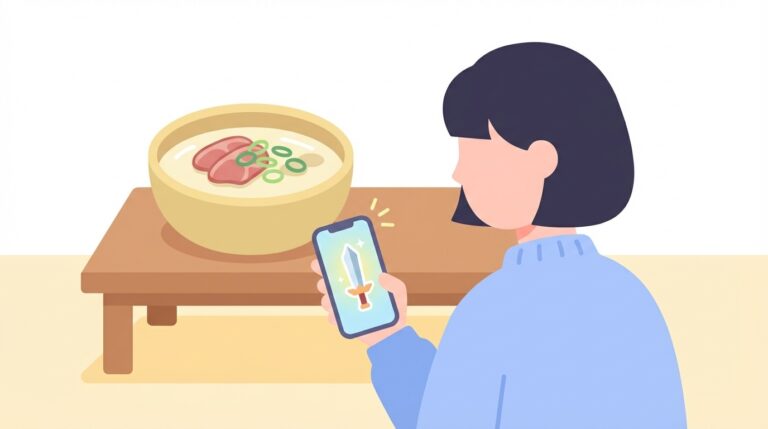
Phase 1: Empathy & K-Culture Cold Open
안녕하세요! 매일한글 (Daily Hangul) 에디터입니다.
Imagine this: You’re deeply invested in the latest chapter of Solo Leveling, Omniscient Reader, or Return of the Mount Hua Sect. The swords are clashing, the magic system is insanely complex, and the translation says something like “His internal energy is overflowing!”
Then, cut to real life. You’re sitting in a tiny, worn-down noodle shop in Seoul with a Korean friend. Your friend takes a sip of the broth, widens their eyes, and says, “Wow, the chef’s internal energy is no joke!” (사장님 내공이 장난 아니네!)
Wait, what? Does the grandma cooking your noodles have secret martial arts powers?
If you’ve ever felt confused because the epic fantasy or Moorim (martial arts) vocabulary you learned from webtoons suddenly popped up in a Korean office meeting or a restaurant review, you are not alone! Welcome to the B2 level of K-Geekdom.
Today, we are going to “level up” your Korean by decoding the fantasy and martial arts terms that have completely infiltrated modern, everyday Korean life. By the end of this guide, you won’t just sound fluent—you’ll sound like an absolute K-Culture insider. Let’s dive in!
Phase 2: Deep Dive into Core Expressions
Let’s break down the 3 most essential webtoon/web novel terms that Koreans actually use in real life.
1. 내공 (Internal Energy / Hidden Expertise)
- Pronunciation: [Nae-gong] The ‘nae’ sounds like ‘net’ without the ‘t’, and ‘gong’ sounds like a bell being struck.
- Meaning:
- Literal (Martial Arts): Internal energy or Qi cultivated through years of meditation.
- Real Nuance: Deeply rooted expertise, hidden skills, or “know-how” acquired over a long period.
- K-Culture Moment: You’re at a 40-year-old hole-in-the-wall restaurant. The menu only has one item. The food is mind-blowing. Someone will definitely say, “이 집 주방장님 내공이 깊다” (This chef’s naegong is deep).
- Editor’s Insight: We don’t just use this for food! If a quiet intern suddenly fixes a massive coding error in 5 minutes, we say they have “hidden naegong.”
- Situation Spectrum:
- Casual with friends: ✅
- Office colleagues (Semi-formal): ✅
- Boss/Elders (Formal): ⚠️ (Use respectfully, e.g., “선배님의 내공을 배우고 싶습니다” – I want to learn from your deep expertise.)
- 🤔 Think About It: Why do Koreans love comparing professional experience to martial arts training? Does your culture have a similar way of describing “hidden masters” in everyday jobs?
2. 회빙환 (The Web Novel Holy Trinity: Regress, Possess, Reincarnate)
- Pronunciation: [Hoe-bing-hwan] Hoe as in ‘ho!’, bing as in ‘bingo’, hwan as in ‘Juan’.
- Meaning:
- Literal: An abbreviation of 회귀 (Regression/Going back in time), 빙의 (Possession/Waking up in someone else’s body), and 환생 (Reincarnation).
- Real Nuance: Used as a meme to describe the overwhelming desire to hit the “reset” button on your life when you’ve messed up.
- K-Culture Moment: It’s Monday morning. Your alarm didn’t go off, you spilled coffee on your white shirt, and you missed the bus. You text your friend: “아… 오늘 하루 회귀하고 싶다” (Ah… I want to regress today).
- Editor’s Insight: While “회빙환” is mostly internet slang, “회귀 마렵다” (I have the urge to regress) is a super common dramatic complaint among young Koreans.
- Situation Spectrum:
- Casual with friends: ✅
- Office colleagues (Semi-formal): ⚠️ (Only with close work-buddies)
- Boss/Elders (Formal): 🚫 (They will have no idea what you’re talking about.)
- 🤔 Think About It: “Hoe-bing-hwan” is incredibly popular in modern K-Fiction. What does this massive demand for “second chance” stories say about the stress of modern society?
3. 먼치킨 (Overpowered / OP)
- Pronunciation: [Meon-chi-kin] Sounds exactly like ‘Munchkin’.
- Meaning:
- Literal: Originally from the Munchkins in the Wizard of Oz, adopted by RPG players to mean a character who breaks the game’s balance because they are too strong.
- Real Nuance: An overwhelmingly competent person. A genius who can do everything flawlessly.
- K-Culture Moment: In K-Dramas, when the male lead is a billionaire CEO, speaks 5 languages, has a six-pack, and solves all problems instantly, viewers call him a “먼치킨 남주” (Munchkin male lead).
- Editor’s Insight: In daily life, if a coworker handles a crazy client, finishes the presentation, and buys everyone coffee, you can say, “와, 완전 먼치킨이네요!” (Wow, you’re totally OP!)
- Situation Spectrum:
- Casual with friends: ✅
- Office colleagues (Semi-formal): ✅
- Boss/Elders (Formal): 🚫
Phase 3: Textbook vs. Real Korean
Let’s see how these words transform boring textbook sentences into native-level, witty Korean.
[Describing someone with a lot of experience]
* 📖 Textbook Korean: 저 식당 사장님은 요리 경험이 많아요. (That restaurant boss has a lot of cooking experience.)
* 🗣️ Real Korean: 저 집 사장님 요리 내공이 장난 아니에요. (That restaurant boss’s cooking naegong is no joke.)
* 💡 Why is it different?: Using ‘경험’ (experience) sounds like a resume. Using ‘내공’ (naegong) paints a picture of a legendary master quietly perfecting their craft.
[Saying you want to start over after a mistake]
* 📖 Textbook Korean: 실수를 해서 처음부터 다시 시작하고 싶어요. (I made a mistake, so I want to start over from the beginning.)
* 🗣️ Real Korean: 아 망했다… 내 인생 회귀 안 되나? (Ah, I’m screwed… Can my life not regress?)
* 💡 Why is it different?: Web novel vocabulary allows young Koreans to express their frustration with a dash of self-deprecating humor and dramatic flair.
Bottom Note: For B2 (Intermediate) learners, using these terms properly will instantly make Koreans say, “Wow, how do you know that word?!” Just remember to keep it casual!
Phase 4: Cultural Context — K-Culture Deep Dive
4-1. Non-Verbal Cues (The ‘Nunchi’ of Slang)
When using “회귀하고 싶다” (I want to regress), it is absolutely required to let out a deep, dramatic sigh first.
Ha-ah… (drop your shoulders) “나 회귀할래…”
It shows you are physically exhausted by reality. If you say it with a huge smile, people will think you’re actually practicing dark magic.
4-2. The K-Food Connection: Searching for “Naegong”
Korean food culture is deeply tied to the concept of 내공 (Naegong). In Korea, the best restaurants aren’t always the shiny, Michelin-starred ones. Often, Koreans hunt for 노포 (Nopo)—old, slightly run-down establishments that have been open for decades.
When we find a grandma who can make the perfect Kimchi Jjigae just by tossing ingredients into a pot without measuring, we say her Naegong has reached the realm of martial arts masters. Eating at these places isn’t just a meal; it’s respecting the master’s lifelong discipline.
Phase 5: Interactive Roleplay Scenario
Setting: Friday, 7:00 PM. A slightly smoky, 30-year-old traditional Gomtang (beef bone soup) restaurant in Euljiro. You are with Minsoo, a Korean coworker who reads way too many webtoons.
Characters:
– YOU: A B2 Korean learner, tired after a long week of work.
– Minsoo (32): Your friendly coworker. A bit dramatic, loves food and fantasy novels.
Dialogue:
Minsoo: 와, 여기 국물 냄새부터 다르다.
(Wa, yeogi gungmul naemsaebuteo dareuda.)
[Wow, even the smell of the broth here is different.]
YOU: 진짜요? 저 이런 오래된 식당은 처음 와봐요.
(Jinjjayo? Jeo ireon oraedoen sikdangeun cheoeum wabwayo.)
[Really? This is my first time coming to such an old restaurant.]
Minsoo: 이 집이 을지로에서 제일 유명한 노포예요. 사장님 내공이 장난 아니거든요.
(I jibi euljiroeseo jeil yumyeonghan nopoyeyo. Sajangnim naegongi jangnan anigeodeunyo.)
[This is the most famous old place in Euljiro. The boss’s naegong is no joke.]
(🎭 Stage Direction: Minsoo sips the soup, closes his eyes like he’s meditating.)
Minsoo: 크으… 국물 한 입 먹으니까 이번 주 피로가 다 풀린다.
(Keueu… gungmul han ip meogeunikka ibeon ju piroga da pullinda.)
[Keu-eu… One sip of the broth and this week’s fatigue is all gone.]
YOU: 이번 주 진짜 바빴죠. 저도 실수할 뻔했어요.
(Ibeon ju jinjja bappatjyo. Jeodo silsuhal ppeonhaesseoyo.)
[This week was really busy, right? I almost made a mistake too.]
Minsoo: 내 말이! 나 수요일에 대형 사고 치고 진짜 회귀하고 싶었다니까.
(Nae mari! Na suyoire daehyeong sago chigo jinjja hoegwihago sipeotdanikka.)
[Tell me about it! I caused a huge accident on Wednesday and seriously wanted to regress.]
🔀 Your Turn! How do you respond?
– A) “회귀가 뭐예요? 다시 설명해주세요.” (What is regress? Please explain again.)
– B) “맞아요, 우리 월요일로 회귀합시다!” (Right, let’s regress to Monday!)
– C) “수요일로 회귀하면 그 사고 막을 수 있어요? 완전 먼치킨이네요!” (If you regress to Wednesday, can you stop the accident? You’re totally OP!)✅ Best Choice: C — Brilliant! You validated his pain, used the web novel logic (going back to fix a mistake), AND threw in another slang word (Munchkin/OP). Minsoo will instantly buy you another bowl of soup.
⚠️ Choice B Analysis: This is also good, but going back to Monday means you have to work the whole week again! In webtoon logic, that’s a bad regression!
Phase 6: 10-Second Shadowing Drill
Listen to the rhythm and try speaking these out loud! Pay attention to the pauses (/) and the emotion tags.
- 😮 (In awe) 와… / 이 집 떡볶이 / 진짜 내공이 / 장난 아니네요!
(Wa… / i jip tteokbokki / jinjja naegongi / jangnan anineyo!)
[Wow… this place’s tteokbokki… its naegong is seriously no joke!] -
😭 (Dramatically exhausted) 아… / 망했다… / 나 어제로 / 회귀하고 싶어…
(Ah… / manghaetda… / na eojero / hoegwihago sipeo…)
[Ah… I’m doomed… I want to regress to yesterday…]
Phase 7: K-Culture Mini Dictionary
Here are some extra geeky words you’ll encounter:
| 한국어 (Korean) | Romanization | English | Cultural Context |
|---|---|---|---|
| 세계관 | segye-gwan | Worldview / Lore | Not just for novels! Used for K-Pop idol universes (like EXO or aespa’s lore). |
| 정주행 | jeong-ju-haeng | Binge-watching/reading | Literally “driving forward.” Reading all 500 chapters of a web novel at once. |
| 무협 | mu-hyeop | Martial Arts Genre | The traditional Korean/Chinese martial arts fantasy genre. |
| 사이다 | sa-i-da | Sprite / Refreshing | Used when the OP character takes revenge or solves a problem swiftly. “Ah, that’s refreshing like Sprite!” |
Phase 8: Traveler’s Survival Kit
If you love webtoons, visiting a 만화카페 (Manhwa Cafe – Comic Cafe) in Korea is a must. Here’s how to navigate one like a pro!
🆘 Survival Phrases for the Comic Cafe
– 🇰🇷 “혹시 [나 혼자만 레벨업] 단행본 어디 있나요?”
(hoksi [na honjaman rebeleop] danhaengbon eodi innayo?)
[Excuse me, where are the physical volumes of ‘Solo Leveling’?]
– 🇰🇷 “여기서 음식 주문해도 되나요?”
(yeogiseo eumsik jumunhaedo doenayo?)
[Can I order food here?]
– 🇰🇷 “종일권으로 할게요.”
(jong-ilgwon-euro halgeyo.)
[I’ll take the all-day pass.]📌 Editor’s Travel Note:
Modern Korean comic cafes are essentially restaurants! You MUST order the Jjapagetti (black bean noodles) or Kimchi Fried Rice while reading. It’s part of the authentic 정주행 (binge-reading) experience. Also, take your shoes off and put them in the locker before entering!
Phase 9: Critical Thinking — “One Step Deeper”
Media vs Reality: The Psychology of “Hoe-Bing-Hwan”
🧠 Think Deeper:
Why is the “Hoe-bing-hwan” (Regress, Possess, Reincarnate) genre so overwhelmingly popular in Korean web novels? Critics suggest it reflects a harsh reality. In a highly competitive society where one bad exam score or one career mistake can feel impossible to overcome, the fantasy of “resetting” your life with all your current knowledge is deeply comforting. It’s a form of escapism. Instead of slowly building success (the traditional hero’s journey), modern readers want a “Munchkin” hero who uses future knowledge to achieve “Cider” (refreshing, instant) success.💬 Your Turn: Does your country’s popular fiction also feature “overpowered” main characters, or do people prefer heroes who struggle and grow slowly? Share your thoughts in the comments!
Phase 10: FAQ & Avoiding Misunderstandings
Q: Can I tell my boss they are a “먼치킨” (Munchkin)?
A: NO! 🚫 Even though it means someone is highly competent, it’s internet slang. To a strict, older boss, calling them a “Munchkin” sounds like you’re calling them a small donut hole or a cute cat. Say “부장님 실력이 대단하십니다” (Your skills are amazing) instead.
Q: Is “내공” only used for cooking?
A: Maybe/No. It’s used for any skill! Acting, singing, coding, even a mother’s ability to fold laundry perfectly. If there is hidden depth and experience, it’s naegong.
❌ Common Mistake #1: Using “빙의” (Possession) lightly in front of older or religious people.
✅ Do this instead: While young people say “주인공에 빙의했다” (I totally immersed/possessed into the main character’s feelings), older generations might associate the word strictly with demonic possession or shamanism. Stick to using it with people your own age!
Phase 11: Summary & Action Items
💡 One-Liner Summary: From praising a chef’s hidden Naegong to wishing you could Regress (회귀) to the weekend, web novel vocabulary adds dramatic, geeky flair to your daily Korean!
Action Mission 3 Steps:
– 🥉 Bronze (Solo): Look in the mirror and practice letting out a deep sigh before saying, “아… 회귀 마렵다” (Ah… I wanna regress).
– 🥈 Silver (Online): Go to Webtoon or a K-Pop MV comment section and see if you can spot the word “세계관” (Lore/Worldview).
– 🥇 Gold (Real Life): Next time you eat at a great local Korean spot, confidently tell your friend: “사장님 내공이 장난 아니네!”
🇰🇷 K-Culture Mission:
Read episode 1 of any popular Fantasy Korean Webtoon (like Omniscient Reader). Try to find the exact moment the character realizes they have “regressed” or “transmigrated.” It usually happens in the first 10 panels!
Phase 12: Quiz — Interactive Challenge
1. Situational Judgment: Your friend accidentally drops their brand new phone, and the screen shatters. What is the most natural Korean webtoon-style reaction they might say?
– A) “내공이 부족했어…” (I lacked internal energy…)
– B) “아… 10분 전으로 회귀하고 싶다…” (Ah… I want to regress to 10 minutes ago…)
– C) “내 폰 먼치킨이다!” (My phone is OP!)
2. True or False – K-Culture Edition:
– In Korea, a “Nopo” (노포) is a brand-new, modern franchise restaurant famous for its quick service. (T/F)
3. Fill in the Blank:
– “Wow, this indie singer’s live vocals are crazy. Her hidden _________ is no joke!” (그녀의 숨겨진 ________이/가 장난 아니에요!)
👉 Click to reveal the answers!
1. B – Wishing to “regress” (회귀) is the ultimate expression of regret!
2. False – A Nopo is an old, historic restaurant, often praised for the owner’s deep “Naegong”.
3. 내공 (Naegong) – Used perfectly to describe her accumulated skill!
Did you enjoy today’s module? Have you ever had a moment where you seriously wanted to ‘regress’? Let us know your stories in the comments below!
Frequently Asked Questions (FAQ)
Q: What does "내공 (Internal Energy / Hidden Expertise)" mean in Korean and how do you pronounce it?
A: In Korean, "내공 (Internal Energy / Hidden Expertise)" is pronounced [Nae-gong] and means: Literal (Martial Arts): Internal energy or Qi cultivated through years of meditation.
Q: What does "회빙환 (The Web Novel Holy Trinity: Regress, Possess, Reincarnate)" mean in Korean and how do you pronounce it?
A: In Korean, "회빙환 (The Web Novel Holy Trinity: Regress, Possess, Reincarnate)" is pronounced [Hoe-bing-hwan] and means: Literal: An abbreviation of 회귀 (Regression/Going back in time), 빙의 (Possession/Waking up in someone else's body), and 환생 (Reincarnation).
Q: What does "먼치킨 (Overpowered / OP)" mean in Korean and how do you pronounce it?
A: In Korean, "먼치킨 (Overpowered / OP)" is pronounced [Meon-chi-kin] and means: Literal: Originally from the Munchkins in the Wizard of Oz, adopted by RPG players to mean a character who breaks the game's balance because they are too strong.







