

Phase 1: Empathy & Immersion (The K-Culture Cold Open)
Hello! It’s your Daily Hangul Editor.
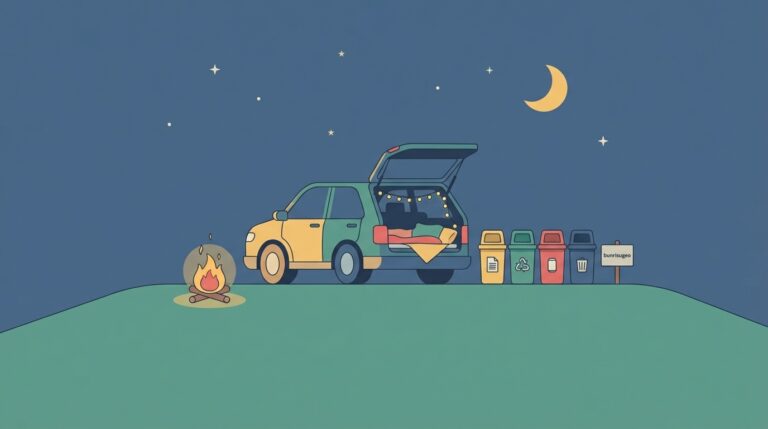
Picture this: You are on a weekend getaway in Gangwon-do. You’ve perfectly executed the ultimate gamseong (aesthetic) camping setup. You had your bulmeong (staring blankly at the campfire), ate crispy pork belly, and listened to an indie K-Pop playlist under the stars. It’s Sunday morning, and it’s time to pack up.
You look around for a massive dumpster to toss your trash, but instead, you see a beautifully carved wooden sign with a poetic proverb. The campsite manager smiles and says something that sounds like it belongs in a historical K-Drama, not a waste disposal area. Wait… what did they just say?
If you’re an advanced (C1) Korean learner, you know that Korean culture doesn’t just ask you to “clean up.” It asks you to respect the collective space. In Korea, the LNT (Leave No Trace) movement isn’t just an environmental trend; it’s deeply tied to nunchi (social awareness) and the intricate, sometimes intimidating, world of Korean waste separation (bunrisugeo). Let’s dive into the advanced, insider expressions you need to become the ultimate respectful camper in Korea!
Phase 2: Core Expressions Deep Dive
1. 아름다운 사람은 머문 자리도 아름답습니다.
- Pronunciation: Areumdaun sarameun meomun jarido areumdapseumnida. (Tip: For ‘으’ in ‘아름’, make the disgusted sound you make when stepping in gum—pull your lips back!)
- Meaning: (Literal) A beautiful person’s stayed space is also beautiful. / (Real nuance) Please clean up after yourself and leave no trace.
- K-Culture Moment: You will see this exact phrase on stickers in almost every public restroom, hiking trail, and campsite in Korea. It’s the ultimate polite, passive-aggressive Korean way of saying, “Don’t be a slob.”
- Editor’s Insight: At the C1 level, you notice how Korean avoids direct commands in public spaces. Instead of “Clean your trash,” it appeals to your sense of personal dignity and social image (face/kibun).
- Situation Spectrum:
- Public signage & official requests: ✅
- Joking with a messy friend: ⚠️ (Can sound too dramatic unless highly sarcastic)
- Telling your boss to clean up: 🚫
- 🤔 Think About It: Why does Korean public messaging rely so heavily on poetry and appealing to one’s “beauty” or “character” rather than issuing strict rules? How does your culture handle public cleanliness signs?
2. 가져온 쓰레기는 되가져가 주세요.
- Pronunciation: Gajyeon sseuregineun doegajyeoga juseyo.
- Meaning: (Literal) Please take back the trash you brought. / (Real nuance) Pack it in, pack it out. Leave no trace.
- K-Culture Moment: You’re backpacking (baekpaeking) in a national park. There are absolutely no trash cans. A park ranger gently reminds your group of this rule before you hike up the mountain.
- Editor’s Insight: The key here is the prefix 되- (doe-), meaning “back” or “return.” You brought it (가져오다), so you must take it back (되가져가다). Using prefixes like this instantly elevates your Korean from textbook intermediate to natural advanced.
- Situation Spectrum:
- Campsite/Trail official to visitors: ✅
- Reminding your camping group: ✅
- Formal business settings: 🚫 (Not applicable)
- 🤔 Think About It: Korea has a strict “pay-as-you-throw” trash system. How does this economic reality shape the culture of LNT in Korean outdoors?
3. 자연은 눈으로만 담아 가세요.
- Pronunciation: Jayeoneun nuneuroman dama gaseyo.
- Meaning: (Literal) Please capture nature only with your eyes and take it. / (Real nuance) Take nothing but pictures, leave nothing but footprints.
- K-Culture Moment: Your friend tries to pick a beautiful wildflower or take a unique river stone as a souvenir. You tap their shoulder and say this softly.
- Editor’s Insight: The verb 담다 usually means “to put into a container.” Here, your eyes are the container. It’s a beautifully poetic, C1-level way to express the LNT philosophy without saying “Don’t touch that!” (만지지 마세요).
- Situation Spectrum:
- Instagram captions for camping trips: ✅
- Hiking groups: ✅
- Everyday casual chats: ⚠️ (A bit too poetic for just walking down a city street)
- 🤔 Think About It: The concept of Han (sorrow) gets a lot of attention, but what about Jeong (affection) and respect for nature? How does the Korean language reflect harmony with the environment?
Phase 3: Textbook vs. Real Korean
[Talking about ‘Leave No Trace’]
* 📖 Textbook Korean: 흔적을 남기지 마세요. (Heunjeogeul namgiji maseyo – Do not leave a trace.)
* 🗣️ Real Korean: 우리 오늘 클린캠 하고 가요! (Uri oneul keullinkaem hago gayo! – Let’s do a “clean-cam” today!)
* 💡 Why the difference?: Koreans love abbreviating English loanwords. “Clean Camping” becomes 클린캠 (Clean-cam). It sounds trendier, cuter, and less like a chore!
[Picking up trash on the trail]
* 📖 Textbook Korean: 쓰레기를 주우면서 걸어요. (Sseuregireul ju-umyeonseo georeoyo – Let’s walk while picking up trash.)
* 🗣️ Real Korean: 아침에 가볍게 줍깅 어때요? (Achime gabyeopge jupging eottaeyo? – How about a light “jupging” in the morning?)
* 💡 Why the difference?: A blend of 줍다 (jupda – to pick up) and 조깅 (jogging). It’s the Korean equivalent of “plogging” and is extremely popular among eco-conscious Millennials and Gen Z.
Bottom Note: At the C1 level, knowing the proper formal terms is expected, but casually dropping a portmanteau like “클린캠” or “줍깅” in front of native speakers will instantly earn you ‘insider’ status!
Phase 4: Cultural Context — K-Culture Deep Dive
4-1. The Non-Verbal Elements: Nunchi in the Wild
When practicing LNT in Korea, language is only half the battle. The other half is nunchi. If you are sorting your recycling (분리수거) at a campsite, do not just toss items in the general direction of the bins. Native campers will watch to see if you rinse your spicy ramyeon cups before recycling them. Rinsing your recyclables is considered basic courtesy. Doing it diligently without being asked? That’s high-level nunchi.
4-2. The K-Travel & K-Variety Connection
If you’ve watched K-variety shows like Camping Club or House on Wheels, you’ve seen the romantic side of Korean camping. But notice what happens at the end of every episode: a meticulously filmed montage of the cast cleaning up, wiping down surfaces, and sorting plastics from cans.
In reality, managing trash is a communal bonding activity. It’s rarely a one-person job. When it’s time to leave, someone will yell, “자, 이제 슬슬 정리할까요?” (Well, shall we slowly start packing up?). This is your cue to grab a trash bag and start participating. Failing to join this “clean-up ritual” is considered very rude.
Phase 5: Real-Life Roleplay Scenario
Setting: Sunday, 11:00 AM. A beautiful coastal chabak (car camping) site in Taean. The ocean breeze is crisp. You and your Korean coworker, Min-su, have just finished packing the tent. Only the trash remains.
Characters:
– YOU: An expat who loves Korean outdoors but is still navigating the strict recycling laws.
– Min-su (32): Your friendly, slightly neat-freak coworker who takes LNT very seriously.
Dialogue:
Min-su: 아, 진짜 잘 쉬었다! 이제 쓰레기만 버리면 되겠네요.
(Ah, jinjja jal swieotda! Ije sseuregiman beorimyeon doegenneyo.)
[Ah, that was a great rest! Now we just need to throw away the trash.]
(🎭 Stage Direction: Min-su starts tying up a white plastic bag full of assorted trash)
YOU: 제가 분리수거장에 갖다 버리고 올게요.
(Jega bunrisugeojange gatda beorigo olgeyo.)
[I’ll go throw it away at the recycling area.]
Min-su: 어? 잠깐만요. 이 컵라면 용기, 그냥 버리면 안 되는데.
(Eo? Jamkkanmanyo. I keopramyeon yonggi, geunyang beorimyeon an doeneunde.)
[Huh? Wait a second. We shouldn’t just throw away this cup ramyeon container.]
🔀 Your Turn! How should you respond?
– A) “아, 맞다! 물로 한 번 헹궈서 버려야 하죠?” (Ah, right! I need to rinse it with water once before tossing it, right?)
– B) “왜요? 플라스틱 아니에요? 그냥 버려요~” (Why? Isn’t it plastic? Just throw it away~)
– C) “아름다운 사람은 머문 자리도 아름다우니까 제가 다 먹을게요!” (Because a beautiful person leaves a beautiful space, I will eat it all!)✅ Best Choice: A — You show that you understand the nuanced Korean recycling rule (rinsing food waste off recyclables). This shows deep cultural respect!
⚠️ Choice B Analysis: This will make Min-su panic. Improper recycling can result in the campsite manager rejecting your trash or issuing a fine.
❌ Choice C Analysis: Funny, but eating an empty styrofoam cup is probably not the best LNT practice!
Min-su: (If you chose A) 맞아요! 양념 묻은 건 일반 쓰레기거나, 씻어서 버려야 해요. 역시 한국 패치 완벽하시네요!
(Majayo! Yangnyeom mudeun geon ilban sseuregigeona, ssiseoseo beoryeoya haeyo. Yeoksi hanguk paechi wanbyeokhasineyo!)
[Right! Things with sauce on them are general waste, or you have to wash them before throwing them away. Your ‘Korean patch’ is perfectly installed!]
YOU: 그럼요. 클린캠의 기본이죠!
(Geureomyo. Keullinkaemui gibonijyo!)
[Of course. It’s the basics of clean-cam!]
Phase 6: 10-Second Shadowing Drill
Let’s practice the polite, C1-level rhythm for reminding someone about LNT rules.
😊 부드럽지만 단호하게 (Softly but firmly):
저기요, / 가져오신 쓰레기는 / 반드시 / 되가져가셔야 합니다.
(Jeogiyo, / gajyeo-osin sseuregineun / bandeusi / doe-gajyeogasyeoya hamnida.)
Excuse me, you must take back the trash you brought with you.
Phase 7: K-Culture Mini-Dictionary
| 한국어 (Korean) | Romanization | English | Context / Meaning |
|---|---|---|---|
| 클린캠 | keullin-kaem | Clean-cam | Slang for “Clean Camping.” Leaving the campsite spotless. |
| 불멍 | bul-meong | Fire-gazing | Spacing out while looking at a campfire. The highlight of K-camping. |
| 차박 | cha-bak | Car camping | Sleeping in your car. Extremely popular since the pandemic. |
| 종량제 봉투 | jong-nyang-je bong-tu | Volume-based garbage bag | The mandatory, paid garbage bags you MUST use for general waste in Korea. |
| 줍깅 | jup-ging | Plogging | Picking up trash while jogging/hiking. |
Phase 8: Traveler’s Survival Kit
If you’re camping or hiking in Korea, these are the top 3 survival phrases regarding waste and LNT:
🆘 Survival Phrase #1
– 🇰🇷 “분리수거장은 어디에 있나요?” (Bunrisugeojangeun eodie innayo?)
– 🗣️ Meaning: Where is the recycling area?
– 📍 Where to use: Campsites, guesthouses, Han River parks.🆘 Survival Phrase #2
– 🇰🇷 “이거 일반 쓰레기인가요, 아니면 음식물 쓰레기인가요?” (Igeo ilban sseuregi-ingayo, animyeon eumsikmul sseuregi-ingayo?)
– 🗣️ Meaning: Is this general waste or food waste?
– 📍 Where to use: When you’re confused about things like animal bones or fruit peels (which are often general waste, surprisingly!).🆘 Survival Phrase #3
– 🇰🇷 “종량제 봉투 하나 주세요.” (Jongnyangje bongtu hana juseyo.)
– 🗣️ Meaning: Please give me one volume-based garbage bag.
– 📍 Where to use: Convenience stores near the campsite.📌 Editor’s Travel Note:
Never burn your trash in your campfire! In many countries, burning paper plates or napkins is normal. In Korea, burning anything other than firewood (장작) is strictly forbidden and heavily fined due to air pollution and wildfire risks.
Phase 9: Critical Thinking Corner — “One Step Deeper”
🧠 Think Deeper: Space, Density, and Communal Responsibility
South Korea is a geographically small country with a high population density, and 70% of the land is mountainous. Because space is limited and deeply shared, the concept of “My space” vs. “Public space” blurs. The rigorous waste separation system and the poetic LNT phrases like “아름다운 사람은 머문 자리도 아름답습니다” reflect a society that relies heavily on social trust and collective responsibility to function. LNT in Korea isn’t just about saving the planet; it’s about respecting the next person who will inevitably occupy that exact same small patch of land just hours after you leave.
💬 Your Turn: Does your home country treat public parks and campsites as “shared community spaces” or “wild frontiers”? How does that change the way people dispose of their waste? Let me know in the comments!
Phase 10: FAQ & Avoiding Common Mistakes
- “Can I just put all my recycling in one bag and leave it next to the bin?”
- NO. In Korea, you must personally separate plastics, vinyl, clear PET bottles, colored plastics, glass, cans, and paper into separate bins. Leaving a mixed bag is a major cultural faux pas.
- “If I’m deep in the mountains, can I bury my food waste?”
- NO. Korea has many wild boars (멧돼지). Burying food waste attracts them to trails and endangers other hikers. Use the “되가져가기” (take it back) rule!
❌ Common Mistake #1: Treating 음식물 쓰레기 (Food Waste) and 일반 쓰레기 (General Waste) the same.
✅ Do this instead: Onion peels, eggshells, and chicken bones are General Waste. Only things an animal could reasonably eat are Food Waste. When in doubt, ask your Korean friends!
Phase 11: Summary & Action Items
- One-Liner Summary: In Korea, leaving no trace is an art form expressed through poetic phrases, strict recycling, and advanced nunchi.
-
Action Mission 3 Steps:
- 🥉 Bronze (Solo): Read the phrase “아름다운 사람은 머문 자리도 아름답습니다” out loud 3 times with the perfect, polite intonation.
- 🥈 Silver (Online): Look up the hashtag #클린캠 on Instagram and observe how Korean campers pack up their sites.
- 🥇 Gold (Real World): Next time you are at a park or cafe in Korea, perfectly separate your waste and softly say “머문 자리는 아름답게!” to yourself as you leave.
- K-Culture Mission: Watch an episode of Wise Camping Life (슬기로운 캠핑생활) or Camping Club. Skip to the end and analyze their clean-up routine. Notice how they separate their trash!
Engagement: What is the most confusing part of Korean recycling for you? Tell me below, and I’ll help you sort it out!
Phase 12: Interactive Quiz Challenge
1. Situational Judgment: You are packing up your tent. Your friend leaves a half-eaten apple core in the bushes, saying “It’s biodegradable!” What is the most culturally appropriate advanced response?
– A) “경찰 부를게요!” (I’ll call the police!)
– B) “가져온 쓰레기는 되가져가는 게 클린캠의 기본이에요.”
– C) “음식물 쓰레기 봉투에 넣으세요.”
Answer: B. It gently uses the C1 phrase ‘되가져가다’ and the trendy slang ‘클린캠’.
2. Fill in the Blank:
아름다운 사람은 ( ______ ) 자리도 아름답습니다.
Answer: 머문 (meomun – stayed/occupied).
3. True or False – K-Culture Edition:
In a Korean campsite, it is acceptable to burn used paper napkins in your bulmeong (campfire) to reduce waste.
Answer: FALSE. Only firewood is permitted. Burning trash is a huge taboo and illegal!
4. Roleplay Prediction: In Phase 5, if you chose Option B (“Just throw it away, it’s plastic”), what is the most likely consequence?
Answer: Min-su will likely feel deeply embarrassed, step in to wash the plastic himself, and silently judge your lack of Korean ‘nunchi’. Always wash your plastics!
Frequently Asked Questions (FAQ)
Q: What does "아름다운 사람은 머문 자리도 아름답습니다." mean in Korean and how do you pronounce it?
A: In Korean, "아름다운 사람은 머문 자리도 아름답습니다." is pronounced [Areumdaun sarameun meomun jarido areumdapseumnida. (Tip: For '으' in '아름', make the disgusted sound you make when stepping in gum—pull your lips back!] and means: (Literal) A beautiful person's stayed space is also beautiful. / (Real nuance) Please clean up after yourself and leave no trace.
Q: What does "가져온 쓰레기는 되가져가 주세요." mean in Korean and how do you pronounce it?
A: In Korean, "가져온 쓰레기는 되가져가 주세요." is pronounced [Gajyeon sseuregineun doegajyeoga juseyo.] and means: (Literal) Please take back the trash you brought. / (Real nuance) Pack it in, pack it out. Leave no trace.
Q: What does "자연은 눈으로만 담아 가세요." mean in Korean and how do you pronounce it?
A: In Korean, "자연은 눈으로만 담아 가세요." is pronounced [Jayeoneun nuneuroman dama gaseyo.] and means: (Literal) Please capture nature only with your eyes and take it. / (Real nuance) Take nothing but pictures, leave nothing but footprints.







