

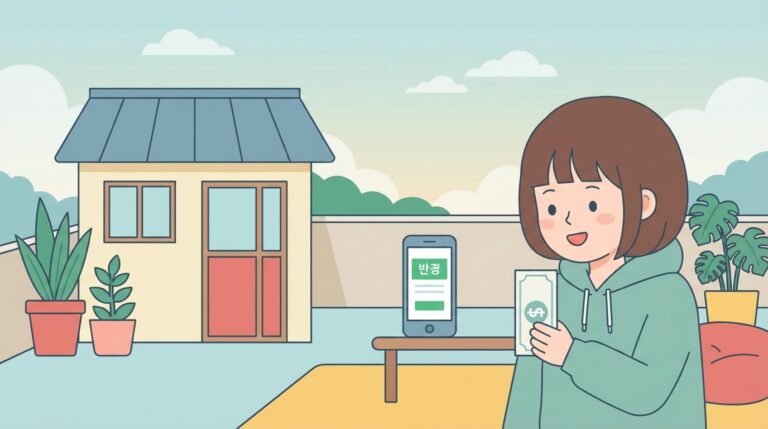
Welcome to Daily Hangul! 🏡\n\nHello! I’m your Daily Hangul Editor, your local guide to surviving and thriving in Korea.\n\nPicture this: You are watching a classic K-Drama. The hardworking main character moves into a cozy rooftop room (oktapbang). Everything is romantic until the end of the month, when they find a yellow slip of paper taped to their door. They look at it, sigh deeply, and dramatically slide down the wall. \n\nWhat was on that paper? It wasn’t a breakup letter. It was the Gwallibi (관리비)—the monthly maintenance and utility bill!\n\nMoving to Korea is exciting, but navigating the real-life admin tasks, like paying bills, can feel like a pop quiz you didn’t study for. If you don’t know the right words, you might end up with late fees or wondering why your winter heating bill is suddenly 200,000 KRW! \n\nDon’t worry. This guide is built from the real experiences of my students who successfully conquered their first Korean bills. Let’s make you a master of your Korean home!\n\n—\n\n## Phase 2: Core Expressions Deep Dive 🔍\n\n### 1. 관리비 (Gwallibi)\n- Pronunciation: [gwal-lee-bee]\n- Meaning: Maintenance fee (often includes utilities like water and internet, depending on your building).\n- K-Culture Moment: In K-Dramas, characters often complain about high gwallibi in winter because of ondol (Korean floor heating). When the boiler runs all day, the gwallibi skyrockets!\n- Editor’s Insight: This isn’t just “rent” (월세, wolse). It’s the extra cost for building upkeep, cleaning, and sometimes your personal utilities. Always ask what is included in your gwallibi before signing a lease!\n- Situation Spectrum:\n [🚫 Never] ———— [⚠️ Caution] ———— [✅ Freely]\n – Casual friends: ✅\n – Landlord/Real estate agent: ✅\n- 🤔 Think About It: In many Western countries, rent and utilities are completely separate. Why do you think Korean apartments (like Officetels) bundle building security, elevator maintenance, and sometimes even your personal internet into one single gwallibi bill?\n\n### 2. 이번 달 관리비가 얼마나 나왔어요? (Ibeon dal gwallibiga eolmana nawasseoyo?)\n- Pronunciation: [ee-beon dal gwal-lee-bee-ga eol-ma-na na-was-seo-yo?]\n- Meaning: Literal: “How much did the maintenance fee come out this month?” / Real: “How much is the maintenance fee this month?”\n- K-Culture Moment: You’ll hear this exactly when roommates are calculating their monthly expenses over a late-night delivery of fried chicken.\n- Editor’s Insight: Notice the verb 나왔어요 (came out). In English, we say a bill “is” a certain amount. In Korean, bills “come out” from the system. It feels a bit like waiting for lottery numbers!\n- Situation Spectrum:\n [🚫 Never] ———— [⚠️ Caution] ———— [✅ Freely]\n – Friends/Roommates: ✅\n – Management Office (Formal): ✅ (Very polite and natural!)\n\n### 3. 계좌이체 할게요 (Gyejwa-iche halgeyo)\n- Pronunciation: [gye-jwa-ee-che hal-ge-yo]\n- Meaning: Literal: “I will do an account transfer.” / Real: “I will pay by bank transfer.”\n- K-Culture Moment: At a Korean restaurant, when one person pays for the whole K-BBQ meal, everyone else pulls out their phones and says “계좌이체 할게요!” to send their share instantly.\n- Editor’s Insight: Korea is a cashless, “Ppalli-ppalli” (hurry up) society. Bank transfers take literally 3 seconds on a smartphone. It is the absolute standard way to pay your rent and gwallibi.\n- Situation Spectrum:\n [🚫 Never] ———— [⚠️ Caution] ———— [✅ Freely]\n – Any payment situation: ✅\n\n—\n\n## Phase 3: Textbook vs. Real Korean 📖🗣️\n\n| Situation | 📖 Textbook Korean | 🗣️ Real Korean | 💡 Why is it different? |\n|—|—|—|—|\n| Asking to pay | 관리비는 어떻게 지불합니까? (How do I make a payment for the fee?) | 관리비 어떻게 내요? (How do I pay the fee?) | “지불하다” is very formal and written. “내다” (to put out/pay) is the everyday spoken verb. |\n| It’s too expensive! | 요금이 너무 비쌉니다. (The fare is too expensive.) | 이번 달 너무 많이 나왔어요. (It came out to too much this month.) | Koreans focus on the result (“it came out high”) rather than just describing the price. |\n\nEditor’s Bottom Note: As an A2 learner, stick to using “내다” (nae-da) for paying bills. It sounds much more natural and friendly than the robotic “지불하다”!\n\n—\n\n## Phase 4: Cultural Context — K-Culture Deep Dive 🌊\n\n### 4-1. Non-Verbal Nunchi (눈치)\nWhen dealing with your building’s management office (관리사무소) or an elderly landlord, always use both hands if you are handing them a physical paper bill or a card. Give a slight bow when saying “감사합니다” (Thank you). Good nunchi here means not arguing aggressively about a bill; instead, ask politely: “제가 잘 몰라서 그러는데…” (I’m asking because I don’t know well…).\n\n### 4-2. The “Ondol” Winter Shock in K-Dramas and Reality 🌡️\nIf you watch K-Dramas, you’ll see characters sitting on the floor, eating tangerines under a warm blanket. This is because of Ondol (온돌), Korea’s famous underfloor heating system! \n\nHowever, dramas rarely show the aftermath. In reality, foreigners often leave their boilleo (boiler) running all day while they are at work. At the end of the month, their gwallibi hits 200,000 KRW (about $150+)! To survive Korean winters like a local, you must learn the “외출” (Going out) mode on your boiler thermostat. It keeps the pipes from freezing but saves your wallet!\n\n—\n\n## Phase 5: Real-Life Roleplay Scenario 🎭\n\nSetting: It’s the 25th of the month. You are standing in the small, slightly cramped security/management office (관리사무소) on the ground floor of your Seoul apartment. \nCharacters:\n- YOU: An expat who just moved in and received a confusing paper bill.\n- Mr. Park (60s): The friendly building security guard (경비 아저씨).\n\nDialogue:\n\nYOU: 안녕하세요, 아저씨! (Annyeonghaseyo, ajeossi!)\n[Hello, sir!]\n\nMr. Park: 어, 302호 학생! 무슨 일이에요? (Eo, sam-baek-i-ho haksaeng! Museun irieyo?)\n[Oh, student from room 302! What’s the matter?]\n\nYOU: 이거… 이번 달 관리비예요? (Igeo… ibeon dal gwallibiyeyo?)\n[Is this… the maintenance bill for this month?]\n\nMr. Park: 네, 맞아요. 겨울이라서 난방비가 좀 많이 나왔네. (Ne, majayo. Gyeouriraseo nanbangbiga jom mani nawanne.)\n[Yes, that’s right. Because it’s winter, the heating bill came out a bit high.]\n\nYOU: 아… 그럼 관리비는 어떻게 내요? (Ah… geureom gwallibineun eotteoke naeyo?)\n[Ah… then how do I pay the maintenance fee?]\n\nMr. Park: 여기 아래에 은행 계좌번호 있죠? 거기로 보내면 돼요. (Yeogi araee eunhaeng gyejwabeonho itjyo? Geogiro bonaemyeon dwaeyo.)\n[See the bank account number at the bottom here? You can just send it there.]\n\n> 🔀 YOUR TURN! How do you reply to Mr. Park?\n> – A) “카드 안 돼요?” (Cards aren’t allowed?)\n> – B) “네, 알겠습니다! 지금 계좌이체 할게요.” (Yes, understood! I will do a bank transfer now.)\n> – C) “너무 비싸요! 안 낼 거예요!” (It’s too expensive! I won’t pay!)\n>\n> ✅ Best Choice: B — Korean bills are almost exclusively paid via bank transfer to a virtual account. \n> ⚠️ Choice A Analysis: You can sometimes set up a credit card auto-pay, but you usually can’t swipe a card at the guard’s desk.\n> 🚫 Choice C Analysis: Funny in a sitcom, terrible for your credit score!\n\n—\n\n## Phase 6: 10-Second Shadowing Drill ⏱️\n\nPractice this out loud right now! Follow the slashes for natural pausing.\n\n😊 이번 달 / 관리비는 / 어떻게 내요?\n(i-beon dal / gwal-lee-bee-neun / eo-tteo-ke nae-yo?)\n\n💳 바로 / 계좌이체 / 할게요!\n(ba-ro / gye-jwa-ee-che / hal-ge-yo!)\n\n—\n\n## Phase 7: K-Culture Mini Dictionary 📚\n\n| Korean | Romanization | English | Context |\n|—|—|—|—|\n| 관리비 | gwallibi | Maintenance fee | The combined bill for building upkeep and utilities. |\n| 보일러 | boilleo | Boiler | The floor heating system. Your best friend and worst enemy. |\n| 월세 | wolse | Monthly rent | Paid separately or together with gwallibi, depending on your contract. |\n| 계좌이체 | gyejwa-iche | Bank transfer | The lifeline of Korean payments. |\n| 관리사무소 | gwallisamuso | Management office | Where you go to ask questions about your apartment. |\n\n—\n\n## Phase 8: Traveler Survival Kit 🧳\n\nEven if you are just traveling and staying in an Airbnb, you might need to understand basic utility terms or use bank transfers for local services!\n\n> 🆘 Survival Phrases for Travelers\n> – 🇰🇷 “이거 계좌이체 돼요?” (igeo gyejwa-iche dwaeyo?)\n> – 🗣️ Meaning: Can I pay by bank transfer for this?\n> – 📍 Where to use: Small markets, pop-up stores, or when splitting bills with Korean friends.\n> – 💡 Pro Tip: If you are staying in Korea long-term, opening a Korean bank account and downloading an app like ‘Toss’ or ‘KakaoPay’ will change your life.\n\n📌 Editor’s Travel Note:\n- Cash vs. Card: Korea is a “Card Republic.” You rarely need cash, but having a way to do a gyejwa-iche (bank transfer) is essential for small street vendors or paying rent.\n\n—\n\n## Phase 9: Think Deeper — “A Step Further” 🧠\n\nGlobal Era: Korea’s Cashless Speed\nKorea’s banking system is heavily influenced by the cultural concept of Ppalli-ppalli (hurry, hurry). In many countries, setting up a bank transfer to pay rent or utilities involves routing numbers, a few business days of waiting, and maybe a fee. In Korea, virtual accounts (가상계좌) are generated instantly for every bill. You type in a 12-digit number on your app, use Face ID, and the money is transferred in exactly 3 seconds with zero fees. This reflects a society that values ultimate digital efficiency and trust in IT infrastructure.\n\n💬 Your Turn: How do you pay your rent or utility bills in your home country? Are checks still used, or is it all digital? Share in the comments!\n\n—\n\n## Phase 10: FAQ & Avoiding Misunderstandings 🛑\n\nQ: Can I negotiate my Gwallibi?\nNo, gwallibi is usually a fixed rate based on the size of your room, plus your exact meter reading for water/electricity. It’s math, not a flea market!\n\nQ: What if I lose my paper bill?\nJust go to the gwallisamuso (management office) and say, “관리비 영수증을 잃어버렸어요” (I lost my maintenance fee receipt). They will gladly print a new one or just tell you the amount.\n\n> ❌ Common Mistake: Throwing away the yellow/blue envelope in your mailbox thinking it’s junk mail. \n> ✅ Do This: Always check the sender. If it says 관리사무소 (Management Office) or 한국전력공사 (KEPCO – Electric company), keep it!\n\n—\n\n## Phase 11: Summary & Action Items 🎯\n\nOne-Liner Summary: Remember that Korean utility bills “come out” (나와요) and the best way to pay them is by “bank transfer” (계좌이체)!\n\nAction Mission 3 Steps:\n- 🥉 Bronze (Solo): Look at any bill you have at home and say, “계좌이체 할게요!” out loud.\n- 🥈 Silver (Online): Post on a language exchange app: “In my country, the maintenance fee is [Price]. 한국은 관리비가 얼마예요?”\n- 🥇 Gold (Real Life): Next time you share a meal with a Korean friend, offer to send your share using the word “계좌이체.”\n\n📺 K-Culture Mission: Watch an episode of a slice-of-life K-Drama (like Because This Is My First Life or Reply 1988). Keep your eyes peeled for scenes where characters look stressed at a piece of paper—that’s the gwallibi moment!\n\nWhat is the most confusing part about living or traveling in Korea for you? Drop a comment below, and I might cover it in the next article!\n\n—\n\n## Phase 12: Interactive Quiz 📝\n\n1. Fill in the Blank:\nFriend: “Wow, the heating bill is so expensive!”\nYou: “Yeah, 이번 달 관리비가 너무 많이 _______.”\n(Hint: ‘came out’)\n\n2. Situational Judgment:\nYou want to pay your rent and utilities to your landlord. What is the most culturally natural phrase to use?\nA) 돈을 드리겠습니다. (I will give you money.)\nB) 계좌이체 할게요. (I will do a bank transfer.)\nC) 카드로 지불합니다. (I pay by card.)\n\n3. True or False – K-Culture Edition:\n”In Korean apartments, the ‘Gwallibi’ ONLY covers your personal electricity and water, nothing else.” (T/F)\n\n(Answers: 1. 나왔어요 2. B 3. False – It often includes building cleaning, elevator fees, and security guard salaries!)
Frequently Asked Questions (FAQ)
Q: What does "나왔어요" mean in Korean and how do you pronounce it?
A: In Korean, "나왔어요" is pronounced [came out] and means: . In English, we say a bill "is" a certain amount. In Korean, bills "come out" from the system. It feels a bit like waiting for lottery numbers!\n-
Q: What does ""내다"" mean in Korean and how do you pronounce it?
A: In Korean, ""내다"" is pronounced [nae-da] and means: for paying bills. It sounds much more natural and friendly than the robotic "지불하다"!\n\n---\n\n## Phase 4: Cultural Context — K-Culture Deep Dive 🌊\n\n### 4-1. Non-Verbal Nunchi (눈치)\nWhen dealing with your building's management office (관리사무소) or an elderly landlord, always use both hands if you are handing them a physical paper bill or a card. Give a slight bow when saying "감사합니다" (Thank you). Good







