

Hello! I am the Lead Editor of Daily Hangul.
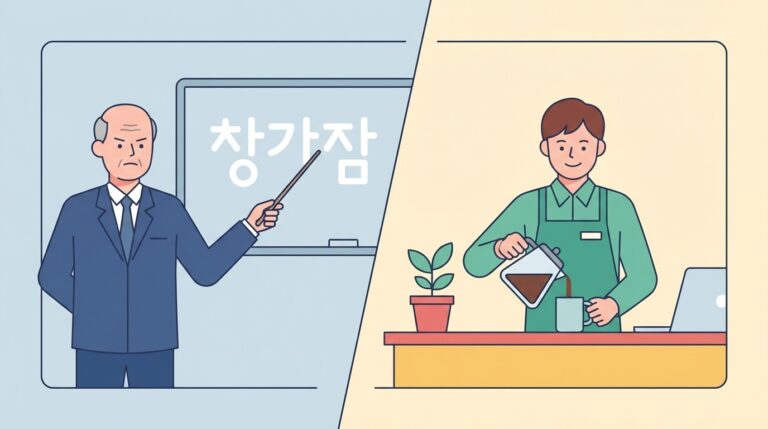
Picture this: You are watching a tense boardroom scene in a K-Drama. The camera pans to the Chaebol (conglomerate) Chairman. He slams a file on the mahogany table and barks a single, crisp sentence. The room freezes. Now, change the channel. You are watching a trendy drama about a Seoul startup. The young CEO is wearing a hoodie, handing out iced Americanos to the team, and asking for their opinions with a warm smile.
As an advanced (C2) Korean learner, you already know the grammar to express both scenes. But do you know the linguistic weight behind them? In Korea, leadership isn’t just about what you do; it’s intricately woven into the very verb endings and pronouns you choose. The shift from traditional Charismatic Leadership (카리스마 리더십) to modern Servant Leadership (서번트 리더십) is currently tearing through Korean corporate culture, and the language is struggling to keep up.
Whether you’re managing a team in Seoul, doing business with Korean partners, or just want to understand the intricate power dynamics in your favorite corporate K-Drama without subtitles, this guide is for you. Let’s dive deep into the vocabulary of power, empathy, and the “Nunchi” of Korean leadership.
Phase 2: Core Expressions Deep Dive
To master C2 Korean leadership nuances, let’s look at how language creates authority versus how it creates psychological safety.
1. “이 방향으로 갑시다. 책임은 제가 집니다.”
- Pronunciation: [i banghyang-euro gapsida. chaegimeun jega jimnida.] + “gapsida” sounds like a firm “gap-she-da”, no hesitation.
- Meaning: Let’s go in this direction. I will take the responsibility.
- K-Culture Moment: This is the ultimate “Charismatic Leader” move. Think of a veteran detective in a K-thriller or a bold CEO pushing a risky project. By explicitly stating they will take the fall (“책임은 제가 집니다”), they buy the team’s absolute loyalty.
- Editor’s Insight: Notice the use of “-ㅂ시다” (Let’s). In textbooks, it’s taught as a suggestion. In a Korean workplace, when a boss says “-ㅂ시다,” it is a polite but absolute command. It means “We are doing this.”
- Situation Spectrum:
[🚫 절대 금지] ———— [⚠️ 주의] ———— [✅ 자유롭게]
- To friends (Casual): ⚠️ (A bit too dramatic)
- To subordinates (Downward): ✅ (Inspires confidence)
- To your boss (Upward): 🚫 (You cannot dictate the direction to a boss)
- 🤔 Think About It: Why is taking responsibility (“총대를 메다” – taking the bullet) so deeply revered in Korean leadership? How does this reflect the collective group dynamic versus individual accountability?
2. “어떻게 지원해 드리면 될까요?”
- Pronunciation: [eotteoke jiwonhae deurimyeon doelkkayo?] + “deurimyeon” sounds smooth and deferential.
- Meaning: How can I support you?
- K-Culture Moment: The hallmark of the modern “Servant Leader” in Pangyo (Korea’s Silicon Valley). You’ll hear this from younger team leads who want to dismantle traditional hierarchies.
- Editor’s Insight: The magic is in the verb “드리다” (the humble form of ‘to give’). By using a humble verb toward a subordinate, the leader linguistically lowers themselves to the role of an enabler, not a dictator.
- Situation Spectrum:
[🚫 절대 금지] ———— [⚠️ 주의] ———— [✅ 자유롭게]
- To friends (Casual): 🚫 (Too formal)
- To subordinates (Downward): ✅ (Creates psychological safety)
- To your boss (Upward): ✅ (Excellent way to offer help)
- 🤔 Think About It: When a boss uses humble language toward an employee, does it completely erase the power dynamic, or just mask it?
3. “우리 팀원들 생각은 어때요? 편하게 얘기해 봐요.”
- Pronunciation: [uri timwondeul saenggageun eottaeyo? pyeonhage yaegihae bwayo.]
- Meaning: What do our team members think? Feel free to speak comfortably.
- K-Culture Moment: The “inclusive” meeting opener. It’s often used in brainstorming sessions over pizza or coffee, trying to break the heavy silence that usually plagues Korean corporate meetings.
- Editor’s Insight: The keyword is 우리 (Our). A charismatic leader might say “내 팀” (My team), but a servant leader always uses “우리.” However, saying “Speak comfortably” (편하게 얘기해 봐요) in Korea is a paradox. Employees will still read the room (Nunchi) before speaking!
- Situation Spectrum:
[🚫 절대 금지] ———— [⚠️ 주의] ———— [✅ 자유롭게]
- To friends (Casual): ✅
- To subordinates (Downward): ✅
- To your boss (Upward): 🚫 (You don’t grant permission for your boss to speak comfortably)
- 🤔 Think About It: Is there an equivalent to “우리” (Our) in your language that is used as frequently and intimately as it is in Korean?
Phase 3: Textbook vs. Real Korean Corporate Speech
Let’s see how leadership language evolves from the rigid textbook to the dynamic modern office.
| Situation | 📖 Textbook Korean | 🗣️ Real Korean (Modern Office) | 💡 Why the difference? |
|---|---|---|---|
| Giving an order | “이것을 내일까지 하세요.” (Do this by tomorrow.) | “이 건, 내일까지 가능할까요?” (Would this be possible by tomorrow?) | Modern leaders soften commands into questions to respect the employee’s workload. |
| Taking charge | “내가 결정하겠습니다.” (I will decide.) | “이건 제가 총대 멜게요.” (I’ll take the bullet for this.) | Using slang (“총대 메다”) builds camaraderie and shows a willingness to protect the team. |
| Asking for ideas | “의견을 말해 주십시오.” (Please state your opinions.) | “좋은 아이디어 있으면 편하게 던져주세요.” (If you have good ideas, feel free to ‘throw’ them out.) | “던지다” (throw) lowers the pressure of having a perfect idea. |
Bottom Note for C2 Learners: Don’t overuse slang like “총대 메다” in highly formal boardrooms. It’s best used in team-level meetings to build rapport.
Phase 4: Cultural Context — K-Culture Deep Dive
4-1. Non-Verbal Nunchi in Leadership
When a Charismatic Leader speaks, subordinates are expected to maintain steady (but not piercing) eye contact and nod slightly. It shows obedience. However, when a Servant Leader speaks, they often break eye contact intentionally, looking at the whiteboard or their coffee cup. Why? To lower the intensity. In Korean culture, direct eye contact from an authority figure can feel like an interrogation. A servant leader physically creates a “softer” space.
4-2. The K-Drama Chaebol vs. The Pangyo Startup
If you watch a classic drama like Secret Garden or Boys Over Flowers, the leaders (usually Chaebol heirs) use “반말” (informal language) to everyone, shout easily, and use the Charismatic (often toxic) style. This reflects the old “Gabjil” (갑질 – abuse of power) culture.
But watch a modern drama like Start-Up or Search: WWW. The leaders use “존댓말” (polite language) even to their youngest interns. They buy meals, ask for feedback, and lead from behind. This mirrors the real-life struggle in Korean society today: older generations expect charismatic authority, while MZ generation workers demand servant leadership and horizontal structures (수평적 문화).
Phase 5: Practical Roleplay Scenario
Setting: Thursday evening, 8:00 PM. A chic, open-plan startup office in Gangnam. A major project launch is delayed by a week due to a massive bug. The team is exhausted. You are the newly appointed Foreign Team Lead.
Characters:
– YOU: The Team Lead. You need to boost morale but also get the job done.
– Min-su (32, Senior Developer): Capable, but currently burned out and defensive.
– Ji-eun (26, Junior Designer): Scared of making mistakes, very quiet.
Dialogue:
YOU: 다들 늦게까지 고생이 많네요. 버그 수정은 어떻게 되어가고 있나요? ☕
(Dadeul neutgekkaji gosaengi manneyo. Beogeu sujeong-eun eotteoke doe-eogago innayo?)
[You’re all working hard so late. How is the bug fixing going?]
(🎭 Stage Direction: You hand out coffees to Min-su and Ji-eun)
Min-su: 아, 팀장님. 코드를 다 뒤집어야 할 것 같습니다. 이번 주 런칭은 무리예요.
(A, timjangnim. Kodeureul da dwijibeoya hal geot gatseumnida. Ibeon ju neonching-eun muri-yeyo.)
[Ah, Team Lead. I think we have to flip the whole code. Launching this week is impossible.]
Ji-eun: (Looking down) 죄송합니다… 제가 UI를 너무 복잡하게 짜서…
(Joesonghamnida… jega UI-reul neomu bokjapage jjaseo…)
[I’m sorry… I designed the UI too complicatedly…]
YOU: 지은 씨 잘못 아니에요. 이건 시스템 문제죠.
(Ji-eun ssi jalmot anieyo. Igeon siseutem munjejyo.)
[It’s not your fault, Ji-eun. This is a system issue.]
Min-su: 하아… 윗선에 보고는 어떻게 하실 계획이신가요? 엄청 깨질 텐데요.
(Haa… witseon-e bogoneun eotteoke hasil gyehoegisingayo? Eomcheong kkaejil tendeyo.)
[Sigh… How do you plan to report this to upper management? We are going to get crushed (shattered).]
🔀 Your Turn! How do you answer Min-su as a leader?
– A) “제가 알아서 할 테니까 민수 씨는 개발에만 집중하세요.” (I’ll handle it, so you just focus on developing.)
– B) “걱정 마세요. 윗선 보고는 제가 총대 멜게요. 우리 어떻게 해결할지 같이 고민해 봐요.” (Don’t worry. I’ll take the bullet for reporting up. Let’s figure out how to solve this together.)
– C) “다들 정신 차리세요! 어떻게든 이번 주에 끝내야 합니다!” (Everyone wake up! We have to finish it this week no matter what!)✅ Best Choice: B — Servant + Charismatic Hybrid. You take the hit from the executives (Charismatic protection) but invite collaboration to fix the issue (Servant empathy). This is the gold standard for modern Korean leadership.
⚠️ Choice A Analysis: Too dismissive. While it protects Min-su, it shuts down communication. “알아서 할 테니까” (I’ll take care of it, so…) can sound arrogant.
🚫 Choice C Analysis: Classic toxic K-Drama boss. You will lose your team’s trust immediately.
YOU (Choosing B): 걱정 마세요. 윗선 보고는 제가 총대 멜게요. 우리 어떻게 해결할지 같이 고민해 봐요.
Min-su: (Looking relieved) 아… 알겠습니다. 그럼 제가 내일 오전까지 새로운 플랜을 짜오겠습니다.
(A… algetseumnida. Geureom jega naeil ojeonkkaji saeroun peullaen-eul jjaogetseumnida.)
[Ah… understood. Then I will draw up a new plan by tomorrow morning.]
Ji-eun: 저도 UI 단순화 작업 바로 시작하겠습니다!
(Jeodo UI dansunhwa jageop baro sijakagetseumnida!)
[I will start simplifying the UI right away too!]
Phase 6: 10-Second Shadowing Drill
Let’s practice the perfect intonation of a modern Korean leader.
😤 Firm but warm: 윗선 보고는 / 제가 총대 멜게요. / 우리 / 어떻게 해결할지 / 같이 고민해 봐요.
(Witseon bogoneun / jega chongdae melgeyo. / uri / eotteoke haegyeolhalji / gachi gominhae bwayo.)
Pro-tip: Put the stress on “제가” (I) to show you are taking the burden, and “같이” (together) to emphasize teamwork. Keep your voice steady and calm.
Phase 7: K-Culture Mini Dictionary (Leadership Edition)
| Korean | Romanization | English | Context |
|---|---|---|---|
| 수평적 문화 | supyeongjeok munhwa | Horizontal Culture | The trend of stripping away complex titles (using “님” or English names) to promote equality. |
| 갑질 | gabjil | Abuse of power | When a boss (the “Gab” / Alpha) mistreats a subordinate. The biggest taboo in modern Korean society. |
| 총대를 메다 | chongdaereul meda | To take the bullet/lead | Literally “to shoulder the rifle.” Means stepping up to take responsibility or do the hard task for the team. |
| 꼰대 | kkondae | Boomer / Condescending older person | A leader who forces outdated, hierarchical views on younger staff. “라떼는 말이야” (Back in my day…) is their catchphrase. |
| 워라밸 | worabael | Work-Life Balance | Crucial for MZ generation workers. Servant leaders actively protect their team’s ‘Worabael’. |
Phase 8: Expat / Business Traveler Survival Kit
Even if you aren’t a CEO, if you are visiting Korea for business or leading a small project, you need to navigate these waters.
🆘 Survival Expression #1: Declining politely to an older partner/boss
– 🇰🇷 “말씀은 이해합니다만, 현실적으로 조금 어려울 것 같습니다.” (malsseumeun ihaehamnidaman, hyeonsiljeogeuro jogeum eoryeoul geot gatseumnida.)
– 🗣️ Sound-alike: [mal-sseum-eun ee-hae-ham-ni-da-man, hyun-shil-juk-eu-ro jo-geum uh-ryuh-ool got gat-seum-ni-da]
– 📍 Where to use: Meeting rooms, client dinners.
– 💡 Pro Tip: Never just say “No” (안 됩니다). Always validate their words first (“말씀은 이해합니다만” – I understand what you are saying, but…), then use “It seems a bit difficult” instead of “impossible.”
📌 Editor’s Business Travel Note
– Titles Matter: Never call a Korean partner “You” (당신/너). Always use their Title + 님 (e.g., 김 부장님 – Director Kim).
– The Business Card Ritual: Receive and give business cards with two hands. Read it for 3 seconds before putting it down. It shows respect to their rank.
– Paying for Meals: In Korea, the highest-ranking person (the leader) usually pays for the team meal. If you are the boss, reaching for the bill is a great display of Servant Leadership.
Phase 9: Critical Thinking Corner — “A Step Deeper”
🧠 Think Deeper: Language & Power (언어와 권력)
In recent years, major Korean conglomerates like Kakao and Samsung have tried to enforce “horizontal culture” by banning traditional titles (like 부장님, 차장님) and making everyone use English names or simply attach “-님” (Nim) to their names. But can linguistic engineering truly change a culture rooted in Confucianism?
Many Korean workers confess that even if they call their CEO “Brian” or “Min-su Nim,” the invisible hierarchy remains intact. The power isn’t just in the title; it’s in the subtle use of honorifics, who speaks first in a meeting, and who pours the water at the company dinner. Language shapes thought, but in Korea, societal context often overpowers vocabulary.
💬 Your Turn: Has your company ever tried to change its culture by changing its language or job titles? Did it work? Share your experience in the comments!
Phase 10: FAQ & Mistake Prevention
Q: “Can I use 반말 (casual language) if I am the boss to build a friendly atmosphere?”
A: NO. This is a huge misconception. While K-Drama bosses might do it, in the real modern Korean workplace, using casual language to subordinates without explicit mutual agreement is considered highly unprofessional and borders on Gabjil (갑질). Always use polite language (존댓말) in the office.
Q: “If I make a mistake as a leader, should I apologize directly?”
A: Yes, but keep it professional. A servant leader apologizes for the process, not their existence. Say “제 불찰입니다” (It was my oversight) rather than overly emotional apologies.
❌ Common Mistake #1: Saying “수고하세요” (Work hard / Keep working) to your boss or a senior partner when leaving.
✅ Do This Instead: “수고하세요” implies a downward command. To a superior, say “먼저 들어가 보겠습니다” (I will head out first) or “고생 많으셨습니다” (You’ve worked hard today).
Phase 11: Summary & Action Items
One-Liner Summary: Modern Korean leadership requires the delicate balance of taking the heavy responsibility (Charismatic) while using inclusive, humble language to empower your team (Servant).
Action Mission:
– 🥉 Bronze: Stand in front of a mirror and practice saying “제가 총대 멜게요” (I’ll take the bullet) with a confident, reassuring smile.
– 🥈 Silver: Write a short Slack/email message in Korean to a hypothetical team, asking for their ideas using “우리” (Our) and “편하게” (Comfortably).
– 🥇 Gold (For Expats): The next time you are in a meeting with Korean colleagues, actively use “어떻게 지원해 드리면 될까요?” to offer your help!
🎬 K-Culture Mission:
Watch one episode of the drama Start-Up or Itaewon Class. Notice how the protagonists speak to their team members versus how the “villain” corporate CEOs speak to their staff. The verb endings will tell you everything you need to know about their character!
Phase 12: Quiz — Interactive Challenge
1. You are the team lead. A junior employee proposes an idea that is a bit flawed, but you want to encourage them (Servant Leadership). What is the best response?
– A) “그건 현실성이 없네요. 다시 해오세요.” (That’s not realistic. Do it again.)
– B) “좋은 시도입니다. 이 부분만 우리 같이 수정해 볼까요?” (Good attempt. Shall we revise this part together?)
– C) “제가 시키는 대로 하세요.” (Do as I order.)
2. True or False – K-Culture Edition:
“If you are the boss in Korea, you should let your youngest team member pay for the company dinner to teach them responsibility.”
3. Fill in the Blank:
“To show you are taking responsibility for a tough project, you can say: 제가 _____ 멜게요.” (Hint: Shoulder the rifle).
💡 Click here for Answers!
- B is the correct answer. It acknowledges the effort and uses “우리” (We) and “-ㄹ까요?” (Shall we?) to make it a collaborative effort. A and C are toxic Gabjil responses.
- False. In Korea, the highest-ranking or oldest person almost always pays for the team meal (Hoesik).
- 총대 (Chongdae). “제가 총대 멜게요.”
How do you prefer to lead? Are you more Charismatic or Servant-oriented? Let us know in the comments below, and see you in the next Daily Hangul post!
Frequently Asked Questions (FAQ)
Q: What does ""이 방향으로 갑시다. 책임은 제가 집니다."" mean in Korean and how do you pronounce it?
A: In Korean, ""이 방향으로 갑시다. 책임은 제가 집니다."" is pronounced [i banghyang-euro gapsida. chaegimeun jega jimnida.] and means: Let's go in this direction. I will take the responsibility.
Q: What does ""어떻게 지원해 드리면 될까요?"" mean in Korean and how do you pronounce it?
A: In Korean, ""어떻게 지원해 드리면 될까요?"" is pronounced [eotteoke jiwonhae deurimyeon doelkkayo?] and means: How can I support you?
Q: What does ""우리 팀원들 생각은 어때요? 편하게 얘기해 봐요."" mean in Korean and how do you pronounce it?
A: In Korean, ""우리 팀원들 생각은 어때요? 편하게 얘기해 봐요."" is pronounced [uri timwondeul saenggageun eottaeyo? pyeonhage yaegihae bwayo.] and means: What do our team members think? Feel free to speak comfortably.







