

🍷 Master the Korean Convenience Store Wine & Whiskey Pickup Service Like a Local
Phase 1: Empathy (The K-Culture Cold Open)
Hello! This is your Daily Hangul Editor.
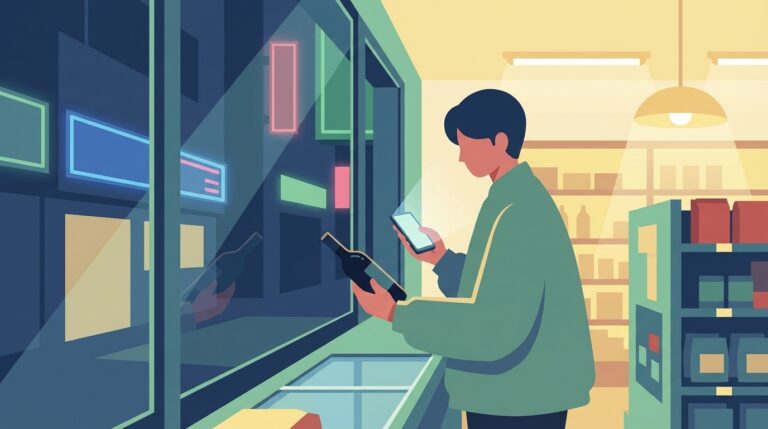
Picture this: You’re watching a recent hit K-Drama. The protagonist just had a brutal day at work. Instead of heading to a loud, neon-lit BBQ joint for endless shots of Soju (the classic trope, right?), they quietly tap their smartphone, stroll into a brilliantly lit GS25 or CU in their sweatpants, and walk out with a $150 bottle of Balvenie single malt whiskey. Wait, what? Since when do convenience stores sell premium liquor alongside triangular kimbap?
Welcome to the Premium Convenience Store Era of South Korea.
The days of solely relying on massive department stores for decent wine or whiskey are over. Thanks to hyper-efficient “Smart Order” apps, Korean convenience stores (편의점) have transformed into ubiquitous, 24/7 boutique liquor shops.
But here’s the catch: the apps are entirely in Korean, and when you finally secure that rare bottle of whiskey through a digital “Open Run,” you have to face the part-timer at the counter. A simple “I’m here for my wine” from a textbook won’t cut it.
Today, we’re diving deep into the C2-level, highly contextual world of Convenience Store Liquor Pickup. As someone who has survived many app crashes trying to secure a bottle of Hibiki in Seoul, I’ll guide you through the exact nuances, cultural shifts, and advanced Korean expressions you need to navigate this like a true Seoulite.
Phase 2: Core Expressions Deep Dive
Let’s unpack the high-level expressions you’ll actually use when utilizing the smart order service.
1. 스마트오더 예약한 거 찾으러 왔는데요.
- Pronunciation: [seumateu-odeo yeyakan geo chajeureo wanneundeyo.]
Sound-alike guide: ‘geo’ sounds like the ‘gu’ in ‘gull’. ‘chat’ sounds like ‘chat’ but stop the ‘t’ sharply in your throat.- Meaning:
- Literal: I came to look for the thing I reserved via smart order.
- Real nuance: I’m here to pick up my smart order.
- K-Culture Moment: You walk into the store. The part-timer is sorting boxes. You don’t want to startle them with a loud announcement. You approach the counter, make brief eye contact, and drop this line with a slight, polite bow. It immediately signals that you know how the system works.
- Editor’s Insight: Notice we use “찾다 (to look for/find)” instead of “픽업하다 (to pickup)” or “수령하다 (to receive)”. In native, everyday Korean, we “find” the things we left or ordered somewhere. It sounds incredibly natural and fluent.
- Situation Spectrum:
[🚫 Never] ———— [⚠️ Be Careful] ———— [✅ Freely]
- Friends (Casual): 🚫 (You wouldn’t say this to a friend, it’s for service staff)
- Service Staff (Polite/Yo-form): ✅
- Highly Formal (Business): ⚠️ (Too casual for a boardroom, perfect for a store)
- 🤔 Think About It: Why does Korean rely heavily on the verb “찾다” (to find/seek) for picking up items, withdrawing money, or claiming baggage? How does this reflect the physical action involved in completing a transaction?
2. 앱상에는 재고가 있다고 뜨던데, 혹시 들어왔나요?
- Pronunciation: [aepsang-eneun jaegoga itdago tteudeonde, hoksi deureowannayo?]
Sound-alike guide: ‘tteu’ sounds like the disgusted sound you make when stepping in gum (‘euh’), preceded by a sharp, tense ‘t’.- Meaning:
- Literal: On the app, it floats that there is inventory, by any chance did it come in?
- Real nuance: The app shows you have this in stock. Has the delivery arrived yet?
- K-Culture Moment: The dreaded “Whiskey Open Run.” You saw on the Pocket CU app that a rare whiskey is in stock at this specific location. You rush there, but the shelf is empty. You ask the part-timer this golden question, hoping the bottle is just sitting in the storage room waiting to be unpacked.
- Editor’s Insight: “뜨다” literally means “to float” or “to rise” (like the sun), but in modern Korean, it means “to appear on a screen.” “들어오다” (to come in) is the native way to say “to be restocked.” Using these two verbs together screams C2 mastery.
- Situation Spectrum:
[🚫 Never] ———— [⚠️ Be Careful] ———— [✅ Freely]
- Service Staff: ✅ (Perfect, polite inquiry without sounding demanding)
- 🤔 Think About It: “혹시” (by any chance) is used here to soften the question. Why are Koreans so careful not to sound demanding, even when the app clearly shows the item should be there?
3. 바코드 여기요. 아, 신분증도 같이 드릴까요?
- Pronunciation: [bakodeu yeogiyo. a, sinbunjeungdo gachi deurilkkayo?]
Sound-alike guide: ‘jeung’ sounds like ‘jung’ in jungle, but drawn out slightly.- Meaning:
- Literal: Barcode here. Ah, shall I give you my ID card together as well?
- Real nuance: Here’s the barcode. Oh, do you need to see my ID too?
- K-Culture Moment: You are paying. Korea is incredibly strict about checking IDs for alcohol, even if you clearly look over 19. Offering your ID proactively before they ask is the ultimate Nunchi (눈치) move. It saves time and makes the part-timer’s life easier.
- Editor’s Insight: “드릴까요?” (Shall I give/offer?) uses the honorific verb for giving. It shows deep respect for the worker. Offering things proactively is a hallmark of a seasoned Seoul expat.
- Situation Spectrum:
[🚫 Never] ———— [⚠️ Be Careful] ———— [✅ Freely]
- Service Staff: ✅
Phase 3: Textbook vs Real Korean
Let’s look at how language evolves from the textbook to the convenience store counter.
| Situation | 📖 Textbook Korean | 🗣️ Real Korean | 💡 Why the difference? |
|---|---|---|---|
| Announcing pickup | 주류를 픽업하러 왔습니다. | 예약한 거 찾으러 왔는데요. | “주류” (liquor) is too formal. “찾으러 왔는데요” softens the statement with an open-ended ending (-는데요). |
| Showing the app | 바코드를 보여드리겠습니다. | 바코드 여기요 / 이거 찍어주세요. | Convenience stores run on Bbali-bbali (speed). Short, direct, but polite phrases are preferred. |
| Asking to check stock | 재고를 확인해 주시겠습니까? | 혹시 창고에 들어온 거 있나요? | Acknowledges the reality of the store (items sit in the storage “창고” before hitting shelves). |
Bottom Note for C2 Learners: Notice how the “-는데요” ending is universally preferred over “-습니다” in retail situations. It leaves conversational room for the worker to respond, acting as a conversational lubricant.
Phase 4: Cultural Context — K-Culture Deep Dive
4-1. The Non-verbal Nunchi at the Counter
When picking up alcohol, the transaction is heavily reliant on smartphones.
– The Bright Screen Rule: Before showing your barcode, turn your phone’s brightness all the way up. The scanners often fail on dim screens. Doing this proactively is a top-tier Nunchi flex.
– The Two-Handed Handover: Even when handing over a plastic ID card or showing your phone screen, use two hands (or support your right elbow with your left hand). It’s a subtle sign of respect that part-timers deeply appreciate.
4-2. The Democratization of Luxury (K-Drama vs Reality)
In older K-Dramas, wealthy chairmen drank single malt whiskey in dimly lit, mahogany-paneled bars. Today, K-Pop idols casually mix highballs on V-Live using whiskey they picked up at a 7-Eleven.
This is a massive cultural shift. Korea’s drinking culture has moved from the collective Hoesik (회식)—where everyone is forced to drink cheap Soju out of a shared sense of team bonding—to Honsul (혼술), drinking alone for personal enjoyment. Convenience stores adapted brilliantly by partnering with liquor importers and building app-based reservation systems. You are no longer just buying a drink; you are participating in the modern Korean pursuit of Sohwakhaeng (소확행 – small, certain happiness in everyday life).
Phase 5: Real-world Roleplay Scenario
Setting: Friday, 6:30 PM. A beautifully remodeled GS25 near Gangnam Station, featuring a dedicated “Wine & Liquor” aisle. You are hosting a dinner party tonight and reserved a specific bottle of natural wine on the Our Neighborhood GS (우리동네GS) app.
Characters:
– YOU: An expat who has lived in Seoul for 2 years. Your Korean is great, but retail interactions still make you slightly nervous.
– Ji-hoon (22): The university student part-timer. He’s polite but tired, currently restocking triangular kimbap.
Dialogue:
YOU: 저기요, 안녕하세요.
(Jeogiyo, annyeonghaseyo.)
[Excuse me, hello.]
Ji-hoon: 네, 어서 오세요. 결제 도와드릴까요?
(Ne, eoseo oseyo. Gyeolje dowadeurilkkayo?)
[Yes, welcome. Shall I help you with checkout?]
YOU: 아, 스마트오더로 예약한 거 찾으러 왔는데요.
(A, seumateu-odeoro yeyakan geo chajeureo wanneundeyo.)
[Ah, I came to pick up what I reserved via smart order.]
Ji-hoon: 아, 주류 픽업이시죠? 핸드폰 바코드 띄워주시겠어요?
(A, juryu pigeobisijyo? Haendeupon bakodeu ttiwojusigesseoyo?)
[Ah, alcohol pickup, right? Could you pull up the barcode on your phone?]
(🎭 Stage Direction: You turn up your screen brightness and show the phone)
YOU: 네, 여기요. 신분증도 같이 드릴까요?
(Ne, yeogiyo. Sinbunjeungdo gachi deurilkkayo?)
[Yes, here. Shall I give you my ID as well?]
Ji-hoon: 네, 신분증 단말기 쪽에 한 번만 터치해 주세요.
(Ne, sinbunjeung danmalgi jjoge han beonman teochihae juseyo.)
[Yes, please tap your ID on the card terminal just once.]
YOU: 네, 됐나요?
(Ne, dwaennayo?)
[Yes, is it done?]
Ji-hoon: 네, 확인되셨고요. 잠시만요… 어, 진열대에 없네요. 창고에서 가져오겠습니다.
(Ne, hwagindoesyeotgoyo. Jamsimanyo… eo, jinyeoldaee eomneyo. Changgoeseo gajyeo-ogetseumnida.)
[Yes, verified. Just a moment… oh, it’s not on the shelf. I’ll bring it from the storage.]
(Two minutes pass. Ji-hoon comes out looking apologetic.)
Ji-hoon: 손님, 죄송한데 이 와인이 어제 파손돼서 재고가 없네요. 앱 오류였나 봐요. 환불 처리해 드릴까요?
(Sonnim, joesonghande i waini eoje pason-dwaeseo jaegoga eomneyo. Aep oryu-yeonna bwayo. Hwanbul cheorihae deurilkkayo?)
[Customer, I’m sorry but this wine was damaged yesterday so we don’t have stock. Must have been an app error. Shall I process a refund?]
🔀 Your Turn! Decision Point: You really needed wine for tonight. How do you respond naturally?
- A) “아… 네. 그럼 환불해 주세요.” (Ah… yes. Then please refund it.)
- B) “너무 화가 나네요! 매니저 불러주세요.” (I am so angry! Call the manager.)
- C) “아, 그래요? 그럼 혹시 비슷한 가격대 다른 와인으로 변경 가능한가요?”
✅ Best Choice: C — “Oh, really? Then by any chance, is it possible to exchange it for another wine in a similar price range?”
Why? It shows absolute mastery of the language and Korean retail flexibility. Part-timers often have the POS system capability to swap items of identical value if there’s an inventory error. Option A is safe but leaves you wine-less. Option B is considered extremely rude (“Gapjil” – 갑질) and will ruin everyone’s night.
YOU (Choosing C): 아, 그래요? 그럼 혹시 매장에 있는 다른 와인으로 차액 결제하고 변경도 되나요?
(A, geuraeyo? Geureom hoksi maejang-e inneun dareun waineuro cha-aek gyeoljehago byeongyeongdo doenayo?)
[Oh, really? Then by any chance, can I change it to another wine in the store and pay the difference?]
Ji-hoon: 아, 네! 기존 결제 취소하고 새로 결제 도와드릴게요.
(A, ne! Gijon gyeolje chwisohago saero gyeolje dowadeurilgeyo.)
[Ah, yes! I’ll cancel the original payment and help you ring up a new one.]
Phase 6: 10-Second Shadowing Drill
Practice this until it flows out of you without thinking. Pay attention to the pauses (/) and emotional tags!
😊 약간 미소 지으며 (With a slight smile)
안녕하세요, / 스마트오더 / 예약한 거 / 찾으러 왔는데요.
(Annyeonghaseyo, / seumateu-odeo / yeyakan geo / chajeureo wanneundeyo.)
🥺 조심스럽게 (Carefully/Politely)
앱에는 / 재고가 있다고 뜨던데, / 혹시 / 창고에 있을까요?
(Aebeneun / jaegoga itdago tteudeonde, / hoksi / changgoe isseulkkayo?)
Phase 7: K-Culture Mini Dictionary
Mastering these keywords will make you sound like a native Seoulite.
| 한국어 | Romanization | English | Contextual Meaning |
|---|---|---|---|
| 혼술 | honsul | Drinking alone | A massive cultural trend. Portmanteau of 혼자 (alone) + 술 (alcohol). No longer viewed as sad, but as a premium self-care activity. |
| 홈술 | homsul | Drinking at home | Closely related to Honsul, elevated by the pandemic. Driving the sales of premium whiskey and wine in convenience stores. |
| 오픈런 | opeulleon | Open run | Waiting in line before a store opens to buy limited edition goods. Now happening at convenience stores for rare whiskies. |
| 품절 대란 | pumjeol daeran | Out-of-stock crisis | Used in news and everyday chat when a specific item goes completely out of stock nationwide due to going viral. |
| 득템 | deuktem | Getting a great item | Slang for successfully acquiring a rare or highly desired item. “오늘 편의점에서 발베니 득템했어!” |
Phase 8: Traveler & Expat Survival Kit
Even if you are just visiting Korea for a week, you might want to try this service. Here is what you need to survive.
🆘 Survival Expressions
– 🇰🇷 “여권도 신분증으로 되나요?” (yeogwondo sinbunjeung-euro doenayo?)
– 🗣️ Meaning: Is a passport acceptable as ID?
– 📍 Where to use: Convenience stores, bars, clubs.
– 💡 Pro Tip: Korea recently implemented mobile ID scanners at convenience stores. As a foreigner, your ARC (Alien Registration Card) works perfectly on these scanners. If you are a tourist, always bring your physical passport. Photos of your passport on your phone are strictly illegal for age verification.📌 Editor’s Convenience Store App Note
To use “Smart Order,” you need the store’s app (like Pocket CU or Our Neighborhood GS).
Warning: You generally need a Korean phone number for identity verification to create an account and a Korean issued card or local pay app (like KakaoPay) to checkout. If you are a short-term tourist without these, you can still use the apps to check inventory (재고 조회) and then run to the store to buy it in person!
Phase 9: Critical Thinking Corner — “Going Deeper”
🧠 Think Deeper: Korean in the Global Era & Socio-economics
The phenomenon of buying $200 whiskey at a local CU isn’t just about convenience; it perfectly illustrates the shifting social hierarchy in Korea. Historically, premium alcohol was a status symbol reserved for high-end department stores (백화점) and exclusive bars. It was intrinsically linked to corporate power and wealth.
By placing high-end wines and single malts next to instant ramen, convenience stores have culturally democratized luxury. Furthermore, the linguistic shift reflects this. Notice how the vocabulary we learned today involves English loanwords (smart order, app, barcode, pickup) deeply integrated with traditional Korean grammar patterns (-하러 왔는데요, -뜨던데). This Konglish hybridization is a hallmark of modern, hyper-connected Korean society, valuing efficiency and accessibility over traditional prestige.
💬 Your Turn: Does your home country have a similar trend where “everyday” stores are suddenly selling high-end luxury items? How has the language around it changed? Let me know in the comments!
Phase 10: FAQ & Avoiding Common Mistakes
Q: “Can I just say ‘와인 주세요’ (Wine please) if I reserved it?”
No! “주세요” implies you are buying it off the shelf right now. If you reserved it via the app, they won’t know unless you specify “예약한 거” (the reserved item) or “스마트오더” (smart order).
Q: “Is it okay to argue with the part-timer if the app says there is stock but they say there isn’t?”
Absolutely not. Inventory syncing issues are common. Pushing the issue will make you look like a “Jin-sang” (진상 – nightmare customer). Just use the polite expression we learned: “혹시 창고에 들어온 거 있나요?”
❌ Common Mistake #1: Leaving your ID at home because you “look old enough.”
✅ Do this instead: Korean law fines the store owner heavily if they don’t check ID, and convenience store POS systems often physically lock up until an ID is scanned for alcohol. Always bring your physical ARC or Passport.
Phase 11: Summary & Action Items
🎯 One-Liner Summary: To master the Korean convenience store liquor run, proactively offer your ID/barcode and use “찾으러 왔는데요” to smoothly pick up your smart order.
Action Mission:
– 🥉 Bronze (Solo): Stand in front of a mirror and practice the 10-second shadowing drill with the correct pauses.
– 🥈 Silver (Online): Download the “포켓CU” or “우리동네GS” app. You don’t need to make an account just to look. Tap the “재고조회” (Inventory Check) button and search for “와인” (Wine) near your location.
– 🥇 Gold (Real-world): Go to a convenience store, buy a drink, and proactively say “바코드 여기요” while showing your payment screen. Feel the power of native-level Nunchi!
🍷 Special K-Culture Mission:
Next time you watch a K-Drama set in modern Seoul, count how many times the characters drink alone at home (Honsul) versus out with a big group. Notice the bottles they are drinking!
Phase 12: Quiz — Interactive Challenge
Test your C2 mastery!
1. Fill in the Blank (Situational):
You walk into GS25 to pick up the Highball cans you ordered on the app.
You: “안녕하세요, 스마트오더 __________.”
A) 수령하겠습니다.
B) 찾으러 왔는데요.
C) 픽업 바랍니다.
2. True or False – K-Culture Edition:
If you are 40 years old and clearly look it, the convenience store part-timer can legally bypass the ID check for alcohol by simply pressing a button without scanning your ID.
True or False?
3. Situational Judgment:
The app says there are 2 bottles of Balvenie left. You run to the store, but the shelf is empty. What is the most culturally appropriate thing to say?
A) “여기 재고 2개 있다고 앱에 나오는데요? 당장 찾아주세요.”
B) “혹시 앱에는 재고가 있다고 뜨던데, 창고에 들어왔나요?”
C) “앱이 고장났나 봐요. 안녕히 계세요.”
(Answers: 1: B, 2: False – while they sometimes bypass it for regulars, strict corporate policy and recent tech updates often require a physical ID scan or tap on the terminal, especially for smart orders. 3: B)
Frequently Asked Questions (FAQ)
Q: What does "스마트오더 예약한 거 찾으러 왔는데요." mean in Korean and how do you pronounce it?
A: In Korean, "스마트오더 예약한 거 찾으러 왔는데요." is pronounced [seumateu-odeo yeyakan geo chajeureo wanneundeyo.] and means: Literal: I came to look for the thing I reserved via smart order.
Q: What does "앱상에는 재고가 있다고 뜨던데, 혹시 들어왔나요?" mean in Korean and how do you pronounce it?
A: In Korean, "앱상에는 재고가 있다고 뜨던데, 혹시 들어왔나요?" is pronounced [aepsang-eneun jaegoga itdago tteudeonde, hoksi deureowannayo?] and means: Literal: On the app, it floats that there is inventory, by any chance did it come in?
Q: What does "바코드 여기요. 아, 신분증도 같이 드릴까요?" mean in Korean and how do you pronounce it?
A: In Korean, "바코드 여기요. 아, 신분증도 같이 드릴까요?" is pronounced [bakodeu yeogiyo. a, sinbunjeungdo gachi deurilkkayo?] and means: Literal: Barcode here. Ah, shall I give you my ID card together as well?







