

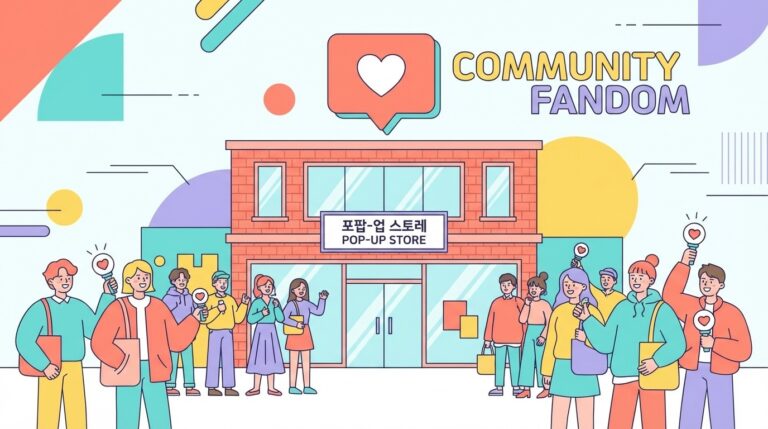
The Secret Playbook of Korean Brand Loyalty: When Customers Become a Fandom
Hello! I’m your lead editor and resident culture navigator at Daily Hangul.
Picture this: You are watching the news in Seoul, and a local fried chicken shop owner is crying. Not because he is going out of business, but because his store was completely emptied of ingredients by 2 PM. He didn’t run a massive discount campaign. Instead, a heartwarming story about him giving free meals to hungry children went viral on social media. In response, Korean netizens collectively decided to “punish” him—by relentlessly ordering chicken until he was sold out.
Welcome to the intense, highly emotional, and hyper-connected world of Korean consumer behavior.
In textbooks, you learn that businesses have gogaek (customers). But in the boardrooms of Seongsu-dong and Gangnam, marketing directors aren’t talking about customers anymore. They are talking about fandoms, lore, and collective action. Today, we are diving deep into the C2-level vocabulary and cultural psychology of how Korean brands build unbreakable community loyalty.
If you want to understand the modern Korean zeitgeist—or if you are a professional trying to navigate the Korean market—these are the concepts you need to master.
Phase 2: Core Expressions Deep Dive
To understand Korean brand loyalty, we need to look at how K-Pop terminology has completely infiltrated corporate marketing.
1. 찐팬 (Jjin-paen)
- Pronunciation: [jjin-paen] (The ‘jj’ sounds like the sharp, tense ‘tz’ in pretzel, followed by ‘pan’)
- Meaning: Literal = Real fan / Real meaning = Die-hard loyalist, brand advocate
- K-Culture Moment: You won’t see this in a classic economics textbook, but you will hear it in every modern Korean marketing meeting. When a brand like Musinsa or Starbucks Korea launches an exclusive tier, they are catering to their jjin-paen.
- Editor’s Insight: This word marks the paradigm shift in Korean commerce. You no longer just “buy” a product; you “stan” a brand. A jjin-paen doesn’t just consume; they defend the brand in comment sections and evangelize it to their friends.
- Situation Spectrum:
[🚫 Formal Business Reports] ———— [⚠️ Office Meetings] ———— [✅ Casual & Brainstorming]- Casual/Peers: ✅
- Internal Marketing Meetings: ✅ (Highly used as a buzzword)
- Formal Contracts/Executive Summaries: 🚫 (Use 충성 고객 – loyal customer instead)
- 🤔 Think About It: Why does Korean society blur the lines between consuming entertainment (idols) and consuming everyday goods (coffee, sneakers)? Does your native culture have an equivalent level of emotional attachment to local brands?
2. 돈쭐내다 (Don-jjul-nae-da)
- Pronunciation: [don-jjul-nae-da]
- Meaning: Literal = To scold with money / Real meaning = To support a good business through mass purchasing (Positive boycott)
- K-Culture Moment: This is the ultimate community-driven consumer action. If a franchise owner shows exceptional kindness or takes a brave social stance, online communities (like Daum Cafes or Twitter) will organize a campaign to don-jjul-nae-da.
- Editor’s Insight: It’s a brilliant linguistic play. Hon-jjul-nae-da means to severely scold someone. By swapping hon (spirit/scolding) with don (money), Koreans created a witty term for altruistic consumerism. It shows the immense power of digital communities in Korea.
- Situation Spectrum:
[🚫 Formal/Academic] ———— [⚠️ Casual Workplace] ———— [✅ Social Media/Friends] - 🤔 Think About It: This term reflects the Korean concept of Jeong (정) operating within a hyper-capitalist framework. How do social media communities in your country reward ethical businesses?
3. 세계관 (Se-gye-gwan)
- Pronunciation: [se-gye-gwan] (seh-gyeh-gwan)
- Meaning: Literal = Worldview / Real meaning = Brand Lore / Universe
- K-Culture Moment: Originally used for sci-fi movies or K-Pop groups (like EXO’s superpower origins or aespa’s metaverse), se-gye-gwan is now a mandatory strategy for Korean brands. Binggrae (a dairy company) created an entire animated royal universe for its milk products on Instagram. Fans consume the story, and the product becomes a souvenir of that universe.
- Editor’s Insight: If you are pitching a campaign in Korea, you must answer: “What is our brand’s se-gye-gwan?” Consumers here are highly sophisticated; they want a narrative playground, not just a list of product features.
- Situation Spectrum:
[🚫 N/A] ———— [⚠️ N/A] ———— [✅ Used everywhere from casual chat to formal marketing decks]
Phase 3: Textbook vs. Real Korean
Let’s compare the clinical terms you learned in language school with the dynamic jargon actually used in the Korean market.
| Situation | 📖 Textbook Korean | 🗣️ Real Korean (Business/Marketing) | 💡 Why the difference? |
|---|---|---|---|
| Describing highly loyal buyers | 충성 고객 (Loyal customer) | 찐팬 (True fan) | Consumers are viewed through the lens of fandom dynamics, emphasizing emotional connection. |
| Communicating with buyers | 고객 지원 (Customer support) | 소통 (Engagement/Communication) | ‘Sotong’ implies a two-way, intimate dialogue rather than a transactional service. |
| Ethical purchasing movement | 착한 소비 (Good consumption) | 돈쭐내다 (Scolding with money) | The internet generation prefers witty, active, and slightly aggressive-sounding irony to express solidarity. |
| Brand Storytelling | 브랜드 스토리 (Brand story) | 세계관 (Brand Universe/Lore) | Borrowed from gaming and K-Pop, it demands active community participation in the narrative. |
Phase 4: Cultural Context — K-Culture Deep Dive
1. The “Nunchi” of Brand Management
In Korea, brand loyalty is a double-edged sword. Because brands treat consumers like fans, consumers expect the brand to act like a loyal partner. This requires immense corporate 눈치 (Nunchi – the ability to read the room). If a brand makes a mistake, the community won’t just silently stop buying; they will organize a highly visible, coordinated boycott (불매운동). In Korea, the opposite of a jjin-paen isn’t an apathetic consumer; it’s an anti-fan.
2. The “Pop-Up” Pilgrimage (K-Travel & Food)
How do brands manifest these communities in the physical world? Through Pop-up Stores (팝업스토어). Walk through Seongsu-dong on a Saturday. You will see hundreds of people waiting in line, not for a Michelin-starred restaurant, but for a Jinro Soju or a webtoon pop-up. They are there to take four-cut photos, buy limited-edition merch, and prove their membership in the brand’s se-gye-gwan.
Phase 5: Real-life Roleplay Scenario
Setting: It’s 2:00 PM on a Tuesday in a sleek conference room in Pangyo (Korea’s Silicon Valley). You are the newly appointed Marketing Director for an international cosmetics brand launching a new line in Korea. You are brainstorming with your sharp, trend-savvy Korean team.
Characters:
– YOU: The Expat Marketing Director.
– Minji (28): Gen Z Marketing Manager, knows every TikTok trend.
– Mr. Park (42): Traditional Sales Team Leader.
Dialogue:
Mr. Park: 이번 신제품은 1+1 할인 행사로 가시죠. 제일 확실한 방법입니다.
(Ibeon sinjepumeun il-ppeulleoseu-il halin haengsaro gasijo. Jeil hwaksilhan bangbeobimnida.)
[Let’s go with a Buy-1-Get-1-Free event for the new product. It’s the most certain method.]
Minji: 팀장님, 요즘 20대들은 단순 할인에 안 움직여요. 우리 브랜드만의 세계관이 필요하다고요.
(Timjangnim, yojeum isipdaedeureun dansun harine an umjigyeoyo. Uri beuraendeumanui segyegwani piryohadagoyo.)
[Team Leader, people in their 20s don’t move for simple discounts these days. We need our own brand universe.]
Mr. Park: 화장품 파는데 무슨 세계관입니까? 아이돌도 아니고.
(Hwajangpum paneunde museun segyegwanimnikka? Aidoldo anigo.)
[What universe for selling cosmetics? We aren’t idols.]
Minji: 에이, 모르시는 말씀! 요즘 뷰티 트렌드는 찐팬들과 소통하면서 같이 크는 거예요.
(Ei, moreusineun malsseum! Yojeum byuti teurendeuneun jjinpaendeulgwa sotonghamyeonseo gachi keuneun geoyeyo.)
[Ah, you don’t know what you’re talking about! The beauty trend these days is growing together by communicating with true fans.]
(🎭 Stage Direction: Minji looks at you expectantly. Mr. Park crosses his arms.)
🔀 Your Turn! As the Director, how do you respond?
– A) “박 팀장님 말이 맞습니다. 할인이 최고죠.” (Mr. Park is right. Discounts are the best.)
– B) “민지 씨, 재미있네요. 우리 브랜드를 어떻게 팬덤으로 만들 수 있을까요?” (Minji, that’s interesting. How can we turn our brand into a fandom?)
– C) “아, 머리 아파요. 퇴근합시다!” (Ah, my head hurts. Let’s get off work!)✅ Best Choice: B — Reason: You are validating Minji’s modern C2-level insight while prompting her to bridge the gap for Mr. Park.
⚠️ Choice A Analysis: Safe for short-term sales, but completely ignores the Korean community-building meta.
Phase 6: 10-Second Shadowing Drill
Let’s practice pitching a community strategy like a native Korean marketing director. Pay attention to the pauses and emotional tone!
😤 단호하게 (Firmly/Professionally)
우리 브랜드도 / 단순한 고객을 넘어서, / 찐팬들과 소통할 수 있는 / 세계관이 필요합니다.
(uri beuraendeudo / dansunhan gogaegeul neomeoseo, / jjin-paendeulgwa sotong-hal su inneun / segyegwani piryohamnida.)
[Our brand also needs a universe where we can communicate with true fans, moving beyond just simple customers.]
Phase 7: K-Culture Mini Dictionary
| Korean | Romanization | English | Context |
|---|---|---|---|
| 팬슈머 | paen-syu-meo | Fansumer (Fan + Consumer) | Consumers who participate in the planning and creation of products, acting like proactive fans. |
| 역조공 | yeok-jo-gong | Reverse Tribute | Originally when idols buy gifts for fans. Now used when a brand gives unexpected, lavish gifts back to its loyal customers. |
| 소통 | so-tong | Communication / Engagement | The holy grail of Korean social media. It implies genuine, barrier-free interaction between brand and consumer. |
| 굿즈 | gut-jeu | Merch (Goods) | Branded merchandise. In Korea, a coffee chain’s limited edition ‘goods’ can cause overnight camping lines. |
Phase 8: Traveler Survival Kit (Brand Pop-Up Edition)
Even as a visitor, you will bump into these aggressive brand communities, especially if you want to visit trendy pop-up stores or exclusive cafes in Seoul.
🆘 Survival Phrases for Pop-up/Brand Events
– 🇰🇷 “예약하셨나요? / 앱으로 대기 걸어주세요.” (yeyak-hasyeonnayo? / aebeuro daegi georeojuseyo.)
– 🗣️ Meaning: “Did you make a reservation? / Please join the waitlist via the app.”
– 📍 Where you’ll hear it: Any hyped brand space in Seongsu, Hannam, or Hongdae.
– 💡 Pro Tip: Many Korean brand communities operate on apps like Catchtable (캐치테이블) or require a Korean phone number to join a Kakao waitlist. If you are a tourist without a local number, politely tell the staff: “외국인이라서 번호가 없는데, 현장 대기 되나요?” (I don’t have a number because I’m a foreigner; can I wait in person?)
📌 Editor’s Travel Note:
Many local brands offer instant discounts or exclusive “goods” if you follow their Instagram or add their KakaoTalk Channel on the spot. Always have your phone ready!
Phase 9: Critical Thinking — “One Step Deeper”
🧠 Think Deeper: Media vs. Reality – The Illusion of “Sotong” (Communication)
Korean brands are masters at using friendly, almost intimate language online to build a community. A massive corporation might use casual internet slang and call its followers “friends” or “family” to manufacture intimacy. However, from a critical C2 perspective, we must ask: Is this genuine sotong, or simply a highly calculated KPI?
The dark side of this fandom consumerism is that it exploits emotional labor. When a consumer’s identity becomes deeply intertwined with a corporate entity, the fallout from a mistake isn’t just a loss of sales; it’s a sense of personal betrayal. This is why corporate apologies in Korea often read like a devastating breakup letter rather than a legal liability statement.
💬 Your Turn: Have you ever felt emotionally attached to a corporate brand? Does the idea of a brand having a “universe” feel innovative or dystopian to you? Let me know in the comments!
Phase 10: FAQ & Avoiding Misunderstandings
Q: Can I use “찐팬 (Jjin-paen)” in a highly formal executive presentation?
Maybe. If you are presenting to older, traditional executives (like Mr. Park in our roleplay), it’s best to frame it as a trend: “요즘 엠지(MZ) 세대들이 말하는 이른바 ‘찐팬’을 확보해야 합니다.” (We need to secure what the MZ generation calls ‘true fans’). Otherwise, stick to 충성 고객 (loyal customers).
Q: How do I participate in a “돈쭐 (Don-jjul)” if I don’t live in Korea?
Interestingly, global K-culture fans often participate by purchasing products online and donating them locally, or by flooding the business’s social media with positive reviews!
❌ Common Mistake #1: Translating “Community” purely as “커뮤니티 (Community board/forum).” In modern Korean marketing, when they say “community,” they are often implying “팬덤 (Fandom).” It’s not just a place to talk; it’s an identity.
Phase 11: Summary & Action Items
One-Liner Summary: In the Korean market, you don’t just sell a product; you build a se-gye-gwan (universe) to communicate with your jjin-paen (true fans).
Action Mission:
– 🥉 Bronze (Solo): Practice saying the Phase 6 shadowing drill in front of a mirror with CEO-level confidence.
– 🥈 Silver (Online): Look up a Korean brand’s Instagram (e.g., Musinsa, Binggrae, Olive Young) and identify one post where they are clearly interacting with their “fandom.”
– 🥇 Gold (Field Mission): If you are in Korea, visit a brand pop-up store in Seongsu-dong. Notice how the staff treats you less like a shopper and more like an event participant.
K-Culture Mission:
Search the hashtag #돈쭐 on Twitter or Instagram. Read the stories of small business owners who received unexpected love from the Korean community. It’s a great way to practice reading advanced Korean while experiencing the warmth of modern Jeong.
Phase 12: Quiz — Interactive Challenge
1. Situational Judgment: You are consulting for a Korean café that just went viral for giving free coffee to firefighters. They are running out of beans because people are flocking to buy from them. What is the internet doing to this café?
A) 불매운동을 하고 있다 (Boycotting)
B) 돈쭐내고 있다 (Scolding with money)
C) 세계관을 만들고 있다 (Making a universe)
2. Fill in the Blank:
“우리 브랜드의 (______)을/를 이해하는 (______)들과 소통해야 합니다.”
Hint: We need to communicate with our [true fans] who understand our brand’s [universe].
3. True or False – K-Culture Edition:
In Korean marketing, adopting idol fandom strategies (like exclusive photocard merch) is considered unprofessional and strictly avoided by major corporations. (T/F)
(Check the bottom of the page or click the toggle for answers!)
Click for Answers
1. B (돈쭐내고 있다) – People are buying aggressively to support a good deed.
2. 세계관 (se-gye-gwan), 찐팬 (jjin-paen).
3. False! Even banks and tech giants use photocard merch and idol-fandom strategies to build community loyalty in Korea.
Frequently Asked Questions (FAQ)
Q: What does "찐팬 (Jjin-paen)" mean in Korean and how do you pronounce it?
A: In Korean, "찐팬 (Jjin-paen)" is pronounced [jjin-paen] and means: Literal = Real fan / Real meaning = Die-hard loyalist, brand advocate
Q: What does "돈쭐내다 (Don-jjul-nae-da)" mean in Korean and how do you pronounce it?
A: In Korean, "돈쭐내다 (Don-jjul-nae-da)" is pronounced [don-jjul-nae-da] and means: Literal = To scold with money / Real meaning = To support a good business through mass purchasing (Positive boycott)
Q: What does "세계관 (Se-gye-gwan)" mean in Korean and how do you pronounce it?
A: In Korean, "세계관 (Se-gye-gwan)" is pronounced [se-gye-gwan] and means: Literal = Worldview / Real meaning = Brand Lore / Universe






