

Phase 1: Immersive Hook
Hello! I’m the Head Editor of Daily Hangul.
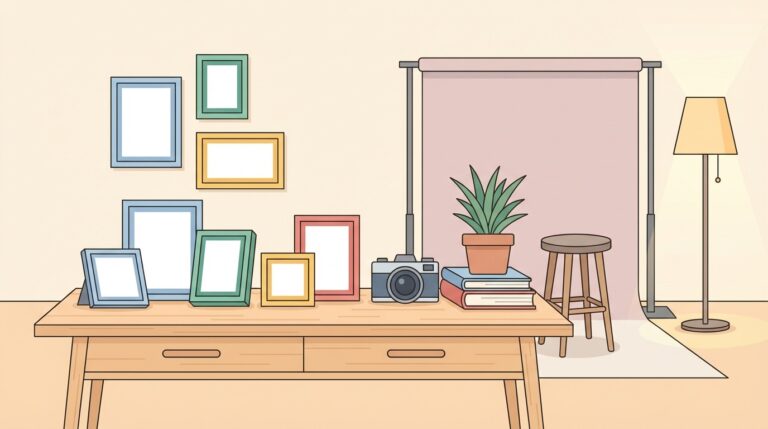
Picture this: You just had an amazing time taking photos with your friends at a trendy retro photo studio in Yeonnam-dong. Or maybe you finally booked a session at one of those famous Korean profile studios where they make you look like a K-Pop idol. The shoot is done, your skin has been flawlessly retouched, and now the photographer points to a huge wall of frames.
Suddenly, you feel like a character in a K-Drama—you know, the ones where the wealthy Chaebol families have a gigantic, gold-trimmed portrait in their living room. The photographer asks you a question in rapid Korean. You just want a simple wooden frame for your desk, but how do you say that without sounding awkward?
Don’t worry! Choosing a frame (액자 고르기) is the final boss of the Korean photo studio experience. Today, we’re going to learn how to pick exactly what you want, like a true local. By the end of this guide, you’ll navigate the studio with confidence!
Phase 2: Deep Dive into Core Expressions
Let’s master the top 3 phrases you need to survive the photo frame selection process at an A2 (Beginner) level.
1. 이걸로 할게요. (I’ll go with this one.)
- Pronunciation: [igeollo halgeyo] – The ‘geollo’ sounds like “gull-lo” rolling off your tongue.
- Meaning: Literal: I will do with this. / Real nuance: I’ll choose this one / I’ll take this.
- K-Culture Moment: You’ll hear this everywhere in Korea—not just in studios, but at cafes, restaurants, and clothing stores. In K-Dramas, when the cool male lead buys a whole rack of clothes for the protagonist, he points and says, “이걸로 할게요.”
- Editor’s Insight: Instead of the difficult verb “선택하다” (to select), Koreans simply use “하다” (to do) when making a choice. It sounds incredibly natural and decisive!
- Situation Spectrum:
[🚫 절대 금지] ———— [⚠️ 주의] ———— [✅ 자유롭게]
- Friends (Casual): ✅ (Say: 이걸로 할래)
- Staff/Clerks (Semi-formal): ✅ (Perfect!)
- Boss/Elders (Formal): ⚠️ (Better to say: 이것으로 하겠습니다)
- 🤔 Think About It: Why do Koreans use the verb “to do” (하다) for “to choose”? It shows that choosing isn’t just a mental thought; it’s an action you are taking!
2. 탁상용이에요, 벽걸이용이에요? (Is it for a desk, or for the wall?)
- Pronunciation: [taksang-yong-ieyo, byeokgeori-yong-ieyo?]
- Meaning: Desk-use or wall-hanging-use?
- K-Culture Moment: When you visit a Korean office or a K-Pop idol’s dorm on a reality show, you’ll always see cute “탁상용” (desk) frames of their pets, family, or members!
- Editor’s Insight: This looks like a scary, long word, but let’s break it down! The magic suffix here is ‘-용’ (yong), which means “for the use of.” 탁상 (desk) + 용 (use) = For desk use. 벽 (wall) + 걸이 (hanging) + 용 (use) = For wall hanging.
- Situation Spectrum:
[🚫 절대 금지] ———— [⚠️ 주의] ———— [✅ 자유롭게]
- Friends (Casual): ✅ (Say: 탁상용이야?)
- Staff/Clerks (Semi-formal): ✅
- Boss/Elders (Formal): ✅
- 🤔 Think About It: Does your language have a short suffix like ‘-용’ to explain the purpose of an item so quickly?
3. 조금 더 심플한 거 있어요? (Do you have something a bit more simple?)
- Pronunciation: [jogeum deo simpeulhan geo isseoyo?] – ‘simpeul’ is just the English word “simple” said with a Korean accent!
- Meaning: Literal/Real nuance: Do you have a simpler one?
- K-Culture Moment: Korean interior design trend right now is all about minimal, clean aesthetics (think of those aesthetic Korean cafes). Young Koreans love “simple” designs over heavy, traditional ones.
- Editor’s Insight: Konglish (Korean + English) is your best friend! Instead of using difficult Korean words for “uncomplicated,” just say “심플한 거” (a simple thing).
- Situation Spectrum:
[🚫 절대 금지] ———— [⚠️ 주의] ———— [✅ 자유롭게]
- Friends (Casual): ✅
- Staff/Clerks (Semi-formal): ✅
- Boss/Elders (Formal): ⚠️ (Use ‘단순한’ instead of Konglish if speaking to strict elders)
Phase 3: Textbook vs Real Life
Let’s see how what you learn in textbooks differs from what Koreans actually say at the studio.
| Situation | 📖 Textbook Korean | 🗣️ Real Korean | 💡 Why is it different? |
|---|---|---|---|
| Choosing a wooden frame | 저는 나무 액자를 선택하겠습니다. | 그냥 기본 나무로 할게요. | Koreans prefer short, efficient sentences and use “하다” (to do) instead of formal verbs. |
| Asking for the cheapest one | 가장 싼 액자를 주십시오. | 제일 기본 액자는 뭐예요? | Asking directly for “cheap” (싼) can feel blunt. Asking for “basic” (기본) sounds much more polite and trendy! |
| Declining an expensive frame | 아니요, 너무 비싸서 싫습니다. | 아, 저는 심플한 게 좋아서요. | Indirect communication! Saying “I like simple things” is a polite excuse to reject a fancy, expensive frame. |
Bottom Note: As an A2 learner, using “기본” (basic/standard) is your secret weapon. When in doubt, just ask for “기본”!
Phase 4: Cultural Deep Dive
4-1. Non-verbal Communication: The “Open Hand” Point
In many cultures, pointing with your index finger is completely fine. But in Korea, if you point at a frame (or a person!) with just one finger, it can seem a bit aggressive or rude.
Pro Tip: When you say “이걸로 할게요” (I’ll go with this one), use your whole hand with your palm facing up to gesture toward the frame. It’s a small detail, but it shows you have great Nunchi (social awareness)!
4-2. K-Culture Connection: The Magic of K-Photo Studios
Korean photo studios are world-famous, not just for the lighting, but for 보정 (Bo-jeong / Photo retouching). It’s deeply tied to K-Beauty standards. When you get a passport photo or a profile picture taken in Korea, the photographer will often sit with you and Photoshop your blemishes, adjust your face shape, and fix your hair in real-time. It’s like magic!
Because the digital photo is already so perfect, modern Koreans usually prefer a “심플한 액자” (simple frame) or a frameless acrylic block so the focus stays entirely on the beautiful photo itself, not a chunky, distracting border.
Phase 5: Immersive Roleplay
Scenario A: The Final Choice
- Setting: A trendy, aesthetic photo studio in Seongsu-dong. Soft K-R&B music is playing. You are sitting at a Mac computer with the photographer.
- Characters:
- YOU: An A2 Korean learner taking a solo profile picture to celebrate your trip to Korea.
- Jihoon (28): The photographer. Friendly, fast, and uses a lot of trendy words.
Dialogue:
Jihoon: 사진 보정 다 끝났습니다! 너무 잘 나왔어요. 액자는 어떤 걸로 하시겠어요?
(sajin bojeong da kkeunnasseumnida! neomu jal nawasseoyo. aekjaneun eotteon geollo hasigesseoyo?)
[The photo retouching is all done! It came out great. Which frame would you like to do?]
(🎭 Stage Direction: Jihoon points to a wall with 20 different frames.)
YOU: 음… 종류가 엄청 많네요.
(eum… jongnyuga eomcheong manneyo.)
[Hmm… there are so many kinds.]
Jihoon: 네, 벽걸이용이랑 탁상용이 있습니다.
(ne, byeokgeoriyong-irang taksang-yong-i isseumnida.)
[Yes, we have wall-hanging types and desk types.]
YOU: 탁상용으로 할게요. 제 책상에 놓을 거예요.
(taksang-yong-euro halgeyo. je chaeksang-e noeul geoyeyo.)
[I’ll go with the desk type. I’m going to put it on my desk.]
Jihoon: 탁상용은 아크릴이랑 나무 액자가 제일 인기 많아요. 이 화려한 유리 액자는 어떠세요?
(taksang-yong-eun akeurir-irang namu aekjaga jeil ingi manayo. i hwaryeohan yuri aekjaneun eotteoseyo?)
[For desk types, acrylic and wood frames are the most popular. How about this fancy glass frame?]
🔀 Your Turn! How do you reply?
– A) 아니요, 싫어요. 안 예뻐요. (No, I hate it. It’s not pretty.)
– B) 아, 저는 조금 더 심플한 거 원해요. 기본 나무 액자로 할게요.
– C) 제일 싼 거 주세요.✅ Best Choice: B — Reason: It politely declines the fancy option by stating your preference for something “simple,” and firmly makes your choice.
⚠️ Choice A & C Analysis: A is too direct and hurts feelings. C is efficient but lacks the warm, polite Nunchi expected in this service interaction.
YOU: (Choosing B) 아, 저는 조금 더 심플한 거 원해요. 기본 나무 액자로 할게요.
(a, jeoneun jogeum deo simpeulhan geo wonhaeyo. gibon namu aekjaro halgeyo.)
[Ah, I want something a bit more simple. I’ll go with the basic wood frame.]
Jihoon: 아, 네! 심플한 게 안 질리고 좋죠. 이걸로 할게요.
(a, ne! simpeulhan ge an jilligo jotjyo. igeollo halgeyo.)
[Ah, yes! Simple things don’t get tiring. We’ll go with this one.]
YOU: 네, 감사합니다. 혹시 디지털 파일도 카톡으로 주시나요?
(ne, gamsahamnida. hoksi dijiteol paildo katog-euro jusinayo?)
[Yes, thank you. By the way, do you give the digital file via KakaoTalk too?]
Jihoon: 그럼요! 바로 보내드릴게요.
(geureomyo! baro bonaedeurilgeyo.)
[Of course! I’ll send it right away.]
Scenario B: Bonus K-Culture Scenario (Life Four Cuts)
You are at an “인생네컷” (Life Four Cuts) self-photo booth in Myeongdong with your friends. You just printed your photos.
– YOU: 와, 사진 귀엽다! (Wow, the photo is cute!)
– Friend: 우리 이거 비닐에 넣자. (Let’s put this in the plastic sleeve.)
– YOU: 응, 벽에 붙일 거야. (Yeah, I’m going to stick it on my wall.)
No heavy frames needed here, just cute washi tape and plastic sleeves!
Phase 6: 10-Second Shadowing Drill
Let’s practice! Speak out loud and match the emotion.
😊 아, / 저는 그냥 / 탁상용 / 기본 액자로 할게요!
(a, / jeoneun geunyang / taksang-yong / gibon aekjaro halgeyo!)
“Ah, / I’ll just / go with the desk-type / basic frame!”
Tip: Pause slightly at the slashes (/). Emphasize ‘기본’ (basic) so the staff knows exactly what you want!
Phase 7: K-Culture Glossary
| Korean | Romanization | English | Context/Explanation |
|---|---|---|---|
| 보정 | bojeong | Retouching / Photoshop | The absolute most important part of Korean photography. Fixing skin, face shape, etc. |
| 탁상용 | taksang-yong | For desk use | Items meant to sit on a table or desk. |
| 벽걸이 | byeokgeori | Wall-hanging | Items meant to be hung on a wall. |
| 인생네컷 | insaeng-nekeot | Life Four Cuts | Famous Korean self-photo booths. A must-do with friends! |
| 원본 / 수정본 | wonbon / sujeongbon | Original / Edited version | When you ask for digital files, you usually get the ‘sujeongbon’ (edited). |
Phase 8: Traveler’s Survival Kit
If you’re getting photos taken during your trip to Korea, you MUST know these phrases!
🆘 Survival Phrases for Photo Studios
1. 🇰🇷 “언제 찾으러 오면 돼요?” (eonje chajeureo omyeon dwaeyo?)
– 🗣️ English: When should I come to pick it up?
– 📍 When to use: After choosing your frame, as it takes time to print and frame it.
- 🇰🇷 “카톡으로 받을 수 있어요?” (katog-euro badeul su isseoyo?)
- 🗣️ English: Can I receive it via KakaoTalk?
- 📍 When to use: To get your digital files. Koreans use KakaoTalk for everything!
- 🇰🇷 “조금만 더 자연스럽게 해주세요.” (jogeumman deo jayeonseureopge haejuseyo.)
- 🗣️ English: Please make it look a little more natural.
- 📍 When to use: If the photographer’s Bojeong (Photoshop) makes you look like a completely different person!
📌 Editor’s Travel Note
– Digital is King: In Korea, you almost always get the high-resolution digital file sent to your phone. Make sure you have KakaoTalk installed or an email ready!
– Speed: Korean studios are incredibly fast (The “Pali-pali” culture). Often, your frame will be ready in 30 minutes to an hour. Go grab a coffee nearby and come back!
Phase 9: Think Deeper – “한 발 더 깊이”
Media vs Reality: The Visual Culture of Korea
In K-Dramas, giant, ornate family portraits in the living room are a trope used to symbolize a family’s wealth, tradition, and hierarchy. However, real modern Korea is driven by “Instagram aesthetics.” Today’s generation prefers sleek, minimal profile shoots (프로필 사진) and frameless acrylic stands that fit perfectly into small, modern apartments. The photo studio is no longer just for formal family events; it’s a playground to record one’s youth, pets, and friendships in the most visually pleasing way possible.
💬 Your Turn:
How do people display photos in your culture? Do you prefer heavy, decorative frames or keeping everything purely digital on your phone? Let me know in the comments!
Phase 10: FAQ & Troubleshooting
Q: Is it rude to say “이걸로 할게요” to an older staff member?
A: Not necessarily “rude,” but it is slightly casual. Because you are the paying customer, staff usually won’t mind at all. However, if you want to sound perfectly polite to an older photographer, say, “이걸로 하겠습니다” (igeollo hagetseumnida).
Q: Can I negotiate the price of the frame?
A: No. Unlike traditional markets, photo studios have fixed prices. Negotiating here will just cause confusion!
❌ Common Mistake #1: Asking “이거 얼마예요?” (How much is this?) repeatedly.
✅ Do this instead: Look for the price list (가격표) first. Usually, photo studios have a clear menu book or iPad showing the exact prices of the frames.
Phase 11: Wrap-up & Action Missions
One-Liner Summary: Remember, when in doubt at the studio, just point with a flat hand and say: “기본 액자로 할게요!” (I’ll go with the basic frame!)
Action Mission 3 Steps:
– 🥉 Bronze (Solo): Look at a photo frame in your room right now and say out loud: “이걸로 할게요!”
– 🥈 Silver (Online): Comment below with what type of frame you like: 나무 (Wood) or 아크릴 (Acrylic)?
– 🥇 Gold (Real-Life): Next time you are in Korea, visit a photo studio and successfully choose your frame entirely in Korean!
📸 Special K-Culture Mission:
Go to Instagram and search the hashtag #프로필사진 (Profile Photo) or #시현하다 (Sihyeonhada). Look at how modern Koreans take their studio photos. Notice how simple and clean the aesthetic is!
Phase 12: Interactive Quiz
Test your knowledge before you go!
1. Fill in the blank:
You want to put a photo on your office desk. You should ask the staff:
“_________용 액자 있어요?”
(A) 벽걸이
(B) 탁상
(C) 기본
2. True or False – K-Culture Edition:
“In Korean photo studios, it’s considered strange to ask the photographer to edit or Photoshop your face.”
(True / False)
3. Situational Judgment:
The photographer shows you a shiny, golden frame that costs $100. You want a cheaper, normal one. What is the most natural Korean way to say this?
(A) 제일 싼 거 주세요. (Give me the cheapest.)
(B) 안 예뻐요. (It’s not pretty.)
(C) 조금 더 심플한 기본 액자로 할게요. (I’ll go with a slightly more simple, basic frame.)
🗝️ Click here for Answers!
1. (B) 탁상. 탁상용 means “for desk use.”
2. False. Retouching (보정) is an essential, highly expected part of Korean photo studio culture!
3. (C). Using “심플한” (simple) and “기본” (basic) is the most polite, native-sounding way to reject an expensive/flashy option.
Frequently Asked Questions (FAQ)
Q: What does "이걸로 할게요. (I'll go with this one.)" mean in Korean and how do you pronounce it?
A: In Korean, "이걸로 할게요. (I'll go with this one.)" is pronounced [igeollo halgeyo] and means: Literal: I will do with this. / Real nuance: I'll choose this one / I'll take this.
Q: What does "탁상용이에요, 벽걸이용이에요? (Is it for a desk, or for the wall?)" mean in Korean and how do you pronounce it?
A: In Korean, "탁상용이에요, 벽걸이용이에요? (Is it for a desk, or for the wall?)" is pronounced [taksang-yong-ieyo, byeokgeori-yong-ieyo?] and means: Desk-use or wall-hanging-use?
Q: What does "조금 더 심플한 거 있어요? (Do you have something a bit more simple?)" mean in Korean and how do you pronounce it?
A: In Korean, "조금 더 심플한 거 있어요? (Do you have something a bit more simple?)" is pronounced [jogeum deo simpeulhan geo isseoyo?] and means: Literal/Real nuance: Do you have a simpler one?







