

Phase 1: 공감 — 몰입형 오프닝 (Immersive Hook)
Hello there! I’m the Lead Editor at Daily Hangul.
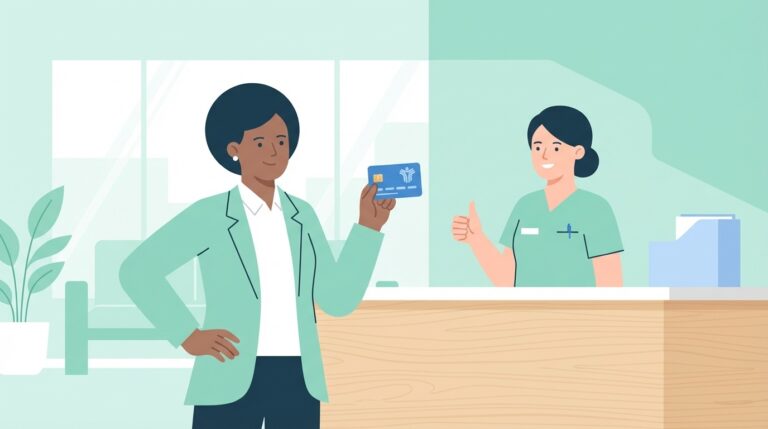
Picture this: You’re watching the K-Drama Hospital Playlist (슬기로운 의사생활), and you see doctors running around, patients getting world-class treatment, and everyone seems so calm about the medical bills. Then, one day, you catch a terrible cold in Seoul. You visit an ENT (Ear, Nose, and Throat) clinic, the doctor checks you out, uses a nebulizer, and writes a prescription. You walk up to the desk, nervously clutching your wallet, expecting a massive bill. The receptionist says, “That’ll be 5,000 won ($4).”
You freeze. Wait, what? Is this a mistake?
No, it’s not a mistake. Welcome to the magic of Korea’s National Health Insurance System (국민건강보험). As a C1 learner living or working in Korea, you are likely enrolled in this system. However, knowing that healthcare is cheap and actually navigating the advanced administrative vocabulary—like distinguishing between covered items, non-covered items, and private indemnity insurance—are two very different beasts.
If you don’t know the right words, you might end up paying out of pocket for things that should be covered, or missing out on refunds from your private insurance. Today, we are going beyond the basic “배 아파요” (My stomach hurts). We are going to master the C1-level medical administrative Korean that will make local nurses respect your savvy! Let’s dive in.
Phase 2: 핵심 표현 심층 분석 (Deep Dive)
At the C1 level, your goal is to understand the legal and administrative nuances of your healthcare.
1. 급여 항목인가요, 비급여 항목인가요?
- Pronunciation: [geubyeo hangmogingayo, bigeubyeo hangmogingayo?] + [Geub-yeo sounds like a sharp gulp, while bi-geub-yeo just adds a ‘bee’ at the front.]
- Meaning: (Literal) Is it a salary item or non-salary item? / (Real Nuance) Is this covered by National Health Insurance, or is it out-of-pocket?
- K-Culture Moment: You visit a dermatologist (피부과) in Gangnam for acne. The doctor suggests a laser treatment and a prescription cream. The cream might be 급여 (covered, very cheap), but the laser is definitely 비급여 (non-covered, expensive because it’s deemed ‘cosmetic’). Asking this question immediately signals you are not a clueless tourist.
- Editor’s Insight: The word ‘급여’ usually means ‘salary’ or ‘pay’ in business, but in medicine, it means ‘benefits provided by the insurance’.
- Situation Spectrum:
[🚫 절대 금지] ———— [⚠️ 주의] ———— [✅ 자유롭게]
- Casual with friends: ⚠️ (Too formal, friends just say “보험 돼?”)
- To hospital staff: ✅ (Perfectly professional and highly recommended)
- 🤔 Think About It: Korea heavily categorizes medical treatments into ‘essential for health’ (급여) and ‘elective/quality of life’ (비급여). Does your home country draw this line as strictly?
2. 실비 청구하게 서류 좀 떼주세요.
- Pronunciation: [silbi cheongguhage seoryu jom tte-juseyo.] + [tte-ju-se-yo uses the tense ‘ㄸ’ sound, like the sharp clicking of a tongue.]
- Meaning: (Literal) Please detach documents so I can claim actual expenses. / (Real Nuance) I’m going to claim this on my private indemnity insurance, please issue the required documents.
- K-Culture Moment: At the administration desk (원무과) after paying for an MRI. Most Koreans have a secondary private insurance called 실비보험 (Silbi) to cover the 20-30% co-pay or non-covered items. Saying this prompts the staff to print a very specific set of receipts.
- Editor’s Insight: The verb ‘떼다’ literally means to detach or tear off, but in administrative Korean, it’s the colloquial standard for ‘issuing a document’ (서류를 발급받다).
- Situation Spectrum:
[🚫 절대 금지] ———— [⚠️ 주의] ———— [✅ 자유롭게]
- Hospital Receptionist: ✅ (Standard everyday phrase)
- Formal written request: 🚫 (Write: 실손보험 청구용 서류 발급을 요청합니다)
- 🤔 Think About It: Notice how Koreans shorten “실손의료보험” (Actual loss medical insurance) to just “실비”. Korean society values speed (빨리빨리), and this reflects heavily in how four-syllable terms are ruthlessly cut down to two.
3. 본인 부담금이 어떻게 되나요?
- Pronunciation: [bonin budamgeumi eotteoke doenayo?] + [Bone-in boo-dam-geum]
- Meaning: (Literal) How does the person’s burden money become? / (Real Nuance) What is my out-of-pocket co-pay?
- K-Culture Moment: A doctor suggests an expensive ultrasound. With recent government policies (보장성 강화), more ultrasounds are becoming covered, but the co-pay percentage varies. This is the smartest question you can ask before agreeing to a procedure.
- Editor’s Insight: This is top-tier adulting in Korea. “본인” (oneself) + “부담금” (burden/charge). Using this vocabulary shows you have a deep grasp of formal societal structures.
- Situation Spectrum:
[🚫 절대 금지] ———— [⚠️ 주의] ———— [✅ 자유롭게]
- Hospital Administration / Doctor: ✅
Phase 3: 교과서 vs 진짜 한국어 (Textbook vs Real Life)
At the C1 level, you need to transition from overly literal textbook translations to the sleek, efficient phrases locals use.
| Situation | 📖 Textbook Korean | 🗣️ Real Korean | 💡 Why the difference? |
|---|---|---|---|
| Asking if NHIS applies | 국민건강보험이 적용됩니까? | 이거 보험(처리) 돼요? / 급여 항목이에요? | Efficiency. “국민건강보험” is too long. Locals just say “보험” or use the technical term “급여”. |
| Asking for a receipt | 영수증을 주시겠어요? | 진료비 세부 내역서 부탁드려요. | A simple receipt (영수증) isn’t enough for insurance claims; you need the “detailed breakdown” (세부 내역서). |
| Identifying yourself at reception | 저는 직장 가입자입니다. | (Just handing over the ARC) 조회해 주세요. | Hospitals automatically pull your NHIS status using your Resident Registration Number (or ARC number). No need to explain your status! |
Bottom Note: You don’t need to over-explain your insurance status. In Korea, the healthcare system is deeply digitized. Handing over your ID card (신분증) or Alien Registration Card (외국인등록증) is usually enough for them to instantly see your coverage history.
Phase 4: 문화적 맥락 — K-Culture 딥다이브 (Cultural Deep Dive)
4-1. Non-verbal Communication: The Art of the Hospital ‘Nunchi’ (눈치)
Korean clinics are incredibly efficient. You might wait 10 minutes, see the doctor for exactly 3 minutes, and pay in 1 minute. Do not be offended if the doctor speaks rapidly and types furiously while talking to you. It’s not rudeness; it’s the systemic necessity of seeing 50+ patients a day. Have your symptoms ready to explain concisely.
4-2. K-Drama & K-Beauty Connections
The “IV Drip” Trope (링거 투혼):
Ever noticed in K-Dramas that when a character is stressed or overworked, they go to the hospital to “get an IV drip” (링거 맞다)? In Korea, getting a vitamin or saline IV drip is a common remedy for fatigue. However, these are almost always 비급여 (non-covered) and can cost around 50,000 to 100,000 won.
K-Beauty & Dermatology:
Many tourists flock to Korea for affordable skincare (K-Beauty). But beware: procedures for beautification (acne extraction, Botox, laser hair removal) are 비급여 and heavily taxed (VAT applies). However, if you have a skin disease (like severe atopic dermatitis or shingles), it becomes a 급여 (covered) treatment and costs practically nothing. The doctor decides this line, so knowing how to ask “이거 급여로 처리되나요?” is your financial superpower.
Phase 5: 실전 롤플레이 시나리오 (Immersive Roleplay)
Scenario A: The Checkout Desk (원무과)
Setting: A bustling orthopedics clinic (정형외과) in Yeouido. You just had physical therapy for a sprained ankle. You are standing at the reception desk, where the nurse is rapidly clicking her mouse.
Characters:
– YOU: A foreign professional working in Seoul, enrolled in NHIS, and you also pay 15,000 won a month for private ‘Silbi’ insurance.
– Nurse Kim: Efficient, polite, but dealing with a line of 5 grandmothers behind you.
Nurse Kim: 환자분, 오늘 물리치료랑 엑스레이 하셔서 총 24,000원입니다.
(Hwanjabun, oneul mullichiryorang ekseurei hasyeoseo chong isaman sicheon-wonimnida.)
[Patient, you had physical therapy and an X-ray today, so the total is 24,000 won.]
YOU: 아, 네. 결제해 주세요.
(A, ne. gyeoljehae juseyo.)
[Ah, yes. Please process the payment.]
(🎭 Stage Direction: You hand over your credit card.)
Nurse Kim: 네, 5개월 할부 해드릴까요?
(Ne, o-gaewol halbu haedeurilkkayo?)
[Yes, would you like to pay in installments over 5 months? – A common joke/habit for anything over 10k won, but she means one-time payment!]
YOU: 아니요, 일시불로 해주세요.
(Aniyo, ilsibullo haejuseyo.)
[No, one-time payment please.]
🔀 당신의 차례! 어떻게 대답할까요? (You need to claim this on your private insurance!)
– A) “영수증 주세요.” (Give me a receipt.)
– B) “저 보험 있어요. 돈 돌려주세요.” (I have insurance. Give me money back.)
– C) “실비 청구할 건데, 진료비 세부 내역서랑 영수증 같이 떼주세요.”✅ Best Choice: C — This is the absolute golden phrase.
⚠️ Choice A Analysis: A normal credit card receipt (카드 영수증) doesn’t show the medical breakdown, so your insurance company will reject the claim.
🚫 Choice B Analysis: Completely incorrect. The hospital doesn’t give you the refund; your private insurance company does.
Scenario B: Bonus – The Health Screening (건강검진)
Korean companies require employees to get a national health screening (국가건강검진) every 1-2 years.
Co-worker: 이번에 건강검진 받을 때 수면 내시경 추가할 거예요?
[Are you going to add a sedated endoscopy during your health screening this time?]
YOU: 그거 비싸지 않아요?
[Isn’t that expensive?]
Co-worker: 아니요, 국가검진 대상자라서 본인 부담금 조금만 내면 돼요!
[No, since you are eligible for the national screening, you only pay a small out-of-pocket fee!]
Phase 6: 10초 섀도잉 드릴 (Shadowing Drill)
Let’s practice the flow of a polite, yet assertive administrative request.
😊 저기요, / 실비 청구할 건데요, / 진료비 세부 내역서 좀 / 떼주실 수 있나요?
(jeogiyo, / silbi cheongguhal geondeyo, / jinryobi sebu naeyeokseo jom / ttejushil su innayo?)
- Intonation Tip: Raise your pitch slightly at “건데요” to show you are providing context, then end with a soft, polite upward inflection at “있나요?”.
Phase 7: K-Culture 미니 사전 (K-Culture Glossary)
| 한국어 | Romanization | English | Context/Explanation |
|---|---|---|---|
| 건강보험 | geongang boheom | National Health Insurance | The mandatory, single-payer healthcare system in Korea. |
| 실비(보험) | silbi (boheom) | Private Indemnity Insurance | Supplemental insurance that covers the out-of-pocket costs NHIS doesn’t cover. |
| 급여 | geubyeo | Covered Items | Treatments subsidized by NHIS (e.g., basic checkups, essential meds). |
| 비급여 | bigeubyeo | Non-covered Items | Treatments entirely paid out-of-pocket (e.g., cosmetic lasers, certain IV drips). |
| 본인 부담금 | bonin budamgeum | Co-pay / Out-of-pocket | The percentage of the medical bill you must pay yourself. |
| 건강검진 | geongang geomjin | Health Screening | A comprehensive medical checkup subsidized heavily by the government. |
Phase 8: 여행자 서바이벌 키트 (Traveler’s Survival Kit)
Even if you are C1 in Korean, getting sick while traveling is terrifying, especially if you aren’t enrolled in NHIS yet. Don’t worry; Korean medical care is relatively affordable even for uninsured foreigners.
🆘 서바이벌 표현 TOP 3
– 🇰🇷 “외국인 진료 가능한가요?” (oegugin jinryo ganeunghangayo?)
– 🗣️ Meaning: Do you accept/treat foreign patients?
– 🇰🇷 “여행자 보험 처리용 영문 진단서 발급 되나요?” (yeohaengja boheom cheoriyong yeongmun jindanseo balgeup doenayo?)
– 🗣️ Meaning: Can you issue a medical certificate in English for my travel insurance claim?
– 🇰🇷 “보험이 없는데, 대략 비용이 얼마나 나올까요?” (boheomi eomneunde, daeryak biyeongi eolmana naolkkayo?)
– 🗣️ Meaning: I don’t have (local) insurance, roughly how much will it cost?📌 Editor’s Travel Note
– Finding Clinics: Search “내과” (Internal Medicine) or “이비인후과” (ENT) on Naver Map/Kakao Map. They are literally on every corner in commercial buildings.
– Pharmacies (약국): You cannot buy strong medicine (like antibiotics) over the counter. You MUST see a doctor first and bring the prescription (처방전) to the pharmacy.
– International Clinics: Major university hospitals (Severance, SNU Hospital, Asan) have dedicated “International Healthcare Centers” with English-speaking staff, but they are much more expensive than local street clinics.
Phase 9: 비판적 사고 코너 — “한 발 더 깊이” (Think Deeper)
🧠 Think Deeper: Language & Power in Korean Healthcare
Have you noticed that medical Korean relies heavily on complex Sino-Korean (Hanja) words? Words like 급여 (給與), 본인부담금 (本人負擔金), and 처방전 (處方箋) can feel incredibly academic compared to their English equivalents. Historically, medical knowledge was a privilege of the elite who could read Hanja. Even today, this dense vocabulary creates an air of authority in hospitals. Yet, paradoxically, Korea’s National Health Insurance is one of the most egalitarian, universally accessible systems in the world. It’s a fascinating contrast: the language of healthcare sounds elitist, but the execution of healthcare is fundamentally socialist and equal.💬 Your Turn: Does the medical terminology in your native language sound drastically different from everyday speech? Does it make healthcare feel intimidating? Share your thoughts in the comments!
Phase 10: FAQ & 오해 방지 (Troubleshooting)
Q: Do I need to carry my physical Health Insurance Card (건강보험증) to the hospital?
No! This is a relic of the past. As long as you have your Alien Registration Card (ARC) or even just know your Resident/ARC number by heart, the hospital can pull up your coverage instantly.
Q: I have NHIS. Does that mean the pharmacy is free?
Not exactly. If you have a doctor’s prescription (처방전), the medicine is heavily subsidized (급여), making it very cheap (usually 3,000-5,000 won). However, if you just walk in and buy over-the-counter drugs like Tylenol or cold medicine without a prescription, you pay full price (비급여).
❌ 흔한 실수 #1: Asking “할인해 주세요” (Please give me a discount) at a hospital.
✅ 이렇게 하세요: Medical fees (급여 항목) are strictly regulated by the government. You cannot haggle. If it’s too expensive, ask: “이거 비급여 항목인가요? 꼭 필요한가요?” (Is this non-covered? Is it absolutely necessary?)
Phase 11: 요약 및 액션 아이템 (Wrap-up)
One-Liner Summary: Mastering the terms 급여 (covered), 비급여 (non-covered), and 실비 청구 (private insurance claim) is the key to navigating Korean healthcare like a seasoned local.
Action Mission 3단계:
– 🥉 Bronze: Stand in front of a mirror and practice saying “본인 부담금이 어떻게 되나요?” naturally.
– 🥈 Silver: Look at a recent pharmacy or hospital receipt you have. Try to locate the words “급여” and “비급여” on the paper.
– 🥇 Gold: The next time you visit a hospital or dentist (치과), boldly ask the front desk to clarify which part of your treatment is “급여” and which is “비급여”!
K-Culture Mission:
Go to YouTube and search for clips of Hospital Playlist (슬기로운 의사생활) or Dr. Romantic (낭만닥터 김사부). Pay attention to the scenes at the front desk. You’ll definitely hear the administrative terms we learned today.
Did you ever have a surprising experience at a Korean hospital? Drop your story in the comments! 👇
Phase 12: 퀴즈 — 인터랙티브 챌린지 (Interactive Quiz)
1. Situational Judgment: You are checking out after a dermatologist appointment. You want to claim the cost on your private indemnity insurance. What should you say?
– A) 진단서 하나만 떼주세요.
– B) 실비 청구하게 진료비 세부 내역서 부탁드려요.
– C) 건강보험 적용해 주세요.
2. True or False — K-Culture Edition:
– T/F: In Korea, you must visit a pharmacy to get prescription medication; clinics generally do not dispense pills directly.
3. Fill in the Blank:
– “원장님, 이 수면 내시경은 국가건강검진 _______ 항목인가요, 아니면 제가 전액 부담해야 하는 _______ 항목인가요?”
👀 정답 보기 (Click for Answers)
1. B – You specifically need the ‘detailed breakdown’ (세부 내역서) for Silbi claims. ‘진단서’ (A) is a formal medical certificate that often costs extra money and isn’t always needed for simple claims.
2. True – Due to the “separation of prescribing and dispensing” law (의약분업), doctors write the prescription, and you must walk to an independent pharmacy (usually on the 1st floor of the same building) to get the meds.
3. 급여, 비급여 – Is it a covered item (급여), or a non-covered item (비급여) that I have to pay fully for?
Frequently Asked Questions (FAQ)
Q: What does "급여 항목인가요, 비급여 항목인가요?" mean in Korean and how do you pronounce it?
A: In Korean, "급여 항목인가요, 비급여 항목인가요?" is pronounced [geubyeo hangmogingayo, bigeubyeo hangmogingayo?] and means: (Literal) Is it a salary item or non-salary item? / (Real Nuance) Is this covered by National Health Insurance, or is it out-of-pocket?
Q: What does "실비 청구하게 서류 좀 떼주세요." mean in Korean and how do you pronounce it?
A: In Korean, "실비 청구하게 서류 좀 떼주세요." is pronounced [silbi cheongguhage seoryu jom tte-juseyo.] and means: (Literal) Please detach documents so I can claim actual expenses. / (Real Nuance) I'm going to claim this on my private indemnity insurance, please issue the required documents.
Q: What does "본인 부담금이 어떻게 되나요?" mean in Korean and how do you pronounce it?
A: In Korean, "본인 부담금이 어떻게 되나요?" is pronounced [bonin budamgeumi eotteoke doenayo?] and means: (Literal) How does the person's burden money become? / (Real Nuance) What is my out-of-pocket co-pay?







