

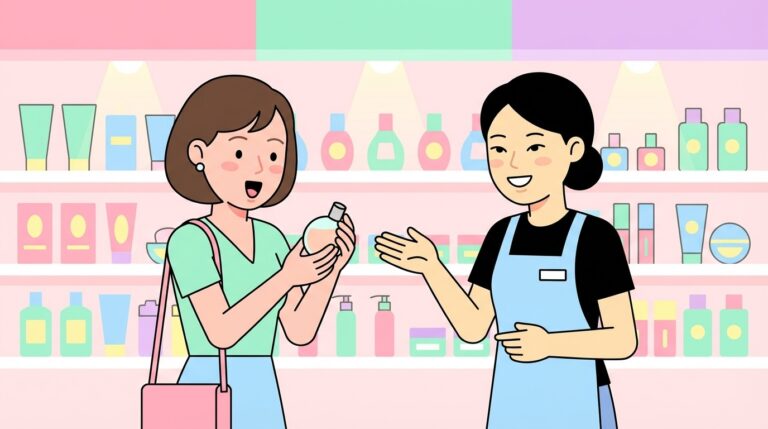
Phase 1: Immersive Hook — The Peak of K-Compliments
Hello! I’m the lead editor of Daily Hangul, your veteran tutor and local cultural navigator in Seoul.
Picture this: You are at a bustling K-BBQ restaurant in Gangnam. The pork belly is sizzling, and you are chatting with your new Korean friends. Eventually, the inevitable question pops up: “How old are you?” You casually state your age. Suddenly, the entire table gasps. Eyes widen. Someone drops their lettuce wrap.
“No way! I thought you were in your twenties!”
If you’ve watched any K-Drama, you know that looking young is a massive deal in Korea. In the land of K-Beauty, 10-step skincare routines, and idol aesthetics, the ultimate compliment you can receive is being called a 동안 (Dong-an)—a “baby face.” But when a Korean person throws this compliment at you, how should you react? Do you agree? Do you deny it?
Today, we are diving into the exact phrases you need to understand and use when dealing with the magical Korean concept of looking young. Let’s make you a true insider!
Phase 2: Deep Dive into Core Expressions
Here are the top three phrases you’ll hear (or want to use!) when someone looks younger than their actual age.
1. 정말 동안이시네요! (You have such a baby face!)
- Pronunciation: jeongmal dong-an-isineyo! (‘ng’ sounds like the end of ‘song’, and ‘ae’ is a soft ‘eh’)
- Meaning: Literal: You are truly a baby face. / Real nuance: You look incredibly young for your age!
- K-Culture Moment: You’ll hear this at Olive Young when the cashier checks your ID for a tax refund, or at a company dinner (회식) when a senior colleague discovers your real age.
- Editor’s Insight: This isn’t just a casual remark; it’s a high-tier compliment. It’s polite, flattering, and works in almost every situation.
- Situation Spectrum:
[🚫 Do not use] ———— [⚠️ Caution] ———— [✅ Freely]
- Close friends (Casual): ✅ (Use “너 진짜 동안이다!”)
- Coworkers (Semi-formal): ✅
- Boss/Elders (Formal): ✅ (Use “정말 동안이십니다!”)
- 🤔 Think About It: Why does Korea have a specific noun (동안) just for “looking young”? How much does age dictate social dynamics in your home country compared to Korea?
2. 제 나이로 안 보여요. (You don’t look your age.)
- Pronunciation: je nairo an boyeoyo. (The ‘eo’ in boyeoyo sounds like “uh”)
- Meaning: Literal: You are not seen as your age. / Real nuance: I would have never guessed you were that old!
- K-Culture Moment: This is the immediate follow-up to the gasp at the K-BBQ table. It’s the phrase Koreans use to validate your youthfulness after hearing a number they didn’t expect.
- Editor’s Insight: This is perfect for B1 learners because it uses the passive form
~아/어 보이다(to look/seem). It’s a very natural, native-like sentence structure.- Situation Spectrum:
[🚫 Do not use] ———— [⚠️ Caution] ———— [✅ Freely]
- Close friends: ✅
- Coworkers: ✅
- Boss/Elders: ⚠️ (It’s okay, but “동안이시네요” is safer and more respectful.)
- 🤔 Think About It: Is it always a compliment to say someone doesn’t look their age? Are there situations where someone might want to look older?
3. 피부 비결이 뭐예요? (What’s your skin secret?)
- Pronunciation: pibu bigyeori mwoyeyo?
- Meaning: Literal: What is your skin secret? / Real nuance: Your skin is flawless, drop the skincare routine right now.
- K-Culture Moment: If you watch K-Beauty YouTubers, this is the #1 question they get. In daily life, this is the ultimate follow-up to “You look young.”
- Editor’s Insight: In Korea, having good skin (피부 미인) is directly tied to looking young. Asking for their “secret” (비결) is a polite way to praise their effort in self-care.
- Situation Spectrum:
[🚫 Do not use] ———— [⚠️ Caution] ———— [✅ Freely]
- Close friends: ✅
- Coworkers: ✅
- Boss/Elders: ✅
- 🤔 Think About It: Why is skincare (스킨케어) considered a fundamental part of daily hygiene in Korea, rather than just “makeup”?
Phase 3: Textbook vs. Real Life
Let’s see how textbooks teach this versus how Koreans actually speak in the wild.
| Situation | 📖 Textbook Korean | 🗣️ Real Korean | 💡 Why the difference? |
|---|---|---|---|
| Expressing surprise at someone’s age | 당신은 젊어 보입니다. (You look young.) | 헉, 완전 동안이세요! (Gasp, you’re a total baby face!) | Textbooks use formal, direct translations. Real life uses “동안” (baby face) and “완전” (totally) for emotional impact. |
| Guessing someone is younger | 20대인 줄 알았습니다. (I thought you were in your 20s.) | 당연히 20대인 줄 알았죠! (I obviously thought you were in your 20s!) | Adding “당연히” (obviously) amplifies the compliment. Korean conversations thrive on strong reactions. |
| Responding to the compliment | 감사합니다. (Thank you.) | 에이, 아니에요~ (Hey, no way~) | Korean culture values modesty (humble denial). Accepting it immediately can seem a bit arrogant! |
Phase 4: Cultural Deep Dive — The K-Beauty Connection
4-1. Non-verbal Communication: The “Humble Wave”
When a Korean person says “정말 동안이시네요!”, please do not just stand there and say “I know.” The proper Korean response requires Nunchi (눈치) and a bit of acting! Smile shyly, wave your hand in front of your face as if swatting a fly, and say “에이, 아니에요~” (Oh, no way~). Even if you know your K-skincare routine is working miracles, modesty is the most attractive trait in Korea.
4-2. K-Beauty & Idol Standards
If you are a K-Pop fan, you know the concept of the “Maknae” (막내 – youngest). Even the oldest members of a group strive to look like the Maknae. In Korean society, youth is often equated with energy, beauty, and approachability. This is why you see endless ads for anti-aging serums, sheet masks, and dermatological clinics (피부과) on the Seoul subway. Looking young isn’t just about genetics here; it’s considered proof of diligence and self-management (자기관리).
Phase 5: Immersive Roleplay — The Gangnam Dinner
Scenario A: The Main Roleplay
Setting: A trendy K-BBQ place near Gangnam Station. The air is thick with the smell of roasting meat. You are having dinner with your Korean language exchange partner, Minsu (32, friendly and talkative).
Minsu: 지훈 씨는 대학생이죠? 졸업 언제 해요?
(jihun ssineun daehaksaeng-ijyo? joreop eonje haeyo?)
[Translation: You’re a university student, right? When do you graduate?]
YOU: 저 대학생 아니에요. 직장인이에요.
(jeo daehaksaeng anieyo. jikjang-in-ieyo.)
[Translation: I’m not a university student. I’m an office worker.]
Minsu: 헉, 진짜요? 그럼 나이가 어떻게 되세요?
(heok, jinjjayo? geureom naiga eotteoke doeseyo?)
[Translation: Gasp, really? Then how old are you?]
YOU: 저 서른두 살이에요.
(jeo seoreundu sarieyo.)
[Translation: I am 32 years old.]
Minsu: 대박! 저랑 동갑이라고요? 완전 동안이시네요! 제 나이로 안 보여요!
(daebak! jeorang donggabiragoyo? wanjeon dong-an-isineyo! je nairo an boyeoyo!)
[Translation: Jackpot! We are the same age? You are a total baby face! You don’t look your age!]
🔀 Your Turn! How should you respond?
– A) “네, 알아요. 감사합니다.” (Yes, I know. Thank you.)
– B) “에이~ 아니에요. 민수 씨가 더 동안이에요!” (Oh, no way. You look younger, Minsu!)
– C) “제 피부 비결은 올리브영이에요.” (My skin secret is Olive Young.)✅ Best Choice: B — Why? It shows humility (아니에요) and playfully bounces the compliment back to Minsu. This is peak Korean conversation skill!
⚠️ Choice A Analysis: Agreeing too quickly (“I know”) breaks the unwritten rule of Korean modesty. Minsu might think you are a bit full of yourself!
Scenario B: Bonus K-Travel Roleplay (The Convenience Store)
You are buying a couple of beers at a CU convenience store.
Clerk: 신분증 좀 보여주세요. (sinbunjeung jom boyeojuseyo.)
[Translation: Please show me your ID.]
YOU: (Smiling proudly) 저 서른 살인데요? (jeo seoreun sarindeyo?)
[Translation: I’m 30 years old, though?]
Clerk: 아, 죄송합니다. 너무 동안이셔서 학생인 줄 알았어요.
(a, joesonghamnida. neomu dong-an-isyeoseo haksaeng-in jul arasseoyo.)
[Translation: Ah, I’m sorry. You look so young, I thought you were a student.]
Phase 6: 10-Second Shadowing Drill
Let’s practice the intonation! Follow the emotion tags and slash marks.
😲 헉! / 정말 / 동~안이시네요! (heok! / jeongmal / dong~an-isineyo!)
🫣 에이~ / 아니에요. / 그 정도는 / 아니에요. (ei~ / anieyo. / geu jeongdoneun / anieyo.)
😉 피부 / 비결이 / 뭐예요? (pibu / bigyeori / mwoyeyo?)
Phase 7: K-Culture Glossary
| Korean | Romanization | English | Cultural Context |
|---|---|---|---|
| 동안 | dong-an | Baby face | The ultimate compliment for looking youthful. |
| 노안 | no-an | Looking older than one’s age | The opposite of Dongan. Be careful, calling someone this can be an insult! |
| 피부 미인 | pibu miin | Skin beauty | Someone with flawless, glass-like skin. |
| 민증 검사 | minjeung geomsa | ID check | Getting carded at a bar or convenience store (a proud moment for anyone over 25). |
| 자기관리 | jagigwalli | Self-management | The concept of maintaining one’s appearance, body, and skills. |
Phase 8: Traveler’s Survival Kit
Even if you are just visiting Korea for a week, looking young and buying K-Beauty products go hand-in-hand!
🆘 Survival Expressions for K-Beauty Shopping
– 🇰🇷 “이거 피부에 좋아요?” (igeo pibue joayo?)
– 🗣️ Pronunciation: ee-geo pee-boo-eh jo-ah-yo?
– 📍 Where to use: Olive Young, Innisfree, Laneige stores.
– 💡 Pro Tip: If a staff member says you are “동안”, just say “감사합니다” (Thank you) with a slight bow and ask for their skincare recommendation!📌 Editor’s Travel Note
– Useful App: Hwahae (화해) – The ultimate app Koreans use to check cosmetic ingredients.
– ID Check: If you plan to drink Soju or Makgeolli, ALWAYS carry your physical passport. Many places do not accept photos of your passport on your phone, no matter how much of a “동안” you are!
Phase 9: Think Deeper — Media vs Reality
🫠 Think Deeper: The Pressure of the K-Beauty Standard
Korean dramas and K-Pop MVs often portray a world where everyone has poreless, glowing skin and looks 22 forever. While hearing “동안이시네요” is a great confidence boost, it also reflects a society where physical appearance and youth are heavily valued. In Korea, first impressions (첫인상) are crucial in job interviews and social gatherings. The boom of K-skincare is wonderful, but it stems from a highly competitive society where “managing yourself” (자기관리) is considered a basic duty.
💬 Your Turn: Does your culture place a high value on looking younger than your actual age? Share your thoughts in the comments!
Phase 10: FAQ & Troubleshooting
Q: Is it rude to ask someone’s age when we first meet?
In many Western cultures, asking a stranger’s age is a huge taboo. In Korea, it’s actually a necessity! Korean language has strict hierarchical levels (Honorifics/Polite/Casual). To know how to speak to you, they must know your age. However, asking an older person “몇 살이세요?” is rude. Instead, use the formal “연세가 어떻게 되세요?” (How old are you? – honorific).
Q: What if I actually think they look OLDER than their age?
Do not, under any circumstances, say “노안이시네요” (You look old for your age) to their face unless you are incredibly close friends joking around. Just smile and say, “아, 그러시구나” (Ah, I see).
❌ Common Mistake:
Replying to “동안이시네요” with “알아요” (I know) or “당연하죠” (Of course).
✅ Do this instead:
Feign shock, wave your hand, and say “아니에요~” (No, I’m not). Modesty wins every time!
Phase 11: Wrap-up & Action Items
One-Liner Summary: When a Korean praises your youthful looks with “동안이시네요”, graciously deny it with “아니에요” to unlock ultimate insider status!
Action Mission:
– 🥉 Bronze (Solo): Stand in front of the mirror, pretend you just got carded, and say “정말 동안이시네요!” 3 times.
– 🥈 Silver (Online): Go to a K-Pop or K-Drama forum and use the word “동안” to describe your favorite actor or idol who never seems to age.
– 🥇 Gold (Real Life): Next time you visit a Korean restaurant or store and someone is surprised by your age or status, jokingly use the “에이~ 아니에요!” response.
🎬 K-Culture Mission: Watch an episode of a K-Drama today. I guarantee you will see at least one scene where characters are establishing their hierarchy based on their age. Spot it!
Phase 12: Interactive Quiz — Test Your Nunchi!
1. You are at Olive Young. The clerk looks at your passport for a tax refund and says, “우와, 30대이신 줄 몰랐어요. 완전 동안이세요!” What is the most culturally appropriate response?
A) “네, 피부과 다녀요.” (Yes, I go to the dermatologist.)
B) “에이, 아니에요. 감사합니다.” (Oh, no way. Thank you.)
C) “당신은 노안이시네요.” (You look old for your age.)
2. Fill in the blank:
Your friend’s skin is glowing. You want to ask for their skincare routine.
“피부가 너무 좋아요! ( ______ ) 비결이 뭐예요?”
3. True or False – K-Culture Edition:
It is incredibly rude and illegal for a Korean person to ask your age when you first meet at a social gathering. (T/F)
(Answers: 1: B – Modesty is key! / 2: 피부 / 3: False – It is necessary to establish the correct speech level!)
Frequently Asked Questions (FAQ)
Q: What does "정말 동안이시네요! (You have such a baby face!)" mean in Korean and how do you pronounce it?
A: In Korean, "정말 동안이시네요! (You have such a baby face!)" is pronounced [jeongmal dong-an-isineyo! ('ng' sounds like the end of 'song', and 'ae' is a soft 'eh'] and means: Literal: You are truly a baby face. / Real nuance: You look incredibly young for your age!
Q: What does "제 나이로 안 보여요. (You don't look your age.)" mean in Korean and how do you pronounce it?
A: In Korean, "제 나이로 안 보여요. (You don't look your age.)" is pronounced [je nairo an boyeoyo. (The 'eo' in boyeoyo sounds like "uh"] and means: Literal: You are not seen as your age. / Real nuance: I would have never guessed you were that old!
Q: What does "피부 비결이 뭐예요? (What's your skin secret?)" mean in Korean and how do you pronounce it?
A: In Korean, "피부 비결이 뭐예요? (What's your skin secret?)" is pronounced [pibu bigyeori mwoyeyo?] and means: Literal: What is your skin secret? / Real nuance: Your skin is flawless, drop the skincare routine right now.







