

Phase 1: Immersive Hook
Hello, language learners! It’s your Daily Hangul Editor here.
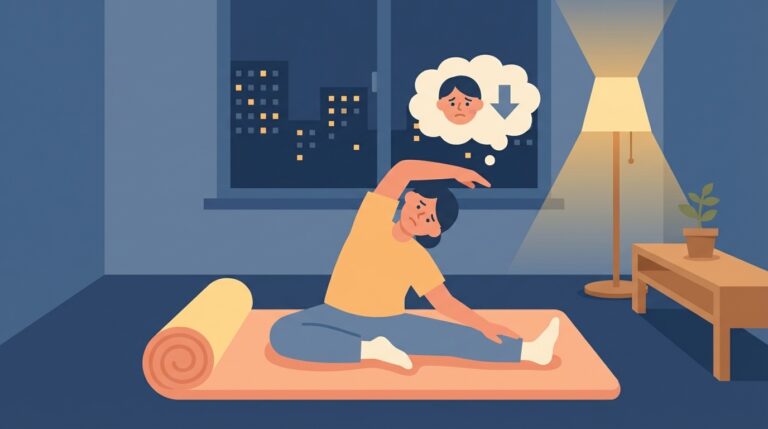
Imagine this: You’re watching a slice-of-life K-Drama. The protagonist just got home from a stressful day at the office, throws on some sweatpants, and starts doing jumping jacks in their living room to shake off the stress. Suddenly… BEEP! BEEP! The wall intercom rings. It’s the security guard. The downstairs neighbor is complaining about the noise. The protagonist immediately freezes, drops to the floor, and starts tiptoeing like a cartoon thief.
Welcome to the reality of South Korean apartment living.
Over 60% of South Koreans live in apartments or multi-family housing. Because of this high-density lifestyle, doing a high-intensity cardio workout at home requires more than just stamina—it requires a cultural superpower called Nunchi (눈치). Today, we are going to dive into the advanced C1-level vocabulary and cultural context of 홈트 (Home-t) and the dreaded 층간소음 (Cheung-gan so-eum, inter-floor noise).
If you live in Korea, knowing these expressions won’t just improve your fluency; it might literally save you from a neighborhood feud! Let’s get moving—quietly, of course. 🤫
Phase 2: Deep Dive into Key Expressions
Let’s break down the essential vocabulary you need to navigate this uniquely Korean living situation.
1. 층간소음
- Pronunciation: [cheung-gan so-eum] (Think of ‘cheung’ like ‘hung’ but with a tight, disgusted ‘eu’ sound, and ‘so-eum’ as ‘so-um’.)
- Meaning: Inter-floor noise; noise complaints between apartments.
- K-Culture Moment: This word is a regular feature on Korean national news. It’s not just an annoyance; it’s a major social issue. If you search for workout videos on Korean YouTube, you’ll see thumbnails plastered with “층간소음 NO!” (No floor noise!).
- Editor’s Insight: This isn’t just “loud noise.” It carries a heavy social weight. When you mention you’re worried about cheung-gan so-eum, Koreans will immediately nod in deep, shared empathy.
- Situation Spectrum:
[🚫 Taboo] ———— [⚠️ Careful] ———— [✅ Freely]
- Casual with friends: ✅
- Formal/News: ✅ (It’s an official term)
- 🤔 Think About It: Why does Korean have such a specific, widely-used compound word for this? How does architectural history influence a society’s daily vocabulary?
2. 무소음 홈트
- Pronunciation: [mu-so-eum hom-teu]
- Meaning: Noiseless home training.
- K-Culture Moment: Hom-teu is a Konglish abbreviation for “Home Training.” During the pandemic, “Noiseless Home-t” routines exploded on Korean YouTube, featuring cardio that involves zero jumping.
- Editor’s Insight: Using abbreviations like hom-teu makes you sound like a true local. If you say “집에서 운동해요” (I exercise at home), it sounds like a textbook. Say “홈트해요” instead!
- Situation Spectrum:
[🚫 Taboo] ———— [⚠️ Careful] ———— [✅ Freely]
- Casual with friends: ✅
- With the boss: ✅ (Totally fine, very common lifestyle term)
- 🤔 Think About It: Koreans love shortening words (e.g., 아아 for Iced Americano, 홈트 for Home Training). Is efficiency the only reason, or does it create an “insider” community feeling?
3. 사뿐사뿐
- Pronunciation: [sa-ppun-sa-ppun] (Emphasize the double ‘pp’ like you’re popping a balloon.)
- Meaning: Lightly, softly, stealthily (A mimetic word describing light footsteps).
- K-Culture Moment: K-Pop fans might immediately think of AOA’s hit song “Like a Cat” (사뿐사뿐). It perfectly describes the exact way you must walk in a Korean apartment after 10 PM.
- Editor’s Insight: Korean is rich in mimetic words (태어). Using them elevates your Korean from “functional” to “colorful.” It paints a picture in the listener’s mind.
- Situation Spectrum:
[🚫 Taboo] ———— [⚠️ Careful] ———— [✅ Freely]
- Casual with friends: ✅
- Professional setting: ⚠️ (A bit too poetic for a business meeting, but great for storytelling)
- 🤔 Think About It: How do mimetic words reflect the Korean language’s focus on sensory experience and observation?
Phase 3: Textbook vs Real Life
How do we transition from intermediate phrasing to advanced, natural Korean?
| Situation | 📖 Textbook Korean | 🗣️ Real Korean | 💡 Why the difference? |
|---|---|---|---|
| Explaining your workout | 집에서 운동해요. (I exercise at home.) |
요즘 홈트 해요. (I do home-t these days.) |
Koreans heavily use trendy abbreviations for modern lifestyles. |
| Being quiet | 조용히 운동해야 돼요. (I have to exercise quietly.) |
아랫집 눈치 보여서 살살 뛰어요. (I jump lightly because I’m conscious of the downstairs neighbor.) |
Nunchi is the core operating system of Korean social interactions. |
| Describing the noise | 이웃이 시끄럽다고 해요. (The neighbor says it’s loud.) |
층간소음 때문에 민원 들어왔어요. (Got a complaint because of floor noise.) |
Using official societal terms (cheung-gan so-eum) shows advanced cultural fluency. |
Phase 4: Cultural Deep Dive
4-1. Non-verbal Communication: The Art of Tiptoeing
If you do a home workout in Korea, the non-verbal rule is the thick yoga mat (요가 매트). In Korea, yoga mats aren’t just for comfort; they are soundproofing tools. Some people even buy 4cm thick “layer mats” (층간소음 매트) specifically to absorb the shock of burpees. Furthermore, heel-striking when you walk indoors is a huge faux pas. You must learn to walk sa-ppun-sa-ppun—toe-to-heel, absorbing your own weight.
4-2. K-Culture Connection: Nunchi and the “Republic of Apartments”
South Korea is often jokingly called the “Republic of Apartments” (아파트 공화국). When you live stacked in high-rises, your personal wellness journey directly impacts someone else’s peace.
This is where Nunchi (눈치) comes in. Nunchi isn’t just “reading the room”; it’s the proactive anticipation of others’ discomfort. In a K-Drama, a good neighbor will bring a box of tangerines or a roll of toilet paper to the downstairs neighbor (아랫집) before starting an interior renovation, apologizing in advance. Doing a “noiseless home-t” is the ultimate act of physical Nunchi.
Phase 5: Immersive Roleplay Scenario
Setting: Friday evening at a trendy cafe in Yeonnam-dong. You and your Korean coworker, Minji (32, fitness enthusiast), are grabbing coffee after work. You’ve been complaining about gaining weight from too many company dinners (회식).
Minji: 헬스장 끊는 건 어때요? 요즘 PT 할인 많이 하던데. 🏋️♀️
(Helseujang kkeunneun geon eottaeyo? Yojeum PT harin mani hadeonde.)
[How about signing up for a gym? They’re doing a lot of PT discounts lately.]
YOU: 헬스장까지 가기 너무 귀찮아요. 그냥 집에서 유튜브 보고 하려고요.
(Helseujangkkaji gagi neomu gwichanayo. Geunyang jibeseo yutyubeu bogo haryeogoyo.)
[It’s too annoying to go all the way to the gym. I’m just going to watch YouTube at home.]
Minji: 아, 홈트족 되시려고요? 근데 집에서 유산소 하면 시끄럽지 않아요?
(A, homteujok doesiryeogoyo? Geunde jibeseo yusanso hamyeon sikkeureopji anayo?)
[Ah, joining the Home-t tribe? But isn’t it loud if you do cardio at home?]
(🎭 Stage Direction: Minji takes a sip of her iced americano, looking concerned.)
🔀 YOUR TURN! How do you respond?
– A) “괜찮아요. 제 집이니까 제 마음대로 할 거예요.” (It’s fine. It’s my house, so I’ll do what I want.)
– B) “그래서 매트 엄청 두꺼운 거 샀어요. 무소음 홈트 하려고요.” (That’s why I bought a super thick mat. I’m planning to do noiseless home-t.)
– C) “미안해요. 조용히 할게요.” (I’m sorry. I will be quiet.)✅ Best Choice: B. It shows you understand the apartment culture and uses advanced vocabulary (무소음 홈트).
⚠️ Choice A Analysis: NEVER say this in Korea! It shows a complete lack of Nunchi and community awareness. Minji will be secretly horrified.
⚠️ Choice C Analysis: You are talking to Minji, not the neighbor! This is a classic learner mistake—translating a general apology instead of answering the conversational context.
Minji: (Nodding approvingly) 오, 센스 있네요! 아랫집 눈치 보여서 막 뛰진 못하잖아요. 저도 층간소음 없는 유산소 영상 찾아봐야겠어요.
(O, senseu inneyo! Araetjip nunchi boyeoseo mak ttwijin mothajannayo. Jeodo cheung-gan so-eum eomneun yusanso yeongsang chajabwayagesseoyo.)
[Oh, you have good sense! You can’t just jump around because you have to be conscious of the downstairs neighbor. I should look up some no-floor-noise cardio videos too.]
Phase 6: 10-Second Shadowing Drill
Read this aloud to master the natural cadence of a Korean native speaker complaining about apartment life!
😤 아랫집 / 눈치 보여서, / 집에서는 / 사뿐사뿐 / 걸어야 돼요.
(araetjip / nunchi boyeoseo, / jibeseoneun / sa-ppun-sa-ppun / georeoya dwaeyo.)
[Because I’m conscious of the downstairs neighbor, I have to walk lightly at home.]
Tip: Drop your pitch slightly on ‘눈치 보여서’ to sound genuinely stressed about it!
Phase 7: K-Culture Glossary
| Korean | Romanization | English | Contextual Meaning |
|---|---|---|---|
| 아랫집 | araetjip | Downstairs neighbor | Literally “lower house.” The ultimate boss you must appease when living in a Korean apartment. |
| 윗집 | witjip | Upstairs neighbor | Literally “upper house.” The people who make the noise. |
| 눈치 보이다 | nunchi boida | To feel self-conscious | Feeling the invisible pressure of others’ judgment or comfort. |
| 홈트족 | hom-teu-jok | Home-training tribe | The demographic of people who exclusively work out at home. ‘-jok’ means tribe/group. |
| 민원 | minwon | Civil complaint | An official complaint, often made to the apartment management office (관리사무소). |
Phase 8: Traveler’s Survival Kit
If you are an expat setting up your apartment in Seoul, or a long-term traveler staying in an Airbnb/Officetel, you need to buy the right gear to avoid angry notes on your door!
🆘 Survival Phrases for the Mart (Daiso / E-Mart)
– 🇰🇷 “층간소음 방지 매트 어디 있어요?” (cheung-gan so-eum bangji maeteu eodi isseoyo?)
– 🗣️ Meaning: Where are the floor-noise prevention mats?
– 📍 Where to use: Daiso, Emart, Lotte Mart (Sports or Interior section).
- 🇰🇷 “이거 소음 안 나게 두꺼운가요?” (igeo so-eum an nage duggeoun-gayo?)
- 🗣️ Meaning: Is this thick enough to prevent noise?
- 📍 Where to use: Asking a store clerk for recommendations.
📌 Editor’s Travel Note
– Slippers are mandatory: Koreans don’t wear outdoor shoes inside, but many wear silnae-hwa (실내화, indoor slippers) with thick soles specifically to prevent cheung-gan so-eum!
– Beware of the Intercom: If your wall pad rings after 10 PM, it’s rarely good news. Keep the TV volume down and your steps light!
Phase 9: Think Deeper — “One Step Further”
Architecture & Lifestyle: How High-Density Living Shapes Etiquette
When you watch K-Dramas, you often see sweeping views of the Han River through massive penthouse windows. But the reality for most Seoulites is living in densely packed “Officetels” (office + hotel apartments) or massive apartment complexes (단지).
Because walls and floors are shared, Korean etiquette has evolved to be highly community-conscious. The obsession with 무소음 (noiselessness)—from noiseless home-t to silent computer mice in cafes—is a direct byproduct of this high-density living. It teaches us that in Korean culture, personal freedom (like doing jumping jacks at midnight) is often voluntarily sacrificed for communal harmony (Nunchi).
💬 Your Turn:
Does your home country have specific vocabulary for “neighbor noise”? How do people in your culture handle loud neighbors? Direct confrontation, or passive-aggressive notes? Share in the comments!
Phase 10: FAQ & Troubleshooting
Q: If the downstairs neighbor comes up to complain, what should I say?
A: Bow slightly and say, “아, 정말 죄송합니다. 몰랐습니다. 주의하겠습니다.” (Ah, I’m really sorry. I didn’t know. I’ll be careful.) Never argue back at the door; in Korea, it’s considered very poor manners to escalate a noise complaint face-to-face. Just apologize and negotiate later through the management office.
Q: Can I use “사뿐사뿐” to describe a quiet machine?
A: No! Sa-ppun-sa-ppun strictly describes the movement of living things (like a cat, a person walking on tiptoes). For machines, use 무소음 (noiseless) or 조용하다 (quiet).
❌ Common Mistake:
Translating “I’m walking on eggshells” literally into “계란 껍질 위를 걷고 있어요.”
✅ Do This Instead:
Use the cultural equivalent! “눈치 보면서 살얼음판 걷는 기분이에요.” (I feel like I’m walking on thin ice while reading the room.)
Phase 11: Wrap-up & Action Items
One-Liner Summary: To master home workouts in a Korean apartment, you need a thick mat, a noiseless routine, and impeccable Nunchi toward your araet-jip (downstairs neighbor).
🚀 Action Missions:
– 🥉 Bronze (Solo): Stand up right now and try walking sa-ppun-sa-ppun across your room while muttering “아랫집 눈치 보여요.”
– 🥈 Silver (Online): Go to YouTube and search “무소음 홈트” (Noiseless home-t). Click on a video and read the Korean comments!
– 🥇 Gold (Real Life): Next time a Korean friend asks if you work out, casually reply, “요즘 층간소음 때문에 무소음 홈트 해요.”
K-Culture Mission:
Find a Korean YouTube fitness channel (like ‘Thankyou BUBU’ or ‘Chloeting’ with Korean subs) and spot the warning: “층간소음 주의” (Caution: Floor Noise). You’ll be surprised how often it appears!
Phase 12: Interactive Quiz 🧠
1. Fill in the blank (Situational Judgment):
You are jumping rope in your Seoul apartment. The intercom rings, and the security guard says the downstairs neighbor is complaining. What is the most natural Korean thought to have?
A) “아, 윗집 눈치 보이네.”
B) “아, 아랫집 눈치 보이네.”
C) “아, 헬스장 가야겠다.”
2. True or False – K-Culture Edition:
If you buy a really expensive apartment in Gangnam, you don’t have to worry about Cheung-gan so-eum at all. (T/F)
3. Vocabulary Matching:
Which word describes the action of a cat walking silently?
A) 무소음
B) 층간소음
C) 사뿐사뿐
🚨 Click here for the answers!
- B (윗집 is upstairs, 아랫집 is downstairs. You must be conscious of the downstairs neighbor when doing cardio!)
- False. Even in luxury apartments, cheung-gan so-eum is a massive issue due to the concrete slab construction methods used in Korea.
- C (Sa-ppun-sa-ppun is the mimetic word for walking lightly. Mu-so-eum is for machines or concepts.)
Frequently Asked Questions (FAQ)
Q: What does "층간소음" mean in Korean and how do you pronounce it?
A: In Korean, "층간소음" is pronounced [cheung-gan so-eum] and means: Inter-floor noise; noise complaints between apartments.
Q: What does "무소음 홈트" mean in Korean and how do you pronounce it?
A: In Korean, "무소음 홈트" is pronounced [mu-so-eum hom-teu] and means: Noiseless home training.
Q: What does "사뿐사뿐" mean in Korean and how do you pronounce it?
A: In Korean, "사뿐사뿐" is pronounced [sa-ppun-sa-ppun] and means: Lightly, softly, stealthily (A mimetic word describing light footsteps).






