

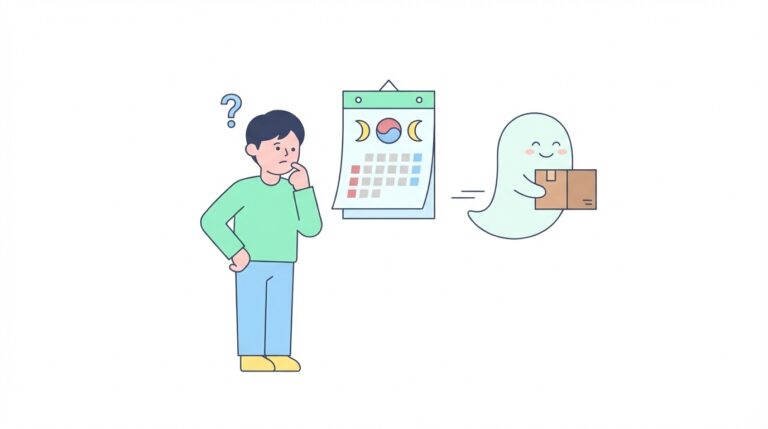
Phase 1: Immersive Hook\n\nHello, language explorers! It’s your Daily Hangul Editor here.\n\nPicture this: You are watching a classic K-Drama. The main couple has finally saved up enough money to move into their dream apartment. They are thrilled! But when they tell the mother-in-law they plan to move next weekend, she gasps, flips frantically through a thick, traditional calendar, and shouts, \”Are you crazy? You CANNOT move on the 14th! You MUST move on the 9th!\” \n\nAs a viewer, you might be confused. Is the 9th a holiday? Is it cheaper? Actually, moving on the 9th in Korea is usually much more expensive! So, why is the mother-in-law so insistent? \n\nWelcome to the fascinating world of 손 없는 날 (Son-eomneun nal)—a unique blend of scheduling, traditional superstition, and modern Korean life. If you don’t understand this concept, you might find yourself baffled when your Korean friend delays their move, or when you see moving companies charging double on seemingly random days. Let’s dive into the cultural logic behind this, so you can talk like a true insider!\n\n—\n\n### Phase 2: Deep Dive into Core Expressions\n\nLet’s break down the essential vocabulary you need to navigate Korean moving superstitions.\n\n> ### 1. 손 없는 날 (A day without evil spirits)\n> \n> – Pronunciation: [son-eom-neun nal] (Imagine saying \”Son\” like ‘song’ without the ‘g’, and \”eom-neun\” sounds a bit like ‘um-nun’.)\n> – Meaning: Literal: A day without a guest/spirit. Real nuance: An auspicious day for major events (moving, weddings, opening a business) because evil spirits have gone up to heaven.\n> – K-Culture Moment: You’ll hear this at the office when a coworker complains, \”I have to pay 300,000 won extra because my parents insisted I move on a Son-eomneun nal!\”\n> – Editor’s Insight: The word ‘손 (son)’ usually means ‘hand’ or ‘guest’, but in folk belief, it refers to an evil spirit that roams around the four compass directions to harass human activities. On days ending in 9 or 0 in the lunar calendar, these spirits take a break. It’s the ultimate \”safe day.\”\n> – Situation Spectrum: [🚫 Never] ———— [⚠️ Caution] ———— [✅ Freely]\n> – Casual with friends: ✅\n> – Semi-formal (Coworkers): ✅\n> – Formal (Boss/Elders): ✅ (In fact, elders will be impressed you know this!)\n> – 🤔 Think About It: Why do even tech-savvy, modern Koreans still check the lunar calendar for \”ghost-free\” days when they move? Is it genuine fear, or is it more about finding peace of mind for a big life transition?\n\n> ### 2. 이삿짐센터 예약했어요? (Did you book the moving company?)\n> \n> – Pronunciation: [i-sat-jim-sen-teo ye-ya-kae-sseo-yo?]\n> – Meaning: Literal/Real: Did you book the moving center (company)?\n> – K-Culture Moment: When spring arrives in Korea, the streets are filled with giant ladder trucks (사다리차) lifting furniture up to 15th-floor apartment windows. It’s a spectacular sight!\n> – Editor’s Insight: In Korea, almost everyone uses a \”포장이사 (Pojang isa – full-service packing move)\”. The workers pack everything, move it, and unpack it exactly where it was. Booking them on a Son-eomneun nal requires doing it months in advance!\n> – Situation Spectrum: [🚫 Never] ———— [⚠️ Caution] ———— [✅ Freely]\n> – Casual with friends: ✅\n> – Semi-formal (Coworkers): ✅\n> – Formal (Boss/Elders): ✅\n> – 🤔 Think About It: Does your culture have a full-service moving system where you don’t even have to put your dishes in a box? How does this reflect the Korean \”빨리빨리 (Ppal-li ppal-li – hurry hurry)\” culture?\n\n> ### 3. 날을 잡다 (To set a date)\n> \n> – Pronunciation: [na-reul jap-da]\n> – Meaning: Literal: To catch a day. Real: To officially set a date for an important event (like moving or getting married).\n> – K-Culture Moment: In a K-Drama, when a couple finally gets their parents’ blessing, the next scene is always the parents saying, \”Let’s catch a day (날 잡자)!\”\n> – Editor’s Insight: Notice the verb ‘잡다’ (to catch). Koreans don’t just ‘decide’ on a big date; they ‘catch’ it, implying that good dates are rare and elusive, much like catching a lucky star.\n> – Situation Spectrum: [🚫 Never] ———— [⚠️ Caution] ———— [✅ Freely]\n> – Casual with friends: ✅\n> – Semi-formal (Coworkers): ✅\n> – Formal (Boss/Elders): ✅ \n\n—\n\n### Phase 3: Textbook vs. Real Life\n\nLet’s see how native speakers actually talk about moving compared to textbook Korean.\n\n| Situation | 📖 Textbook Korean | 🗣️ Real Korean | 💡 Why is it different? |\n|—|—|—|—|\n| Asking about moving plans | 언제 이사합니까? (When do you move?) | 이사 날짜는 잡았어요? (Did you catch a moving date?) | Focuses on the cultural importance of selecting the right date. |\n| Explaining a delay | 좋은 날에 이사하고 싶습니다. (I want to move on a good day.) | 손 없는 날로 맞추느라 좀 미뤘어요. (I delayed it a bit to align with a ghost-free day.) | Shows native-level cultural nuance. ‘맞추다’ means ‘to align/match’. |\n| Eating after moving | 이사한 후에 중국 음식을 먹습니다. (We eat Chinese food after moving.) | 이사엔 역시 짜장면이죠! (For moving, Jajangmyeon is the best, obviously!) | Uses ‘역시 (as expected/obviously)’ to show shared cultural understanding. |\n\n> Bottom Note for B2 Learners: You don’t need to believe in the superstitions, but using the phrase \”날을 잡다\” instead of \”날짜를 정하다\” will immediately make your Korean sound much more natural and fluent.\n\n—\n\n### Phase 4: Cultural Deep Dive — The Moving Day Rituals\n\n#### 4-1. Non-verbal Communication: The Lunar Calendar App\nWhen discussing moving dates, you will often see older Koreans whip out their phones or look at a physical calendar that has small Chinese characters printed under the regular numbers. They are checking the 음력 (Lunar Calendar). If you are involved in this conversation, nodding thoughtfully while they check the dates shows excellent 눈치 (Nunchi). Do not rush them; finding a good day is a serious matter!\n\n#### 4-2. K-Food Connection: The Jajangmyeon Tradition 🍜\nWe cannot talk about moving in Korea without talking about food. In almost every K-Drama moving scene, you will see characters sitting on a newspaper spread across the bare floor of their new house, eating 짜장면 (Black bean noodles) and 탕수육 (Sweet and sour pork).\n\nWhy Jajangmyeon?\n1. On moving day, all your pots, pans, and utensils are packed away.\n2. Delivery apps (or a quick phone call) bring Chinese food in less than 20 minutes.\n3. It’s relatively cheap, filling, and easy to eat without plates (since Korean Chinese restaurants traditionally delivered in real bowls that they later collected, though disposable ones are common now).\n\nCritical View: Sharing this meal on the floor isn’t just about hunger; it’s a bonding ritual. It marks the first meal in a new space, turning an empty house into a ‘home’ through shared food.\n\n—\n\n### Phase 5: Immersive Roleplay\n\n#### Scenario A: The Office Lunch\n\nSetting: Tuesday afternoon, grabbing coffee with your Korean coworker after lunch. You mentioned you are moving out of your officetel (studio apartment) next month.\n\nCharacters:\n- YOU: An expat who has lived in Korea for a year, currently apartment hunting.\n- Minsu (30s): Your helpful but slightly superstitious Korean coworker.\n\nDialogue:\n\nMinsu: 땡땡 씨, 이사 날짜는 잡았어요?\n(Ttaeng-ttaeng ssi, isa naljjaneun jabasseoyo?)\n[Hey, did you catch a moving date yet?]\n\nYOU: 네! 다음 달 15일로 정했어요. 주말이라서 딱 좋아요.\n(Ne! Da-eum dal sibo-illo jeonghaesseoyo. Jumariraseo ttak joayo.)\n[Yes! I decided on the 15th of next month. It’s a weekend, so it’s perfect.]\n\nMinsu: 어? 잠시만요… (Pulls out his phone to check the calendar app)\n(Eo? Jamsimanyo…)\n[Huh? Wait a second…]\n(🎭 Stage Direction: Minsu frowns and looks up with a worried expression)\n\nMinsu: 헐, 그날 손 없는 날 아니에요. 다른 날로 바꾸는 건 어때요?\n(Heol, geunal son eomneun nal anieyo. Dareun nallo bakkuneun geon eottaeyo?)\n[Whoa, that day isn’t a day without spirits. How about changing to another day?]\n\n> 🔀 YOUR TURN! How do you respond?\n> \n> – A) 손 없는 날이 뭐예요? 저는 귀신 안 믿어요. (What is a ghost-free day? I don’t believe in ghosts.)\n> – B) 아, 진짜요? 근데 손 없는 날은 이사 비용이 너무 비싸서요. (Oh, really? But moving costs are too expensive on ghost-free days.)\n> – C) 네? 당장 이삿짐센터에 전화해서 바꿀게요! (What? I’ll call the moving company and change it right now!)\n> \n> ✅ Best Choice: B — This is the most natural, native-like response for young people! It shows you understand the culture (you know what it is), but you are making a practical, modern choice to save money.\n> ⚠️ Choice A Analysis: A bit too direct and dismissive of his cultural concern.\n> ⚠️ Choice C Analysis: An overreaction! Unless you are deeply superstitious, there is no need to change your perfectly good weekend schedule.\n\n#### Scenario B: Bonus – The Moving Day Feast\n(You moved successfully! You and a friend are sitting on the floor surrounded by boxes.)\n\nFriend: 아, 배고프다. 우리 밥부터 먹고 짐 정리할까?\n(Ah, baegopeuda. Uri bap-buteo meokgo jim jeongnihalkka?)\n[Ah, I’m hungry. Should we eat first and then organize?]\n\nYOU: 좋아요! 이사하는 날엔 역시 짜장면이죠! 제가 주문할게요.\n(Joayo! isahaneun naren yeoksi jajangmyeonijyo! Jaega jumunhalgeyo.)\n[Sounds good! For moving day, Jajangmyeon is the best! I’ll order.]\n\n—\n\n### Phase 6: 10-Second Shadowing Drill\n\nPractice this sentence to sound like a Korean complaining about moving costs! Focus on the pauses (/) and intonation.\n\n> 😤 아, / 이번 주말이 / 손 없는 날이라서 / 이사 비용이 / 더 비싸요!\n> (Ah, / ibeon jumari / son eomneun nariraseo / isa bi-yong-i / deo bissayo!)\n> [Ugh, / this weekend is / a day without spirits, so / the moving cost is / more expensive!]\n\n—\n\n### Phase 7: K-Culture Mini Glossary\n\n| Korean | Romanization | English | Context |\n|—|—|—|—|\n| 손 | son | Wandering spirit | Specifically refers to evil spirits in folk belief, not a ‘hand’. |\n| 음력 | eumnyeok | Lunar calendar | Essential for traditional holidays and picking auspicious dates. |\n| 포장이사 | pojang isa | Full-service moving | The standard moving method in Korea where workers pack and unpack everything. |\n| 짜장면 | jajangmyeon | Black bean noodles | The official unofficial food of Korean moving days. |\n| 길일 | giril | Auspicious day | A lucky day. Son-eomneun nal is a type of Giril. |\n\n—\n\n### Phase 8: Traveler’s Survival Kit 🧳\n\nEven if you aren’t moving houses, understanding how Koreans talk about dates, booking, and schedules is crucial for a smooth trip!\n\n> 🆘 Survival Phrases for Booking & Schedules\n> \n> 🇰🇷 1. \”이 날짜에 예약할 수 있나요?\” (i naljja-e yeyakal su innayo?)\n> – 🗣️ Meaning: Can I make a reservation on this date?\n> – 📍 Use it: Hotels, tours, KTX trains.\n> \n> 🇰🇷 2. \”날짜를 변경하고 싶어요.\” (naljja-reul byeong-gyeonghago sipeoyo.)\n> – 🗣️ Meaning: I want to change the date.\n> – 📍 Use it: When your flight or hotel plans change.\n> \n> 🇰🇷 3. \”주말은 요금이 더 비싼가요?\” (jumareun yogeumi deo bissangayo?)\n> – 🗣️ Meaning: Is the rate more expensive on weekends?\n> – 💡 Pro Tip: Just like moving companies charge more on Son-eomneun nal, hotels and trains have strict peak pricing!\n\n> 📌 Editor’s Travel Note\n> – Useful Apps: Naver Map or Kakao T for navigating to your new hotel. \n> – Did you know? Many Korean airlines and hotels don’t have a \”4th floor\” or \”Room 4\” because the number 4 (사) sounds like the Chinese character for death (死). Instead, you might see an ‘F’ in the elevator! Superstition is everywhere in travel.\n\n—\n\n### Phase 9: Think Deeper — \”One Step Further\” 🧠\n\nTradition vs. Practicality in Modern Society\nKorea is home to Samsung, hyper-fast 5G internet, and AI innovations. Yet, when it comes to moving, millions of Koreans still consult the ancient lunar calendar. Why? This phenomenon highlights a unique aspect of Korean psychology: the concept of 정성 (Jeongseong)—putting your utmost sincerity and care into an endeavor. Choosing a Son-eomneun nal isn’t necessarily about literal belief in ghosts anymore. It’s a cultural ritual of showing care for your family’s future, ensuring that your new chapter starts with positive energy and zero anxiety. It proves that technological advancement doesn’t always erase cultural heritage; sometimes, they just learn to co-exist.\n\n💬 Your Turn: Does your culture have a superstition or tradition that everyone follows just for \”good luck\” or \”peace of mind,\” even if they don’t logically believe in it? Share it in the comments!\n\n—\n\n### Phase 10: FAQ & Troubleshooting\n\nQ: Do I HAVE to move on a Son-eomneun nal?\nA: Not at all! Actually, a lot of young couples specifically choose a day with \”evil spirits\” because moving companies often offer massive discounts on those days! They joke, \”The ghosts can’t hurt us, we’re too poor!\”\n\nQ: If I want to mention this to a much older person, is the vocabulary polite enough?\nA: Yes, \”손 없는 날\” is a standard noun phrase. Just ensure you end your sentence politely with ~요 or ~습니다. (e.g., \”어르신, 손 없는 날에 이사하셨어요?\” – Elder, did you move on a day without spirits?)\n\n> ❌ Common Mistake #1: Thinking \”손 없는 날\” means \”A day without hands/labor.\”\n> ✅ How to fix: Remember that ‘손’ here comes from a very old word for ‘guest’ (손님), which became a euphemism for a wandering spirit. Don’t tell people you are moving on a day \”without hands\” because you have no help!\n\n—\n\n### Phase 11: Wrap-up & Action Missions\n\nOne-Liner Summary: \”손 없는 날 (Son-eomneun nal)\” is a traditional Korean lucky day for moving, showing how ancient superstitions still impact modern schedules and prices!\n\nTake Action:\n- 🥉 Bronze (Solo): Say \”이사 날짜 잡았어요? (Did you catch a moving date?)\” out loud 3 times with a curious expression.\n- 🥈 Silver (Online): Go to a language exchange app and ask a Korean partner: \”한국에서는 손 없는 날에 이사해요?\” (Do you move on ghost-free days in Korea?)\n- 🥇 Gold (Real Life): Next time you hear a Korean friend is moving, ask them \”짜장면 먹을 거예요?\” (Are you going to eat Jajangmyeon?)\n\n🎬 K-Culture Mission: \nSearch for a K-Drama or Vlog on YouTube with the keywords \”포장이사 브이로그 (Full-service moving vlog)\”. Watch how the workers pack a whole house in 2 hours. It will blow your mind!\n\n—\n\n### Phase 12: Interactive Quiz 🏆\n\nTest your cultural and linguistic Nunchi!\n\n1. Situation Judgment: Your Korean friend says they are delaying their move by two weeks so they can move on a Son-eomneun nal. What is the most empathetic B2-level response?\n- A) 귀신은 진짜 없어요. 바보 같아요. (Ghosts aren’t real. That’s silly.)\n- B) 아, 좋은 날에 이사하려고요? 이사 준비 파이팅! (Ah, trying to move on a good day? Good luck with the prep!)\n- C) 네, 저는 짜장면을 좋아해요. (Yes, I like Jajangmyeon.)\n\n2. Fill in the Blank: \n\”다음 달 결혼식 _______ 잡았어요?\” (Did you set/catch a date for the wedding next month?)\n- A) 시간을\n- B) 날을\n- C) 손을\n\n3. True or False – K-Culture Edition: \n\”Moving companies are generally cheaper on a Son-eomneun nal because the spirits are gone.\” (T / F)\n\n
\n
Click here for Answers!
\n
\n1. B – Respects their cultural choice and offers encouragement. ‘A’ is rude, ‘C’ is irrelevant.
\n2. B (날을) – The phrase is ‘날을 잡다’ (to catch/set a day).
\n3. False! Because EVERYONE wants to move on these lucky days, the high demand makes moving companies charge a premium. If you want a discount, move on a day WITH ghosts!\n
\n\n—\nSee you in the next lesson! 매일매일 재미있게 한국어 공부해요! (Let’s study Korean fun every day!)
Frequently Asked Questions (FAQ)
Q: What does "손 없는 날" mean in Korean and how do you pronounce it?
A: In Korean, "손 없는 날" is pronounced [Son-eomneun nal] and means: —a unique blend of scheduling, traditional superstition, and modern Korean life. If you don't understand this concept, you might find yourself baffled when your Korean friend delays their move, or when you see moving companies charging double on seemingly random days. Let's dive into the cultural logic behind this, so you can talk like a true insider!\n\n---\n\n### Phase 2: Deep Dive into Core Expressions\n\nLet's break down the essential vocabulary you need to navigate Korean moving superstitions.\n\n> ### 1. 손 없는 날 (A day without evil spirits)\n> \n> -
Q: What does "음력" mean in Korean and how do you pronounce it?
A: In Korean, "음력" is pronounced [Lunar Calendar] and means: . If you are involved in this conversation, nodding thoughtfully while they check the dates shows excellent
Q: What does "탕수육" mean in Korean and how do you pronounce it?
A: In Korean, "탕수육" is pronounced [Sweet and sour pork] and means: .\n\n
Q: What does "정성" mean in Korean and how do you pronounce it?
A: In Korean, "정성" is pronounced [Jeongseong] and means: —putting your utmost sincerity and care into an endeavor. Choosing a







