

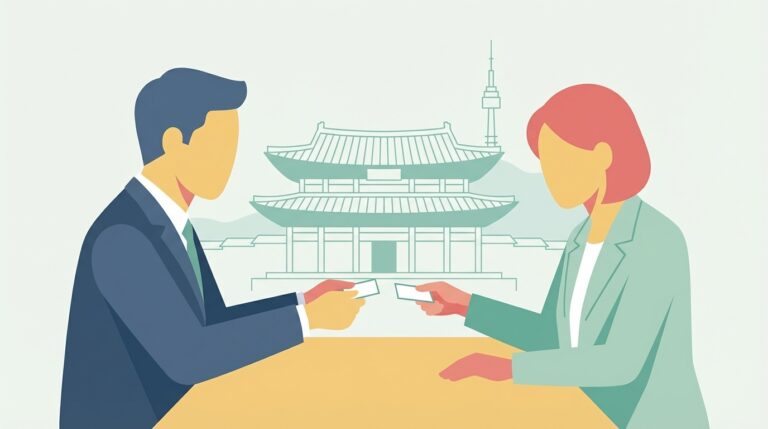
Phase 1: Empathy — Immersive Hook
Hello! I’m your Daily Hangul Editor.
Imagine this: You are watching a sleek K-Drama political thriller like Designated Survivor: 60 Days. The characters are in a tense, wood-paneled situation room. A high-ranking official leans over the table, adjusts their glasses, and sternly says, “We need to reconsider our 원조 (wonjo) strategy.” The subtitles read ‘aid’.
But wait. Fast forward to Friday night. You are walking down the vibrant streets of Hongdae with your Korean friends, and someone points to a bustling pork belly restaurant and shouts, “Let’s go there! It’s the 원조 (wonjo)!”
Wait, the aid restaurant? Are they giving out free food to developing nations?
Welcome to the beautiful, context-heavy world of Advanced Korean! At the C1 level, you aren’t just learning how to order coffee anymore. You are discussing global issues, international relations, and Official Development Assistance (ODA) policies. Whether you work at an NGO in Seoul, an embassy, or simply want to sound incredibly sophisticated when discussing global news, mastering this specific vocabulary is your golden ticket.
Today, we’re going to dive deep into the language of Korean diplomacy. We’ll decode the news, understand the cultural pride behind Korea’s global role, and make sure you never confuse a diplomatic aid policy with an original grandma’s soup restaurant.
Phase 2: Core Expressions Deep Dive
Let’s unpack the heavy hitters. These are the words that will make your Korean colleagues nod in profound respect.
1. 공적 개발 원조 (Official Development Assistance – ODA)
- Pronunciation: [Gong-jeok gae-bal won-jo] Sounds like: Gong-juck gae-bal won-joe
- Meaning: Official Development Assistance (Literal) / Foreign Aid (Real nuance)
- K-Culture Moment: You’ll hear this constantly on KBS News or Arirang TV when the President travels abroad. It’s the cornerstone of Korea’s global soft power strategy.
- Editor’s Insight: Remember my opening story? 원조 (wonjo) in a diplomatic context means aid or assistance (援助 in Hanja). But in daily life, 원조 (wonjo) means original or founder (元祖). Context is everything! If you are wearing a suit, it’s aid. If you are holding a menu, it’s original.
- Situation Spectrum:
[🚫 절대 금지] ———— [⚠️ 주의] ———— [✅ 자유롭게]
- Casual with friends: ⚠️ (A bit too academic for a pub, but fine for intellectual debates)
- Office/Semi-formal: ✅
- Formal/Diplomatic: ✅
- 🤔 Think About It: Why does Korea use such formal Sino-Korean (Hanja) words for diplomacy? Does your native language also use Latin or French-rooted words to sound more “official” in politics?
2. 수원국에서 공여국으로 (From a recipient country to a donor country)
- Pronunciation: [Su-won-gug-e-seo gong-yeo-gug-eu-ro] Sounds like: Soo-won-gook-eh-suh gong-yuh-gook-eu-roh
- Meaning: From recipient to donor.
- K-Culture Moment: This isn’t just a phrase; it’s a national badge of honor. You will see this phrase in almost every KOICA (Korea International Cooperation Agency) brochure. It reflects the “Miracle on the Han River”—Korea’s rapid transformation after the Korean War.
- Editor’s Insight: When you use this phrase as a foreigner acknowledging Korea’s history, you will instantly win the hearts of older Korean policymakers. It shows deep historical empathy.
- Situation Spectrum:
[🚫 절대 금지] ———— [⚠️ 주의] ———— [✅ 자유롭게]
- Casual with friends: ⚠️
- Office/Semi-formal: ✅
- Formal/Diplomatic: ✅
- 🤔 Think About It: How does a nation’s history shape its vocabulary? The transition from receiving to giving is literally built into the Korean diplomatic identity.
3. 상호 호혜적 협력 (Mutually beneficial cooperation)
- Pronunciation: [Sang-ho ho-hye-jeok hyeom-nyeok] Sounds like: Sang-ho ho-hyeh-juck hyum-nyuck
- Meaning: Mutually beneficial cooperation.
- K-Culture Moment: Picture a K-Drama where the charismatic CEO or diplomat shakes hands with a foreign delegate while cameras flash. This is the exact phrase the reporters will use in their voiceover.
- Editor’s Insight: It’s a mouthful! Even Koreans stumble over “호혜적” (ho-hye-jeok). Using this proves your Korean is definitively C1/C2.
- Situation Spectrum:
[🚫 절대 금지] ———— [⚠️ 주의] ———— [✅ 자유롭게]
- Casual with friends: 🚫 (They will think you are reading a textbook)
- Office/Semi-formal: ✅
- Formal/Diplomatic: ✅
Phase 3: Textbook vs Real Life
How do we translate rigid diplomatic terms into things people actually say in the office?
| Situation | 📖 Textbook Korean | 🗣️ Real Korean (Office/News) | 💡 Why the difference? |
|---|---|---|---|
| Discussing foreign aid | “우리는 공적 개발 원조를 늘려야 합니다.” (We must increase ODA.) | “이번에 개도국 지원 예산 늘었대요.” (I heard the budget for supporting developing countries increased.) | “개도국” is the standard abbreviation for 개발 도상국 (developing country). Efficiency is key! |
| Talking about volunteering abroad | “해외 자원봉사를 다녀왔습니다.” (I went on overseas volunteering.) | “코이카(KOICA) 단원으로 갔다 왔어요.” (I went as a KOICA member.) | KOICA is so synonymous with overseas aid that people just use the brand name. |
| Win-win situation | “상호 호혜적인 관계를 구축합시다.” (Let us build a mutually beneficial relationship.) | “서로 윈윈(Win-Win)하는 방향으로 가시죠.” (Let’s go in a win-win direction.) | Corporate Korea loves incorporating English business slang (Konglish) for a modern feel. |
Phase 4: Cultural Deep Dive — The K-Culture Connection
4-1. Non-verbal Communication: The Diplomatic Handshake
In international relations, body language speaks volumes. Have you ever noticed how Korean presidents or K-Pop idols like BTS shake hands when they are at the UN General Assembly?
They extend their right hand, but their left hand lightly supports their right forearm or rests on their stomach.
This isn’t a sign of nervousness! In Korean culture, using one hand is for equals or subordinates. Using two hands (or supporting the dominant arm) is a deep sign of respect. When discussing ODA or diplomacy, mastering the “respectful handshake” is just as important as the vocabulary.
4-2. K-Pop Connection: BTS, Soft Power, and Public Diplomacy (공공외교)
You might wonder, what does K-Pop have to do with ODA? Everything.
In modern Korean diplomacy, culture is the policy. When BTS spoke at the UN or when K-dramas are broadcasted globally, it’s categorized under 공공외교 (Public Diplomacy) and 소프트파워 (Soft Power).
Korea often leverages its cultural appeal in developing nations to build bridges before implementing economic aid. So, the next time you are at a diplomatic mixer, mentioning K-Pop isn’t trivial—it’s highly relevant geopolitical strategy!
Phase 5: Immersive Roleplay Scenario
Setting: Friday evening, 7:00 PM. You are at a sleek hotel banquet hall in Gwanghwamun attending a global NGO networking mixer. You hold a glass of sparkling water. You strike up a conversation with Minsoo, a manager at KOICA (Korea International Cooperation Agency).
Characters:
– YOU: An expat working in international relations in Seoul. (C1 Korean speaker)
– Minsoo (35): KOICA Manager. Professional, slightly tired from the event, but passionate about his work.
Dialogue:
Minsoo: 오늘 포럼 발표 정말 인상적이었습니다. 한국어 정말 잘하시네요!
(Oneul poreom balpyo jeongmal insangjeog-ieotseumnida. Hangugeo jeongmal jalhasineyo!)
[Your presentation at the forum today was really impressive. You speak Korean really well!]
YOU: 과찬이십니다. 민수 책임님 발표도 훌륭했어요. 특히 한국의 ODA 정책 변화가 흥미로웠습니다.
(Gwachanisimnida. Minsu chaegimnim balpyodo hullyunghaesseoyo. Teukhi hangug-ui ODA jeongchaek byeonhwaga heungmirowotseumnida.)
[I’m flattered. Your presentation was excellent too, Manager Minsoo. The evolution of Korea’s ODA policy was especially interesting.]
Minsoo: 감사합니다. 아시다시피, 한국은 수원국에서 공여국으로 전환한 유일한 국가라는 자부심이 있거든요.
(Gamsahamnida. Asidasipi, hangug-eun suwongug-eseo gongyeogug-euro jeonhwanhan yuilhan gukgaraneun jabusim-i itgeodeunyo.)
[Thank you. As you know, we take pride in being the only country to transition from a recipient to a donor country.]
YOU: 맞아요. 그 경험이 다른 개도국 지원에 큰 도움이 될 거라고 생각해요.
(Majayo. Geu gyeongheom-i dareun gaedoguk jiwon-e keun doum-i doil georago saenggakhaeyo.)
[Exactly. I think that experience will be a huge help in supporting other developing countries.]
Minsoo: 네, 그래서 단순한 원조보다는 지속 가능한 발전에 초점을 맞추고 있습니다. 실례지만, 혹시 다음 주에 저희 본부에서 미팅 한번 가능하실까요?
(Ne, geuraeseo dansunhan wonjobodaneun jisok ganeunghan baljeon-e chojeom-eul matchugo itseumnida. Sillyejiman, hoksi daeum ju-e jeohui bonbueseo miting hanbeon ganeunghasilkkayo?)
[Yes, that’s why we focus on sustainable development rather than simple aid. Excuse me, but would it be possible to have a meeting at our headquarters next week?]
🔀 Your Turn! How should you respond?
– A) “콜! 다음 주에 봐요!” (Call! See you next week!)
– B) “네, 좋습니다. 명함 하나 주시겠어요? 제가 월요일에 메일 드리겠습니다.” (Yes, sounds good. Could you give me your business card? I will email you on Monday.)
– C) “저는 바빠서 안 될 것 같아요.” (I think I can’t because I’m busy.)✅ Best Choice: B — This is the perfect C1 business response. It accepts politely, asks for the crucial business card (명함), and sets a clear follow-up action.
⚠️ Choice A Analysis: “콜” (Call/Deal) is Konglish used only among very close friends when deciding what to eat or do. Never use it in a diplomatic/business setting!
(🎭 Stage Direction: You hand over your business card using both hands, making a slight bow.)
YOU: 네, 좋습니다. 명함 교환하시죠. 제가 월요일에 일정 확인하고 메일 드리겠습니다.
(Ne, jotseumnida. Myeongham gyohwanhasijyo. Jega woryoil-e iljeong hwaginhago meil deurigetseumnida.)
[Yes, sounds good. Let’s exchange business cards. I will check my schedule and email you on Monday.]
Minsoo: 완벽하네요. 연락 기다리겠습니다.
(Wanbyeokhaneyo. Yeollak gidarigetseumnida.)
[Perfect. I’ll look forward to your message.]
Phase 6: 10-Second Shadowing Drill
Time to get the rhythm right. In professional Korean, speaking clearly with the right pauses is more important than speaking fast.
💼 전문적이고 자신감 있게 (Professional and Confident)
한국은 / 수원국에서 / 공여국으로 / 발전한 / 특별한 경험이 / 있습니다.
(Hangug-eun / suwongug-eseo / gongyeogug-euro / baljeonhan / teukbyeolhan gyeongheom-i / itseumnida.)
[Korea has the special experience of developing from a recipient country into a donor country.]
Pro Tip: Put a slight emphasis (stress) on “수원국” and “공여국” to highlight the contrast.
Phase 7: K-Culture Glossary (Diplomacy Edition)
| Korean | Romanization | English | Context |
|---|---|---|---|
| 코이카 | ko-i-ka | KOICA | Korea International Cooperation Agency. The heart of Korea’s ODA. |
| 한강의 기적 | han-gang-ui gi-jeok | Miracle on the Han River | The period of rapid economic growth in South Korea following the Korean War. |
| 국격 | guk-gyeok | National prestige | A very common term in Korean news meaning the ‘status’ or ‘class’ of the nation on the global stage. |
| 공공외교 | gong-gong-oe-gyo | Public diplomacy | Using culture, art, and K-Pop to win hearts and minds abroad. |
| 눈치 | nun-chi | Reading the room | Essential in Korean diplomacy. Sensing what the counterpart wants before they say it. |
Phase 8: Traveler’s Survival Kit (Gwanghwamun Business Trip)
If you are working in diplomacy, NGO, or ODA in Korea, you will inevitably spend a lot of time in Gwanghwamun (광화문)—the political and diplomatic heart of Seoul where the Government Complex and major embassies are located.
🆘 Survival Expressions for the Business Traveler
– 🇰🇷 “정부서울청사가 어느 쪽인가요?” (Jeongbu-seoul-cheongsa-ga eoneu jjog-ingayo?)
– 🗣️ Meaning: Which way is the Government Complex Seoul?
– 📍 Where to use: Exiting Gwanghwamun Subway Station.
– 💡 Pro Tip: Don’t rely solely on Google Maps in Korea; it doesn’t offer walking directions. Download Naver Map or KakaoMap immediately upon arrival.📌 Editor’s Travel Note
– Coffee Culture: Between diplomatic meetings, your Korean counterpart will 100% offer you an “아아” (Iced Americano). Accepting it is good social bonding.
– Business Cards: Always carry a sleek case. Receiving a card with one hand and immediately putting it in your back pocket is considered a major faux pas. Hold it, look at it respectfully for 3 seconds, and place it on the table during the meeting.
Phase 9: Think Deeper — “One Step Further”
Language & Power: The Linguistic Shift of a Nation
🧠 Think Deeper:
The phrase “from a recipient to a donor” (수원국에서 공여국으로) is fascinating from a sociolinguistic perspective. Language reflects a nation’s collective psyche. For decades, Korea’s vocabulary was centered around rebuilding, survival, and seeking help. Today, the language of Korean diplomacy is heavily centered on “giving back” (보답하다) and “sharing experience” (경험 공유). This shift isn’t just about economics; it’s about redefining the national identity from a victim of war to a capable global leader.💬 Your Turn: How does your home country’s history influence the specific vocabulary used in your national news or politics? Share your thoughts in the comments below!
Phase 10: FAQ & Troubleshooting
❌ Common Mistake #1: Overusing “당신” (Dangsin – You)
In English diplomacy, “you” and “your country” are standard. But translating this directly to “당신” in Korean is a disaster. “당신” can sound aggressive or overly intimate.
✅ Fix: Use their title (e.g., “민수 책임님” – Manager Minsoo) or refer to their organization/country directly (e.g., “한국의 정책은…” – Korea’s policy is…).
Q: Can I use “원조 맛집” (Original restaurant) as a joke during a serious ODA meeting?
A: Proceed with caution! If you are at the formal conference table, keep it strictly professional. But during the hoesik (after-party/dinner), making a pun like, “We discussed ODA (원조) all day, now let’s eat at the original (원조) restaurant!” will absolutely make your Korean colleagues burst into laughter and consider you an insider.
Phase 11: Wrap-up & Action Items
One-Liner Summary: Mastering Korean diplomatic vocabulary isn’t just about learning complex words; it’s about understanding Korea’s proud journey from receiving aid to offering it.
Action Mission:
– 🥉 Bronze: Stand in front of a mirror and practice the phrase “상호 호혜적 협력” 3 times without stumbling over the ‘h’ sounds.
– 🥈 Silver: Search “코이카 ODA” on YouTube and try to spot the word “공여국” in the video.
– 🥇 Gold: Use the “respectful two-handed” gesture the next time you hand something (a card, a document, a cup) to a Korean colleague.
K-Culture Mission:
Watch one episode of Designated Survivor: 60 Days (60일, 지정생존자) on Netflix. Listen closely to the scenes in the Blue House. How many times can you catch them saying “외교” (Diplomacy) or “협력” (Cooperation)?
Phase 12: Interactive Quiz
Let’s test your C1 diplomatic instincts!
1. Situational Judgment: You are discussing a new project with an NGO partner in Seoul. You want to say the project should be a “win-win” for both sides. Which is the most natural corporate Korean phrase?
A) 우리는 상호 호혜적인 관계입니다.
B) 서로 윈윈하는 방향으로 가시죠.
C) 우리가 당신에게 원조를 주겠습니다.
2. Fill in the Blank:
한국은 역사상 유일하게 ( ______ )에서 ( ______ )(으)로 바뀐 나라입니다.
(Korea is historically the only country to change from a _______ to a _______.)
3. True or False – K-Culture Edition:
When exchanging business cards at a diplomatic meeting, it is considered confident and professional to maintain unbroken eye contact and hand the card with one firm right hand. (T/F)
(Answers: 1. B – ‘A’ is strictly formal news/textbook, ‘C’ is arrogant. 2. 수원국, 공여국. 3. False – Two hands are required, and a slight bow with brief lowering of the eyes shows respect.)
Frequently Asked Questions (FAQ)
Q: What does "공적 개발 원조 (Official Development Assistance - ODA)" mean in Korean and how do you pronounce it?
A: In Korean, "공적 개발 원조 (Official Development Assistance - ODA)" is pronounced [Gong-jeok gae-bal won-jo] and means: Official Development Assistance (Literal) / Foreign Aid (Real nuance)
Q: What does "수원국에서 공여국으로 (From a recipient country to a donor country)" mean in Korean and how do you pronounce it?
A: In Korean, "수원국에서 공여국으로 (From a recipient country to a donor country)" is pronounced [Su-won-gug-e-seo gong-yeo-gug-eu-ro] and means: From recipient to donor.
Q: What does "상호 호혜적 협력 (Mutually beneficial cooperation)" mean in Korean and how do you pronounce it?
A: In Korean, "상호 호혜적 협력 (Mutually beneficial cooperation)" is pronounced [Sang-ho ho-hye-jeok hyeom-nyeok] and means: Mutually beneficial cooperation.







