

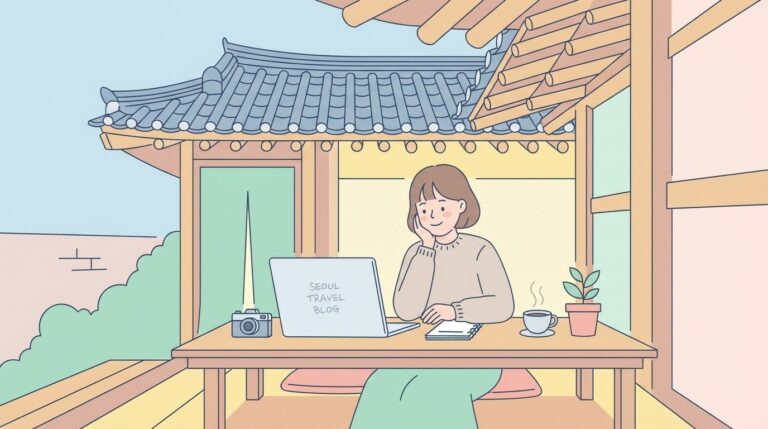
Phase 1: 공감 — 몰입형 오프닝 (Immersive Hook)
Hello, explorers and storytellers! I’m your Daily Hangul Editor, your resident language tutor and local culture navigator.
Picture this: You’re wandering through the narrow, neon-lit alleys of Euljiro (often dubbed ‘Hip-jiro’ by locals). You stumble upon a hidden LP bar that looks straight out of a K-Drama. The vibe is immaculate. You pull out your camera to capture this masterpiece for your travel blog, but suddenly… the owner gives you a cautious look.
Your mind goes blank. How do you politely explain that you’re a travel writer? In English, “Can I take a few pictures?” sounds harmless. But in Korea, where Nunchi (reading the room) and privacy laws are paramount, a blunt textbook translation might get you a polite but firm “No.”
If you’re operating a travel blog, vlog, or writing reviews at an advanced (C1) level, you need more than just “맛있어요” (It’s delicious) or “사진 찍어도 돼요?” (Can I take a picture?). You need the vocabulary to negotiate permissions, describe nuanced aesthetics, and sound like an insider. Today, we’re going to upgrade your Korean from a ‘lost tourist’ to a ‘pro K-travel blogger.’
(Note: This guide is crafted from real questions I’ve received from expat vloggers and travel writers navigating Seoul!)
Phase 2: 핵심 표현 심층 분석 (Deep Dive)
Let’s look at the top three expressions you absolutely need as a content creator in Korea.
1. 혹시 실례가 안 된다면, 촬영 좀 해도 될까요?
- Pronunciation: Hoksi sillyega an doendamyeon, chwaryeong jom haedo doelkkayo? [Hok-shee sheel-lye-ga an dwen-da-myon, chwa-ryeong jom hae-do dwel-kka-yo?]
- Meaning: (Literal) By any chance, if it is not a discourtesy, may I do some filming? / (Real nuance) Excuse me, would you mind if I took some photos/videos?
- K-Culture Moment: You’ll see this in behind-the-scenes vlogs of K-Pop idols or famous YouTubers. Before setting up a camera in a busy restaurant, the staff always approaches the owner with this exact phrase. It shows immense respect for the owner’s space.
- Editor’s Insight: The magic word here is 실례가 안 된다면 (If it’s not a burden/rude). It softens your request beautifully. Also, using 촬영 (filming/photography) sounds much more professional than just 사진 찍다 (to take a picture).
- Situation Spectrum:
[🚫 절대 금지] ———— [⚠️ 주의] ———— [✅ 자유롭게]- Close friends (Casual): 🚫 (Too formal, just say “찍어도 돼?”)
- Business Owners/Staff (Formal): ✅
- Corporate PR departments (Very Formal): ✅ (Or use “촬영 협조 부탁드립니다”)
- 🤔 Think About It: Why do Koreans prefer to say “If it’s not a burden” before making a request? How does this reflect the cultural value of preserving harmony and not inconveniencing others (폐를 끼치다)?
2. 나만 알고 싶은 숨겨진 보석
- Pronunciation: Naman algo sipeun sumgyeojin boseok [Na-man al-go shee-peun soom-gyeo-jeen bo-seok]
- Meaning: (Literal) A hidden jewel that only I want to know about. / (Real nuance) A hidden gem.
- K-Culture Moment: This is the ultimate click-magnet title for Naver Blogs and Instagram Reels. When a K-Drama shows a secret hideout where the main leads share a quiet moment, viewers immediately search for “[Location] 숨겨진 보석.”
- Editor’s Insight: It perfectly captures the modern blogger’s paradox: you love a place so much you want to keep it a secret, but you’re literally broadcasting it to the internet. It instantly builds intimacy with your readers.
- Situation Spectrum:
[🚫 절대 금지] ———— [⚠️ 주의] ———— [✅ 자유롭게]- Blog Titles / Social Media Captions: ✅
- Casual conversation with friends: ✅
- Official news reports: ⚠️ (A bit too subjective/emotional)
- 🤔 Think About It: In a densely populated city like Seoul, why do you think “hidden” (숨겨진) and “exclusive” (나만 아는) places are so highly valued by young Koreans?
3. 내돈내산 찐 맛집
- Pronunciation: Naedonnaesan jjin matjip [Nae-don-nae-san jjeen mat-jeep]
- Meaning: (Literal) Bought with my money, real taste-house. / (Real nuance) A 100% authentic, genuinely delicious restaurant that I paid for myself (not sponsored).
- K-Culture Moment: After several controversies involving influencers secretly taking money for “honest reviews” (뒷광고), the hashtag #내돈내산 (내 돈 주고 내가 산 – bought with my own money) became a mandatory badge of trust in Korean blog culture.
- Editor’s Insight: If you want your restaurant review to be taken seriously by locals, put 내돈내산 in the title. Add 찐 (slang for ‘real/authentic’) to 맛집 (famous restaurant), and you have the most trusted phrase on the Korean internet.
- Situation Spectrum:
[🚫 절대 금지] ———— [⚠️ 주의] ———— [✅ 자유롭게]- Blog Posts / Vlog Titles: ✅
- Recommending to a colleague: ✅
- Academic/Formal writing: 🚫
Phase 3: 교과서 vs 진짜 한국어 (Textbook vs Real Life)
| 상황 | 📖 교과서 한국어 | 🗣️ 진짜 한국어 | 💡 왜 다를까? |
|---|---|---|---|
| Asking to film | 여기에서 사진을 찍어도 됩니까? | 혹시 실례가 안 된다면, 블로그에 올릴 건데 촬영 좀 해도 될까요? | ‘블로그에 올린다’는 목적을 밝히는 것이 예의이자 허락받기 쉬운 팁입니다. |
| Good atmosphere | 분위기가 아주 좋습니다. | 여기 분위기 깡패예요 / 인스타 감성 제대로예요. | ‘분위기 깡패’ (Atmosphere gangster) is a fun slang for places with unbeatable vibes. |
| Non-sponsored | 저는 돈을 내고 먹었습니다. | 내돈내산 찐 후기입니다. | Acronyms (줄임말) like 내돈내산 drive internet search traffic. |
| Very popular | 사람이 많습니다. | 웨이팅 필수인 핫플이에요. | English loan words (Waiting, Hot-place) are heavily integrated into modern Korean review culture. |
Bottom Note: At a C1 level, weaving words like ‘핫플’ (Hot place) and ‘웨이팅’ (Waiting) into your complex sentences makes you sound incredibly fluent and culturally tuned in.
Phase 4: 문화적 맥락 — K-Culture 딥다이브 (Cultural Deep Dive)
4-1. 비언어적 요소 (Non-verbal Communication): The Art of ‘Nunchi’ Filming
When asking for permission to film, do not have your camera pointing at the owner. Keep your camera lowered or capped by your side. Approach them during a quiet moment (not while they are carrying boiling hot tofu stew!). A slight bow of the head while saying “실례가 안 된다면…” shows you respect their authority over the space.
4-2. K-Travel Connection: The Power of Naver and Portrait Rights
If you’re running a blog in Korea, you must understand two things:
1. Naver is King: While Google is growing, Koreans search for cafes and restaurants almost exclusively on Naver. Mentioning “네이버 블로그에 소개하고 싶어서요” (I want to introduce it on my Naver Blog) can suddenly make an aloof owner very friendly. You might even get some 서비스 (Service – free complimentary food).
2. 초상권 (Portrait Rights): This is critical. Korea has incredibly strict portrait rights laws. Even in a public space, if you capture someone’s face without permission and post it online, you can be sued. When you vlog or take blog photos, you must blur (모자이크 처리) everyone’s faces except your own. When talking to owners, adding “다른 손님들 얼굴은 모자이크 할게요!” (I will blur out other customers’ faces!) is a pro-move that guarantees a “Yes.”
Phase 5: 실전 롤플레이 시나리오 (Immersive Roleplay)
메인 롤플레이: The Euljiro LP Bar
Setting: Friday, 8:00 PM. A dimly lit, aesthetic LP bar tucked away on the 3rd floor of a rundown building in Euljiro. Jazz is playing. You want to write an in-depth review for your K-Travel blog.
Characters:
– YOU: A passionate travel blogger looking for authentic content.
– 사장님 (Owner): A mid-50s man wearing a vintage vest. Looks a bit intimidating but takes great pride in his bar.
Dialogue:
YOU: 사장님, 안녕하세요. 분위기가 너무 좋네요! 🎵
(Sajangnim, annyeonghaseyo. Bunwigiga neomu jonneyo!)
[Hello boss, the atmosphere here is so nice!]
사장님: 네, 어서 오세요. 편한 자리에 앉으세요.
(Ne, eoseo oseyo. Pyeonhan jarie anjeuseyo.)
[Yes, welcome. Please take a seat anywhere comfortable.]
(You order a cocktail and take in the beautiful wall of vintage vinyl records. It’s the perfect shot for your blog.)
YOU: 사장님, 칵테일 너무 맛있어요. 혹시…
(Sajangnim, kakteil neomu masisseoyo. Hoksi…)
[Boss, the cocktail is so delicious. By any chance…]
🔀 당신의 차례! 어떻게 대답할까요?
– A) “제가 인플루언서인데, 사진 좀 맘대로 찍을게요!” (I’m an influencer, I’ll take pictures as I please!)
– B) “여기 너무 예뻐서 제 블로그에 소개하고 싶은데, 공간 사진 좀 찍어도 될까요?”
– C) “저기요, 사진 찍어도 됩니까?”✅ Best Choice: B — Reason: You state your positive intention (introducing it on your blog) and ask politely.
⚠️ Choice A 분석: Never call yourself an influencer to demand things; it’s considered extremely rude and entitled (진상) in Korea.
(Assuming you chose B)
사장님: 아, 블로그 하세요? 사진 찍는 건 괜찮은데, 다른 손님들 얼굴은 안 나오게 해주세요.
(A, beullogeu haseyo? Sajin jjingneun geon gwaenchanheunde, dareun sonnimdeul eolgureun an naoge haejuseyo.)
[Ah, you have a blog? Taking pictures is fine, but please make sure other customers’ faces don’t appear.]
YOU: 네, 당연하죠! 다른 분들은 다 모자이크 처리하겠습니다. 감사합니다!
(Ne, dangyeonhajyo! Dareun bundeureun da mojaikeu cheorihagetseumnida. Gamsahamnida!)
[Yes, of course! I will mosaic (blur) everyone else. Thank you!]
사장님: (Smiling slightly) 예쁘게 올려주세요. 이거 서비스입니다. (Hands you a small plate of chocolate)
(Yeppeuge ollyeojuseyo. Igeo seobiseuimnida.)
[Please post it beautifully. This is on the house.]
K-Culture 보너스 롤플레이: The “No Kids/No Camera” Zone
You arrive at a famous aesthetic cafe in Jeju Island, but there is a sign on the door.
Staff: 죄송하지만, 저희 매장은 상업적 촬영이 불가합니다.
(Sorry, but commercial filming is not allowed in our store.)
YOU: 아, 저는 상업용은 아니고 개인 여행 블로그 기록용인데도 안 될까요?
(Ah, it’s not for commercial use, just for my personal travel blog. Is that still not allowed?)
Staff: 아, 핸드폰으로 조용히 찍으시는 건 괜찮습니다. 전문 카메라는 삼가주세요.
(Ah, taking pictures quietly with your phone is fine. Please refrain from using professional cameras.)
Phase 6: 10초 섀도잉 드릴 (Shadowing Drill)
Let’s practice the ultimate permission phrase. Pay attention to the pauses!
🥺 혹시 / 실례가 안 된다면, / 제 블로그에 소개하고 싶은데 / 촬영 좀 / 해도 될까요?
(hoksi / sillyega an doendamyeon, / je beullogeue sogaehago sipeunde / chwaryeong jom / haedo doelkkayo?)
Pro-tip: Stretch the “조~옴” (jom) slightly to sound softer and more polite!
Phase 7: K-Culture 미니 사전 (K-Culture Glossary)
| 한국어 | Romanization | English | 맥락 설명 (Context) |
|---|---|---|---|
| 내돈내산 | naedonnaesan | Bought with my own money | The ultimate stamp of honesty for Korean reviews. |
| 핫플 | hatpeul | Hot place | A trending, highly popular spot (cafe, neighborhood, etc.). |
| 가성비 | gaseongbi | Cost-effectiveness | Crucial for reviews. Places with great value for money. (Opposite: 가심비 – expensive but emotionally satisfying). |
| 서비스 | seobiseu | Service / On the house | Complimentary food or items given by the owner to show appreciation. |
| 초상권 | chosang-gwon | Portrait rights | The legal right to one’s own image. Why Korean vloggers blur everything! |
| 모자이크 | mojaikeu | Mosaic (Blur effect) | The editing technique used to hide faces in photos/videos. |
Phase 8: 여행자 서바이벌 키트 (Traveler’s Survival Kit)
🆘 서바이벌 표현: The Blogger’s Toolkit
– 🇰🇷 “여기 시그니처 메뉴가 뭐예요?” (yeogi sigeunicheo menyuga mwoyeyo?)
– 🗣️ English: What is the signature menu here?
– 📍 Where to use: Cafes and restaurants to ensure you feature the most Instagrammable/famous item.
– 🇰🇷 “다른 분들 안 나오게 조심해서 찍을게요.” (dareun bundeul an naoge josimhaeseo jjigeulgeyo.)
– 🗣️ English: I’ll be careful to shoot so others don’t appear.
– 📍 Where to use: When an owner looks hesitant about your camera.
– 🇰🇷 “와이파이 비밀번호 영수증에 있나요?” (waipai bimilbeonho yeongsujeunge innayo?)
– 🗣️ English: Is the Wi-Fi password on the receipt?
– 📍 Where to use: When you need to upload a post immediately. (Koreans rarely ask “What is the password?” directly; they usually check the receipt first!)📌 Editor’s Travel Note: Korea’s Digital Landscape
– Best Apps for Bloggers: Naver Map (Google Maps doesn’t work well for walking in Korea), Papago (superior to Google Translate for Korean).
– Review Culture: Koreans are brutal and honest on Naver Receipts Reviews (영수증 리뷰). If you want real opinions, translate Naver reviews, not TripAdvisor!
Phase 9: 비판적 사고 코너 — “한 발 더 깊이” (Think Deeper)
미디어 vs 현실: The “Instagrammability” of Korea
🧠 Think Deeper:
Walk through Seongsu-dong or Yeonnam-dong, and you will notice that modern Korean urban spaces are increasingly designed to be consumed through a lens. The rise of In-sta gam-seong (Instagram aesthetic) has literally shaped the architecture—exposed concrete, deliberate rustic elements, and specifically lit photo zones. Language has evolved too; a place isn’t just “good,” it’s “사진 맛집” (A restaurant for taking photos). But does this relentless pursuit of aesthetic perfection strip away the raw, authentic charm of old Seoul? When we review a place as “현지인 찐 맛집,” are we preserving its authenticity, or just starting the timer on its gentrification?💬 Your Turn: Does your country have a word like ‘핫플’ (Hot place)? How has social media changed the way tourists and locals experience your city? Let me know in the comments!
Phase 10: FAQ & 오해 방지 (Troubleshooting)
- Q: Should I refer to my readers as “당신” (You) in my Korean blog posts?
- A: NO! This is a classic C1-level trap. “당신” sounds either confrontational or oddly romantic (like a spouse). When writing to a broad audience, always use 여러분 (Everyone). Ex: “여러분, 오늘은 핫플을 소개할게요!” (Everyone, today I’ll introduce a hot place!)
- Q: Can I fly my drone to get B-roll of Seoul for my vlog?
- A: Highly restricted. Because of the division with North Korea, most of Seoul is a no-fly zone for drones. You need explicit government permission via the ‘Ready to Fly’ app. Don’t risk it!
- Q: Is it okay to review a place negatively if I didn’t like it?
- A: Yes, but tread carefully. Korea has strict defamation laws (명예훼손), and truth is not always an absolute defense if the intent is solely malicious. Stick to subjective feelings: “제 입맛에는 조금 아쉬웠어요” (It was a bit disappointing for my taste) rather than “이 식당은 쓰레기다” (This restaurant is trash).
❌ 흔한 실수 (Common Mistake): Walking into a quiet cafe and loudly vlogging while narrating to your camera.
✅ 이렇게 하세요: Korea has a strong “public consideration” culture. Vloggers often speak in hushed tones or add voiceovers later to avoid disturbing the “atmosphere” (분위기) of the space.
Phase 11: 요약 및 액션 아이템 (Wrap-up)
- One-Liner Summary: To navigate Korea’s vibrant content creation scene, use “실례가 안 된다면” to politely ask for permission, and master terms like “내돈내산” and “찐 맛집” to build trust with your audience.
Action Mission 3단계:
– 🥉 Bronze (Solo): Practice saying the shadowing drill 3 times while imagining you are holding a camera.
– 🥈 Silver (Online): Draft a short Instagram caption for a picture of your favorite local cafe using the hashtag #내돈내산 and the word 숨겨진 보석.
– 🥇 Gold (Real-world): Next time you are at a Korean cafe or restaurant, ask the owner, “혹시 사진 좀 찍어도 될까요?” with a polite bow.
K-Culture Mission (Content Creator Edition):
Go to Naver (naver.com), type in your favorite Korean neighborhood (e.g., 홍대, 강남) followed by “내돈내산 맛집” (Hongdae Naedonnaesan Matjip). Open the first blog post you see and try to spot at least two expressions we learned today!
Phase 12: 퀴즈 — 인터랙티브 챌린지 (Interactive Quiz)
Let’s test your C1 blogger instincts!
Q1. You want to write an honest review of a cafe you visited, paying with your own money. Which hashtag is mandatory in modern Korean blog culture?
1) #가성비
2) #내돈내산
3) #서비스
4) #초상권
Q2. (True or False) If you are in a public street in Myeongdong, it is perfectly fine to upload a vlog showing random pedestrians’ faces clearly because it is a public space.
Q3. Fill in the blank (Situational Judgment):
You want to film the owner making coffee. What is the most polite C1-level way to ask?
“사장님, 혹시 ______________ 제 블로그에 올릴 영상 좀 촬영해도 될까요?”
1) 실례가 안 된다면 (If it’s not rude/a burden)
2) 시간 있으시면 (If you have time)
3) 제가 인플루언서인데 (Because I am an influencer)
(Answers: Q1- 2, Q2- False (Always blur faces to avoid Portrait Rights issues!), Q3- 1)
Frequently Asked Questions (FAQ)
Q: What does "혹시 실례가 안 된다면, 촬영 좀 해도 될까요?" mean in Korean and how do you pronounce it?
A: In Korean, "혹시 실례가 안 된다면, 촬영 좀 해도 될까요?" is pronounced [Hoksi sillyega an doendamyeon, chwaryeong jom haedo doelkkayo? [Hok-shee sheel-lye-ga an dwen-da-myon, chwa-ryeong jom hae-do dwel-kka-yo?] and means: (Literal) By any chance, if it is not a discourtesy, may I do some filming? / (Real nuance) Excuse me, would you mind if I took some photos/videos?
Q: What does "나만 알고 싶은 숨겨진 보석" mean in Korean and how do you pronounce it?
A: In Korean, "나만 알고 싶은 숨겨진 보석" is pronounced [Naman algo sipeun sumgyeojin boseok [Na-man al-go shee-peun soom-gyeo-jeen bo-seok] and means: (Literal) A hidden jewel that only I want to know about. / (Real nuance) A hidden gem.
Q: What does "내돈내산 찐 맛집" mean in Korean and how do you pronounce it?
A: In Korean, "내돈내산 찐 맛집" is pronounced [Naedonnaesan jjin matjip [Nae-don-nae-san jjeen mat-jeep] and means: (Literal) Bought with my money, real taste-house. / (Real nuance) A 100% authentic, genuinely delicious restaurant that I paid for myself (not sponsored).







