

Phase 1: The Immersive Hook
Hello! This is your Senior Editor at Daily Hangul.
Imagine this scene: You are walking through the trendy streets of Seongsu-dong or Hannam-dong. You pass a glass-walled building that looks like a high-end boutique or a minimalist cafe. But inside, there are no clothes, no coffee machines. Just rows of Monsteras, Alocasias, and rare orchids basking under specialized LED grow lights.
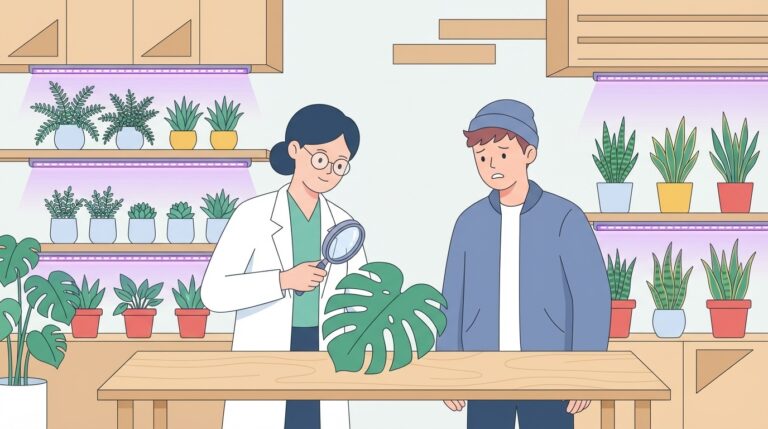
You see a person in a white lab coat examining a leaf with a magnifying glass while the owner looks on with the same anxiety as a parent in a pediatrician’s office. Welcome to the world of Banryeo Singmul (반려 식물 – Companion Plants).
In Korea, plants aren’t just decor; they are family. We have moved beyond “gardening” to “parenting.” K-Pop idols like RM of BTS openly discuss conversing with their bonsai, and K-Dramas show CEOs tending to orchids to relieve stress. Consequently, we now have Plant Hotels for when you travel and Plant Hospitals for when your green friends are under the weather.
As a C2 learner, you don’t just need to know how to buy a flower. You need the sophisticated vocabulary to discuss symptoms, diagnoses, and care services. Let’s dive into the high-level Korean used by the serious Sik-jipsa (식집사 – Plant Butler).
Phase 2: Deep Dive into Core Expressions
Here are three advanced expressions to navigate premium plant services.
1. 위탁 관리를 맡기다 [witak gwalli-reul matgida]
- Pronunciation: [wee-tak gwal-li-reul mat-gi-da] (Think of ‘wit’ like ‘wheat’, ‘tak’ like ‘tock’.)
- Meaning: Literal: To entrust consignment management / Real Nuance: To check (someone/something) into professional care/custody.
- K-Culture Moment: You’ll hear similar phrasing in legal dramas involving assets, but here it adds a layer of professionalism to plant care. It implies you are paying for expert supervision, not just storage.
- Editor’s Insight: Using specific verbs like 맡기다 (to entrust) elevates your speech. You aren’t just “putting” (놓다) the plant there; you are transferring responsibility.
- Situation Spectrum:
[🚫 Casual Friend] ———— [✅ Service Provider] ———— [✅ Official Contract]- 🤔 Think About It: Why does Korean use the same word (관리 – management) for business projects, skin care, and plant care? What does this suggest about the Korean approach to maintenance?
2. 소생이 불가능할 것 같습니다 [sosaeng-i bulganeung-hal kkot gatseumnida]
- Pronunciation: [so-saeng-ee bul-ga-neung-hal ggot gat-seum-ni-da]
- Meaning: Literal: It seems revival is impossible. / Real Nuance: It’s beyond saving / It’s a lost cause.
- K-Culture Moment: This is the dramatic line a doctor delivers in a medical K-Drama (Medical Top Team, Hospital Playlist) when a patient flatlines. Hearing a “Plant Doctor” say this about your basil is a uniquely Korean tragicomedy.
- Editor’s Insight: At the C2 level, we avoid simple words like “죽다” (die). 소생 (resuscitation/revival) carries the weight of a medical procedure. It shows you respect the life of the plant.
- Situation Spectrum:
[🚫 Buying Groceries] ———— [⚠️ Casual Chat] ———— [✅ Medical/Serious Context]- 🤔 Think About It: The use of Sino-Korean words (Hanja) like ‘소생’ (So-saeng) creates a formal, almost clinical distance. How does this formalization help manage bad news?
3. 과습으로 인한 뿌리 부패 [gwaseub-euro inhan ppuri bupae]
- Pronunciation: [gwa-seub-eu-ro in-han ppoo-ree boo-pae]
- Meaning: Literal: Root corruption caused by over-humidity. / Real Nuance: Root rot due to overwatering.
- K-Culture Moment: If you watch YouTube channels by Korean “Plant Influencers,” 과습 (overwatering/excess moisture) is the villain in every story. It’s the ultimate diagnosis.
- Editor’s Insight: Instead of saying “물을 너무 많이 줬어요” (I gave too much water), using the causal noun phrase ~로 인한 (caused by…) demonstrates academic-level proficiency.
- Situation Spectrum:
[🚫 Playground] ———— [✅ Expert Consultation] ———— [✅ Academic Report]- 🤔 Think About It: Korean heavily utilizes noun-ending forms (substantives) in professional settings for efficiency. How does this compare to the verb-heavy structure of English?
Phase 3: Textbook vs. Real Life
| Situation | 📖 Textbook Korean | 🗣️ Real Korean (Plant Butler Edition) | 💡 Why the difference? |
|---|---|---|---|
| Describing a dying plant | 식물이 죽어가고 있어요. (The plant is dying.) |
애가 상태가 영 아니에요. (The kid’s condition is really ‘not it’.) |
Anthropomorphism. Referring to the plant as ‘kid’ (애) implies emotional attachment. |
| Asking for care services | 여행 가는 동안 물 좀 주세요. (Please water it while I travel.) |
케어 서비스 입실 가능한가요? (Is admission to care service possible?) |
Adoption of ‘Konglish’ (Care Service) and hotel terminology (Check-in/Ip-sil) emphasizes the premium nature. |
| Asking about recovery | 다시 살 수 있을까요? (Can it live again?) |
회복 가능성이 얼마나 되나요? (What is the probability of recovery?) |
In professional consultations, Koreans prefer statistical/objective language (Possibility/Probability). |
Phase 4: Cultural Deep Dive — The Rise of the “Sik-jipsa”
4-1. Non-verbal Communication: The “Expert’s Touch”
When visiting a plant hospital, attitude is everything. Do not simply point at the plant. If you bring a potted plant, hold it with both hands, supporting the bottom, as if presenting a valuable artifact or a small child. When the ‘doctor’ speaks, nod gravely. This shows you understand the gravity of the diagnosis (Jin-dan).
4-2. K-Culture Connection: K-Pop Idols & Plants
Why the obsession? In a hyper-competitive society like Korea, where housing is expensive and loneliness is common (Hon-jok culture), plants offer companionship without the high maintenance of a dog.
* Connection: Just like K-Pop fans use honorifics for their idols, Sik-jipsas use honorific terms for their plants’ needs (e.g., giving “nutrition” implies supplements, not just fertilizer).
* The Vibe: Think of the drama Crash Landing on You, where Captain Ri speaks to the tomato plant. That specific mix of tenderness and seriousness is what you are aiming for.
Phase 5: Immersive Roleplay
Setting: A minimalist Plant Hospital in Gangnam. Soft classical music plays. The air is humid.
Characters:
* YOU: A frantic plant parent whose expensive Monstera Albo is turning yellow.
* Manager Park: A serious plant pathologist wearing a pristine apron.
Manager Park: (Adjusting glasses) 아이고, 잎 마름이 꽤 진행됐네요. 언제부터 이러셨어요?
(Aigo, the leaf withering has progressed quite a bit. Since when has it been like this?)
YOU:
🔀 Your Turn! Choose your response:
– A) “한 3일 됐어요. 물을 너무 많이 줬나 봐요.” (Standard & Safe)
– B) “출장 다녀오니까 이 모양이네요. 소생 가능할까요?” (Professional & Urgent)
– C) “죽지 마! 제발 살려주세요 선생님!” (K-Drama Drama Queen)✅ Best Choice: B. It explains the context (business trip) and uses the high-level term “resuscitation” (So-saeng). It treats the transaction professionally.
Manager Park: 글쎄요, 뿌리까지 과습 피해가 갔는지 확인해봐야겠는데요. 일단 입원 수속 밟으시겠어요?
(Well, we need to check if the over-humidity damage reached the roots. Would you like to proceed with hospitalization procedures for now?)
YOU: 네, 비용은 상관없으니 집중 치료(intensive care) 부탁드립니다.
(Yes, cost doesn’t matter, please provide intensive care.)
Phase 6: 10-Second Shadowing Drill
Let’s practice the tone of a concerned client. Focus on the pause to show hesitation and worry.
😟 혹시… / 분갈이 랑 / 영양 처방도 / 같이 받을 수 있을까요?
(Hoksi… / bun-gal-i-rang / yeong-yang cheo-bang-do / ga-chi ba-deul su isseulkkayo?)
“By any chance… could I receive repotting and a nutritional prescription together?”
Phase 7: K-Culture Mini Glossary
| Korean | Romanization | English | Context |
|---|---|---|---|
| 반려 식물 | Banryeo Singmul | Companion Plant | The official term replacing “houseplant.” Implies emotional bond. |
| 식집사 | Sik-jipsa | Plant Butler | A portmanteau of Plant (Sikmul) + Butler (Jipsa). A person who serves their plants. |
| 분갈이 | Bungal-i | Repotting | A common service offered. ‘Bun’ (Pot) + ‘Gali’ (Changing). |
| 시들하다 | Sideul-hada | To wither | Used for plants, but also metaphorically for fading interest or energy. |
| 반려 식물 호텔 | … Hotel | Plant Hotel | Boarding service for plants during owner’s vacation. |
Phase 8: Traveler’s Survival Kit (Service Edition)
Even if you aren’t bringing a plant to Korea, these service-industry phrases are universal for high-end concierge or repair services.
🆘 Survival Expression #1: Availability
– 🇰🇷 “당일 예약 가능한가요?” (Dang-il ye-yak ga-neung-han-ga-yo?)
– Meaning: Is a same-day reservation possible?
– Use at: Hair salons, restaurants, and plant hospitals.🆘 Survival Expression #2: Cost Estimate
– 🇰🇷 “견적이 대략 어떻게 나오나요?” (Gyeon-jeok-i dae-ryak eo-tteo-ke na-o-na-yo?)
– Meaning: Roughly how does the estimate come out?
– Nuance: ‘Gyeon-jeok’ is a formal word for ‘quote/estimate’. Much better than “How much?”📌 Editor’s Note: In Korea, specialized services (like plant hospitals) often require Naver Reservation (네이버 예약). Walk-ins might be turned away in trendy areas like Seongsu.
Phase 9: Think Deeper — Anthropomorphism in Language
Think Deeper: Why do Koreans use human medical terms (Diagnosis, Prescription, Hospitalization) for plants?
This reflects the personification of care in modern Korean society. As traditional family structures shrink and single-person households increase, the emotional energy previously directed at children or extended family is now projected onto pets and plants. Using words like “반려” (Companion/Life Partner) elevates the object to a subject, granting it dignity. It’s not just about keeping a leaf green; it’s about preserving a relationship.
💬 Your Turn: Does your language differentiate between “fixing” an object and “healing” a living thing? How would you talk about your plants in your native tongue?
Phase 10: FAQ & Troubleshooting
Q: Can I use these terms for a cheap plant I bought at a convenience store?
A: Absolutely. In fact, using high-level terms for a small cactus makes you sound like a dedicated Sik-jipsa with a sense of humor. It shows “affectionate exaggeration.”
Q: Is it rude to ask for a discount at a Plant Hospital?
A: Yes (🚫). These are considered professional medical/consulting services. You wouldn’t haggle at a dentist. Ask for a “service” (freebie) like a small nutrient bottle instead.
❌ Common Mistake: Saying “고쳐주세요” (Fix it) like it’s a broken toaster.
✅ Better: “치료해주세요” (Treat/Cure it) or “살려주세요” (Save its life).
Phase 11: Wrap-up & Action Items
One-Liner: Treat your plant like a VIP patient, and your Korean will sound C2-level professional.
🎬 Action Missions:
* 🥉 Bronze: Look at your plant and say out loud: “오늘 상태가 좀 안 좋은데? 진단이 필요해.” (Condition is bad today. Need a diagnosis.)
* 🥈 Silver: Search for “반려식물 병원” on Instagram and read three captions. Note the emotional words used.
* 🥇 Gold: If you are in Korea, visit a “Plant Cafe” or Garden Center and ask: “이 아이는 관리가 까다로운 편인가요?” (Is this kid picky about management?)
Phase 12: Interactive Quiz
1. Situational Judgment:
The ‘doctor’ says your plant has “root rot” (gwaseub). What is the most appropriate C2-level follow-up question?
* A) 그럼 물을 적게 줄까요? (So, give less water?) -> Too basic.
* B) 회복을 위한 처방전이 따로 있나요? (Is there a specific prescription for recovery?) -> Correct! Fits the medical metaphor.
* C) 이거 환불 되나요? (Can I get a refund?) -> Rude and irrelevant.
2. True or False:
In Korea, it is common to refer to plants as “children” (Ai/Ae) in hobbyist communities.
* [ True / False ] -> Answer: True. It signifies the ‘Sik-jipsa’ identity.
Frequently Asked Questions (FAQ)
Q: What does "위탁 관리를 맡기다 [witak gwalli-reul matgida]" mean in Korean and how do you pronounce it?
A: In Korean, "위탁 관리를 맡기다 [witak gwalli-reul matgida]" is pronounced [wee-tak gwal-li-reul mat-gi-da] and means: Literal: To entrust consignment management / Real Nuance: To check (someone/something) into professional care/custody.
Q: What does "소생이 불가능할 것 같습니다 [sosaeng-i bulganeung-hal kkot gatseumnida]" mean in Korean and how do you pronounce it?
A: In Korean, "소생이 불가능할 것 같습니다 [sosaeng-i bulganeung-hal kkot gatseumnida]" is pronounced [so-saeng-ee bul-ga-neung-hal ggot gat-seum-ni-da] and means: Literal: It seems revival is impossible. / Real Nuance: It’s beyond saving / It’s a lost cause.
Q: What does "과습으로 인한 뿌리 부패 [gwaseub-euro inhan ppuri bupae]" mean in Korean and how do you pronounce it?
A: In Korean, "과습으로 인한 뿌리 부패 [gwaseub-euro inhan ppuri bupae]" is pronounced [gwa-seub-eu-ro in-han ppoo-ree boo-pae] and means: Literal: Root corruption caused by over-humidity. / Real Nuance: Root rot due to overwatering.







