

Phase 1: Immersive Hook
Hello! This is your Senior Editor at Daily Hangul.
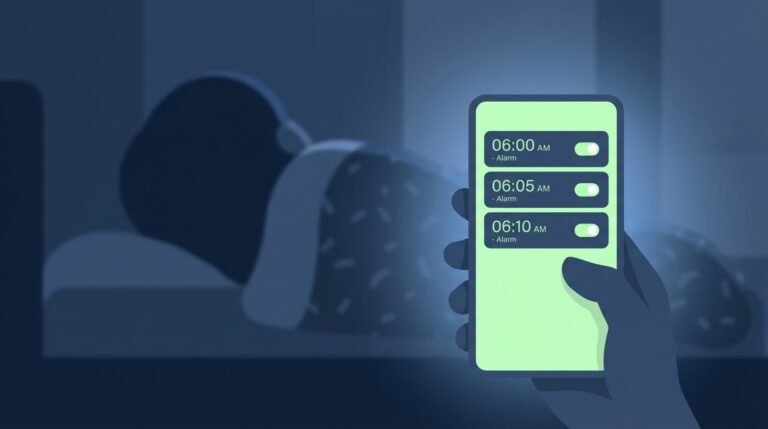
Picture this: You are the main character in a K-Drama. The sunlight is streaming through the window, hitting your face perfectly (unlike real life, where we look like zombies). But wait—something is wrong. The calm, melodic soundtrack is interrupted by a blaring siren. You check your phone. You have set 10 alarms, 5 minutes apart, starting from 6:00 AM to 6:50 AM.
Does this sound familiar?
In Korea, we call this “알람 지옥” (Alarm Hell). Whether it’s K-Pop idols recording sweet “Morning Call” voice packs for their fans, or the intense struggle of waking up for a 9 AM class or work, the culture of waking up in Korea is serious business.
If you don’t know how to talk about alarms and waking up properly, you might miss your train to Busan, or worse, misunderstand when a Korean friend asks you for a “Morning Call” (Is it a favor? Or are they flirting?).
Today, we are going deeper than just “I wake up.” Let’s master the Smartphone Life: Alarm & Morning Call Edition.
Phase 2: Deep Dive into Key Expressions
1. 알람을 맞추다 [allameul matchuda]
- Pronunciation: matchuda sounds a bit like “ma-chew-da.”
- Meaning: To set an alarm (Literal: To adjust/match the alarm).
- K-Culture Moment: In reality shows like I Live Alone (나 혼자 산다), you often see celebrities setting their alarms on their smartphones before bed, muttering, “Can I wake up tomorrow?”
- Editor’s Insight: You might want to say “set” (세팅하다), but 맞추다 is the most natural verb here. It implies adjusting the time to fit your schedule.
- Situation Spectrum:
[🚫 Formal/Boss] ———— [⚠️ Colleagues] ———— [✅ Friends/Self]- Usage: ✅ Universal (You can say this to anyone about yourself).
🤔 Think About It: Why do Koreans use the verb “match” (맞추다) instead of just “set”? Perhaps it’s because time in Korea is something you must synchronize with perfectly to survive the fast-paced “Palli-Palli” (Hurry-Hurry) culture.
2. 모닝콜 [moningkol]
- Pronunciation: mo-ning-kol (Konglish at its finest!)
- Meaning: Wake-up call.
- K-Culture Moment: This is huge in dating culture. If a guy asks a girl, “내일 모닝콜 해줄래?” (Will you give me a morning call tomorrow?), it’s often a sign of intimacy. Also, K-Pop idols release “Morning Call” content where they whisper, “Wake up, honey” to fans.
- Editor’s Insight: While hotels offer “wake-up calls,” in daily life, a 모닝콜 is a phone call from a friend or partner to ensure you’re up. It implies care and connection.
- Situation Spectrum:
[🚫 Boss] ———— [⚠️ Close Colleagues] ———— [✅ Friends/Lovers]- Asking a boss for a morning call? 🚫 Absolute suicide.
3. 깨우다 vs. 일어나다 [kkae-u-da vs. i-reo-na-da]
- Pronunciation: kkae-u-da (active) / i-reo-na-da (self).
- Meaning: To wake someone up vs. To wake up (oneself).
- K-Drama Context: The classic scene where a mom smacks her son’s back, yelling “빨리 안 일어나?!” (Won’t you get up quickly?!) vs. the protagonist whispering to their sleeping lover, “깨우기 싫었어” (I didn’t want to wake you).
- Editor’s Insight: B2 learners often confuse these. Remember: You 일어나다 (get up) yourself, but you 깨우다 (wake) others.
Phase 3: Textbook vs. Real Life
| Situation | 📖 Textbook Korean | 🗣️ Real Korean (Insa Style) | 💡 Why the difference? |
|---|---|---|---|
| Oversleeping | 늦게 일어났습니다. (I woke up late.) | 아, 늦잠 잤어! 망했다. (Ah, I overslept! I’m doomed.) | Koreans emphasize the result (doom) and the specific verb for oversleeping (늦잠). |
| Asking to wake up | 내일 아침 7시에 저를 깨워주세요. (Please wake me at 7 AM.) | 나 7시에 좀 깨워줘. (Wake me up a bit at 7.) | “좀” (a little/please) softens the command among friends. |
| Alarm didn’t ring | 알람이 울리지 않았습니다. (The alarm did not ring.) | 알람이 안 울렸어! / 못 들었어! (Alarm didn’t ring! / I couldn’t hear it!) | In panic mode, shorter negatives (안/못) are preferred over long forms. |
Bottom Note: “망했다” (I’m screwed/doomed) is the most common reaction to a missed alarm. Use it sparingly in formal settings!
Phase 4: Cultural Deep Dive
4-1. The “Snooze” Button Psychology
In Korea, hitting the snooze button isn’t just laziness; it’s a negotiation with fatigue. If someone says, “5분만 더…” (Just 5 more minutes), do not believe them. In Korean culture, if you are waking a friend up and they say this, you have two choices: pull the blanket away (extreme friends) or let them accept their fate of being late.
4-2. K-Pop Connection: The “Bias” Alarm
Many K-Pop apps (like Weverse or Bubble) feature voice messages from idols. Fans often set these as alarms. If you hear a sweet voice saying “일어날 시간이에요, 공주님” (It’s time to wake up, princess) on someone’s phone in the subway or dorm, don’t be alarmed. They are just starting their day with their “Bias” (최애). It’s a digital form of the 모닝콜 culture.
Phase 5: Immersive Roleplay
Setting: A guesthouse in Jeju Island. It is 8:00 AM. You and your Korean friend, Min-ji, planned to leave at 7:30 AM for a hike.
Characters:
* YOU: Still in bed, hair messy, looking for your phone.
* Min-ji (28): Already dressed, annoyed but finding it funny.
Dialogue:
Min-ji: 야! 너 아직도 자? 우리 늦었어! 😡
(Ya! Neo ajikdo ja? Uri neujeosseo!)
(Hey! You’re still sleeping? We’re late!)
YOU: 으… 몇 시야? 내 알람이 안 울렸나 봐. 😴
(Eu… Myeot siya? Nae allami an ulryeonna bwa.)
(Ugh… What time is it? I guess my alarm didn’t go off.)
Min-ji: 무슨 소리야. 내가 네 알람 끄는 거 봤는데? 얼른 일어나! 🧴
(Museun soriya. Naega ne allam kkeuneun geo bwanneunde? Eolleun ireona!)
(What are you talking about? I saw you turn off your alarm! Get up quickly!)
(🎭 Stage Direction: Min-ji throws a pillow at you lightly.)
🔀 Your Turn! How do you respond?
- A) “진짜? 기억이 안 나… 5분만 더 자면 안 될까?” (The risky beg)
- B) “헐, 미안해! 5분 안에 준비할게!” (The responsible panic)
- C) “네가 깨워줬어야지!” (The blame shift – Dangerous!)
✅ Best Choice: B — Koreans value speed (Speed/Palli-Palli). Showing that you will be ready in “5 minutes” is the best apology.
⚠️ Choice C Analysis: Blaming others for your sleep is a great way to start a fight during a trip.
Phase 6: 10-Second Shadowing Drill
Let’s practice the excuse you will use when you are inevitably late.
Emotion: 😨 Panic & Regret (Eyes wide open, voice slightly high)
“헐 / 망했다! / 알람을 / 못 들었어!”
(Heol / mang-haet-da! / Al-la-meul / mot deu-reo-sseo!)
Translation: Oh my god / I’m doomed! / The alarm / I couldn’t hear it!
Phase 7: K-Culture Mini Glossary
| Korean | Rom | Meaning | Context |
|---|---|---|---|
| 꿀잠 | kkul-jam | Honey Sleep | A very sweet, deep, satisfying sleep. |
| 늦잠 | neut-jam | Oversleeping | Sleeping past your intended wake-up time. |
| 칼기상 | kal-gi-sang | Knife Wake-up | Waking up instantly and sharply (like a soldier). |
| 알람 지옥 | allam jiok | Alarm Hell | Setting alarms every 5 minutes (6:00, 6:05, 6:10…). |
Phase 8: Traveler’s Survival Kit
Since many of you stay in hotels or guesthouses, here is how to handle wake-up calls professionally.
🆘 Survival Expression #1
* 🇰🇷 “내일 아침 7시에 모닝콜 부탁드려도 될까요?”
* (Naeil achim ilgop-si-e moningkol butak-deuryeodo doelkkayo?)
* 🗣️ Meaning: Can I ask for a wake-up call at 7 AM tomorrow?
* 📍 Where: Hotel Front Desk / Guesthouse Host
* 💡 Pro Tip: If you are staying at a fancy hotel, saying “Wake-up call” works. But in a local motel or pension, “Morning call” is the standard term.📌 Editor’s Travel Note
Koreans are punctual. If you book a tour bus for 8:00 AM, it leaves at 8:00 AM sharp. Always set two alarms. One on your phone, and one on the hotel TV/Phone if available.
Phase 9: Think Deeper — “Morning Call” vs. “Wake up Call”
🧠 Think Deeper: Language & Collectivism
Why does Korea use the term “Morning Call” (a Konglish term) so affectionately? In Western cultures, an alarm is often a solitary, mechanical tool. In Korea, asking for a “Morning Call” from a friend or significant other implies a reliance on the relationship. It transforms the act of waking up from a personal responsibility into a shared communal act. You are entrusting the start of your day to someone else.
💬 Your Turn: In your country, do friends wake each other up? Or is sleep sacred and private? Share in the comments!
Phase 10: FAQ & Troubleshooting
- Q: Can I ask my Korean boss for a morning call if we are on a business trip?
- A: NO. Never. Unless you want to be the subject of office gossip. Rely on your phone.
- Q: My Korean friend sent me a recording of them yelling “Wake up!” Is this rude?
- A: No, it’s a sign of close friendship! They are acting as your human alarm clock. It’s playful (and effective).
❌ Common Mistake #1: Saying “알람을 세팅해요.”
✅ Correction: While understood, “알람을 맞춰요” is much more natural. Save “setting” for hair or tables.
Phase 11: Wrap-up & Action Mission
One-Liner: Waking up in Korea is about responsibility, but sharing that struggle (via Morning Calls) creates a bond.
🎬 Action Missions:
* 🥉 Bronze: Look at your phone and say “내일 7시에 알람 맞춰야지” (I should set the alarm for 7 tomorrow).
* 🥈 Silver: Post a screenshot of your “Alarm Hell” (multiple alarms) on social media with the caption #알람지옥 #못일어나요.
* 🥇 Gold: Ask a close Korean friend (or study buddy), “나 내일 늦잠 잘 것 같은데, 모닝콜 해줄 수 있어?”
K-Culture Mission: Search for “IU Morning Call” or your favorite idol’s name + “Morning Call” on YouTube. Try waking up to it tomorrow. Good luck!
Phase 12: Interactive Quiz
- Situational Judgment: You are late for a meeting with a Korean professor. You arrive panting. What is the best thing to say?
- A) 알람이 고장 났어요. (The alarm was broken.)
- B) 늦잠 잤습니다. 죄송합니다! (I overslept. I am sorry!)
- C) 왜 모닝콜 안 해주셨어요? (Why didn’t you give me a morning call?)
- Fill in the Blank:
- A: 너 왜 이렇게 눈이 빨개?
- B: 어제 넷플릭스 보느라
_____ 잤어. - (Hint: The opposite of early sleep / implies oversleeping or late sleeping)
⬇️ Scroll for Answers
Answers:
1. B. Honesty is best. C is rude, and A sounds like a lame excuse.
2. 늦잠 (Neut-jam) – In this context, it can mean sleeping late or oversleeping.
Frequently Asked Questions (FAQ)
Q: What does "알람을 맞추다 [allameul matchuda]" mean in Korean and how do you pronounce it?
A: In Korean, "알람을 맞추다 [allameul matchuda]" is pronounced [matchuda sounds a bit like "ma-chew-da."] and means: To set an alarm (Literal: To adjust/match the alarm).
Q: What does "모닝콜 [moningkol]" mean in Korean and how do you pronounce it?
A: In Korean, "모닝콜 [moningkol]" is pronounced [mo-ning-kol (Konglish at its finest!] and means: Wake-up call.
Q: What does "깨우다 vs. 일어나다 [kkae-u-da vs. i-reo-na-da]" mean in Korean and how do you pronounce it?
A: In Korean, "깨우다 vs. 일어나다 [kkae-u-da vs. i-reo-na-da]" is pronounced [kkae-u-da (active] and means: To wake someone up vs. To wake up (oneself).







