

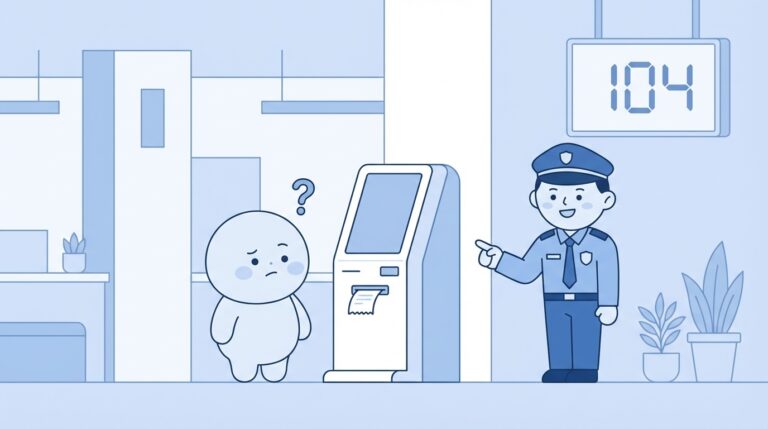
Phase 1: The “Ding-Dong” Anxiety – Welcome to the Korean Bank 🏦
안녕하세요! Daily Hangul Editor is back.
Imagine this scene: You are the protagonist in a K-Drama. You’ve just moved to Seoul, and you need to open a bank account to deposit your hard-earned paycheck. You walk into the bank with confidence, looking like a CEO from a drama… but then you freeze. 🥶
There are buttons everywhere. People are sitting in silence, staring at screens. Suddenly, a loud “Ding-Dong!” rings out, and a mechanical voice says, “204-beon gogaek-nim” (Customer number 204).
Everyone looks up. It wasn’t you. You realize you don’t even have a number.
Today’s mission is crucial: How to survive the first 5 minutes in a Korean bank. Specifically, how to handle the Waiting Number Ticket (번호표) system. Without this ticket, you are invisible. Let’s make sure you get seen!
Phase 2: Deep Dive – The Keys to the Castle 🔑
Here are the top 3 expressions you need to navigate the waiting area.
1. 번호표를 뽑다 [beon-ho-pyo-reul ppop-da]
- Pronunciation: [beon-ho-pyo] + [ppop-da] (Think of the ‘p’ sound like popping bubble wrap – explosive!)
- Meaning: To pull/take a number ticket.
- The Nuance: The verb 뽑다 is interesting. We use it for pulling weeds, extracting a tooth, or playing a claw machine game. Here, it means “extracting” that precious piece of paper from the machine.
- K-Culture Moment: In variety shows like Running Man, when members have to choose a random mission, they often shout “뽑아!” (Pull it/Pick it!).
- Situation Spectrum:
[🚫 Formal Boss] ———— [✅ Standard/Polite] ———— [✅ Casual]- Usually, you see this written on machines: “번호표를 뽑아주세요” (Please pull a ticket).
2. 대기인 수 [dae-gi-in su]
- Pronunciation: [dae-gi-in] + [su] (‘Su’ sounds like ‘Sue’)
- Meaning: Number of people waiting.
- Editor’s Insight: This is the scariest number in the bank. You look at your ticket, and it says 대기인 수: 15명. This means you have time to go grab a coffee (maybe).
- 🤔 Think About It: Why does Korean society emphasize “numbers” and “efficiency” (Bballi-bballi culture) so much that even the waiting count is displayed in real-time everywhere?
3. 무슨 업무 보러 오셨어요? [museun eomu bo-reo o-syeo-sseo-yo?]
- Pronunciation: [museun] + [eomu] + [bo-reo]…
- Meaning: “What business/task did you come for?” (Literal) → “How can I help you?”
- K-Culture Moment: This is the standard line for the Police/Security Guard (청원경찰) at the bank entrance. In Korea, the bank security guard is often the friendliest person who acts like a concierge!
- Situation Spectrum:
- This is a formal phrase used by staff towards customers.
Phase 3: Textbook 📖 vs. Real Life 🗣️
| Situation | 📖 Textbook Korean | 🗣️ Real Korean (Survival) | 💡 Why the difference? |
|---|---|---|---|
| Asking for a ticket | 번호표는 어디에 있습니까? (Where is the number ticket?) | 번호표 어디서 뽑아요? (Where do I pull the ticket?) | “~습니까” is too military/formal. “~요?” is perfect for daily life. |
| Confused by options | 저는 예금 업무를 하고 싶습니다. (I want to do deposit business.) | 입출금 통장 만들려고요. (I’m here to make a deposit/withdrawal account.) | Specificity wins. “Business” (업무) is vague; stating the goal is clearer. |
Bottom Note: When in doubt, just look at the Security Guard with confused puppy eyes 🥺. They will immediately come over and press the button for you.
Phase 4: Cultural Deep Dive – The Art of Waiting 🧘
4-1. Non-Verbal: The “Eye-Contact” Game
In Western banks, you might stand in a line (queue). In Korea, you sit. But you must keep one eye on the screen. When the “Ding-Dong” sounds:
1. Look at the screen for your number.
2. Look for the counter number (e.g., 3번 창구).
3. Walk fast. If you delay more than 10 seconds, the teller might press the “next” button, and you lose your turn!
4-2. K-Drama Connection: The “Bank Scene” Trope
Have you seen scenes in dramas like My Mister or Squid Game where characters stare desperately at bank books?
* The Vibe: Korean banks are exceptionally quiet. Talking loudly on the phone while waiting is a major taboo (Eye-daggers will be thrown at you 👀).
* Food Connection: Banks are often located near markets or subway stations. If the wait time is long (대기인 수: 20+), many Koreans will run to a nearby convenience store or cafe and come back. It’s an unspoken skill.
Phase 5: Roleplay Scenario – The Guard Encounter 👮
Setting: A bustling bank in Hongdae. Lunchtime (12:30 PM). It’s crowded. You enter, looking confused by the machine with two main buttons: 예금 (Deposit/General) and 대출 (Loans).
Characters:
* YOU: A foreign student who needs a debit card.
* Guard (Ahjussi): Helpful security guard in uniform.
(Scene Start)
Guard: (Approaching you with a smile) 어서 오세요! 무슨 업무 보러 오셨어요?
(Eoseo oseyo! Museun eomu bo-reo o-syeo-sseo-yo?)
(Welcome! What are you here for?)
YOU: 아, 안녕하세요. 저… 번호표…
(Ah, annyeong-haseyo. Jeo… beon-ho-pyo…)
(Ah, hello. I… the number ticket…)
Guard: 통장 만드시나요? 아니면 대출 상담이세요?
(Tong-jang mandu-si-nayo? Animyeon dae-chul sang-dam-iseyo?)
(Are you making a bankbook? Or is it a loan consultation?)
🔀 Decision Point! How do you answer?
- A) “돈 주세요.” (Give me money.)
- B) “입출금 하려고요.” (I want to do deposit/withdrawal stuff.)
- C) “대출이요.” (Loan, please.)
✅ Best Choice: B
* Guard: 네, 그럼 여기 ‘예금’ 누르시면 돼요. 대기인 수가 좀 많네요.
(Okay, press ‘Deposit’ here. There are quite a few people waiting.)
⚠️ Why not A? “돈 주세요” sounds like a bank robber! 🔫 never say this unless you want real trouble!
Phase 6: 10-Second Shadowing Drill 🗣️
Practice this to express your frustration (or relief) about the waiting time.
Emotion: Surprised & slightly worried 😟
“와… / 대기인 수가 / 10명이나 / 있어요?”
(Wa… / dae-gi-in su-ga / yeol-myeong-ina / isseo-yo?)
(Wow… / the number of waiting people / is as many as 10?)
Phase 7: K-Culture Glossary 📚
| Korean | Romanization | English | Context |
|---|---|---|---|
| 창구 | chang-gu | Counter/Window | The desk where the teller sits. Usually numbered (1번 창구). |
| 순서 | sun-seo | Turn/Order | “제 순서예요?” (Is it my turn?) |
| 청원경찰 | cheong-won-gyeong-chal | Bank Security | Not just security; they are the “Hall Managers” of Korean banks. |
| 띵동 | dding-dong | Ding-Dong | The sound that rules your destiny in the bank. |
Phase 8: Traveler’s Survival Kit 🧳
Even if you are just traveling, you might need to visit a bank for currency exchange (환전).
🆘 Survival Expression #1
* 🇰🇷 “환전 하러 왔어요.” (Hwan-jeon ha-reo wa-sseo-yo.)
* 🗣️ Pronunciation: [Hwan-jeon] (Change money)
* 📍 Usage: When the guard asks why you are there.
* 💡 Pro Tip: You usually need your Passport (여권) for any bank task. Don’t leave it at the hotel!📌 Editor’s Note:
Most Korean banks operate from 9:00 AM to 4:00 PM. If you go at 4:01 PM, the shutters are down. Be strictly on time!
Phase 9: Think Deeper – Digital vs. Physical 🧠
Topic: The Paradox of Korean Banking
Korea is a digital powerhouse. You can pay for anything with a smartphone. Yet, opening a bank account as a foreigner often requires a physical visit and waiting for that “Ding-Dong.” Why?
It reflects the tension between extreme convenience (FinTech) and strict security (Real-name verification laws). The physical visit is a ritual of trust. Also, the bank acts as a community hub in Korea—air-conditioned in summer, warm in winter. You’ll often see elderly people resting there. It’s not just a business; it’s a shared space.
💬 Your Turn: In your country, do you still visit physical banks, or is everything 100% online? Tell us in the comments!
Phase 10: FAQ & Troubleshooting 🛠️
- Q: Can I use English at the counter?
- A: Maybe. In major tourist areas (Myeongdong, Hongdae, Gangnam), there is often a “Global Desk” or English-speaking staff. Look for the English sign on the ticket machine!
- Q: The machine has too many buttons! What if I press the wrong one?
- A: Don’t panic. If you pulled a “Loan” ticket but need “Deposit,” just tell the teller when called. They might redirect you, but they will help.
- ❌ Common Mistake: Sitting in the “VIP” area seats without a VIP ticket.
- ✅ Fix: Check if the chairs are in front of the “PB” (Private Banking) room. Stick to the general waiting area seats to avoid awkwardness.
Phase 11: Wrap-up & Action Mission 🎬
One-Liner: To survive a Korean bank, find the machine, pull the ticket (번호표), and listen for the “Ding-Dong”!
🚀 Your Mission:
* 🥉 Bronze: Say “번호표 어디서 뽑아요?” out loud 3 times.
* 🥈 Silver: Watch a YouTube vlog of a foreigner visiting a Korean bank (Search: “Opening Korean Bank Account”).
* 🥇 Gold: Visit a Korean bank (or a crowded post office) and successfully pull a ticket without asking for help!
Phase 12: Quiz – Interactive Challenge 🎯
1. Situation Judgment:
You walk into a bank, and the security guard approaches you. What is the most natural thing to say?
* A) “돈 내놔!” (Hand over the money!)
* B) “체크카드 만들러 왔어요.” (I came to make a debit card.)
* C) “당신은 누구세요?” (Who are you?)
2. Fill in the Blank:
“Excuse me, where is the ticket machine?”
→ “저기요, [____] 어디서 뽑아요?”
3. True or False (K-Culture):
Korean banks are usually open until 6:00 PM. (True / False)
Answers:
1. B (A is a robbery, C is rude!)
2. 번호표 (Beon-ho-pyo)
3. False (They usually close at 4:00 PM! Be careful!)
Frequently Asked Questions (FAQ)
Q: What does "번호표를 뽑다 [beon-ho-pyo-reul ppop-da]" mean in Korean and how do you pronounce it?
A: In Korean, "번호표를 뽑다 [beon-ho-pyo-reul ppop-da]" is pronounced [beon-ho-pyo] and means: To pull/take a number ticket.
Q: What does "대기인 수 [dae-gi-in su]" mean in Korean and how do you pronounce it?
A: In Korean, "대기인 수 [dae-gi-in su]" is pronounced [dae-gi-in] and means: Number of people waiting.
Q: What does "무슨 업무 보러 오셨어요? [museun eomu bo-reo o-syeo-sseo-yo?]" mean in Korean and how do you pronounce it?
A: In Korean, "무슨 업무 보러 오셨어요? [museun eomu bo-reo o-syeo-sseo-yo?]" is pronounced [museun] and means: "What business/task did you come for?" (Literal) → "How can I help you?"







