

Phase 1: The Immersive Hook
Greeting: Hello, Daily Hangul readers! This is your Senior Editor, bringing you the nuances of Korean that textbooks are too polite to mention.
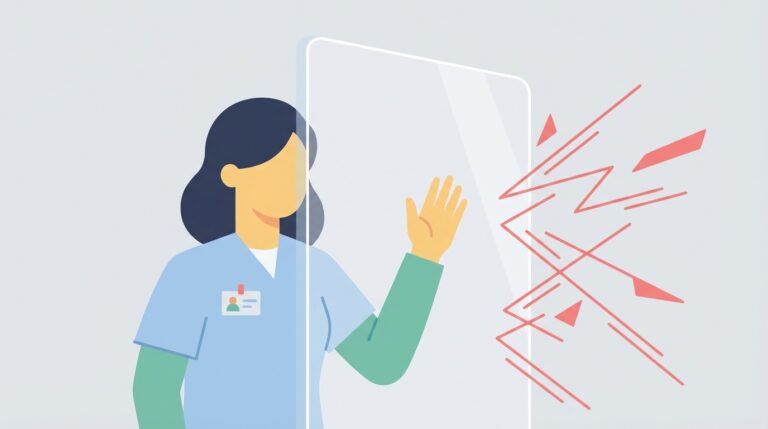
The K-Drama Cold Open: Picture this: You’re watching a tense scene in a K-Drama set in a luxury department store. A wealthy antagonist (let’s call her the Chaebol daughter) is screaming at a store clerk because a limited-edition bag is sold out. She throws money, maybe even a glass of water (the classic water slap trope). The clerk, trembling but maintaining a 90-degree bow, says something soft yet firm.
It’s not just “I’m sorry.” It’s a linguistic shield.
The ‘Why’: In the Korean service industry, the customer used to be ‘king’ (wang), but today, we face the ‘Black Consumer’ (블랙 컨슈머) or ‘Jinsang’ (진상)—unreasonable customers who abuse the system. As an advanced (C1) learner, knowing how to navigate these heated moments without losing your dignity—or your job—is the ultimate test of fluency. You need to know how to set boundaries using the highest level of honorifics. Irony? Perhaps. Essential? Absolutely.
Transparency: This guide compiles strategies from veteran hotel managers and retail experts in Seoul to help you master the art of the “Polite Refusal.”
Phase 2: Deep Dive into Core Expressions
1. 고객님, 심정은 충분히 이해합니다만…
(Gogaengnim, simjeong-eun chungbunhi ihaehamnidaman…)
- Pronunciation: [Go-gaeng-nim, sim-jeong-eun chung-bun-hi i-hae-ham-ni-da-man…]
Tip: The ‘man’ at the end should trail off slightly, inviting them to listen to the ‘but’. - Meaning:
- Literal: Customer, I sufficiently understand your feelings, but…
- Real Nuance: “I am validating your emotions so you calm down, but the answer is still no.”
- K-Culture Moment: You’ll see this in medical dramas when a doctor has to deliver bad news to an angry family member, or in airline situations when a passenger misses a flight. It’s the standard “empathy sandwich” opener.
- Editor’s Insight: This is a crucial de-escalation technique. In Korea, ignoring the emotion (jeong/feeling) and jumping straight to logic makes you seem cold-blooded. You must address the mood first.
- Situation Spectrum:
[🚫 Casual Friends] ———— [⚠️ Colleagues] ———— [✅ Angry Customers/Elders] - 🤔 Think About It: Why does Korean require us to acknowledge “feelings” (simjeong) before facts in a business setting? How does this relate to the culture of Jeong (attachment/bond)?
2. 규정상 어쩔 수가 없습니다.
(Gyujeongsang eojjeol suga eopseumnida.)
- Pronunciation: [Gyu-jeong-sang uh-jjul su-ga up-sum-ni-da]
Sound Analogy: ‘Uh-jjul’ sounds like a sigh of resignation. - Meaning:
- Literal: According to regulations, there is no way (to do it).
- Real Nuance: “It’s not that I don’t want to help you; the system won’t let me. Don’t shoot the messenger.”
- K-Culture Moment: The ultimate shield. When a protagonist in a thriller tries to enter a restricted area, the security guard will robotically repeat this phrase. It depersonalizes the refusal.
- Editor’s Insight: Using the word 규정 (Regulation/Policy) shifts the blame from you to an invisible, untouchable authority. It protects you from the customer’s personal attacks.
- Situation Spectrum:
[🚫 Family] ———— [⚠️ Boss] ———— [✅ Unreasonable Requests] - 🤔 Think About It: In Western cultures, “I can’t do that” is often enough. Why does Korean culture prefer citing external “regulations” rather than personal agency?
3. 이러시면 곤란합니다.
(Ireosimyeon gollanhamnida.)
- Pronunciation: [I-ruh-si-myun gol-lan-ham-ni-da]
- Meaning:
- Literal: If you do this, it is difficult/troublesome.
- Real Nuance: “You are crossing the line. Stop immediately, or there will be consequences.”
- K-Culture Moment: Used when a Jinsang customer starts shouting, swearing, or getting physical. It’s a warning shot fired with extreme politeness. Think of a bouncer in a Gangnam club stopping a drunk patron.
- Editor’s Insight: The word 곤란 (Difficult/Awkward) is a masterpiece of indirectness. You aren’t saying “You are bad”; you are saying “The situation is becoming difficult.” It saves the customer’s face while signaling a hard stop.
- Situation Spectrum:
[🚫 Joke] ———— [⚠️ Mild Annoyance] ———— [✅ Harassment/Aggression] - 🤔 Think About It: How does this indirect warning reflect the Korean concept of Chemyon (Social Face)?
Phase 3: Textbook vs. Real Life
| Situation | 📖 Textbook Korean | 🗣️ Real Korean (Pro CS) | 💡 Why the difference? |
|---|---|---|---|
| Refusing a refund | 안 됩니다. (No, you can’t.) | 도움 드리고 싶지만, 규정상 어렵습니다. (I’d love to help, but regualtions make it difficult.) | “No” is too direct and offensive. You must show intent to help first. |
| Customer is yelling | 조용히 해 주세요. (Please be quiet.) | 고객님, 목소리 조금만 낮춰 주시겠습니까? (Customer, would you mind lowering your voice a little?) | Asking directly implies a command. Asking as a question respects the hierarchy. |
| Customer is delaying | 빨리 결정하세요. (Decide quickly.) | 뒤에 기다리시는 분들이 계셔서요… (There are people waiting behind you…) | Instead of pushing the customer, you blame the situation (other people). |
Bottom Note: At the C1 level, fluency isn’t about grammar; it’s about softening the blow. Direct translations of “No” or “Stop” can be perceived as aggressive Gapjil (power abuse) in reverse.
Phase 4: Cultural Deep Dive — The Hierarchy of Rage
4-1. Non-verbal: The ‘Dead’ Eyes (Eun-eun-han Gwang-gi)
When dealing with a Black Consumer, your body language must be a paradox: submissive posture, but unshakeable mental fortitude.
– Eye Contact: Do not stare them down (challenge), but do not look at the floor (guilt). Look at the bridge of their nose.
– Hand Position: Hands clasped in front (Gongsu position), creating a physical barrier between you and them.
4-2. K-Culture Connection: Gapjil (갑질)
This unit is impossible to understand without the concept of Gapjil.
– Definition: ‘Gap’ (甲) refers to the dominant party in a contract, and ‘Jil’ (질) is a suffix for negative action. It essentially means “abusing one’s power over a subordinate.”
– K-Drama Trope: The Nut Rage incident (real life turned drama trope) is the peak example. A customer demands the plane turn around because of how nuts were served.
– Critical Perspective: While “The Customer is King” was the old motto, modern Korea is fighting back with the “Gamjeong Nodong” (Emotional Labor) Protection Act. Now, workers are legally encouraged to hang up or walk away from abusive customers. The language is shifting from pure submission to “polite assertiveness.”
Phase 5: Immersive Roleplay
Setting: A high-end cosmetics counter in Myeongdong. Saturday, 3 PM. Crowded. A customer (Lady in her 50s, heavy makeup) throws an opened lipstick on the counter.
Characters:
– YOU: Manager of the brand. Professional, calm.
– NPC (Customer): “This color looks trash on me! Refund me now! I bought it yesterday!”
Dialogue:
NPC: 야! 이거 색깔이 왜 이래? 당장 환불해 줘!
(Ya! Igeo saek-kkar-i wae irae? Dangjang hwanbulhae jwo!)
Translation: “Hey! Why is this color like this? Refund me right now!”
(🎭 Stage Direction: She slams the lipstick down. The tip is smashed.)
YOU: (Checking the product calmly)
고객님, 많이 속상하셨겠습니다. 하지만 이 제품은 이미 사용하셔서…
(Gogaengnim, mani soksanghasyeotgetseumnida. Hajiman i jepumeun imi sayonghasyeoseo…)
Translation: “Customer, you must be very upset. However, since this product has already been used…”
NPC: 내가 누군지 알아? 여기 사장 나오라 그래!
(Naega nugunji ara? Yeogi sajang naora geurae!)
Translation: “Do you know who I am? Tell the owner to come out!”
🔀 Decision Point! How do you respond?
– A) “제가 사장인데요.” (I am the owner.)
– B) “사장님 안 계십니다. 돌아가세요.” (Owner isn’t here. Please leave.)
– C) “제가 책임자입니다. 말씀해 주시면 도와드리겠습니다.” (I am the person in charge. If you tell me, I will help you.)✅ Best Choice: C — It asserts authority (“I am in charge”) without challenging the customer’s ego. It shifts the focus back to solving the problem.
⚠️ Choice A Analysis: While satisfying, in a high-service culture, this often escalates the fight unless you are ready for a full-blown argument.
Phase 6: 10-Second Shadowing Drill
Scenario: Firmly closing a conversation with a rude customer.
Sentence:
😊 죄송하지만 / ✋ 더 이상은 / 🙅 규정상 / 어렵습니다.
(Joe-song-ha-ji-man / deo i-sang-eun / gyu-jeong-sang / eo-ryeop-seum-ni-da.)
Guide:
– Tone: 😤 Firm but Polite (Not angry, just final).
– Pause: Pause after “However” and “Anymore” to let the weight of the refusal sink in.
– Focus: Pronounce 규정 (Gyu-jeong) clearly. That is your shield.
Phase 7: K-Culture Glossary (CS Edition)
| Korean | Romanization | Meaning | Context |
|---|---|---|---|
| 진상 | Jinsang | Nuisance Customer | A slang term for customers who make unreasonable demands or scenes. |
| 갑질 | Gapjil | Power Abuse | Being arrogant or abusive to staff because you paid money. |
| 감정노동 | Gamjeong Nodong | Emotional Labor | The stress of having to smile and be polite even when being abused. |
| 컴플레인 | Keompeullein | Complaint | Konglish. Used frequently in service industries (e.g., “We got a complain”). |
| 책임자 | Chaegimja | Person in Charge | The manager/supervisor. The person Jinsangs always ask for. |
Phase 8: Traveler’s Survival Kit
Even as a traveler, you might encounter a rude taxi driver or an unresponsive host. Here is how to complain politely (C1 Level) without being a Jinsang yourself.
🆘 Survival Expressions (Polite Complaint)
– 🇰🇷 “혹시 확인 한번 부탁드려도 될까요?” (Hoksi hwagin hanbeon butakdeuryeodo doelkkayo?)
– English: “Could I possibly ask you to check just once?”
– Use: When you think the bill is wrong or the order is forgotten.
– 🇰🇷 “오해가 있으신 것 같은데…” (Ohaega isseusin geot gateunde…)
– English: “I think there might be a misunderstanding…”
– Use: When someone accuses you of something or is rude unnecessarily.
– 💡 Pro Tip: Never point your finger at a person. Use an open hand to gesture. Pointing is considered extremely aggressive in Korea.
Phase 9: Think Deeper — Language & Power
The Honorifics Trap:
Korean honorifics (Keundoenmal) are designed to show respect, but in a conflict, they can become a cage. Service workers are forced to use high deference (Customer is superior) even when the customer is acting like a criminal. This linguistic structure reinforces the power dynamic of Gapjil.
However, skilled speakers (like you, aiming for C1) know how to use “Hage-che” (Authoritative neutral tone) or cold formal speech to create a psychological distance that chills the air without being technically rude. Language in Korea is not just communication; it is a weapon of social positioning.
💬 Your Turn: In your culture, does “the customer is always right” still exist? How do you handle rude service or rude customers linguistically?
Phase 10: FAQ & Troubleshooting
Q: If a customer curses at me, can I curse back?
A: Absolutely No. Even if they are 100% wrong, cursing back (Ssang-yok) makes it a “mutual assault” or “mutual insult” legally. The best strategy is recording the conversation (legal in Korea if you are part of the conversation) and saying: “녹음하고 있습니다” (I am recording this).
Q: Why do Koreans ask “Do you know who I am?”
A: It stems from a time when hierarchy and connections (In-maek) ruled society. They are implying they have the power to destroy your career through their network. Ignore the threat, focus on the Regulation (Gyu-jeong).
❌ Common Mistake: Smiling too much during a conflict.
✅ Fix: In the West, smiling defuses tension. In Korea, smiling while someone is angry can be seen as “Bi-useum” (Mocking laughter). Keep a neutral, serious face.
Phase 11: Wrap-up & Mission
One-Liner: To master CS Korean is to master the art of erecting a polite wall that no anger can breach.
Action Mission:
– 🥉 Bronze: Stand in front of a mirror, make a neutral face, and say “규정상 어렵습니다” 5 times without smiling.
– 🥈 Silver: Watch a K-Drama clip of a “Jinsang” customer (search ‘드라마 진상 손님’ on YouTube) and identify the 3 expressions we learned.
– 🥇 Gold: Next time you have to refuse a request (even from a friend), try using the “Emotion First, Refusal Second” structure: “I understand how you feel, but…”
Phase 12: Interactive Quiz
Situation: A customer demands you open the store 10 minutes early because it’s cold outside.
1. Which response is the most professional (C1)?
– A) “아직 문 안 열었어요. 기다리세요.” (We aren’t open yet. Wait.)
– B) “추우시죠? 죄송하지만 오픈 준비 중이라 입장이 어렵습니다.” (It’s cold, right? Sorry, but entry is difficult as we are preparing.)
– C) “들어오세요!” (Come in!)
2. True or False?
– If a customer yells, you should yell back to show dominance. (T/F)
Answers:
1. B (Validates the cold weather + Polite Refusal based on situation).
2. False (Never escalate. Use the “broken record” technique with regulations).
Frequently Asked Questions (FAQ)
Q: What does "규정" mean in Korean and how do you pronounce it?
A: In Korean, "규정" is pronounced [Regulation/Policy] and means: shifts the blame from
Q: What does "곤란" mean in Korean and how do you pronounce it?
A: In Korean, "곤란" is pronounced [Difficult/Awkward] and means: is a masterpiece of indirectness. You aren't saying "You are bad"; you are saying "The situation is becoming difficult." It saves the customer's face while signaling a hard stop.
Q: What does "규정" mean in Korean and how do you pronounce it?
A: In Korean, "규정" is pronounced [Gyu-jeong] and means: clearly. That is your shield.







