

Phase 1: The Immersive Hook
Greeting: Hello, Daily Hangul family! It’s your Senior Editor here.
The K-Drama Moment: Picture this: The rain is pouring down. The male lead rushes into the hospital, his hair perfectly wet, carrying the female lead on his back. He screams at the top of his lungs, “의사 선생님! 여기 응급 환자예요!” (Doctor! We have an emergency patient here!) The nurses rush over with a gurney, and the camera pans to the blinking red sign: 응급실 (Emergency Room).
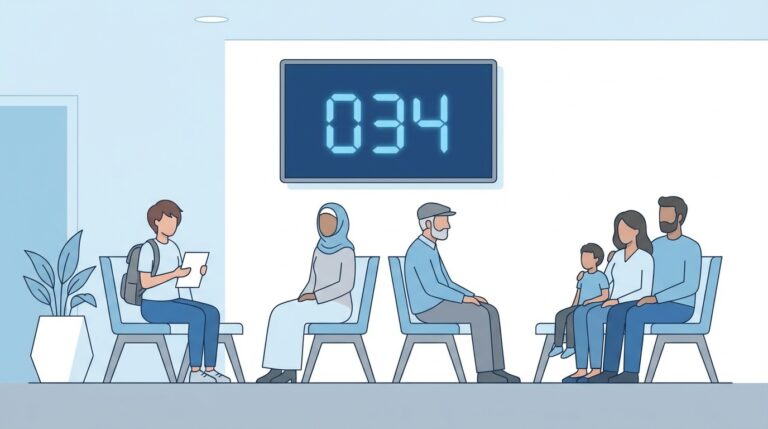
We’ve seen this scene in Hospital Playlist or Dr. Romantic a hundred times. But in reality? If you rush in screaming, you might just be told to take a number ticket. 😅
The ‘Why’: Facing a medical emergency in a foreign country is terrifying. The “Ppalli-Ppalli” (Hurry-Hurry) culture of Korea suddenly hits a wall called “Triage.” Knowing how to navigate the registration process and understanding why you are waiting can turn a nightmare situation into a manageable one.
Transparency: This guide combines standard medical Korean with the reality of busy Seoul ERs, based on feedback from expats who have successfully navigated them.
Phase 2: Deep Dive into Core Expressions
1. 접수 먼저 하셔야 해요 (You need to register first)
- Pronunciation: [Jeop-su meon-jeo ha-syeo-ya hae-yo]
- Sound Analogy: ‘Jeop’ sounds like a karate ‘chop’ but with a J. ‘Su’ sounds like ‘Sue’.
- Meaning:
- Literal: You must do the reception first.
- Real Nuance: “I know you are in pain, but the computer system won’t let us help you until we have your ID and insurance.”
- K-Culture Moment: In dramas, the rich chaebol tries to skip this step by yelling, “Do you know who I am?” Reality check: The nurse will still point to the counter.
- Editor’s Insight: The word 접수 (Jeopsu) is critical. It applies to hospitals, exams, and even audition programs. Without Jeopsu, you don’t exist in the system.
- Situation Spectrum:
[🚫 Casual] ———— [✅ Semi-formal] ———— [✅ Formal]- This is standard polite language used by staff.
- 🤔 Think About It: Why does Korea, a country obsessed with speed, have such strict registration protocols? It’s often tied to the highly digitized National Health Insurance system.
2. 대기 시간이 얼마나 걸려요? (How long is the wait time?)
- Pronunciation: [Dae-gi si-gan-i eol-ma-na geol-ryeo-yo?]
- Meaning: How long will the waiting time take?
- K-Culture Moment: Think of a K-Pop ticketing queue. You are number 45,000 in line. That feeling of anxiety? That’s 대기 (Daegi – Waiting).
- Editor’s Insight: In an ER, you might hear answers like “2시간 이상 걸릴 수 있어요” (It could take more than 2 hours). At B2 level, listen for the particle -이상 (more than).
- Situation Spectrum:
[✅ Casual] ———— [✅ Semi-formal] ———— [✅ Formal]- You can use this anywhere: restaurants, theme parks, and hospitals.
3. 응급도에 따라 순서가 바뀔 수 있어요 (The order may change depending on urgency)
- Pronunciation: [Eung-geup-do-e tta-ra sun-seo-ga ba-kkwil su i-sseo-yo]
- Meaning: The order can change according to the severity/urgency level.
- K-Culture Moment: Similar to survival shows like Produce 101 where rankings flip instantly. Here, the “ranking” is based on who is in more danger, not who came first.
- Editor’s Insight: This is the polite way of saying, “The person bleeding next to you is more important right now, please be patient.” 응급도 (Eunggeupdo) means ‘degree of emergency.’
Phase 3: Textbook vs. Real Life
| Situation | 📖 Textbook Korean | 🗣️ Real Street Korean | 💡 Why the difference? |
|---|---|---|---|
| Asking where to register | 접수처가 어디입니까? (Where is the reception desk?) | 접수 어디서 해요? (Where do I do registration?) | “-입니까?” is too stiff for a frantic ER. “-요?” is standard politeness. |
| Being told to wait | 잠시만 기다려 주십시오. (Please wait a moment.) | 잠시만요, 밖에서 대기해 주세요. (Just a moment, please wait outside.) | ER nurses are busy. They combine commands with politeness for efficiency. |
| Explaining symptoms | 배가 많이 아픕니다. (My stomach hurts a lot.) | 배가 끊어질 듯이 아파요. (It hurts as if my stomach is being cut off.) | Koreans use descriptive metaphors to emphasize pain intensity. |
Bottom Note: In the ER, clarity beats politeness. If you are in severe pain, simple sentences are better.
Phase 4: Cultural Context — The “Bohoja” System
4-1. The Concept of “Bohoja” (Guardian)
In Western hospitals, nurses often do everything. In Korea, the 보호자 (Bohoja – Guardian)—usually a family member or friend—plays a critical role. They register you, go to the in-hospital pharmacy to buy meds, fetch water, and sometimes even help move the patient.
4-2. Nunchi in the ER
- The Silence Rule: Unless it is a life-or-death situation, screaming or complaining loudly about the wait time is considered bad Nunchi. Everyone is sick. Patience is a virtue here.
- The “Dring-Dring” Taboo: Just like in a movie theater, keep your phone silent. If you’re watching videos while waiting, use headphones.
Phase 5: Immersive Roleplay Scenario
Setting: It’s 11 PM on a Saturday. You ate some questionable seafood at a pojangmacha (street food tent) and now have severe abdominal pain. You are at a university hospital ER reception desk.
Characters:
* YOU: An expat in pain, holding your stomach.
* Nurse (Kim): Efficient, fast-talking, wearing a mask.
Dialogue:
Nurse Kim: 어떻게 오셨어요? (What brings you here?)
(Romanization) Eotteoke osyeosseoyo?
YOU: 배가 너무 아파서 왔어요. 저녁에 해산물을 먹었거든요.
(Romanization) Baega neomu apaseo wasseoyo. Jeonyeoge haesanmureul meogeotgeoduengyo.
(Translation) My stomach hurts too much. I ate seafood for dinner.
Nurse Kim: 네, 접수 먼저 하셔야 해요. 신분증 주세요.
(Romanization) Ne, jeopsu meonjeo hasyeoya haeyo. Sinbunjeung juseyo.
(Translation) Okay, you need to register first. ID, please.
YOU: (Giving ID) 여기요. 대기 시간이 얼마나 걸려요?
(Romanization) Yeogiyo. Daegi sigani eolmana geolryeo-yo?
(Translation) Here. How long is the wait time?
Nurse Kim: 지금 환자가 많아서 1시간 정도 대기하셔야 해요.
(Romanization) Jigeum hwanjaga manaseo han-sigan jeongdo daegihasyeoya haeyo.
(Translation) There are many patients now, so you need to wait about 1 hour.
🔀 Decision Point! How do you react?
- A) “1시간이나요? 저 죽을 것 같은데요!” (1 hour?! I feel like I’m dying!)
- B) “아, 네… 알겠습니다.” (Ah, okay… I understand.)
- C) “다른 병원은 없나요?” (Is there no other hospital?)
✅ Best Choice: B — Unless you are literally fainting, accepting the triage is standard. If the pain gets worse while waiting, tell the nurse again calmly.
⚠️ Choice A Analysis: Using “죽을 것 같다” (feel like dying) is a common Korean idiom, but in an ER, use it only if serious. Otherwise, you might look like a “Jin-sang” (troublesome customer).
Phase 6: 10-Second Shadowing Drill
Let’s practice the tone of urgency mixed with politeness.
- Checking the wait time (Worried 😟):
응급 환자가 / 많아서 / 많이 기다려야 하나요?
(Eung-geup hwan-ja-ga / ma-na-seo / ma-ni gi-da-ryeo-ya ha-na-yo?)
Meaning: Are there many emergency patients, so do I have to wait long? -
Explaining pain (Painful 😖):
숨을 쉴 때마다 / 가슴이 / 찌릿찌릿해요.
(Su-meul swil ttae-ma-da / ga-seu-mi / jji-rit-jji-ri-tae-yo.)
Meaning: Every time I breathe, my chest tingles/stings.
Phase 7: K-Culture Mini Glossary
| Korean | Romanization | English | Context |
|---|---|---|---|
| 응급실 | Eunggeupsil | ER | The literal translation is “Emergency Room.” |
| 보호자 | Bohoja | Guardian | The person accompanying the patient. Very important role. |
| 진료 | Jillyo | Medical Treatment/Consultation | What happens when you finally see the doctor. |
| 야간 진료 | Yagan Jillyo | Night Clinic | Some regular clinics stay open late. Cheaper/faster than ER. |
| 119 | Il-il-gu | 911 | The emergency number for ambulance/fire in Korea. |
Phase 8: Traveler’s Survival Kit
🆘 ER Survival Card
* 🇰🇷 “제 친구가 쓰러졌어요!” (Je chin-gu-ga sseu-reo-jyeo-sseo-yo!)
* Meaning: My friend collapsed/fainted!
* 🇰🇷 “여행자 보험 있어요.” (Yeo-haeng-ja bo-heom i-sseo-yo.)
* Meaning: I have travel insurance.
* 📍 Pro Tip: If your condition isn’t life-threatening, dial 1339 (Korea Disease Control Agency). They have interpretation services and can tell you which hospitals have English-speaking doctors or are less crowded.
Phase 9: Think Deeper — “The Guardian Culture”
🧠 Why is the ‘Bohoja’ (Guardian) so important?
In many Western cultures, medical care is viewed as a relationship between the individual and the doctor. In Korea, it’s a collective/family event. The concept of Bohoja reflects the Confucian value of family responsibility. When you are sick, you become the passive recipient of care (care-receiver), and your family/friend becomes the active agent (care-giver). This is why you see K-Drama scenes where the whole family camps out in the hospital room.
💬 Your Turn: Does your culture have a concept like Bohoja? Or do patients handle everything themselves? Let us know in the comments!
Phase 10: FAQ & Troubleshooting
- Q: Can I speak English in a Korean ER?
- A: In major university hospitals (International Healthcare Centers), yes. But in a regular local ER at 3 AM? Don’t count on it. Have Papago (translation app) ready.
- Q: Do I pay first or later?
- A: Usually, you register (and sometimes pay a deposit), get treated, and pay the full bill at the end before leaving.
❌ Common Mistake #1: Calling an ambulance (119) for a minor cold.
✅ Do this instead: Visit a local clinic (의원) or a pharmacy (약국). Ambulances are strictly for emergencies.
Phase 11: Wrap-up & Action Items
One-Liner: Knowing “Jeopsu” (Registration) and “Daegi” (Waiting) is half the battle in a Korean ER.
🏆 Action Missions:
* 🥉 Bronze: Save the number 1339 in your phone right now.
* 🥈 Silver: Open Naver Maps/Kakao Maps and search for “응급실” to find the one nearest to your home/hotel.
* 🥇 Gold: Watch an episode of Hospital Playlist and try to spot the “Bohoja” doing paperwork for the patient.
Phase 12: Interactive Quiz
1. Situation Judgment: You have a mild fever (37.5°C) and a sore throat. It is 2 PM on a Tuesday. Where should you go?
* A) Call 119 immediately.
* B) Go to a university hospital ER (응급실).
* C) Go to a local internal medicine clinic (내과).
2. True or False:
* “In Korea, if you arrive at the ER first, you are always treated first regardless of symptoms.”
* ( ) True
* ( ) False
📝 Click to see answers
- Answer: C. Going to the ER for mild symptoms is expensive and you will wait a long time. Go to a local clinic.
- Answer: False. Korean ERs use a triage system. More urgent patients (응급 환자) are treated first.
Frequently Asked Questions (FAQ)
Q: What does "접수 먼저 하셔야 해요 (You need to register first)" mean in Korean and how do you pronounce it?
A: In Korean, "접수 먼저 하셔야 해요 (You need to register first)" is pronounced [Jeop-su meon-jeo ha-syeo-ya hae-yo] and means: a key conversational Korean expression covered in this lesson.
Q: What does "대기 시간이 얼마나 걸려요? (How long is the wait time?)" mean in Korean and how do you pronounce it?
A: In Korean, "대기 시간이 얼마나 걸려요? (How long is the wait time?)" is pronounced [Dae-gi si-gan-i eol-ma-na geol-ryeo-yo?] and means: How long will the waiting time take?
Q: What does "응급도에 따라 순서가 바뀔 수 있어요 (The order may change depending on urgency)" mean in Korean and how do you pronounce it?
A: In Korean, "응급도에 따라 순서가 바뀔 수 있어요 (The order may change depending on urgency)" is pronounced [Eung-geup-do-e tta-ra sun-seo-ga ba-kkwil su i-sseo-yo] and means: The order can change according to the severity/urgency level.







