

Phase 1: The Immersive Hook
Greeting: 안녕하세요! (Hello!) I’m your Daily Hangul Editor, here to guide you through the streets of Seoul.
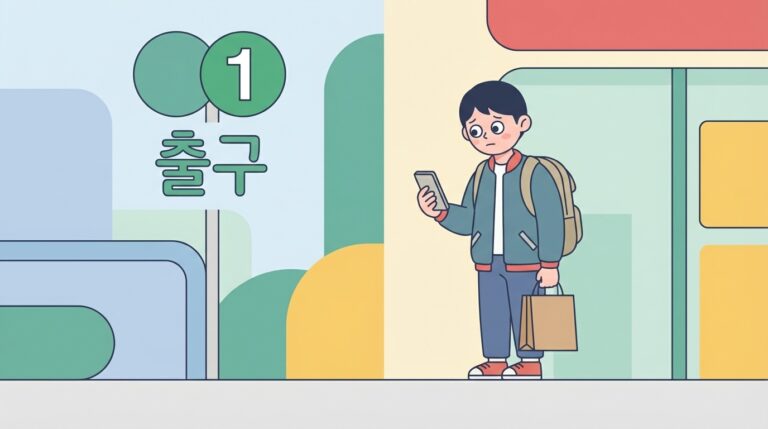
Imagine this: You are standing in front of Exit 9 of Hongik University Station. It’s crowded. You are clutching your phone in one hand and looking around nervously. You are not waiting for a date, and you are not meeting a spy.
You are here to buy a rare, out-of-print BTS album from a stranger you met online.
In K-Dramas, meetings are always dramatic with slow-motion effects. But in real life Korea, specifically in Second-hand Trade (Jik-georae), the meeting is fast, quiet, and efficient. But how do you identify the seller among hundreds of people? Do you hold a rose?
No. You approach someone who looks equally nervous and say one magic phrase. If you don’t know this, you might just stand there until the subway closes!
This guide is based on real experiences of foreigners who successfully bought everything from K-Pop merch to rice cookers in Korea. Let’s get you ready for your first deal.
Phase 2: Deep Dive into Core Expressions
Here are the top 3 expressions you need to survive a face-to-face trade.
1. 당근이세요? (Danggeun-iseyo?)
- Pronunciation: [Dang-geun-i-se-yo?]
- Sound-alike: Dang (like “Dang it!”) + Geun (sounds like “Gun”) + i-se-yo.
- Meaning:
- Literal: Are you a carrot?
- Real Nuance: Are you the person from Carrot Market (the most popular second-hand app)?
- K-Culture Moment: Imagine a scene where two secret agents identify each other with a code word. In Korea, this is that code word. You will see people whispering this at subway stations everywhere.
- Editor’s Insight: It sounds funny to ask “Are you a carrot?”, but Danggeun Market (Danggeun implies ‘Your Neighborhood’) is so famous that ‘Carrot’ has become the word for ‘Trader’.
- Situation Spectrum:
[🚫 Formal Biz] ———— [✅ Strangers/Casual] ———— [✅ Friends] - 🤔 Think About It: Why do Koreans name a trading app “Carrot”? It’s actually a short form of “Dangsin-ui Geuncheo” (Near You). It highlights how much Koreans value local community trust.
2. 확인해 보세요. (Hwaginhae boseyo.)
- Pronunciation: [Hwa-gin-hae bo-se-yo]
- Meaning: Please check it.
- K-Culture Moment: In a crime thriller drama, the boss hands over a briefcase and says this. In real life, the seller hands you the K-Pop album and says this so you can check for scratches.
- Editor’s Insight: This is a polite way to offer trust. It means, “I have nothing to hide, please inspect the item.”
- Situation Spectrum:
[⚠️ Boss] ———— [✅ Strangers] ———— [✅ Casual]
3. 계좌이체 할게요. (Gyejwa-iche halgeyo.)
- Pronunciation: [Gye-jwa-i-che hal-ge-yo]
- Meaning: I will do a bank transfer.
- K-Culture Moment: Korea is a cashless society. Even at street stalls, you might see this. In a trade, pulling out cash is rare these days; everyone taps on their phone.
- Editor’s Insight: Speed is key. Koreans love “Ppalli-ppalli” (Hurry hurry) culture. Sending money instantly via phone app is the norm.
- Situation Spectrum:
[✅ Everywhere]
Phase 3: Textbook vs. Real Life
| Situation | 📖 Textbook Korean | 🗣️ Real Korean | 💡 Why the difference? |
|---|---|---|---|
| Identifying | 판매자분이십니까? (Are you the seller?) | 당근? (Carrot?) | Efficiency! We drop the long grammar and just use the app name. |
| Checking | 물건을 확인하겠습니다. (I will check the item.) | 잠시만요. (Just a moment.) | “Just a moment” implies you are checking. Context is everything. |
| Leaving | 안녕히 가세요. (Goodbye.) | 감사합니다! (Thank you!) | In trades, gratitude (“Thanks for the deal”) replaces the formal goodbye. |
Bottom Note for A1: If “Danggeun-iseyo?” is too hard, just make eye contact and bow slightly. It works 90% of the time!
Phase 4: Cultural Deep Dive
4-1. Non-verbal: The “Phone & Bag” Signal
In a crowded subway station, how do you spot your trader? Look for the “Nunchi” (Eye measure) stance. They will be standing still, checking their phone, and holding a shopping bag. Do not stare directly into their eyes from far away. Approach gently.
4-2. K-Drama Connection: The Subway Station Trope
In dramas, subway stations are for romantic reunions or tragic goodbyes. In reality, they are the #1 Hub for Second-hand Trading. Why? Because they are safe, public, and CCTV is everywhere. If you trade here, you are participating in a very modern Korean ritual.
Phase 5: Immersive Roleplay
Setting: Friday, 6 PM. Gangnam Station Exit 10. Extremely crowded. You are buying a lightstick for a concert tomorrow.
Characters:
* YOU: A foreign student who desperately needs this lightstick.
* MINJI: A Korean university student selling the item. She is wearing a cap and mask.
(Scene Start)
YOU: (You see a girl holding a box. You approach cautiously.)
저기요… 당근이세요? 🥕
(Jeogiyo… Danggeun-iseyo?)
(Excuse me… Are you Carrot?)
MINJI: (Eyes widen) 아, 네! 안녕하세요.
(Ah, ne! Annyeonghaseyo.)
(Ah, yes! Hello.)
MINJI: (Handing over the box) 여기요. 확인해 보세요.
(Yeogiyo. Hwaginhae boseyo.)
(Here. Please check it.)
🔀 Decision Point! You open the box. It looks perfect. What do you say?
- A) “I love you!” (Too strong!)
- B) “좋아요! 계좌이체 할게요.” (Good! I’ll transfer the money.)
- C) “깎아주세요.” (Please give a discount.)
✅ Best Choice: B. Since you met in person, the price is usually fixed unless there is damage. B is the most professional response.
⚠️ Choice C Analysis: Asking for a discount (Nego) after meeting is considered bad manners unless the item is broken.
(Dialogue Continues with Choice B)
YOU: 좋아요! 계좌이체 할게요.
(Joayo! Gyejwa-iche halgeyo.)
(It’s good! I’ll do a bank transfer.)
MINJI: 네, 감사합니다.
(Ne, gamsahamnida.)
(Yes, thank you.)
Phase 6: 10-Second Shadowing Drill
Let’s practice the rhythm. Don’t be robotic!
- The Greeting (Hesitant but polite):
🤔 저기요… / 당근… / 이세요?
(Jeogiyo… / Danggeun… / iseyo?) -
The Payment (Fast and confident):
📲 계좌이체 / 할게요!
(Gyejwa-iche / halgeyo!) -
The Exit (Cheerful):
😊 네! / 감사합니다!
(Ne! / Gamsahamnida!)
Phase 7: K-Culture Mini Glossary
| Korean | Rom. | Meaning | Context |
|---|---|---|---|
| 직거래 | Jik-georae | Direct Transaction | Meeting face-to-face to trade. Saves shipping fees! |
| 쿨거래 | Kul-georae | Cool Deal | A quick transaction with no haggling. Sellers love this. |
| 네고 | Nego | Negotiation | Short for “Negotiation”. Asking for a discount. |
| 먹튀 | Meok-twi | Eat and Run | Scammers who take money/item and vanish. |
Phase 8: Traveler’s Survival Kit
Even if you aren’t buying a used fridge, you might buy a ticket or souvenir from a local directly.
🆘 Survival Phrase #1
* 🇰🇷 “혹시… 현금도 돼요?” (Hoksi… hyeongeum-do dwaeyo?)
* 🗣️ Meaning: By any chance… is cash okay too?
* 📍 Where: When you don’t have a Korean bank account.
* 💡 Pro Tip: Most individual sellers prefer bank transfers, but if you ask politely with “Hoksi” (By any chance), they often accept cash.📌 Editor’s Travel Note
* Meeting Spots: Use Subway Exits. They are numbered and easy to find on KakaoMap.
* Safety: Korea is very safe, but always meet in public places like a café or station during the day.
Phase 9: Think Deeper — “Trust in Strangers”
The CCTVs of Seoul
Have you noticed that Koreans often leave their laptops on café tables while going to the restroom? This high level of social trust extends to Jik-georae (Direct Trading). People often meet strangers to trade expensive items like iPads or luxury bags on the street.
🧠 Think About It: Does this high-trust culture come from the people’s nature, or the fact that there are CCTVs everywhere? How does second-hand trading work in your country? Is it safe to meet a stranger at a subway station?
Phase 10: FAQ & Troubleshooting
Q: Can I use these phrases with an older person?
A: Yes! The phrases taught here (ending in -yo) are polite enough for strangers of any age. Just remember to bow.
Q: What if I can’t speak Korean well and they start talking fast?
A: Just say: “한국어 잘 못해요.” (Hangugeo jal mothaeyo – I can’t speak Korean well.) They will likely switch to body language or a translation app.
❌ Common Mistake #1: Trying to shake hands.
✅ Fix: Koreans rarely shake hands in casual encounters. A slight bow is the perfect greeting and goodbye.
Phase 11: Wrap-up & Action Items
One-Liner Summary: To buy second-hand in Korea, just ask “Danggeun-iseyo?”, check the item, and transfer money!
🎬 Action Missions:
* 🥉 Bronze: Look in the mirror and practice the “Danggeun-iseyo?” face (slightly confused but hopeful).
* 🥈 Silver: Search for “Danggeun Market” on Google Images to see what the app logo looks like.
* 🥇 Gold: Next time you are in Korea, try buying a small souvenir via a local trading app or forum!
K-Culture Mission: Watch a K-Drama (like Crash Landing on You) and look for a scene where characters meet secretly. Notice their body language. That is your “Jik-georae” stance!
Phase 12: Interactive Quiz
- Situation: You see someone waiting at the station. What is the BEST opening line?
- a) I love BTS! (Why?)
- b) 당근이세요? (Are you Carrot?)
- c) 얼마예요? (How much is it? – You already know the price!)
- True or False:
- “It is rude to check the item before paying.” -> FALSE! Always say “Hwaginhae boseyo” or ask to check. It’s expected.
- Culture:
- Why do people prefer subway stations for trading?
- [Answer: Easy to find (numbered exits) and safe (CCTV/Crowds).]
(Scroll up for answers!)
Frequently Asked Questions (FAQ)
Q: What does "당근이세요? (Danggeun-iseyo?)" mean in Korean and how do you pronounce it?
A: In Korean, "당근이세요? (Danggeun-iseyo?)" is pronounced [Dang-geun-i-se-yo?] and means: a key conversational Korean expression covered in this lesson.
Q: What does "확인해 보세요. (Hwaginhae boseyo.)" mean in Korean and how do you pronounce it?
A: In Korean, "확인해 보세요. (Hwaginhae boseyo.)" is pronounced [Hwa-gin-hae bo-se-yo] and means: Please check it.
Q: What does "계좌이체 할게요. (Gyejwa-iche halgeyo.)" mean in Korean and how do you pronounce it?
A: In Korean, "계좌이체 할게요. (Gyejwa-iche halgeyo.)" is pronounced [Gye-jwa-i-che hal-ge-yo] and means: I will do a bank transfer.






