

Phase 1: The Immersive Hook
Greeting: 안녕하세요! Daily Hangul’s Senior Editor here.
Imagine a tense scene in a high-stakes K-Drama like Penthouse or Reborn Rich. A conglomerate heir slams a document on the table, furious. “Why can’t I buy that land in Cheongdam-dong?! I have the money!” The calm lawyer adjusts his glasses and says, “Sir, that area has just been designated as a Land Transaction Permit Zone (토지 거래 허가 구역). Unless you plan to actually live in that old villa for two years, you cannot buy it.”
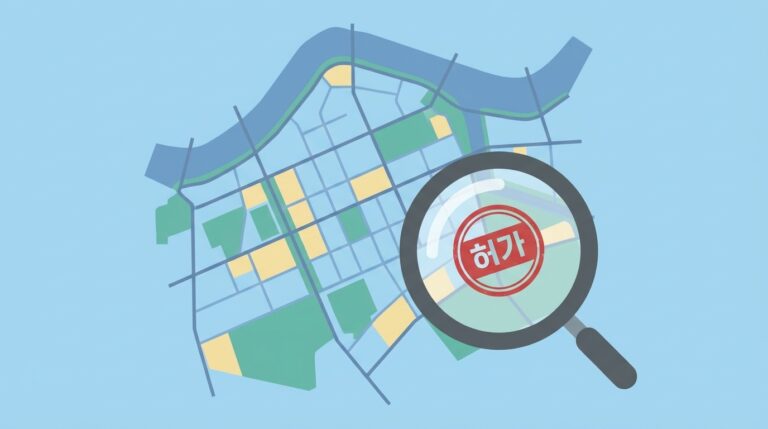
Welcome to the deep end of Korean society. We are moving beyond “How much is this?” to understanding the regulatory frameworks that control the heat of the Korean real estate market. Today, we dissect the Effect of Designation of Land Transaction Permit Zones. This isn’t just legalese; it’s the invisible wall stopping speculation in Seoul’s hottest neighborhoods.
Why does this matter? Because if you ever plan to invest in Korea, or just want to understand why your Korean friends are stressed about “real residence obligations,” this is the C2 knowledge that separates the tourists from the locals.
Phase 2: Deep Dive into Core Expressions
Here are the three heavy-hitter concepts you need to discuss Korean property regulations like a pro.
1. 실거주 의무 [Sil-geo-ju Ui-mu]
- Pronunciation: sil-geo-ju ui-mu [Sounds like: Seal (the animal) + Go (to leave) + Jew (jewel) + Ui (we) + Moo (cow sound)]
- Meaning: Obligation of Actual Residence
- K-Culture Moment: In news reports about Gangnam apartments, anchors often emphasize this. It’s the “Anti-Speculation” shield. If you buy a house in a permit zone, you must live there. No renting it out immediately.
- Editor’s Insight: This effectively kills “Gap Investment” (buying a house with a tenant’s deposit covering most of the price). It forces the buyer to prove they are buying a home, not a financial product.
- Situation Spectrum:
[🚫 Casual Chat] ———— [⚠️ News/Biz] ———— [✅ Real Estate]- 🤔 Think About It: Why does the Korean government feel the need to mandate where people live? How does this balance individual property rights against housing stability for the masses?
2. 허가 [Heo-ga]
- Pronunciation: heo-ga [Sounds like: Huh? + Ga (Lady Gaga)]
- Meaning: Permission / Permit
- K-Culture Moment: You see this word on construction sites (“공사 허가”) or business licenses. In this context, it means the local district office (Gu-cheong) must approve your purchase contract before it becomes valid.
- Editor’s Insight: Without Heo-ga, the contract is void (무효). It’s not just a formality; they check your funding sources and residence plans rigorously.
- Situation Spectrum:
[🚫 Slang] ———— [✅ Formal/Legal] ———— [✅ Administration]3. 투기 수요 차단 [Tu-gi Su-yo Cha-dan]
- Pronunciation: tu-gi su-yo cha-dan
- Meaning: Blocking Speculative Demand
- K-Culture Moment: Every time housing prices spike, the government announces measures for “Tu-gi Su-yo Cha-dan.” It’s the mantra of Korean real estate policy.
- Editor’s Insight: Note the difference between 투자 (Investment) and 투기 (Speculation). Investment is seen as healthy; Speculation is viewed as a social evil destroying the ladder for the younger generation.
Phase 3: Textbook vs. Real Life
Even in high-level real estate, there’s the official term and the “street” term.
| Situation | 📖 Textbook Korean | 🗣️ Real Estate Agent Talk | 💡 Why the difference? |
|---|---|---|---|
| Discussing the zone | 토지 거래 허가 구역으로 지정되었습니다. (It has been designated as a… zone.) | 여기 토허제로 묶였어요. (This place is “tied up” by To-Heo-Je.) | “묶이다” (tied up) vividly conveys the restriction of liquidity and freedom. |
| Living in a bad house for profit | 미래 가치를 위해 거주합니다. (Residing for future value.) | 몸테크 중이에요. (Doing “Mom-tech” / Body-tech.) | Investing with one’s body (suffering in old housing) is a unique Korean concept of asset building. |
| Asking if it’s buyable | 매수 가능합니까? (Is purchase possible?) | 실입주 되세요? (Can you actually move in?) | The agent cuts straight to the regulatory requirement (residence). |
Bottom Note: Use “토허제” (To-Heo-Je) instead of the full phrase to sound like an insider. It’s the standard abbreviation among investors.
Phase 4: Cultural Deep Dive
4-1. The “Nunchi” of Policy Timing
In Korea, real estate isn’t just market dynamics; it’s a cat-and-mouse game with the government. When a neighborhood gets too hot (prices rising too fast), the government designates it a Permit Zone to “pour cold water” on it. Understanding this policy is effectively reading the macro-Nunchi of the Korean economy.
4-2. K-Drama Connection: The “Chaebol” Struggle
In dramas like Sky Castle, the obsession isn’t just education; it’s location. Being in a Permit Zone ironically signals that the area is premium. While it restricts transactions, it also stamps the area as “Government Certified Gold.” So, characters might complain about the regulation while secretly smiling because their asset value is protected from short-term flippers.
4-3. Critical Perspective: “Gap Investment” Culture
The Permit Zone is specifically designed to kill Jeonse Gap Investment (buying a $1M house with a $700k tenant deposit and only $300k cash). This unique Korean investment style relies on high leverage. By enforcing the Real Residence Obligation, the policy says: “If you can’t afford the full price without a tenant, you don’t deserve this house.”
Phase 5: Immersive Roleplay
Scenario: You are a foreign investor looking at a high-end apartment in Jamsil (a strict Permit Zone). You are at a real estate agency.
Characters:
– YOU: An expat executive looking for a long-term home.
– Agent Kim: A sharp, fast-talking realtor in her 50s.
Agent Kim: (showing a map) 사장님, 여기가 입지는 최고인데, 아시다시피 토허제 구역이에요.
(Sajang-nim, yeogi-ga ipji-neun choego-inde, asidasi-pi to-heo-je guyeok-ieyo.)
“Boss, the location is the best, but as you know, it’s a Land Transaction Permit Zone.”
🔀 Decision Point! How do you respond?
– A) “토허제가 뭐예요?” (What is To-Heo-Je?) -> Risks looking like a novice.
– B) “네, 실거주 2년 해야 하는 거 알고 왔습니다.” (Yes, I came knowing I have to live there for 2 years.) -> Pro move.
– C) “그럼 전세 끼고는 못 사나요?” (So I can’t buy it with a Jeonse tenant?) -> Confirming the restriction.
✅ Select B:
YOU: 네, 실거주 2년 해야 하는 거 알고 왔습니다. 당장 입주 가능한 물건 있나요?
(Ne, sil-geo-ju inyeon haeya haneun geo algo wass-seumnida. Dangjang ipju ganeunghan mulgeon innayo?)
“Yes, I know I must live there for 2 years. Are there any units available for immediate move-in?”
Agent Kim: (nodding with respect) 아, 공부 많이 하셨네요. 마침 주인이 거주 중인 물건이 하나 있어요.
(Ah, gongbu mani hasyeon-neyo. Machim juin-i geoju jung-in mulgeon-i hana isseoyo.)
“Ah, you’ve studied a lot. Just in time, there is one unit where the owner is currently living (so no tenant issues).”
Phase 6: 10-Second Shadowing Drill
Practice this sentence to use when explaining your situation to an agent or lawyer.
“Since this area is a Permit Zone, I plan to move in immediately after the purchase.”
😤 Confident & Formal:
이 지역은 / 토지 거래 허가 구역이라서 /
(I jiyeogeun / toji georae heoga guyeogiraseo /)
매수 후에 / 즉시 입주할 계획입니다.
(maesu hue / jeuksi ipjuhal gyehoegimnida.)
Phase 7: K-Culture Glossary (Real Estate Edition)
| Korean | Romanization | Meaning | Context |
|---|---|---|---|
| 갭투자 | Gap-tu-ja | Gap Investment | Buying a house using the tenant’s Jeonse deposit as leverage. |
| 영끌 | Yeong-kkeul | Soul-pulling | Pulling every penny from your soul to buy a house (maxing out loans). |
| 줍줍 | Jup-jup | Picking up | Picking up unsold apartments (usually after regulations scare others away). |
| 몸테크 | Mom-tech | Body Tech | Living in an uncomfortable, old house to wait for reconstruction profit. |
| 임장 | Im-jang | Field Visit | Going to the actual site to investigate the vibe, traffic, and market. |
Phase 8: Traveler’s & Expat’s Survival Kit
While tourists won’t buy land, Expats might. If you are looking for long-term housing in Seoul:
🆘 Survival Info for Expats
– The “Permit Zone” isn’t a ban: Foreigners CAN buy in these zones, provided they meet the same criteria (actual residence).
– The App You Need: Download “Hogangnono” (호갱노노). It’s the #1 real estate app. It visualizes these zones on a map. If you see a region highlighted in specific colors with “규제” (Regulation) tags, that’s likely it.
– Pro Tip: In these zones, the contract isn’t final until the district office stamps it. Do NOT transfer the full money until the permit (허가증) is issued.
Phase 9: Think Deeper — “One Step Further”
Topic: Capitalism vs. Public Good
The “Land Transaction Permit System” is highly controversial. Critics argue it infringes on private property rights (buying/selling freely). Proponents argue that in a country with limited land and high population density like Korea, housing is a public good (공공재) before it is an asset.
🧠 Think Deeper:
Does your country restrict who can buy homes in popular cities? Do you think the government has the right to tell you that you must live in the house you buy? Or should the free market decide?
Phase 10: FAQ & Troubleshooting
Q: Can I buy in a Permit Zone if I am a foreigner on a visa?
A: Yes, but you are subject to the same Real Residence Obligation. If you are on a short-term visa and cannot legally reside for 2 years, the permit will likely be rejected.
Q: What happens if I lie and rent it out?
A: You can face up to 2 years in prison or a fine of up to 30% of the land price. Korea takes real estate fraud very seriously. Also, the contract becomes void.
❌ Common Mistake: Thinking “Money talks.”
✅ Correction: In Permit Zones, “Policy rules.” No matter how much cash you have, if you can’t move in, you can’t buy.
Phase 11: Wrap-up & Action Items
One-Liner Summary:
In designated Permit Zones (토허제), you cannot buy for investment; you must buy to live (실거주).
Action Mission:
– 🥉 Bronze: Practice saying “실거주 의무” (Real residence obligation) three times.
– 🥈 Silver: Open a Korean map app (Naver/Kakao), find the Gangnam area (Samseong-dong/Cheongdam-dong), and look for regulation markers.
– 🥇 Gold: Ask a Korean friend, “Do you think the Permit Zone policy is effective?” (토허제 효과가 있다고 생각해요?) and listen to their rant!
Phase 12: Quiz — Interactive Challenge
1. Situational Judgment:
You want to buy an apartment in a Permit Zone, but you are currently working in Busan and cannot move to Seoul for 3 years. What will the agent likely say?
– A) “No problem, just use a fake address.” (문제없어요, 위장전입 하세요.)
– B) “The permit will not be granted because you cannot fulfill the residence obligation.” (실거주 의무를 못 지키셔서 허가가 안 나올 겁니다.)
– C) “You can buy it if you pay more tax.” (세금을 더 내면 살 수 있어요.)
2. Vocab Match:
Which term means “Investing by living in an uncomfortable house for future value”?
– A) 영끌 (Yeong-kkeul)
– B) 갭투자 (Gap-tu-ja)
– C) 몸테크 (Mom-tech)
Answers:
1. B (It is strictly about residence, not taxes).
2. C (Mom-tech is the physical sacrifice for asset growth).
Frequently Asked Questions (FAQ)
Q: What does "실거주 의무 [Sil-geo-ju Ui-mu]" mean in Korean and how do you pronounce it?
A: In Korean, "실거주 의무 [Sil-geo-ju Ui-mu]" is pronounced [sil-geo-ju ui-mu [Sounds like: Seal (the animal] and means: Obligation of Actual Residence
Q: What does "허가 [Heo-ga]" mean in Korean and how do you pronounce it?
A: In Korean, "허가 [Heo-ga]" is pronounced [heo-ga [Sounds like: Huh? + Ga (Lady Gaga] and means: Permission / Permit
Q: What does "투기 수요 차단 [Tu-gi Su-yo Cha-dan]" mean in Korean and how do you pronounce it?
A: In Korean, "투기 수요 차단 [Tu-gi Su-yo Cha-dan]" is pronounced [tu-gi su-yo cha-dan] and means: Blocking Speculative Demand







