

Phase 1: Immersive Hook
Greeting: Hello, Daily Hangul readers. It’s your editor here.
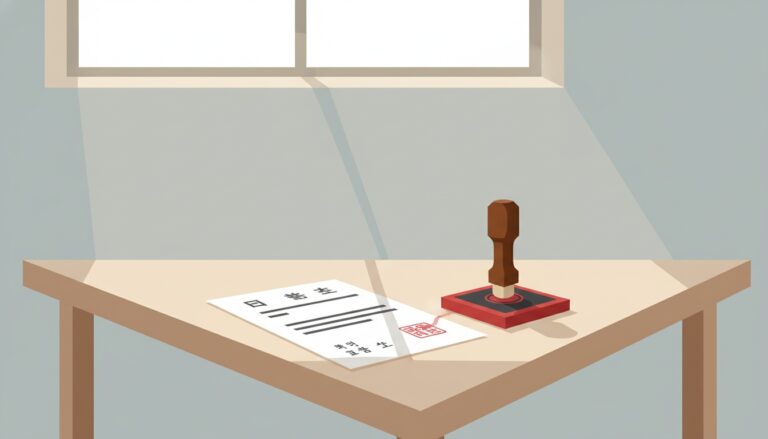
The Scene: You’ve seen this moment in a dozen K-Dramas. The tense music plays. The protagonist sits across from a stern-looking building owner in a real estate office (budongsan). There’s a stack of papers, a red stamp pad, and instant coffee mix in paper cups. They aren’t just buying a house; they are battling for their future.
Usually, the camera cuts away before the boring part happens. But in real life, that boring part—the “Special Terms” (특약 사항) section—is where the war is actually won or lost. In Korea, the standard contract text is just the appetizer. The Teuk-yak is the main course where you negotiate repairs, move-in dates, and liability.
The ‘Why’: If you gloss over this section, you might end up liable for a leaky roof discovered three days after moving in, or find out the previous owner left unpaid utility bills. Mastering these terms is the difference between being a helpless foreigner and a savvy resident who knows their rights.
Transparency: I’ve helped several expat friends through this process in Seoul. The panic in their eyes when the realtor starts typing rapidly in the Teuk-yak box is real. Today, we decode that panic.
Phase 2: Deep Dive
Let’s look at the three heavy-hitters you need for C1-level negotiation.
1. 특약 사항 (Teuk-yak sa-hang)
- Pronunciation: [Teuk-yak sa-hang] (Sounds like ‘Took-yak’ + ‘sa-hang’)
- Meaning: Special terms / Special covenants. (Lit: Special contract items)
- K-Culture Moment: In dramas involving corporate takeovers or marriage contracts, someone always points a shaking finger at the document and yells, “Did you read the special terms?!”
- Editor’s Insight: This isn’t just a vocabulary word; it’s a weapon. This is the blank space at the bottom of the contract where custom rules apply. If it’s written here, it overrides standard civil code.
- Situation Spectrum:
[🚫 Casual Chat] ———— [✅ Legal/Biz]- 🤔 Think About It: Why does Korean law allow so much flexibility in this section? It reflects a culture where specific, agreed-upon context often supersedes general rules.
2. 현 시설 상태 (Hyeon si-seol sang-tae)
- Pronunciation: [Hyeon si-seol sang-tae]
- Meaning: Current condition of facilities / “As is”
- Context: You will often see: “현 시설 상태에서의 매매 계약임.” (This contract is based on the current condition of the facilities.)
- Editor’s Insight: This is a trap card. Sellers love this because it implies they don’t have to fix anything. Your job is to add a “however” (단, meaning ‘but/except’) clause after this.
- Situation Spectrum:
[🚫 Friends] ———— [✅ Contracts]3. 원상복구 (Won-sang bok-gu)
- Pronunciation: [Won-sang bok-gu]
- Meaning: Restoration to original state.
- K-Culture Moment: Every time a villain trashes the hero’s shop in a movie? The hero has to do won-sang bok-gu. In real estate, this usually applies to removing that weird chandelier the previous owner installed.
- Editor’s Insight: This is the most common cause of fighting when moving out. Define exactly what “original state” means before you sign.
Phase 3: Textbook vs. Real Life
In a high-stakes negotiation, sounding too polite can make you look like a pushover. You need firmness.
| Situation | 📖 Textbook Korean | 🗣️ Real Korean (Negotiation Mode) | 💡 Why the difference? |
|---|---|---|---|
| Demanding repairs | 수리를 해 주실 수 있습니까? (Can you please do repairs?) | 잔금 전까지 수리 완료하는 조건입니다. (Condition: repairs completed before balance payment.) | Passive questions get vague answers. “Conditions” are binding. |
| Checking hidden debts | 빚이 있는지 확인하고 싶어요. (I want to check for debts.) | 등기부등본상 융자는 없는 것으로 알겠습니다. (I understand there are no loans on the registry.) | You aren’t asking; you are stating the premise of the deal. |
| Refusing ‘As Is’ | 그 조건은 받아들이기 힘듭니다. (It is hard to accept that condition.) | 그건 곤란하죠. 중대 하자는 책임지셔야 합니다. (That’s difficult. You must be liable for major defects.) | “Gonlan-hajyo” (It’s difficult) is a polite but firm “No.” |
Phase 4: Cultural Context — K-Culture Deep Dive
4-1. The Power of the Dojang (Inkan)
In Western contracts, a signature is everything. In Korea, while signatures are becoming common, the Inkan (registered seal) or Dojang (personal stamp) still holds significant weight, especially in real estate.
– Visual: When the seller pulls out a worn-out leather case and produces a red stamp, the atmosphere changes. It’s the “point of no return.”
– Tip: As a foreigner, a signature is legally valid, but having a Dojang made (you can get one for 5,000 KRW in Insadong) commands respect in the Budongsan office. It shows you understand the gravity of the transaction.
4-2. The “Nunchi” of the Realtor
The Realtor (Gongin-junggaesa) is not just an agent; they are the moderator.
– K-Drama Connection: Think of the nosy but knowledgeable neighborhood auntie/uncle in dramas like Hometown Cha-Cha-Cha. They play both sides.
– Strategy: If the atmosphere gets too heated, look at the realtor, not the seller, and say, “Sajang-nim (Mr./Ms. Realtor), please adjust this for us.” Let them do the uncomfortable haggling. That is their job.
Phase 5: Immersive Roleplay
Setting: A cramped Real Estate office in Mapo-gu. The walls are covered in maps. The air conditioner hums loudly.
Characters:
– YOU: A savvy buyer looking for an apartment.
– Realtor Kim: Experienced, fast-talking, trying to close the deal quickly.
Realtor Kim: (Typing fast) 자, 그럼 특약은 기본 사항만 넣겠습니다. 현 시설 상태 인수 조건이고요.
(Ja, geureom teuk-yageun gibon sahangman neok-get-seumnida. Hyeon si-seol sang-tae insu jocheon-igoyo.)
(Okay, I’ll just put the standard special terms. You accept the facility in its current condition.)
🔀 Decision Point! How do you react?
Option A: “네, 알겠습니다.” (Okay, understood.)
Option B: “잠시만요. 누수 같은 중대 하자는 매도인이 책임진다는 문구 넣어주세요.”
(Wait a moment. Please insert a clause that the seller is responsible for major defects like leaks.)
Option C: “집이 너무 낡았는데 깎아주세요.”
(The house is too old, give me a discount.)
✅ Best Choice: Option B.
– Why? Option A is dangerous. Option C is bad timing (price negotiation usually happens before sitting down to write the contract). Option B uses professional legal vocabulary (High-context: Major defects / Seller) and protects your asset.
Realtor Kim: (Pauses typing, looks over glasses) 깐깐하시네… 알겠습니다. 6개월 내 누수는 책임지는 걸로 합시다.
(You’re picky… Alright. Let’s say liability for leaks within 6 months.)
YOU: 감사합니다. 그리고 잔금일은 이사 날짜에 맞춰주시는 거죠?
(Gamsahamnida. Geurigo jan-geum-ireun isa nal-jja-e matchwo-jusineun geojyo?)
*(Thank you. And the balance payment date will be aligned with the moving date, right?)
Phase 6: 10-Second Shadowing Drill
Practice being firm without raising your voice. Low pitch, clear enunciation.
😤 (Polite but Firm):
특약 사항에 / 이 부분을 / 명확히 / 적어주세요.
(Teuk-yak sa-hang-e / i bu-buneul / myeong-hwak-hi / jeogeo-juseyo.)
Please write this part clearly in the special terms.🧐 (Clarifying):
잔금 치르기 전에 / 한번 더 / 확인하고 싶어요.
(Jan-geum chireugi jeone / hanbeon deo / hwagin-hago sipeoyo.)
I want to check it one more time before paying the balance.
Phase 7: K-Culture Mini Glossary
| Korean | Rom. | English | Context |
|---|---|---|---|
| 가계약금 | Ga-gyeyak-geum | Provisional deposit | Money sent to “hold” the property before the real contract. Dangerous if you don’t have terms set. |
| 등기부등본 | Deunggi-bu deungbon | Certified Register | The “ID card” of the building. Shows ownership and debts. Always check this on the day of signing! |
| 임차인 | Im-cha-in | Tenant | Legal term for the renter. |
| 매수인 | Mae-su-in | Buyer | Legal term for the buyer. |
Phase 8: Traveler’s Survival Kit
Even if you aren’t buying a house, you might rent an Airbnb or a long-term stay. The logic is the same.
🆘 Survival Phrase
– 🇰🇷 “보일러가 안 돼요.” (Boil-leo-ga an dwaeyo.)
– Meaning: The boiler isn’t working.
– Why it matters: In Korea, the “Boiler” controls both floor heating (Ondol) and hot water. If this breaks in winter, it is an emergency.
– 💡 Pro Tip: If you stay in a guesthouse, always take a photo of existing damage when you arrive. That is your visual Teuk-yak.
Phase 9: Think Deeper — “Jeong” vs. Contracts
Language & Culture:
Historically, Korean transactions were heavily based on Jeong (bond/affection) and oral agreements among neighbors. Writing everything down in cold, hard legal clauses was sometimes seen as “calculating” or lacking trust.
However, modern Seoul is high-speed and high-stakes. The legal language has become incredibly precise to compensate for this shift. Yet, you will still see older generations offended if you demand too many written guarantees (“Don’t you trust me?”). As a foreigner (and a smart buyer), you must navigate this: smile, appeal to the system (“I need this for my company/visa”), but always get it in writing.
💬 Your Turn: In your country, is a handshake enough? Or do you need a 50-page contract for everything?
Phase 10: FAQ & Troubleshooting
Q: Can I record the negotiation conversation?
A: In Korea, yes—IF you are part of the conversation. Under Korean law, you can record a conversation you are participating in without the other party’s consent (One-party consent rule). It’s a powerful tool if a dispute arises later about what was promised verbally.
Q: The owner wants to use a “Downer Contract” (Down-gyeyak-seo). What is this?
A: Run away. This is illegal. They are asking you to write a lower price on the contract so they pay less tax. If caught, you (the buyer) will also face massive fines. Never agree to this, no matter how much “discount” they offer.
❌ Common Mistake: Confusing “Contract Date” (Gye-yak-il) with “Move-in Date” (Ip-ju-il). Ensure the special terms specify exactly when the house must be empty.
Phase 11: Wrap-up
One-Liner: In Korean real estate, what isn’t written in the Teuk-yak (Special Terms) does not exist.
Action Missions:
– 🥉 Bronze: Say “Teuk-yak sa-hang” out loud 3 times. Feel the legal power.
– 🥈 Silver: Search for “Korean standard apartment sales contract” (아파트 매매 표준계약서) on Google Images and find the blank box at the bottom.
– 🥇 Gold: Next time you sign any paper (even a gym membership) in Korea, ask, “Is there a cancellation fee?” and check if it’s written down.
K-Culture Mission: Watch a clip of the drama The Penthouse. Look at how they handle documents. That intensity? That’s the mood you need.
Phase 12: Interactive Quiz
- Situation: The seller says, “The wallpaper is dirty, but I won’t fix it.” How do you write this in the contract?
- A) Seller will replace wallpaper. (False)
- B) Hyeon si-seol sang-tae (Current condition). (Correct – This acknowledges the dirt and implies you accept it.)
- True or False: You should trust the verbal promise of the Realtor over the written contract.
- False. The Realtor wants the commission. The contract is what stands in court.
(Answers are hidden in the explanations above!)
Frequently Asked Questions (FAQ)
Q: What does "특약 사항 (Teuk-yak sa-hang)" mean in Korean and how do you pronounce it?
A: In Korean, "특약 사항 (Teuk-yak sa-hang)" is pronounced [Teuk-yak sa-hang] and means: Special terms / Special covenants. (Lit: Special contract items)
Q: What does "현 시설 상태 (Hyeon si-seol sang-tae)" mean in Korean and how do you pronounce it?
A: In Korean, "현 시설 상태 (Hyeon si-seol sang-tae)" is pronounced [Hyeon si-seol sang-tae] and means: Current condition of facilities / "As is"
Q: What does "원상복구 (Won-sang bok-gu)" mean in Korean and how do you pronounce it?
A: In Korean, "원상복구 (Won-sang bok-gu)" is pronounced [Won-sang bok-gu] and means: Restoration to original state.







