

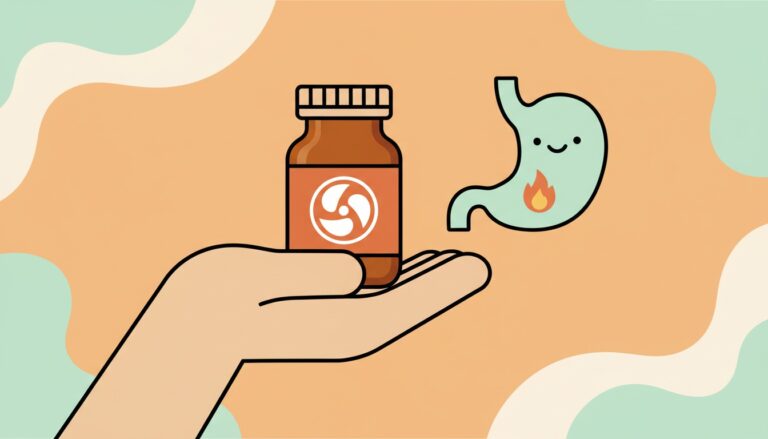
Ate Too Much Kimchi Jjigae? How to Say “My Stomach Hurts” in Korean
Phase 1: The Aftermath of the Feast
Hello! I’m your editor from Daily Hangul.
Picture this: You just finished a glorious meal at a K-BBQ spot in Hongdae. You wrapped the Samgyeopsal (pork belly) in lettuce, added extra garlic, and maybe washed it down with a bit too much Soju. Or perhaps you were brave and tried the “Fire Noodle Challenge” (Buldak-bokkeum-myeon).
Now, you’re back at your hotel, and your stomach is staging a protest. It’s burning, it feels blocked, and you need to find a pharmacy (Yakguk) fast.
In K-Dramas, this is usually where the male lead runs to buy medicine or awkwardly tries to prick the female lead’s finger with a needle (we’ll get to that later). But in reality, you need to know exactly what to tell the pharmacist to get the right relief. Saying “stomach hurt” isn’t enough because Korean distinguishes sharply between “indigestion” and “heartburn.”
Let’s get you the right meds so you can eat again tomorrow.
Phase 2: Deep Dive into Symptoms
Here are the three most common ways to describe your suffering.
1. 속이 쓰려요 (Sog-i sseu-ryeo-yo)
- Pronunciation: [Sog-ee sseu-ryeo-yo]
- Sound Analogy: Sog sounds like “Soak,” sseu sounds like a snake hissing “ss,” ryeo rhymes with “Leo.”
- Meaning: “My stomach is burning” or “I have heartburn.”
- Context: Use this when you’ve eaten something spicy (like Kimchi Jjigae or spicy rice cakes) or drank too much alcohol. It describes a stinging, burning sensation.
- Editor’s Insight: The verb ‘쓰리다’ (sseu-ri-da) is also used when you scrape your knee and it stings. So, you are literally saying your insides are stinging.
- Situation Spectrum:
[🚫 Formal Speech] ———— [⚠️ Polite/Standard] ———— [✅ Casual]
This phrase is standard polite (with -yo). Perfect for the pharmacist.- 🤔 Think About It: Koreans love spicy food, so this phrase is incredibly common. Why do you think a culture that eats such spicy food developed a specific verb just for that burning sensation?
2. 체한 것 같아요 (Che-han geo gat-a-yo)
- Pronunciation: [Che-han geo ga-ta-yo]
- Meaning: “I think I have indigestion” (specifically: I feel stuck/bloated).
- Context: This is the most important word in this unit. Che (체) implies food is stuck in your esophagus or stomach and won’t go down. You feel heavy, lethargic, and maybe have cold hands.
- Editor’s Insight: If you just say “stomach ache” (배가 아파요), they might give you a painkiller. If you say “Che,” they will give you digestive enzymes.
- Situation Spectrum: ✅ Safe to use with pharmacists, doctors, and colleagues.
3. 소화가 안 돼요 (So-hwa-ga an-dwae-yo)
- Pronunciation: [So-hwa-ga an-dwae-yo]
- Meaning: “Digestion isn’t working” (I have indigestion).
- Context: This is a broader term than Che. It just means your stomach isn’t processing food well. It’s less dramatic than Che.
- Editor’s Insight: Use this for chronic issues or mild discomfort.
Phase 3: Textbook vs. Real Life
| Situation | 📖 Textbook Korean | 🗣️ Real Korean (Daily Hangul) | 💡 The Vibe Shift |
|---|---|---|---|
| At the Pharmacy | 소화불량입니다. (I have dyspepsia.) | 속이 더부룩해요. (My insides feel bloated/cluttered.) | “So-hwa-bul-lyang” sounds like a medical diagnosis. “Deo-bu-ruk” describes the feeling perfectly. |
| After Spicy Food | 위가 아픕니다. (My stomach hurts.) | 속이 뒤집어졌어요. (My insides have flipped over.) | Describes the chaos inside your stomach after a wild night out. |
| Feeling Stuck | 소화가 잘 안 됩니다. (Digestion is not well.) | 얹힌 것 같아요. (It feels like food is sitting on top.) | “Eon-chin” vividly describes food sitting in your chest, refusing to digest. |
Bottom Note: B1 learners, sticking to “속이 안 좋아요” (My insides aren’t good) is a great catch-all phrase if you forget the specific terms!
Phase 4: Cultural Deep Dive — The Needle & The Soda
4-1. The Magic of “Son-dda-gi” (Finger Pricking)
If you tell a Korean friend “Che-han geo gat-a-yo” (I feel stuck), they might bring out a needle. Don’t panic! This is a traditional folk remedy called Son-dda-gi (손따기). They prick the thumb to release “bad blood” (black blood).
Does it work? Western medicine says it’s a placebo. Korean grandmas say it saves lives. If you’re squeamish, just say “Yakguk gal-ge-yo” (I’ll go to the pharmacy).
4-2. The Brown Drink: Hwal-myeong-su
Walk into any convenience store (GS25, CU) or pharmacy, and you’ll see small brown bottles with a fan logo. This is Hwal-myeong-su (Gas-whl-myung-su). It’s a carbonated herbal digestive drink. It tastes like medicinal root beer. It’s the first line of defense for indigestion in Korea.
Phase 5: Roleplay — At the Yakguk (Pharmacy)
Setting: A small pharmacy with a green cross sign neon light. It’s 8 PM. You are holding your stomach.
Characters:
– YOU: Ate too much Dakgalbi (Spicy Chicken Stir-fry).
– Pharmacist (Yak-sa): A kind middle-aged woman in a white coat.
Dialogue:
Yak-sa: 어서 오세요. 어디가 불편하세요?
(Eoseo oseyo. Eodiga bulpyeon-haseyo?)
(Welcome. Where are you uncomfortable?)
YOU: ____________________.
🔀 Your Turn! Pick your symptom:
– Option A: “속이 너무 쓰려요.” (My stomach burns.)
– Option B: “체한 것 같아요.” (I feel indigestion/stuck.)
(Assuming you picked A because of the spicy chicken)
YOU: 매운 걸 먹어서 속이 너무 쓰려요.
(Mae-un geol meogeo-seo sog-i neomu sseu-ryeo-yo.)
(I ate spicy food, so my stomach burns.)
Yak-sa: 아, 그럼 위장약 드릴게요. 술도 드셨나요?
(Ah, geureom wi-jang-yak deuril-ge-yo. Sul-do deu-syeot-nayo?)
(Ah, I’ll give you gastrointestinal medicine. Did you drink alcohol too?)
YOU: 네, 조금요…
(Ne, jogum-yo…)
(Yes, a little…)
Yak-sa: 이거 식후에 드세요. 자극적인 음식 피하시고요.
(Igeo sik-hu-e deuseyo. Jageuk-jeog-in eumsik pi-ha-sigoyo.)
(Take this after eating. And avoid stimulating [spicy/salty] foods.)
Phase 6: 10-Second Shadowing Drill
Practice saying this naturally so you don’t freeze up in pain!
Scenario: Explaining your condition to a friend.
😢 (Painfully/Weakly)
어제 / 과식했더니 / 속이 / 계속 / 쓰려요.
(Eo-je / gwa-sik-haet-deoni / sog-i / gye-sok / sseu-ryeo-yo.)
Yesterday / I overate so / my stomach / keeps / burning.
Phase 7: K-Culture Mini Glossary
| Korean | Romanization | Meaning | Context |
|---|---|---|---|
| 약국 | Yak-guk | Pharmacy | Look for the ‘약’ (Medicine) sign. Often closed on Sundays. |
| 소화제 | So-hwa-je | Digestive Medicine | Can be pills or liquid. |
| 위장약 | Wi-jang-yak | Stomach Medicine | Specific for heartburn/gastritis. |
| 매운맛 | Mae-un-mat | Spicy Taste | The culprit of your heartburn. |
| 죽 | Juk | Porridge | The only thing you should eat when sick. Like Bonjuk (chain store). |
Phase 8: Traveler’s Survival Kit
If you can’t speak, just show these screens!
🆘 Survival Phrase #1
– 🇰🇷 “소화제 주세요.” (So-hwa-je ju-se-yo)
– 🗣️ Meaning: “Please give me digestive medicine.”
– 📍 Where: Pharmacy or Convenience Store (for mild liquid meds)🆘 Survival Phrase #2
– 🇰🇷 “약국이 어디에 있어요?” (Yak-guk-i eodi-e isseo-yo?)
– 🗣️ Meaning: “Where is the pharmacy?”
– 💡 Pro Tip: In Korea, you can buy basic Tylenol and digestive drinks at convenience stores (CU, GS25, 7-Eleven) 24/7 if pharmacies are closed.
Phase 9: Think Deeper — The Concept of “Sok”
🧠 Why “Sok” (Inside) and not “Stomach”?
You noticed we kept saying “Sok” (속) instead of the anatomical word for stomach (“Wi” – 위). In Korean culture, Sok represents your “insides”—both physical and emotional.When you are stressed, Koreans say “Sog-i ta” (My insides are burning/charring). When you are upset, it’s “Sok-sang-hae” (My insides are damaged).
Unlike English, where we might separate “heartburn” (physical) from “heartbreak” (emotional), Korean language acknowledges that your gut and your emotions are deeply connected. When you tell a doctor “Sog-i an jowa” (My insides aren’t good), you’re speaking to a holistic view of the body.
Phase 10: Troubleshooting & FAQ
Q: Can I say “배 아파요” (Bae a-pa-yo) for everything?
A: You can, but it’s vague. It sounds like “My tummy hurts” (like a child) or could mean diarrhea. Using “Che-haet-seo-yo” or “Sog-i sseu-ryeo-yo” helps the pharmacist give you the exact medicine faster.
Q: Is it rude to burp in Korea?
A: Generally, yes. But if someone pats your back to help with digestion (common among friends/family), a burp is seen as a sign of relief! But don’t do it at the dinner table.
❌ Common Mistake: Confusing Jeom-sim (Lunch) with Jeung-sang (Symptom).
– Don’t say: “My lunch is heartburn.”
– Do say: “My symptom (jeung-sang) is heartburn.”
Phase 11: Wrap-up & Mission
One-Liner: If it burns, say “Sseu-ryeo-yo”; if it’s stuck, say “Che-haet-seo-yo.”
🚀 Action Mission:
– 🥉 Bronze: Save the word “소화제” (So-hwa-je) in your phone notes.
– 🥈 Silver: Go to a Korean mart (or online) and look for the fan logo on the brown bottle (Hwal-myeong-su).
– 🥇 Gold: Next time you eat something spicy, try to identify if your stomach is burning or stuck using the Korean terms!
💬 Question: In your country, what is the go-to home remedy for a stomach ache? Soda? Tea? Tell us below!
Phase 12: Quiz
- Situation: You ate super spicy Tteokbokki and now your stomach feels like it’s on fire. What do you say?
- A) 체한 것 같아요. (Che-han geo gat-a-yo)
- B) 속이 쓰려요. (Sog-i sseu-ryeo-yo)
- Culture: You are at a convenience store at 1 AM with indigestion. What should you look for?
- A) A brown bottle with a fan logo (Hwal-myeong-su)
- B) Soju
- True or False: “Sok” (속) only refers to your physical stomach organ.
- (True / False)
(Answers: 1-B, 2-A, 3-False – it refers to insides/feelings too!)
Frequently Asked Questions (FAQ)
Q: What does "속이 쓰려요 (Sog-i sseu-ryeo-yo)" mean in Korean and how do you pronounce it?
A: In Korean, "속이 쓰려요 (Sog-i sseu-ryeo-yo)" is pronounced [Sog-ee sseu-ryeo-yo] and means: "My stomach is burning" or "I have heartburn."
Q: What does "체한 것 같아요 (Che-han geo gat-a-yo)" mean in Korean and how do you pronounce it?
A: In Korean, "체한 것 같아요 (Che-han geo gat-a-yo)" is pronounced [Che-han geo ga-ta-yo] and means: "I think I have indigestion" (specifically: I feel stuck/bloated).
Q: What does "소화가 안 돼요 (So-hwa-ga an-dwae-yo)" mean in Korean and how do you pronounce it?
A: In Korean, "소화가 안 돼요 (So-hwa-ga an-dwae-yo)" is pronounced [So-hwa-ga an-dwae-yo] and means: "Digestion isn't working" (I have indigestion).







