

안녕하세요! This is your editor from Daily Hangul.
Have you ever been woken up at 6 AM by a loud siren sound coming from your smartphone? WEE-WOO-WEE-WOO! 🚨 You look at the screen, and it’s a terrifying message entirely in Korean. You panic. Is it a war? An earthquake?
Take a deep breath. Usually, in January or February, it’s just a Safety Disaster Message (안전 안내 문자) telling you it’s going to be freezing cold.
Today, we are tackling a survival skill for anyone living in Korea: dealing with Cold Wave Alerts (한파 주의보) and preventing your pipes from bursting (동파 방지). If you ignore this, you might end up with no water and a huge repair bill. Let’s make sure you stay warm and safe!
1. Deep Dive: Core Expressions for Survival
Here are the three most critical phrases you will see in those text messages and hear from your landlord.
1. 한파 주의보 (Hanpa Juuibo)
- Pronunciation: [Hanpa Ju-ui-bo] (Sounds like: Han-pah Joo-ee-bow)
- Meaning: Cold Wave Advisory
- Han (한): Cold / Pa (파): Wave
- Editor’s Insight: You will see this on the news or your phone when the temperature drops drastically (usually below -12°C). If it gets even colder (below -15°C), it changes to 한파 경보 (Cold Wave Warning). When you see this, dress like an onion (layers!) and stay indoors if possible.
- Situation Check: Formal term, used in news/texts. Friends just say “날씨 미쳤어 (Weather is crazy).”
2. 동파되다 (Dongpadweda)
- Pronunciation: [Dong-pa-dwe-da] (Think: ‘Dong’ like a bell + ‘Pa’ like Papa + ‘Dwe’ like dwell)
- Meaning: To be frozen and burst (pipes/meters)
- Dong (동): Winter/Freeze / Pa (파): Break/Burst
- Editor’s Insight: This is the nightmare scenario. If the water inside your pipes freezes, it expands and cracks the pipe. You’ll hear Koreans say, “수도 계량기가 동파됐어요” (The water meter froze and burst).
- Situation Check: Standard Korean. Usable with repairmen, landlords, or friends.
3. 물을 조금 틀어 놓다 (Mureul Jogeum Teureo Nota)
- Pronunciation: [Mu-reul Jo-geum Teu-reo No-ta]
- Meaning: To leave the water running slightly (dripping)
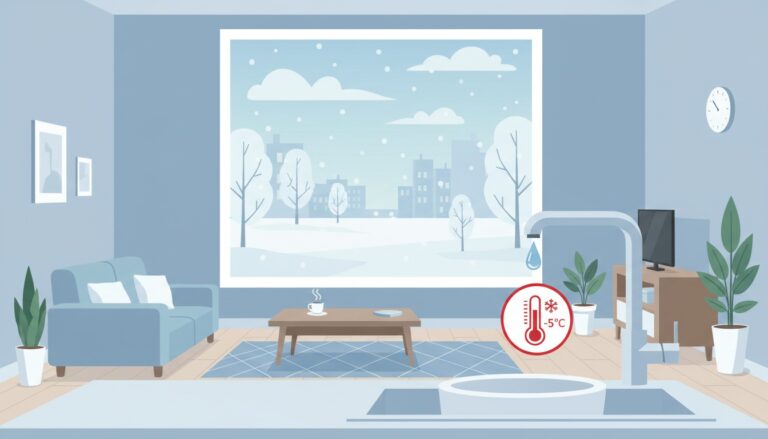
- Editor’s Insight: This is the Golden Rule of Korean winter. Moving water doesn’t freeze easily. When a cold wave hits, you must leave your tap dripping—specifically the hot water tap—just a little bit.
- Situation Check: Essential advice phrases.
2. Textbook vs. Real Life (B2 Level Nuance)
Textbooks teach you to describe the weather. Real life teaches you how to complain about it with style.
| Textbook Korean 📘 | Real Life Korean (Insa Style) 🕶️ | Context |
|---|---|---|
| 날씨가 너무 추워요. (The weather is too cold.) | 얼어 죽을 것 같아요. (I think I’m going to freeze to death.) | Used when stepping outside. |
| 파이프가 얼지 않게 하세요. (Please prevent pipes from freezing.) | 수도 꼭지 살짝 열어 두세요. (Leave the tap slightly open.) | Practical advice from neighbors. |
| 밖에 나가지 마세요. (Do not go outside.) | 이불 밖은 위험해. (Outside the blanket is dangerous.) | Internet meme / Slang for staying home. |
Editor’s Note: “얼어 죽겠다” (I’ll freeze to death) is hyperbole, but Koreans love dramatic expressions for weather. It makes you sound very local!
3. Cultural Context: The “Ondol” Responsibility 🏠
In Korea, heating is done via Ondol (floor heating) powered by a boiler. Unlike central heating in some Western countries, you (the tenant) are often responsible for preventing frozen pipes.
- The Nunchi Game: If the news says “Hanpa,” and you don’t leave your water dripping, and the pipes burst… the landlord might ask you to pay for repairs because it was “negligence” (관리 소홀).
- The Dripping Trick: You don’t need a strong stream. Just a thin stream, like the width of a chopstick, is enough. Do this for the hot water side to protect the boiler.
4. Real Life Scenario: The Landlord Calls
Setting: It is -17°C in Seoul. Your landlord (Min-su) calls you (Alex) to check on the apartment.
(Phone rings) 📱
Min-su (Landlord): 알렉스 씨, 오늘 밤에 한파 경보 내린 거 보셨어요?
(Alex, did you see the Cold Wave Warning issued for tonight?)
Alex: 네, 문자 왔더라고요. 날씨가 진짜 춥네요.
(Yes, I got the text. The weather is really cold.)
Min-su: 네, 맞아요. 혹시 동파될 수도 있으니까, 자기 전에 물 좀 틀어 놓으세요.
(Yes, right. Since it might freeze and burst, please leave the water running a bit before sleeping.)
Alex: 아, 온수 쪽으로 조금만 열어 두면 되죠? 걱정 마세요! (wink sound)
(Ah, I just need to leave the hot water side open a little, right? Don’t worry!)
Min-su: 오, 역시 한국 생활 적응 다 하셨네요! 고마워요.
(Oh, as expected, you’ve fully adapted to life in Korea! Thanks.)
5. 10-Second Shadowing Drill 🗣️
Practice this sentence so you can confidently tell your friends you know what to do.
“한파 주의보니까 / 동파되지 않게 / 물을 조금 틀어 놔야 해요.”
(Since it’s a cold wave advisory / so it doesn’t freeze and burst / I have to leave the water running a bit.)
Intonation Guide:
* Hanpa Juuibo-nikka (Rising tone ↗)
* Dongpa-dweji anke (Pause slightly)
* Mureul jogeum teureo nwaya haeyo (Falling tone ↘, sound determined)
6. FAQ & Troubleshooting
- Q: Can I turn off the boiler when I go on a winter trip to save gas money?
- A: NEVER! (절대 안 돼요!) If you turn it off completely during a cold wave, the pipes will freeze instantly. Instead, set it to “외출 (Away/Outing)” mode. This keeps it at a minimum temperature to prevent freezing.
- Q: Is “Dongpa” used for car engines too?
- A: Usually, we use it for water pipes and meters. For cars, we usually say “방전되다” (battery discharged) or “시동이 안 걸리다” (won’t start) due to cold.
7. Wrap-up & Mission
Today’s One-Liner: When the alert sounds, don’t panic—just drip the tap!
🔥 Your Mission: Check your boiler control panel right now. Find the “외출” (Away) button so you know where it is for your next vacation. Also, tonight, try saying “날씨가 미쳤어!” (The weather is crazy!) to a Korean friend.
Do you prefer winter or summer in Korea? Tell me in the comments below!
8. Pop Quiz 📝
1. What is the correct term for “Cold Wave Advisory”?
A) 태풍 주의보 (Typhoon Advisory)
B) 한파 주의보 (Cold Wave Advisory)
C) 폭염 주의보 (Heat Wave Advisory)
2. Why do we leave the water running slightly?
A) To humidify the room.
B) To wash the dishes slowly.
C) To prevent “Dongpa” (Freezing and bursting).
3. Which boiler mode should you use when leaving the house for a long time in winter?
A) 전원 끄기 (Power Off)
B) 외출 (Away)
C) 온수 전용 (Hot Water Only)
(Answers: 1-B, 2-C, 3-B)
Frequently Asked Questions (FAQ)
Q: What does "동파되다 (Dongpadweda)" mean in Korean and how do you pronounce it?
A: In Korean, "동파되다 (Dongpadweda)" is pronounced [Dong-pa-dwe-da] and means: To be frozen and burst (pipes/meters)
Q: What does "물을 조금 틀어 놓다 (Mureul Jogeum Teureo Nota)" mean in Korean and how do you pronounce it?
A: In Korean, "물을 조금 틀어 놓다 (Mureul Jogeum Teureo Nota)" is pronounced [Mu-reul Jo-geum Teu-reo No-ta] and means: To leave the water running slightly (dripping)







