

Phase 1: Introduction
Greeting: Hello! This is your Senior Editor at Daily Hangul.
Imagine this: You are at a high-end Izakaya in Yeouido (Korea’s Wall Street) with your Korean colleagues. Everyone is checking their phones at 10:30 PM because the US market just opened. Someone sighs, “Ah, I made a profit on Tesla, but the exchange rate killed me.”
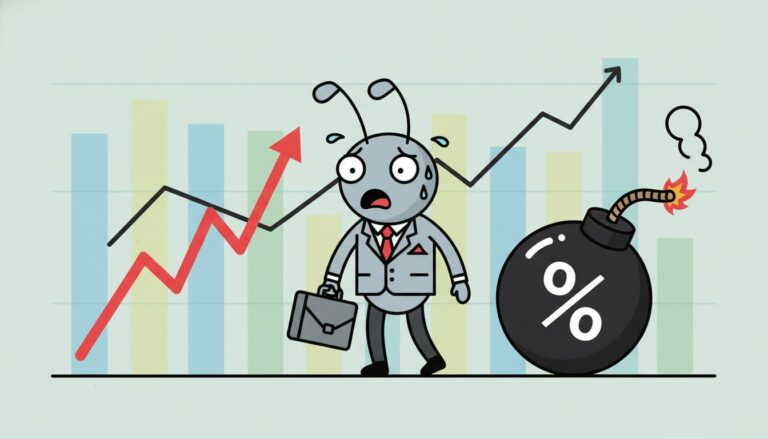
If you simply nod and say “That is sad,” you remain an outsider. But if you know the specific vocabulary of the “Seohak Ant” (Western Ant), you instantly become an insider—a fellow warrior in the global stock market battlefield.
Today, we are diving deep into the Unit: Exchange Rate Risks & Tax Issues. This isn’t just language; it’s about money and survival. This guide is based on real frustrations shared by my advanced students who manage portfolios in Korea.
Phase 2: Deep Dive (Core Expressions)
1. 서학 개미 (Seohak Gaemi)
- Pronunciation: [Seo-hak Gae-mi] Sounds like “Saw-hak” + “Geh-me”
- Meaning:
- Literal: Western Learning Ant.
- Real Nuance: An individual Korean investor who aggressively invests in overseas stocks (primarily the US market). It contrasts with 동학 개미 (Donghak Ant), who invests in domestic Korean stocks.
- Editor’s Insight: Why an “Ant”? In Korea, individual investors are seen as small and hardworking but powerless compared to the giant institutions (Foreigners and Institutions). Calling yourself an “Ant” is a humble, self-deprecating way to bond with others.
- Situation Check: Very common in news and casual conversation. Using this shows you read the financial news.
2. 환차손 (Hwancha-son) vs. 환차익 (Hwancha-ik)
- Pronunciation: [Hwan-cha-son] / [Hwan-cha-ik]
- Meaning:
- 환차손: Loss from exchange rate fluctuation.
- 환차익: Profit from exchange rate fluctuation.
- Editor’s Insight: At C2 level, stop saying “Don is lost because exchange rate bad.” Use 환차손을 입다 (suffer a forex loss). It sounds professional and precise. Koreans are hyper-sensitive to the KRW/USD rate because it determines their actual realized profit.
- Situation Check: Formal & Professional. suitable for business meetings or serious investment talks.
3. 세금 폭탄 (Segeum Poktan)
- Pronunciation: [Se-geum Pok-tan] “Pok-tan” sounds like an explosion.
- Meaning:
- Literal: Tax Bomb.
- Real Nuance: An unexpectedly large tax bill. For Seohak Ants, this specifically refers to the 22% Capital Gains Tax applied to profits exceeding 2.5 million KRW.
- Editor’s Insight: This is an emotional word. You don’t just “pay” a tax bomb; you get hit by it (세금 폭탄을 맞다). It conveys the feeling of being ambushed by the National Tax Service.
- Situation Check: Casual to Semi-formal. Don’t use it in an official report to the tax office, but perfect for complaining with friends.
Phase 3: Textbook vs. Real Life
| Textbook Korean (Standard) | Real Life Korean (Insiders) |
|---|---|
| 해외 주식 투자자 (Overseas stock investor) | 서학 개미 (Western Ant) |
| 환율 때문에 손해를 봤어요. (I lost money due to exchange rates.) | 환차손 때문에 수익 다 까먹었어. (My profits were all eaten away by forex loss.) |
| 세금을 많이 내야 해서 걱정이에요. (I am worried about paying a lot of tax.) | 5월은 양도세 폭탄 맞는 달이야. (May is the month we get hit by the capital gains tax bomb.) |
| 미국 주식을 샀어요. (I bought US stocks.) | 미장 들어갔어 / 국장 탈출했어. (Entered the US market / Escaped the Korean market.) |
- Bottom Note: “미장” (Mi-jang) refers to the US Market, and “국장” (Guk-jang) refers to the Domestic (Korean) Market. These are essential slang terms for C2 learners.
Phase 4: Cultural Context & Manners
1. The “May” Trauma (5월의 트라우마)
In Korea, May is the month for reporting Global Capital Gains Tax. If you see a Korean friend looking depressed in May, don’t ask, “Did you lose money?” They might have actually made money, but are now facing the “Tax Bomb.” The appropriate reaction is empathy: “Ah, the 22% rule is too harsh, right?” (아, 22%는 너무 세죠?)
2. Humble Bragging through Complaints
Complaining about taxes is a high-level social skill called “Gimahn” (기만 – Deception/Humble Brag). By complaining about the tax bomb, you are indirectly signaling, “I made more than 2.5 million KRW in profit.” If you want to fit in, complain about the tax, not the profit.
Phase 5: Real Scenario (Roleplay)
Setting: A casual dinner with a coworker (Min-su) who loves stocks.
Min-su: (Sighing deeply while looking at his phone)
아… 엔비디아(NVIDIA)가 올랐는데도 웃을 수가 없네.
(Ah… NVIDIA went up, but I can’t even smile.)
You: (Pouring him a drink)
왜요? 환율이 떨어져서 환차손 입으셨어요?
(Why? Did you suffer a forex loss because the exchange rate dropped?)
Min-su: (Surprised)
와, 대리님 완전 전문가시네. 맞아요. 환율 1,300원 깨지니까 수익률이 확 줄더라고요.
(Wow, you’re a total expert. Exactly. As the rate broke below 1,300 won, my yield shrank drastically.)
You: (Nodding sympathetically)
거기다 수익 나면 내년 5월에 양도세 폭탄까지 맞잖아요. 서학 개미 하기 진짜 힘들죠.
(Plus, if you make a profit, you get hit with the tax bomb next May. Being a Seohak Ant is really tough.)
Min-su:
진짜 제 마음을 너무 잘 아시네요! 건배합시다!
(You understand my heart so well! Let’s cheers!)
Phase 6: 10-Second Shadowing
Read this naturally to practice the flow of logic (Profit -> Exchange Loss -> Tax Worry).
“주식이 올라도 / 환차손 때문에 손해고, / 수익이 나면 / 세금 폭탄이 걱정돼요.”
“Ju-sigi ol-la-do / hwan-cha-son ttae-mu-ne son-hae-go, / su-igi na-myeon / se-geum pok-tan-i geok-jeong-dwae-yo.”
(Even if the stock goes up, it’s a loss due to exchange rates, and if there is a profit, I worry about the tax bomb.)
- Acting Tip: Stress the words “손해” (loss) and “세금” (tax) with a tone of frustration.
Phase 7: FAQ & Troubleshooting
- Q: Can I use the term ‘Ant’ (개미) with my boss?
- A: Yes, but read the room. If your boss invests, they likely identify as an ant too. However, never call your boss an “Ant” in a derogatory way. Use it as a collective “we” (우리 같은 개미들은… / Ants like us…).
- Q: Is it rude to ask how much tax they paid?
- A: Yes. Asking for the exact amount implies you are calculating their total profit. Instead, just ask generally: “Did the tax hit hard this year?” (올해 세금 좀 많이 나오셨어요?)
Phase 8: Wrap-up
- Summary: To survive Korean stock talk, remember you are a Seohak Ant, beware of Hwancha-son (Forex loss), and complain about the Tax Bomb in May.
- Action Mission: Next time you see a news headline about the exchange rate dropping, tell your Korean friend: “Ah, Seohak Ants must be crying today because of Hwancha-son.”
- Engagement: Have you ever paid the “Tax Bomb” in Korea? Share your painful story in the comments!
Phase 9: Quiz
- What do you call a Korean investor focusing on US stocks?
- A) Donghak Ant
- B) Seohak Ant
- C) Gangnam Ant
- If the US stock price stays the same but the Korean Won becomes stronger (Exchange rate drops), what do you suffer from?
- A) Hwancha-ik (Forex Profit)
- B) Hwancha-son (Forex Loss)
- C) Segeum Poktan (Tax Bomb)
- Which month is the “Season of Pain” for paying capital gains tax on overseas stocks?
- A) December
- B) January
- C) May
(Answers: 1-B, 2-B, 3-C)
Frequently Asked Questions (FAQ)
Q: What does "동학 개미" mean in Korean and how do you pronounce it?
A: In Korean, "동학 개미" is pronounced [Donghak Ant] and means: , who invests in domestic Korean stocks.
Q: What does "환차손을 입다" mean in Korean and how do you pronounce it?
A: In Korean, "환차손을 입다" is pronounced [suffer a forex loss] and means: . It sounds professional and precise. Koreans are hyper-sensitive to the KRW/USD rate because it determines their actual realized profit.
Q: What does ""세금"" mean in Korean and how do you pronounce it?
A: In Korean, ""세금"" is pronounced [tax] and means: with a tone of frustration.







