

Phase 1: Introduction
안녕하세요! This is your Daily Hangul Editor. 👋
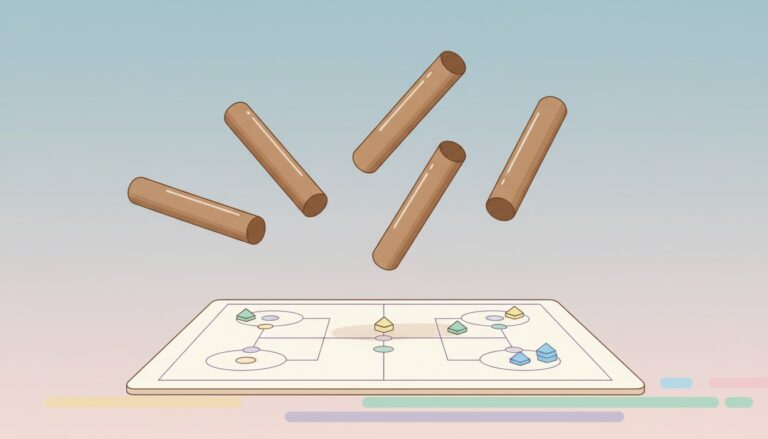
Imagine this: It’s Seollal (Lunar New Year) or Chuseok. You’ve been invited to a Korean friend’s family gathering. You’ve successfully navigated the bowing and the endless food. Suddenly, a blanket is spread on the floor, four wooden sticks appear, and the room transforms into a battlefield.
People are shouting “Mo!” or “Yut!”, slamming sticks down, and groaning in despair. You are standing there, smiling awkwardly, thinking, “Is this a ritual? Why is everyone so aggressive?”
Welcome to Yutnori (윷놀이), the ultimate Korean traditional board game. If you only know how to say “Hello” and “Thank you,” you’ll be a spectator. But if you know the phrases I’m about to teach you, you’ll become the MVP of the night.
Today, we are moving beyond textbook Korean. We are diving into the intense, loud, and strategic world of traditional games. Let’s make sure you don’t just play, but play to win.
Phase 2: Deep Dive into Core Expressions
Here are the top 3 expressions that will make Koreans gasp and say, “Who taught you that?”
1. 낙장불입 (Nakjang-bulip)
- Pronunciation: [Nak-jang-bu-rip] (Sounds like ‘Knock’ + ‘Jang’ + ‘Boo’ + ‘Lip’)
- Meaning:
- Literal: A card laid down cannot be taken back.
- Real Nuance: “No take-backs!” or “What’s done is done!”
- Editor’s Insight: This is a B2+ level idiom (Sajeoseong-eo). In the heat of the game, someone (usually an uncle) will try to move their piece, realize it’s a bad move, and try to move it back. That is your moment. Shout this word. It’s the golden rule of Korean games.
- Situation Check: Used in games mostly, but surprisingly applicable in casual arguments with friends!
2. 잡았다! (Jabatda!)
- Pronunciation: [Ja-bat-da] (The ‘Ja’ is sharp like ‘Jar’, ‘bat’ is short and clipped)
- Meaning:
- Literal: I caught it.
- Real Nuance: “Gotcha!” or “You’re dead!”
- Editor’s Insight: In Yutnori, if your piece lands on the opponent’s spot, you kick them off the board (sending them back to the start). This is the most thrilling moment. You don’t just say it; you have to exclaim it with pure joy while removing their piece.
- Situation Check: Casual only. If playing with elders, add ‘yo’ (잡았어요/Jabasseoyo), but keep the energy high.
3. 업고 가자 (Eopgo gaja)
- Pronunciation: [Eop-go Ga-ja]
- Meaning:
- Literal: Let’s piggyback and go.
- Real Nuance: “Let’s stack our pieces and move together.”
- Editor’s Insight: This is a strategy phrase. In Yutnori, you can stack your pieces (tokens) to move them all at once. It’s high risk, high return. Using the verb ‘업다’ (to piggyback) sounds incredibly native compared to just saying “put them together.”
- Situation Check: Casual / Strategy discussion.
Phase 3: Textbook vs. Real Life
Textbooks teach you how to describe the game. Real life teaches you how to survive the game.
| Textbook Korean (Too Polite/Descriptive) | Real Life Korean (Survival Mode) |
|---|---|
| 윷을 던지세요. (Please throw the Yut.) | 던져! / 굴려! (Throw it! / Roll it!) |
| 말이 함께 이동합니다. (The horses move together.) | 야, 업어! 업고 가! (Hey, piggyback! Carry it!) |
| 다시 할 수 없어요. (You cannot do it again.) | 에이~ 낙장불입이지! (Ey~ No take-backs!) |
| 제가 이겼습니다. (I have won.) | 아싸! 내가 1등이다! (Yes! I’m first place!) |
Note: Even though these are casual forms (Banmal), in the heat of a game during holidays, hierarchy often relaxes slightly. However, always gauge the room atmosphere (Nunchi)!
Phase 4: Cultural Context & Manners
The “Combat” Nunchi (눈치)
Unlike Western board games which might be quiet concentration, Korean traditional games are auditory experiences.
- Volume Control (or lack thereof): Silence is not golden here. Silence implies you are bored. cheering, groaning, and clapping are required manners.
- The “Throw” Etiquette: When throwing the Yut sticks, they must land within the mat/blanket. If a stick falls off the mat, it’s called ‘낙’ (Nak) and your turn is void. It is heartbreaking. Don’t throw them too hard!
- Respecting the Elders: Even if you scream “잡았다!” (Gotcha!), if you win against a grandparent, it’s polite to be humble in victory. Don’t gloat too much.
Phase 5: Real-Life Roleplay
Setting: A family living room on Chuseok. You are on a team with your Korean friend’s cousin, Min-su. You are playing against the Aunt and Uncle.
(You are about to throw the sticks. You need a ‘Mo’ (5 spaces) to win.)
You: (Shaking the sticks in both hands) 제발… 모 나와라! 모!
(Please… Come out Mo! Mo!)
Min-su: 좋아, 세게 던져! 낙만 하지 마!
(Good, throw it hard! Just don’t get a ‘Nak’ (out of bounds)!)
(You throw. It’s a ‘Yut’ (4 spaces) and you land on the Uncle’s piece!)
You: 와! 윷이다! 아저씨 말 잡았다!
(Wow! It’s Yut! I caught Uncle’s horse/piece!)
Uncle: (Pretending to be upset) 아, 이거 무효야. 손이 미끄러졌어.
(Ah, this is void. My hand slipped.)
You: (Smiling cheekily) 에이~ 아저씨, 낙장불입이죠!
(Ey~ Uncle, no take-backs, you know!)
Everyone: (Laughs) 와, 한국말 진짜 잘하네!
(Wow, your Korean is really good!)
Phase 6: 10-Second Shadowing Drill
Practice this sentence to sound like a passionate player. Focus on the intonation—raise your pitch at ‘Ah’ and ‘Jang’.
“Ah, that’s cheating! No take-backs!”
아, 반칙이에요! / 낙장불입 / 인 거 아시죠?
[Ah, ban-chi-gi-e-yo! / Nak-jang-bu-rip / in-geo a-si-jyo?]
Key Point: Don’t read it like a robot. Read it like you just lost $10 because your friend cheated.
Phase 7: FAQ & Troubleshooting
Q: Can I use “낙장불입” (No take-backs) to my boss?
A: Maybe. If the atmosphere is very casual and you are playing a game during a company workshop, yes, it can be a funny icebreaker. But don’t use it if you are discussing a contract error in a meeting! Context is everything.
Q: What is the ‘Mal’ (말) they keep talking about?
A: Literally, ‘Mal’ means horse. In games, it refers to the game pieces/tokens. So “말을 쓰다” means to move your piece on the board.
Phase 8: Wrap-up & Action Item
Summary: Today we learned how to be competitive in Korean. Remember 낙장불입 (No take-backs), 잡았다 (Gotcha), and the strategy 업고 가자 (Let’s piggyback).
Your Mission: Next time you play any game with a Korean friend—even if it’s just Rock, Paper, Scissors—if they say “Wait, let’s do it again!”, look them in the eye and say “낙장불입!” smilingly. Their reaction will be priceless.
Tell me in the comments: Have you ever played Yutnori? Did you win or did you get a ‘Nak’? 👇
Phase 9: Pop Quiz
1. Your opponent wants to redo their turn because they made a mistake. What do you say?
A) 안녕하세요 (Hello)
B) 낙장불입! (No take-backs!)
C) 맛있게 드세요 (Enjoy your meal)
2. You want to suggest moving two game pieces together (stacking them). You say:
A) 업고 가자 (Let’s piggyback)
B) 잡았다 (Caught you)
C) 낙이다 (It’s out of bounds)
3. Which behavior is considered BAD etiquette in Yutnori?
A) Shouting happily when you score.
B) Throwing the sticks outside the mat (Nak).
C) Catching the opponent’s piece.
(Answers: 1.B, 2.A, 3.B)
Frequently Asked Questions (FAQ)
Q: What does "낙장불입 (Nakjang-bulip)" mean in Korean and how do you pronounce it?
A: In Korean, "낙장불입 (Nakjang-bulip)" is pronounced [Nak-jang-bu-rip] and means: Literal: A card laid down cannot be taken back.
Q: What does "잡았다! (Jabatda!)" mean in Korean and how do you pronounce it?
A: In Korean, "잡았다! (Jabatda!)" is pronounced [Ja-bat-da] and means: Literal: I caught it.
Q: What does "업고 가자 (Eopgo gaja)" mean in Korean and how do you pronounce it?
A: In Korean, "업고 가자 (Eopgo gaja)" is pronounced [Eop-go Ga-ja] and means: Literal: Let's piggyback and go.







