

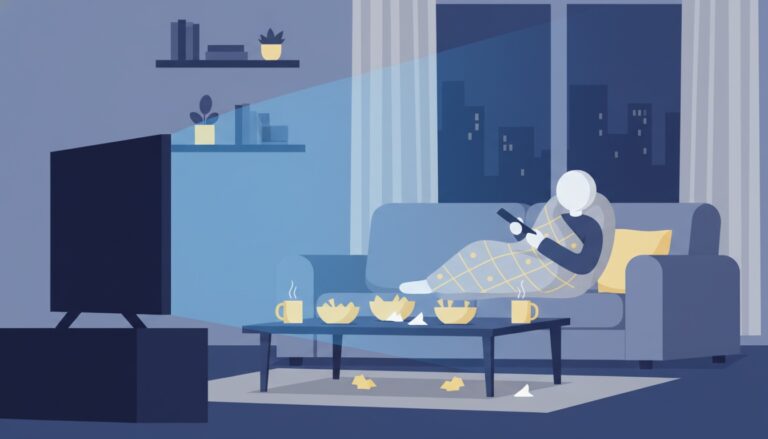
Introduction: So, You Stayed Up All Night Again?
Hello! This is your Daily Hangul Senior Editor.
We all know that feeling. You sat down to watch “just one episode” of that new Netflix K-Drama at 9 PM. Suddenly, the birds are chirping, the sun is rising, and you realize you’ve watched the entire season in one go.
The next day, your Korean friend asks, “Did you watch it?”
At B1 (Intermediate) level, saying “Ne, jaemisseosseoyo” (Yes, it was fun) is no longer enough. You want to express the passion, the fatigue, and the excitement of finishing a drama in a single sitting. You want to tell them, “I didn’t just watch it; I devoured it!”
Today, we are going to learn the real words Koreans use when discussing their Netflix habits. These are expressions I’ve taught my students who wanted to gossip about The Glory or Squid Game like a local.
Phase 1: Deep Dive into Core Expressions
Here are the three most essential phrases for K-Drama addicts.
1. 정주행하다 (Jeong-ju-haeng-ha-da)
- Pronunciation: [Jeong-ju-haeng-ha-da]
- Sound tip: Jeong (like ‘Jungle’) – Ju (like ‘Jewel’) – Haeng (like ‘Hang’ but softer) – Ha-da.
- Meaning: To binge-watch.
- Literal: “Driving straight/forward without stopping.”
- Real Nuance: Watching a drama from Episode 1 to the finale without taking a break (or over a very short period).
- Editor’s Insight: This is the #1 word to know. It comes from driving terminology but is now exclusively used for consuming content. Conversely, watching it as it airs on TV is called 본방 사수 (Bon-bang-sa-su).
- Situation Check: ✅ Casual (Friends) | ✅ Polite (Colleagues)
2. 밤을 새우다 (Bam-eul sae-u-da)
- Pronunciation: [Bam-eul sae-u-da]
- Sound tip: Bam (like ‘Bomb’ without the final ‘b’ sound) – ul – Sae (like ‘Say’) – u – da.
- Meaning: To stay up all night / Pull an all-nighter.
- Editor’s Insight: You can combine this with expression #1. “Jeongjuhaeng haneura bameul saewosseoyo” (I stayed up all night binge-watching).
- Situation Check: ✅ Casual | ✅ Polite
3. 스포하지 마세요 (Seu-po-ha-ji ma-se-yo)
- Pronunciation: [Seu-po-ha-ji ma-se-yo]
- Meaning: Don’t spoil it.
- Origin: Seu-po is short for “Spoiler.”
- Editor’s Insight: Koreans love shortening words. Instead of saying “Spoiler,” just say “Seu-po.” If you accidentally reveal the ending, you are a “Seu-po-villain.”
- Situation Check: ✅ Casual | ✅ Polite (with the ‘yo’ ending)
Phase 2: Textbook vs. Real Life
Textbooks teach you to be correct. We teach you to be natural.
| Textbook Korean (A bit stiff) | Real Spoken Korean (Natural & Trendy) |
|---|---|
| 드라마를 처음부터 끝까지 다 봤어요. (I watched the drama from start to finish.) |
주말에 시즌 1 정주행 완료했어! (I completed binge-watching Season 1 this weekend!) |
| 내용을 미리 말하지 마세요. (Do not tell me the content in advance.) |
아, 제발 스포 금지! (Ah, please, spoiler ban!) |
| 다음 편이 정말 기대돼요. (I really look forward to the next episode.) |
다음 화 궁금해서 현기증 나요. (I’m so curious about the next episode I’m getting dizzy.) |
Editor’s Note: The phrase “Hyeongijeung nayo” (I’m getting dizzy) is a humorous internet meme way to say you can’t wait.
Phase 3: Cultural Context & Manners
The Art of “Nunchi” (눈치) with Spoilers
In Korea, ruining a drama ending is a serious social crime!
When discussing a popular show at lunch or coffee breaks:
1. Ask first: “혹시 다 보셨어요?” (Hoksi da bosyeosseoyo? – By any chance, did you finish it?)
2. Read the Nunchi: If everyone is excited but one person looks nervous, imply that you won’t talk about the ending.
3. The Gesture: When saying “No spoilers!” (스포 금지), Koreans often cross their arms in an ‘X’ shape playfully.
Phase 4: Real-Life Scenario (Roleplay)
Setting: Monday morning at the office pantry. Minji (Korean coworker) and Alex (Foreign employee) are chatting.
Minji: 어, 알렉스 씨! 눈이 왜 이렇게 빨개요? 피곤해 보여요.
(Oh, Alex! Why are your eyes so red? You look tired.)
Alex: (Rubbing eyes) 아, 어제 넷플릭스 신작 나오자마자 정주행하느라고 밤을 새웠어요.
(Ah, I stayed up all night binge-watching the new Netflix show as soon as it came out.)
Minji: 대박! 저도 보려고 했는데. 결말 어때요? 재미있어요?
(Daebak! I was planning to watch it too. How is the ending? Is it good?)
Alex: (Smiling mischievously) 음… 말해주고 싶은데… 스포는 안 할게요. 직접 보세요!
(Hmm… I want to tell you… but I won’t spoil it. Watch it yourself!)
Minji: 오, 센스쟁이! 오늘 퇴근하고 바로 봐야겠네요.
(Oh, you have good sense! I should watch it right after work today.)
Phase 5: 10-Second Shadowing Drill
Practice this sentence to sound like a native speaker. Focus on the pause!
“It was so fun that I stayed up all night binge-watching it.”
너무 재밌어서 / 밤새 / 정주행했어요.
[Neo-mu jae-mi-sseo-seo / bam-sae / jeong-ju-haeng-hae-sseo-yo]
- Intonation Tip: Raise your pitch slightly on “Jae-mi” to emphasize the fun, and stress “Jeong” in “Jeong-ju-haeng”.
Phase 6: FAQ & Troubleshooting
Q: Can I use ‘Jeongjuhaeng’ for books or webtoons?
A: Yes! Originally for driving, then dramas, now it’s used for webtoons, anime, and even reading a long series of blog posts.
Q: Is it rude to say “Seu-po-ha-ji ma-se-yo” to a boss?
A: It’s grammatically polite, but a bit direct. To a senior boss, it’s better to say softly: “아직 안 봤는데, 비밀로 해주세요!” (I haven’t watched it yet, please keep it a secret!).
Phase 7: Wrap-up
Today’s Summary:
Don’t just say “I watched it.” Say you “Jeong-ju-haeng-ed” (binge-watched) it and warn others about “Seu-po” (spoilers).
Your Mission:
Go to a Korean friend or language partner and ask: “요즘 정주행할 만한 드라마 있어?” (Is there any drama worth binge-watching these days?)
What is the last K-Drama you binge-watched? Tell me in the comments!
Phase 8: Pop Quiz
1. What does “Jeong-ju-haeng” mean?
A) Watching one episode a week.
B) Driving a car fast.
C) Binge-watching a series continuously.
2. How do you say “Don’t spoil it!” using slang?
A) No Story!
B) Seu-po No No!
C) Ending Secret!
3. Which phrase means “I stayed up all night”?
A) Bameul meogeosseoyo.
B) Bameul saewosseoyo.
C) Bameul jasseoyo.
(Answers: 1. C, 2. B (or similar variations like Seu-po Geum-ji), 3. B)
Frequently Asked Questions (FAQ)
Q: What does "정주행하다 (Jeong-ju-haeng-ha-da)" mean in Korean and how do you pronounce it?
A: In Korean, "정주행하다 (Jeong-ju-haeng-ha-da)" is pronounced [Jeong-ju-haeng-ha-da] and means: a key conversational Korean expression covered in this lesson.
Q: What does "밤을 새우다 (Bam-eul sae-u-da)" mean in Korean and how do you pronounce it?
A: In Korean, "밤을 새우다 (Bam-eul sae-u-da)" is pronounced [Bam-eul sae-u-da] and means: a key conversational Korean expression covered in this lesson.
Q: What does "스포하지 마세요 (Seu-po-ha-ji ma-se-yo)" mean in Korean and how do you pronounce it?
A: In Korean, "스포하지 마세요 (Seu-po-ha-ji ma-se-yo)" is pronounced [Seu-po-ha-ji ma-se-yo] and means: Don't spoil it.







