

Phase 1: Introduction
Hello! This is your Senior Editor at Daily Hangul.
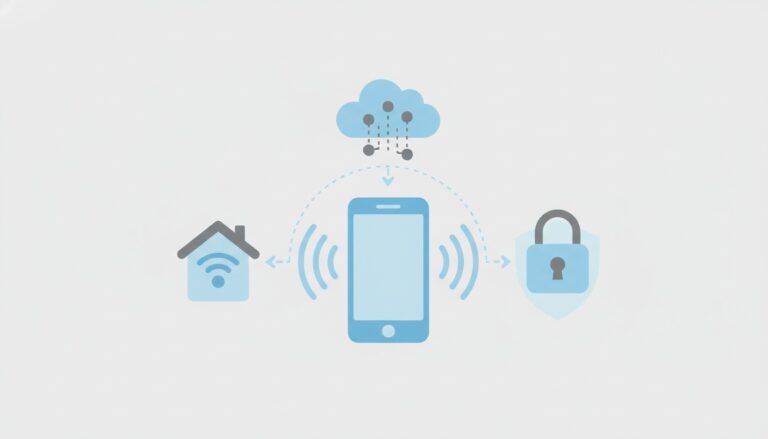
Welcome to another deep dive into real Korean. Living in Korea often feels like living in the future. You walk into an apartment, and the lights turn on automatically; you pay for the subway with your watch; and your fridge might even tell you the weather. This is the era of IoT (사물 인터넷).
But as an advanced (C1) learner, you shouldn’t just be saying, “Wow, cool!” (와, 멋지다!). You need to be able to discuss the nuances—the trade-off between convenience and privacy risks.
I remember one of my long-term students, Sarah, a software engineer. She could explain complex coding in English but froze when her Korean landlord installed a new smart door lock. She wanted to ask about security vulnerabilities but only knew how to say, “Is this safe?” Today, we will upgrade your vocabulary so you can debate the “Convenience and Risks of a Hyper-connected Society” like a true intellectual insider.
Phase 2: Deep Dive (Core Expressions)
Here are three high-level expressions to discuss the double-edged sword of technology.
1. 편리함의 이면 (The flip side of convenience)
- Pronunciation: pyeolliham-ui imyeon [pyuhn-li-hahm-e u-ee-myuhn]
- Meaning: Literal: ” The backside of convenience” → Real Nuance: “The dark side/drawbacks hidden behind the convenience.”
- Editor’s Insight: This is a classic C1 debating phrase. ‘이면’ (Backside/Hidden side) adds a layer of sophistication. Use this when you want to transition from praising tech to criticizing it gracefully.
- Situation Check: Formal ✅ | Casual ✅ (Sounds intelligent in both)
2. 사생활 침해 (Invasion of privacy)
- Pronunciation: sasaenghwal chimhae [sa-saeng-hwal chim-hae]
- Meaning: Invasion of privacy.
- Editor’s Insight: You know ‘Privacy’ (프라이버시), but using the Sino-Korean word ‘사생활’ (private life) + ‘침해’ (infringement/violation) shows you read the news. It sounds much more serious than just saying “I don’t like it.”
- Situation Check: Mostly Formal/Serious discussions ✅
3. 연동되다 (To be linked/synced)
- Pronunciation: yeondong-doeda [yuhn-dong-dwae-da]
- Meaning: To be interlocked/linked/synchronized.
- Editor’s Insight: Don’t just say “connect” (연결하다). In the context of IoT (apps, devices, accounts), ‘연동’ is the specific technical term for systems working together.
- Ex: “Is my bank account linked to this pay app?”
- Situation Check: Universal ✅
Phase 3: Textbook vs. Real Life
Let’s see how a textbook robot talks versus a local Seoulite.
| Textbook / Formal | Real Life / Natural (C1 Nuance) |
|---|---|
| 정보가 유출될까 봐 걱정돼요. (I am worried information might be leaked.) |
내 정보가 털릴까 봐 좀 찜찜해. (I feel sketchy that my info might get ‘robbed/hacked’.) |
| 이 기기는 스마트폰과 연결됩니다. (This device connects with a smartphone.) |
이거 폰이랑 바로 연동돼요. (This syncs right up with the phone.) |
| 편리하지만 위험도 있습니다. (It is convenient, but there are risks.) |
편하긴 한데, 감시당하는 기분이야. (It’s convenient, sure, but I feel like I’m being watched.) |
Note: ‘털리다’ (literally: to be dusted/robbed) is very common slang for getting hacked. ‘찜찜하다’ describes that specific ‘icky/uneasy’ feeling when something doesn’t feel safe.
Phase 4: Cultural Context & Manners
The “Speed” Culture vs. The “Security” Worry
Korea is a country of ‘Palli-Palli’ (Hurry, Hurry). IoT is loved here because it saves time. However, there is a growing sensitivity towards CCTV and data privacy.
- Nunchi Tip: If you are visiting a friend’s “Smart Home,” praise the convenience first (Wow, it syncs so fast! / 연동이 진짜 빠르네요!). Do not immediately start talking about hacking risks unless they bring it up first. It can be seen as “throwing cold water” (찬물을 끼얹다) on their excitement.
- Eye Contact: When discussing serious topics like ‘security breaches’ (보안 문제), keep a steady, serious gaze to show you aren’t joking.
Phase 5: Real-Life Scenario (Roleplay)
Setting: A cafe. Two friends are discussing a new AI speaker that Minji bought.
Characters:
* Alex (Learning Korean): Tech-savvy, cautious about privacy.
* Minji (Korean Local): Loves new gadgets.
Dialogue:
Minji: 이번에 산 AI 스피커 진짜 대박이야. 말만 하면 불도 꺼줘.
(Ibeone san AI speaker jinjja daebagiya. Malman hamyeon buldo kkeojwo.)
(The AI speaker I bought this time is amazing. Just say the word, and it turns off the lights.)
Alex: (slightly skeptical face) 편리함의 이면도 생각해야지. 그거 계속 켜져 있는 거잖아.
(Pyeolliham-ui imyeondo saeng-gakaeyaji. Geugeo gyesok kyeojyeo inneun geojana.)
(You have to think about the flip side of convenience. That thing is on all the time, right?)
Minji: 에이, 설마 내 대화를 듣겠어?
(Ei, seolma nae daehwareul deutgesseo?)
(Ay, no way, you think it listens to my conversations?)
Alex: 조심해서 나쁠 건 없잖아. 혹시라도 계정 털리면 사생활 침해 심각할걸?
(Josimhaeseo nappeul geon eopjana. Hoksirado gyejeong teollimyeon sasaenghwal chimhae simgakhalgeol?)
(It doesn’t hurt to be careful. If your account gets hacked (robbed) by chance, the invasion of privacy would be serious, right?)
Phase 6: 10-Second Shadowing
Read this aloud to practice your logical flow and intonation. Pause where the / marks are.
“모든 기기가 / 연동되니 편하긴 한데, / 혹시 해킹당할까 봐 / 좀 찜찜하기도 해요.”
(Modeun gigiga / yeondong-doeni pyeonhagin hande, / hoksi haeking-danghalkka bwa / jom jjimjjimhagido haeyo.)
Translation: “It’s convenient that all devices are linked, but I also feel a bit uneasy that I might get hacked.”
Phase 7: FAQ & Troubleshooting
Q: Can I use ‘털리다’ (get robbed/hacked) with my boss?
A: No. It’s too slangy. With a boss or in a presentation, use “정보 유출” (information leak) or “해킹의 위험” (risk of hacking). Save ‘털리다’ for drinks with friends.
Q: Is ‘IoT’ used in Korean?
A: Yes, Koreans write it as IoT or say 사물 인터넷. However, in daily conversation, people often just say “스마트 기기” (smart devices) or specify the item (e.g., AI speaker).
Phase 8: Wrap-up
One-Liner Summary:
Convenience comes with a cost—use ‘연동되다’ for tech syncing, and ‘사생활 침해’ when worrying about privacy.
Action Mission:
Open your phone’s ‘Settings’ (설정). Look for the ‘Privacy’ (개인정보 보호) menu. Read the Korean terms there. Can you find ‘연동’?
Let’s Chat:
Are you a fan of Smart Homes, or do you prefer analog? Tell me in the comments using “편리함의 이면”!
Phase 9: Quiz
1. Which word best fills the blank? “This watch _____ with my phone automatically.”
a) 침해돼요 (invades)
b) 연동돼요 (links/syncs)
c) 털려요 (gets robbed)
2. How would you formally describe the “downside” or “dark side” of a situation?
a) 뒷맛 (Aftertaste)
b) 이면 (Hidden side/Flip side)
c) 쌩얼 (Bare face)
3. (True/False) It is polite to immediately criticize a friend’s new gadget for security risks.
a) True
b) False
Click to see answers
1. b) 연동돼요
2. b) 이면
3. b) False (Use Nunchi! Acknowledge the convenience first.)
Frequently Asked Questions (FAQ)
Q: What does "편리함의 이면 (The flip side of convenience)" mean in Korean and how do you pronounce it?
A: In Korean, "편리함의 이면 (The flip side of convenience)" is pronounced [pyeolliham-ui imyeon [pyuhn-li-hahm-e u-ee-myuhn] and means: Literal: " The backside of convenience" → Real Nuance: "The dark side/drawbacks hidden behind the convenience."
Q: What does "사생활 침해 (Invasion of privacy)" mean in Korean and how do you pronounce it?
A: In Korean, "사생활 침해 (Invasion of privacy)" is pronounced [sasaenghwal chimhae [sa-saeng-hwal chim-hae] and means: Invasion of privacy.
Q: What does "연동되다 (To be linked/synced)" mean in Korean and how do you pronounce it?
A: In Korean, "연동되다 (To be linked/synced)" is pronounced [yeondong-doeda [yuhn-dong-dwae-da] and means: To be interlocked/linked/synchronized.






