

Phase 1: Introduction
Hello! This is your Senior Editor at Daily Hangul.
If you’ve lived in Korea for even a week, you’ve likely experienced the sorcery that is “Rocket Delivery” (로켓 배송) or “Dawn Delivery” (새벽 배송). You order fresh milk at 11 PM, and it’s waiting at your doorstep by 7 AM. It feels like magic, but as advanced learners (C2), we know it’s not magic—it’s hyper-optimized logistics (초연결 물류 시스템).
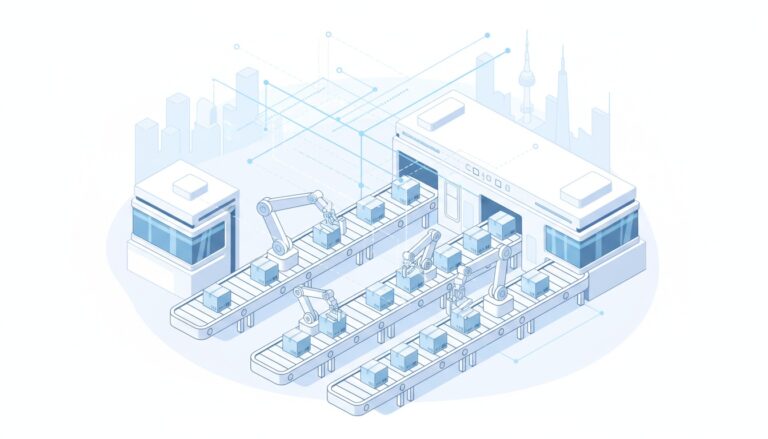
Today, we are stepping behind the curtain. We aren’t just talking about “sending a package.” We are diving into the vocabulary of the Smart Logistics Center (스마트 물류 센터). Understanding these terms will not only help you understand business news in Korea but also allow you to discuss technology and efficiency with local professionals.
Let’s upgrade your Korean from “daily conversation” to “industry expert.”
Phase 2: Deep Dive into Key Expressions
Since we are at the C2 level, we will focus on Sino-Korean words (Hanja-based) used in professional settings.
1. 풀필먼트 시스템 (Fulfillment System)
- Pronunciation: [Pul-pil-meon-teu Si-seu-tem]
- Meaning: Fulfillment System (The entire process from receiving an order to delivery)
- Editor’s Insight: Yes, it is a loanword from English. However, in the Korean logistics industry, 풀필먼트 represents the shift from simple warehousing to an all-in-one service managed by AI. Using this word shows you understand modern logistics trends, not just traditional “shipping.”
- Situation Check: Essential in Business meetings (Formal).
2. 자동 분류기 (Automatic Sorter)
- Pronunciation: [Ja-dong Bun-ryu-gi]
- Meaning: Automatic Sorter / Sorting Machine
- Editor’s Insight: Often shortened to 오토 소터 (Auto Sorter) in field slang. This is the heart of the logistics center where barcodes are scanned, and packages are routed onto different conveyor belts without human touch.
- Usage: “이번 센터에는 최신식 자동 분류기가 도입되었습니다.” (This center has introduced the latest automatic sorter.)
3. 재고 회전율 (Inventory Turnover Rate)
- Pronunciation: [Jae-go Hoe-jeon-nyul]
- Meaning: Inventory Turnover Rate
- Editor’s Insight: This is a crucial metric for Rocket Delivery. A high turnover rate means items are selling fast and not gathering dust. It combines
재고(stock),회전(rotation/turnover), and율(rate). - Situation Check: Business analysis, financial reports.
4. 최적화 (Optimization)
- Pronunciation: [Choe-jeok-hwa]
- Meaning: Optimization
- Editor’s Insight: You will hear this everywhere in tech and logistics. 동선 최적화 (Route optimization), 시스템 최적화 (System optimization). It implies making something as perfect and efficient as possible.
Phase 3: Textbook vs. Real Life
At the C2 level, the difference is often between “descriptive language” and “industry jargon.”
| Textbook / General Korean | Real Business / Industry Term | Nuance Difference |
|---|---|---|
| 물건을 보관하는 곳 (Place to store goods) | 물류 허브 (Logistics Hub) or 물류 센터 | “Hub” implies a central node in a network, not just a storage warehouse. |
| 기계가 알아서 해요 (Machines do it automatically) | 무인 자동화 설비 (Unmanned Automation Facility) | Used in official reports and news to emphasize technology. |
| 빨리 배달하기 (Delivering fast) | 라스트 마일 혁신 (Last-mile Innovation) | “Last mile” refers to the final leg of delivery. Using this makes you sound like a CEO. |
| 일하는 로봇 (Working robot) | AGV (Automated Guided Vehicle) | Koreans often use the English acronym AGV [에이지브이] in professional contexts. |
Phase 4: Cultural Context & Manners
The “Ppalli-ppalli” Spirit Meets AI
Korea’s “hurry-hurry” (빨리빨리) culture has evolved. It is no longer just about people running fast; it is about algorithmic speed. In a logistics center, efficiency is the highest virtue.
- Nunchi Tip: When visiting or discussing these facilities, the focus should always be on data (데이터) and accuracy (정확성). Complimenting the “hard work of the staff” is polite, but complimenting the “throughput of the system” (시간당 처리량) impresses the managers more.
- Safety First: Despite the automation, safety is a sensitive topic. Always use respectful terms like 현장직 (Field staff) instead of just “workers” when referring to human employees.
Phase 5: Roleplay Script
Setting: An investor is touring a new Smart Logistics Center with the Center Manager.
Characters:
* James (Investor): Impressed by the technology.
* Manager Kim: Proud of the facility’s efficiency.
Dialogue:
Manager Kim: (Pointing to the moving robots) 저기 보이는 것이 AGV입니다. 바닥의 QR코드를 인식해 물건을 나르죠.
(Jeogi boineun geosi AGV-imnida. Badagui QR-kodeureul insikhae mulgeoneul nareujyo.)
That over there is the AGV. It recognizes QR codes on the floor to transport goods.
James: 정말 놀랍군요. 인력 의존도가 확연히 줄었겠어요.
(Jeongmal nollapgunyo. Illyeok uijondoga hwakhyeonhi jureotgesseoyo.)
That’s truly amazing. The dependency on manual labor must have decreased significantly.
Manager Kim: 맞습니다. 덕분에 처리 속도는 두 배 빨라졌고, 오배송률은 0%에 가깝습니다.
(Matseumnida. Deokbune cheori sokdoneun du bae ppallajyeotgo, obaesongnyureun zero-percent-e gakkapseumnida.)
Correct. Thanks to that, processing speed has doubled, and the misdelivery rate is close to 0%.
James: 결국, 물류 혁신의 핵심은 데이터 최적화에 있었군요.
(Gyeolguk, mullyu hyeoksine haeksimeun deiteo choejeokhwa-e isseotgunyo.)
Ultimately, the core of logistics innovation lay in data optimization.
Phase 6: 10-Second Shadowing
Let’s practice a sentence you might hear in a news report about these centers. Focus on the pauses / for clarity.
“빅데이터를 기반으로 / 배송 경로를 실시간으로 분석하여 / 가장 효율적인 동선을 / 제공합니다.”
Pronunciation: [Big-data-reul giban-euro / baesong gyeong-no-reul sil-si-gan-euro bun-seok-ha-yeo / ga-jang hyo-yul-jeog-in dong-seon-eul / je-gong-ham-nida.]
Translation: Based on big data, it analyzes delivery routes in real-time and provides the most efficient movement path.
Phase 7: FAQ & Troubleshooting
Q: Can I use these terms when talking to a delivery driver?
A: No! If you say “Your last-mile optimization is impressive” to a delivery driver, they will look at you strangely. These terms are for business discussions, news analysis, or academic settings. For drivers, a simple “수고 많으십니다” (Thank you for your hard work) is best.
Q: Why are there so many English loanwords (System, Data, Hub)?
A: In high-tech industries in Korea, English terms are often preferred because they sound more “modern” and “standardized” globally. Don’t try to translate ‘Data’ into ‘자료’ (jaryo) in this specific context; ‘데이터’ is more natural.
Phase 8: Wrap-up & Action Item
Summary: Today we explored the advanced vocabulary of Smart Logistics, focusing on automation, optimization, and system management.
Action Mission: Next time you receive a package, look at the tracking history (배송 조회) on your app. Try to identify the Hub (허브) it passed through and imagine the Automatic Sorter (자동 분류기) scanning your barcode!
What’s the fastest delivery you’ve ever received in Korea? Tell me in the comments!
Phase 9: Quiz
1. What is the Korean term for “Inventory Turnover Rate”?
a) 재고 관리 (Inventory Management)
b) 재고 회전율 (Inventory Turnover Rate)
c) 재고 정리 (Inventory Clearance)
2. Which term refers to the final step of delivery to the customer’s door?
a) 퍼스트 마일 (First Mile)
b) 미들 마일 (Middle Mile)
c) 라스트 마일 (Last Mile)
3. In a Smart Logistics Center, what does ‘AGV’ usually stand for?
a) Automated Guided Vehicle
b) Automatic Great Value
c) Auto Generated Video
(Answers: 1-b, 2-c, 3-a)
Frequently Asked Questions (FAQ)
Q: What does "풀필먼트 시스템 (Fulfillment System)" mean in Korean and how do you pronounce it?
A: In Korean, "풀필먼트 시스템 (Fulfillment System)" is pronounced [Pul-pil-meon-teu Si-seu-tem] and means: Fulfillment System (The entire process from receiving an order to delivery)
Q: What does "자동 분류기 (Automatic Sorter)" mean in Korean and how do you pronounce it?
A: In Korean, "자동 분류기 (Automatic Sorter)" is pronounced [Ja-dong Bun-ryu-gi] and means: Automatic Sorter / Sorting Machine
Q: What does "재고 회전율 (Inventory Turnover Rate)" mean in Korean and how do you pronounce it?
A: In Korean, "재고 회전율 (Inventory Turnover Rate)" is pronounced [Jae-go Hoe-jeon-nyul] and means: Inventory Turnover Rate
Q: What does "최적화 (Optimization)" mean in Korean and how do you pronounce it?
A: In Korean, "최적화 (Optimization)" is pronounced [Choe-jeok-hwa] and means: Optimization







