

Phase 1: Introduction
Hello! This is your Senior Editor at Daily Hangul.
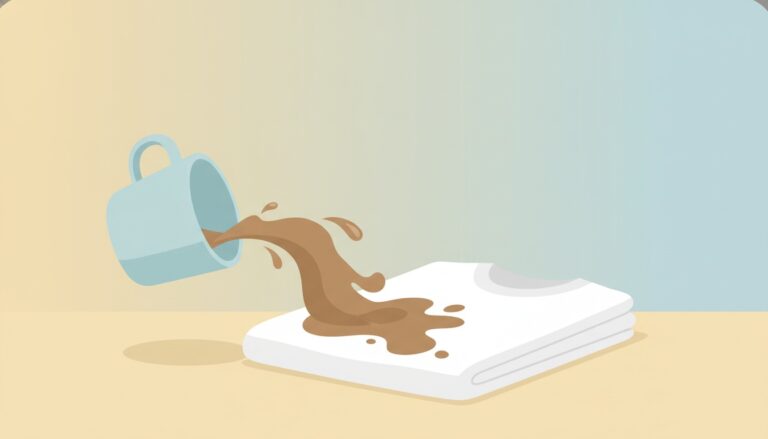
Picture this: You are at a trendy cafe in Seongsu-dong, wearing your favorite white shirt. You’re excited to meet a Korean friend. But in a moment of clumsiness, splash! Your iced Americano is now all over your chest.
We’ve all been there. The panic is real. But in Korea, how you react to this messy situation can actually turn a disaster into a bonding moment. If you just stand there silently, people might think you are angry. But if you can express your frustration or ask for help naturally, you transform from a “confused foreigner” into a “relatable friend.”
Today, we are moving beyond basic greetings. As B1 (Intermediate) learners, we need to handle life’s little emergencies. This guide is based on real questions from students who wanted to know how to ask for stain remover at a convenience store!
Phase 2: Deep Dive into Key Phrases
1. 옷에 커피를 쏟았어요 (I spilled coffee on my clothes)
- Pronunciation: [O-se keo-pi-reul sso-da-sseo-yo]
- Sound-alike: “Oh-seh coffee-rule sso-dah-suh-yo”
- Meaning: I spilled coffee on my clothes.
- Editor’s Insight: The verb 쏟다 (ssot-da) implies a larger volume or an accidental dump of liquid. If you just dropped a few drips, you might use 흘리다 (heul-li-da). But let’s be honest, when we panic, it usually feels like we poured it over ourselves! Use this to explain why you look messy.
- Situation Check: Safe for both Casual (drop the ‘yo’) and Formal situations.
2. 얼룩이 안 지워져요 (The stain isn’t coming out)
- Pronunciation: [Eol-lu-gi an ji-wo-jyeo-yo]
- Sound-alike: “Awl-look-ee an jee-woh-juh-yo”
- Meaning: The stain won’t wash off / isn’t being erased.
- Editor’s Insight: This uses the passive form 지워지다 (to become erased). It expresses frustration that despite your efforts, the stain remains. This is a great B1 level phrase because it shifts focus from you cleaning it to the stain resisting you.
- Situation Check: Very common when complaining to friends or asking dry cleaners for help.
3. 물티슈 좀 주시겠어요? (Could you give me some wet wipes?)
- Pronunciation: [Mul-ti-syu jom ju-si-ge-sseo-yo?]
- Sound-alike: “Mool-tea-shoe jom ju-she-guess-uh-yo?”
- Meaning: Could you please give me some wet wipes?
- Editor’s Insight: 물티슈 (Mul-ti-syu) is a Konglish word combining “Water” + “Tissue.” In Korea, almost every restaurant has these. Knowing this word is a survival skill!
- Situation Check: Politeness level is high (주시겠어요?), suitable for asking staff.
Phase 3: Textbook vs. Real Life
Let’s see how a real Seoulite speaks compared to a textbook.
| Type | Korean Expression | Nuance |
|---|---|---|
| Textbook | 커피가 옷에 묻었습니다. (Coffee got on my clothes.) | Very factual, dry, slightly robotic. |
| Real Life | 아, 망했다! 옷 다 버렸어. (Ah, I’m doomed! I ruined my clothes.) | Emotional, natural, very common among friends. |
Note: “망했다 (Mang-haet-da)” is a very common slang-ish term for “I screwed up” or “It’s ruined.” As a B1 learner, you can use this with close friends to sound very native!
Phase 4: Cultural Context & Manners
💡 The “Ppalli-Ppalli” (Hurry-Hurry) Cleanup
Koreans value cleanliness and speed. If you spill something in a public space, the staff will likely rush over with a rag immediately. This isn’t them rushing you to leave; it’s the service culture of fixing the problem quickly.
The Magic of “Pong-Pong”
If you ask for soap in a bathroom to clean a stain, you might hear someone say “퐁퐁 (Pong-Pong)”. This is actually a brand name for dish detergent, but it’s used generically for liquid soap effective against grease/food stains. If a Korean friend says, “Go put some Pong-Pong on it,” they mean liquid detergent!
Phase 5: Real-World Roleplay
Setting: A cafe. You just knocked over your latte onto your pants.
Characters: Minji (Korean Friend), Alex (You)
Alex: (Looking shocked) 앗! 어떡해! 바지에 커피 쏟았어.
(Aht! Eotteokhae! Ba-ji-e keo-pi sso-da-sseo.)
(Ah! What do I do! I spilled coffee on my pants.)
Minji: (Eyes wide open) 헐, 괜찮아? 뜨겁지 않아?
(Heol, gwaen-cha-na? Tteu-geop-ji a-na?)
(Oh my god, are you okay? Isn’t it hot?)
Alex: 나는 괜찮은데, 얼룩이 생길까 봐 걱정이야. 물티슈 있어?
(Na-neun gwaen-cha-neun-de, eol-lu-gi saeng-gil-kka bwa geok-jeong-i-ya. Mul-ti-syu i-sseo?)
(I’m fine, but I’m worried it will stain. Do you have wet wipes?)
Minji: 저기 직원분한테 달라고 하자. 내가 가서 받아올게!
(Jeo-gi ji-gwon-bun-han-te dal-la-go ha-ja. Nae-ga ga-seo ba-da-ol-ge!)
(Let’s ask the staff over there. I’ll go get some!)
Phase 6: 10-Second Shadowing Drill
Read this aloud to practice your intonation. Focus on the pause to emphasize your worry.
“아, 흰 옷인데 / 커피 얼룩이 / 안 지워지면 어떡하죠?”
- Romanization: Ah, hin o-sin-de / keo-pi eol-lu-gi / an ji-wo-ji-myeon eo-tteo-ka-jyo?
- Meaning: Ah, it’s white clothes… what if the coffee stain doesn’t come out?
- Tip: Raise your pitch slightly at “어떡하죠?” to sound genuinely concerned.
Phase 7: FAQ & Troubleshooting
Q: Can I use ‘쏟다 (ssot-da)’ for food like pizza?
A: Not usually. 쏟다 is for liquids (water, coffee) or small loose items (beads, rice). For dropping a slice of pizza, use 떨어뜨리다 (tteo-reo-tteu-ri-da).
Q: Is it rude to ask for wet wipes (물티슈) at a restaurant?
A: Not at all! It is extremely common. Just raise your hand and say, “저기요, 물티슈 좀 주세요 (Excuse me, please give me wet wipes).” They will give it to you happily.
Phase 8: Wrap-up
Today’s Summary:
When accidents happen, don’t freeze. Use “커피를 쏟았어요” to explain, and ask for “물티슈” to fix it.
Your Mission:
Next time you are at a Korean convenience store (like GS25 or CU), look for a stain remover stick. It’s usually called “얼룩 제거제” (Stain Remover) or “싹스틱” (Ssak-stick). Take a photo of it so you remember it for emergencies!
Question for you:
Have you ever had a fashion disaster in Korea? How did you handle it? Tell me in the comments!
Phase 9: Pop Quiz
- How do you say “Stain” in Korean?
A) 퐁퐁 (Pong-Pong)
B) 얼룩 (Eol-luk)
C) 물티슈 (Mul-ti-syu) -
Which verb is best for “spilling” a liquid?
A) 먹다 (Meok-da)
B) 입다 (Ip-da)
C) 쏟다 (Ssot-da) -
“This stain isn’t coming out.” (Translate: 얼룩이 안 _____.)
A) 지워져요 (Ji-wo-jyeo-yo)
B) 맛있어요 (Ma-si-sseo-yo)
C) 비싸요 (Bi-ssa-yo)
(Answers: 1. B, 2. C, 3. A)
Frequently Asked Questions (FAQ)
Q: What does "옷에 커피를 쏟았어요 (I spilled coffee on my clothes)" mean in Korean and how do you pronounce it?
A: In Korean, "옷에 커피를 쏟았어요 (I spilled coffee on my clothes)" is pronounced [O-se keo-pi-reul sso-da-sseo-yo] and means: a key conversational Korean expression covered in this lesson.
Q: What does "얼룩이 안 지워져요 (The stain isn't coming out)" mean in Korean and how do you pronounce it?
A: In Korean, "얼룩이 안 지워져요 (The stain isn't coming out)" is pronounced [Eol-lu-gi an ji-wo-jyeo-yo] and means: a key conversational Korean expression covered in this lesson.
Q: What does "물티슈 좀 주시겠어요? (Could you give me some wet wipes?)" mean in Korean and how do you pronounce it?
A: In Korean, "물티슈 좀 주시겠어요? (Could you give me some wet wipes?)" is pronounced [Mul-ti-syu jom ju-si-ge-sseo-yo?] and means: a key conversational Korean expression covered in this lesson.







