

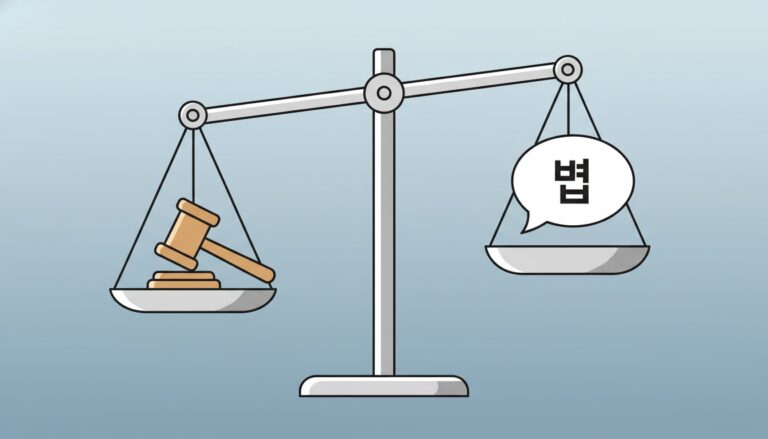
K-Drama vs. Reality: Understanding Korea’s “Citizen Participation Trial” (C1 Level)
Phase 1: The Hook
“Objection!” (이의 있습니다!)
Hello, Daily Hangul students! It’s your Senior Editor here.
If you are a fan of legal K-Dramas like Extraordinary Attorney Woo (이상한 변호사 우영우) or Law School, you might have noticed something interesting. Sometimes there’s a jury, and sometimes there isn’t. And even when there is a jury, the judge sometimes… ignores them?
For C1 (Advanced) learners, simply knowing how to order coffee isn’t enough. You want to discuss society, justice, and news. Today, we are diving into the “Citizen Participation Trial” (국민참여재판). This is a complex topic where language meets a very unique cultural implementation of justice.
Misunderstanding this system can lead to confusion when discussing high-profile news cases with your Korean colleagues. Let’s bridge that gap between textbook definitions and the real Korean courtroom vibe.
Phase 2: Deep Dive into Key Expressions
Since this is a C1 level lesson, we are skipping the basics and going straight to the terms you’ll hear on the 9 PM News.
1. 국민참여재판 (Citizen Participation Trial)
- Pronunciation: [Gungmin-chamyeo-jaepan] Think: “Gung-min” (Citizens) + “Cham-yeo” (Chum-yell without the ‘ll’) + “Jae-pan” (Japan with an ‘e’).
- Meaning: A criminal trial where citizens participate as jurors. (Lit: National Participation Trial)
- Editor’s Insight: Unlike the US system where a jury is a constitutional right, in Korea, the defendant must apply (신청하다) for it. It’s a strategic choice!
- Situation Check: Formal/Professional. Used in news, debates, or legal contexts.
2. 배심원단 (The Jury / Jury Panel)
- Pronunciation: [Baesim-wondan] “Bae” (like Bae) + “Sim” (like Sims) + “Won-dan”.
- Meaning: The group of selected jurors.
- Editor’s Insight: You will often hear the phrase “배심원 선정 절차” (Jury selection process). If you receive a summon letter, you become a 배심원 후보자 (Prospective Juror).
- Situation Check: Formal. In casual conversation, you might just say “배심원들” (the jurors).
3. 권고적 효력 (Advisory Effect / Non-binding)
- Pronunciation: [Gwongojeok Hyoryeok] This is a tongue twister. “Gwon-go” (Recommend) + “Jeok” + “Hyo-ryeok”.
- Meaning: The verdict is a recommendation, not a binding order.
- Editor’s Insight: This is the most critical concept. In Korea, the judge respects the jury’s decision but is not legally bound to follow it. If the judge disagrees, they just have to write a detailed explanation why.
- Situation Check: Very Formal/Academic. Essential for C1 discussions about the legal system.
Phase 3: Textbook vs. Real Life (Korean Nuance)
At the C1 level, you need to sound like an intellectual, not just a student.
| Situation | Textbook (Standard) | Real Life (Native/News Vibe) |
|---|---|---|
| Discussing a verdict | 배심원들은 그가 유죄라고 했습니다. (The jurors said he is guilty.) | 만장일치로 유죄 평결이 나왔어요. (A unanimous guilty verdict came out.) |
| Expressing doubt | 판사가 동의하지 않을 수도 있어요. (The judge might not agree.) | 판사가 배심원 의견을 뒤집을 수도 있죠. (The judge might overturn/flip the jury’s opinion.) |
| Certainty of crime | 증거가 아주 확실합니다. (The evidence is very certain.) | 완전 빼박 증거예요. (It’s undeniable/irrefutable evidence.) Slang but widely used. |
- Editor’s Note: “빼박” comes from “빼도 박도 못하다” (Can’t pull it out or drive it in). It’s slightly casual, so use “결정적 증거” (decisive evidence) in a strictly formal setting.
Phase 4: Cultural Context (The “Nunchi” of Justice)
The Burden of “Consensus”
In Western juries, a “hung jury” (disagreement) is common. In Korea, while disagreements happen, there is a strong cultural pressure toward consensus (합의). The jury discussions (평의) are intense because Koreans often value group harmony.
Respect for the Judge (판사님)
Even in a participatory trial, the Judge is the ultimate authority figures. The jury system in Korea is relatively new (started in 2008) compared to the West. Therefore, the public still looks to the Judge’s final sentence (선고) as the “real” conclusion. When you talk about this, showing respect for the Judge’s final discretion is considered culturally astute.
Phase 5: Roleplay Script (The Coffee Break Debate)
Scenario: You and your Korean colleague, Min-su, are discussing a controversial news verdict over coffee.
Characters:
* Alex (You): C1 Korean learner, interested in social issues.
* Min-su: Korean office worker.
Min-su: (Sighing while looking at phone) 와, 이번 사건 배심원들은 무죄라고 했는데 판사가 유죄 선고를 내렸네.
(Wow, in this case, the jury said not guilty, but the judge sentenced him as guilty.)
Alex: (Nodding seriously) 아, 정말요? 한국의 국민참여재판은 배심원 평결이 권고적 효력만 있어서 그런 거죠?
(Ah, really? That’s because the jury verdict in Korea’s Citizen Participation Trial only has an advisory effect, right?)
Min-su: (Surprised) 오, 알렉스 대리님, 그런 어려운 법률 용어도 아세요? 맞아요. 그래도 보통은 따르는데 이번엔 이례적이네요.
(Oh, Assistant Manager Alex, you know such difficult legal terms? Correct. Usually, they follow it, but this time is exceptional/unusual.)
Alex: 법 감정과 법리적 해석의 차이 때문에 판사가 고심이 많았겠어요.
(The judge must have agonized a lot due to the difference between public legal sentiment and legal interpretation.)
Phase 6: 10-Second Shadowing Drill
Let’s practice a sophisticated sentence to show off your logic. Focus on the pauses / to sound authoritative.
“배심원의 평결은 / 판사를 기속하지 않지만, / 재판부는 이를 존중해야 합니다.”
- Pronunciation: Baesimwon-ui pyeong-gyeol-eun / pansa-reul gisok-haji-anchiman, / jaepanbu-neun i-reul jonjung-haeya hamnida.
- Meaning: The jury’s verdict / does not bind the judge, / but the court must respect it.
(Tip: Emphasize “기속하지 않지만” (does not bind) to highlight the contrast!)
Phase 7: FAQ & Troubleshooting
- Q: Can I use legal terms like “피고인” (Defendant) in daily life?
- A: Only jokingly! Calling your friend a “피고인” when they are late is funny. Calling them that seriously is weird. Use standard pronouns instead.
- Q: Is the Korean jury system exactly like the US one?
- A: NO. The biggest difference is the “Advisory Effect” we learned today. Also, in Korea, the jury also gives an opinion on the sentencing (how many years in prison), not just guilty/not guilty. This is a great fact to mention to impress Koreans!
Phase 8: Wrap-up & Action Item
- Summary: Korea’s “Citizen Participation Trial” involves jurors, but their verdict is “advisory” (권고적 효력), meaning the Judge has the final say.
- Mission: Next time you see a crime drama, try to spot if they mention “배심원” or “국민참여재판”. If they do, tell your watching partner: “You know the judge can ignore them, right?”
- Question: If you were a juror, would you feel comfortable judging someone, or would you prefer the judge to decide? Let me know in the comments!
Phase 9: Pop Quiz
1. What is the Korean term for a trial where citizens participate as jurors?
a) 시민재판 (Simin-jaepan)
b) 국민참여재판 (Gungmin-chamyeo-jaepan)
c) 나홀로소송 (Nahollo-sosong)
2. Which phrase describes the fact that the judge is NOT forced to follow the jury’s decision?
a) 만장일치 (Unanimous)
b) 권고적 효력 (Advisory Effect)
c) 집행유예 (Probation)
3. How do you say “The judge overturned the verdict” in a natural way?
a) 판사가 평결을 뒤집었어요.
b) 판사가 평결을 요리했어요.
c) 판사가 평결을 사랑했어요.
(Answers: 1-b, 2-b, 3-a)
Frequently Asked Questions (FAQ)
Q: What does "국민참여재판 (Citizen Participation Trial)" mean in Korean and how do you pronounce it?
A: In Korean, "국민참여재판 (Citizen Participation Trial)" is pronounced [Gungmin-chamyeo-jaepan] and means: A criminal trial where citizens participate as jurors. (Lit: National Participation Trial)
Q: What does "배심원단 (The Jury / Jury Panel)" mean in Korean and how do you pronounce it?
A: In Korean, "배심원단 (The Jury / Jury Panel)" is pronounced [Baesim-wondan] and means: The group of selected jurors.
Q: What does "권고적 효력 (Advisory Effect / Non-binding)" mean in Korean and how do you pronounce it?
A: In Korean, "권고적 효력 (Advisory Effect / Non-binding)" is pronounced [Gwongojeok Hyoryeok] and means: The verdict is a recommendation, not a binding order.







