

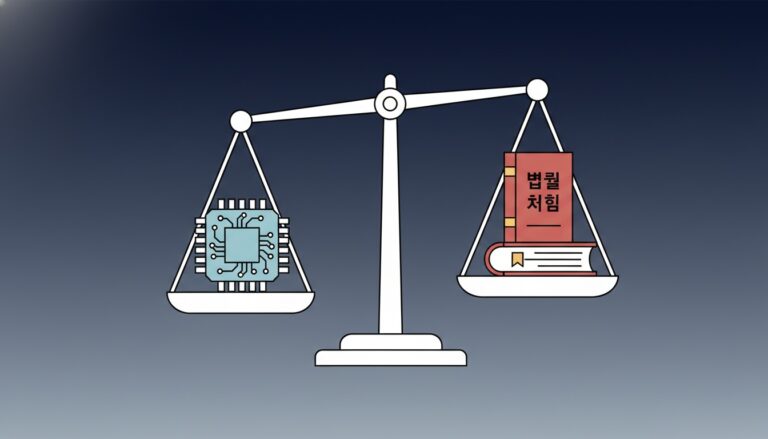
Phase 1: Introduction
Hello! This is your Senior Editor at Daily Hangul.
Welcome to the “big leagues.” Today, we aren’t ordering coffee or asking for directions. We are stepping into a corporate boardroom to discuss Product Liability (PL) and Risk Management.
At the C2 level, your goal isn’t just to be understood; it’s to protect your company’s interests while navigating the complex web of Korean law. Imagine this: A product your company exported to Korea has malfunctioned, causing injury. The Korean partner is demanding an explanation regarding the Product Liability Act (제조물 책임법).
Using the wrong word here doesn’t just sound awkward—it could cost your company billions of won in a lawsuit. In this unit, we will dissect the high-level legal terminology needed to discuss defects, liability, and defense strategies with the precision of a veteran attorney. Let’s get professional.
Phase 2: Deep Dive into Core Expressions
Here are the heavy-hitters you need for a legal strategy meeting.
1. 입증 책임 (Burden of Proof)
- Pronunciation: Ip-jeung chae-gim [Think: ‘Ip’ as in lip, ‘jeung’ involves clenching your teeth lightly]
- Meaning: The obligation to prove the facts in a legal dispute.
- Editor’s Insight: In the context of Korean PL law (Article 3-2), the 입증 책임 has partially shifted from the consumer to the manufacturer in specific cases. This is a massive talking point in risk management. You aren’t just saying “They have to prove it”; you are discussing who carries the legal burden.
- Situation Check: strictly Formal / Legal / Business.
2. 징벌적 손해배상 (Punitive Damages)
- Pronunciation: Jing-beol-jeok son-hae-bae-sang
- Meaning: Damages assessed in order to punish the defendant for outrageous conduct (up to 3 times the actual damages in Korea).
- Editor’s Insight: This is a scary word in the boardroom. Since the amendment of the PL Act, Korea allows for 3배 배상 (treble damages) if the manufacturer knew about the defect but ignored it. Use this when warning your team about the severity of a cover-up.
- Situation Check: Formal. Used to emphasize critical risk.
3. 면책 사유 (Grounds for Exemption/Immunity)
- Pronunciation: Myeon-chaek sa-yu
- Meaning: Legal reasons that exempt a party from liability.
- Editor’s Insight: When a crisis hits, your boss will ask, “Is there a way out?” You reply by discussing 면책 사유. For example, proving that the science/technology at the time of distribution couldn’t detect the defect (development risk defense).
- Situation Check: Professional / Strategic discussions.
Phase 3: Textbook vs. Real Life (C2 Level)
At the C2 level, “Real Life” means “Strategic Ambiguity.” You need to sound professional but cautious.
| Textbook (Correct but generic) | Real Life (Strategic & Professional) |
|---|---|
| 제품에 문제가 있습니다. (There is a problem with the product.) | 해당 제품에 설계상의 결함이 의심됩니다. (A design defect is suspected in the product in question.) |
| 우리가 돈을 물어줘야 합니다. (We have to pay money.) | 배상 책임이 성립할 가능성이 높습니다. (It is highly likely that liability for damages will be established.) |
| 몰랐다고 합시다. (Let’s say we didn’t know.) | 고의성이 없었음을 입증하는 것이 관건입니다. (Proving the absence of intent is the key issue.) |
Note: Notice the shift from “problem” to “design defect” (설계상의 결함). PL law distinguishes between manufacturing defects (제조 결함), design defects (설계 결함), and warning defects (표시상의 결함). Being specific shows your expertise.
Phase 4: Cultural Context & Manners
The Art of “Moral” vs. “Legal” Apology
In Western litigation, you often admit nothing until the court decides. In Korea, however, public sentiment (국민 정서) plays a huge role in corporate risk management.
Even if you have a perfect 면책 사유 (legal defense), if you appear cold, the public backlash can be worse than the lawsuit.
- The Strategy: You must distinguish between 도의적 책임 (moral responsibility) and 법적 책임 (legal liability).
- The Phrase: “법적 책임 여부를 떠나, 도의적 책임을 통감합니다.” (Regardless of legal liability, we keenly feel our moral responsibility.)
- Non-verbal: When saying this, your posture should be stiff, expression grave, and eye contact respectful but slightly lowered to show contrition. Do not cross your arms or lean back.
Phase 5: Roleplay Script
Setting: A crisis management meeting at a manufacturing company.
Characters:
* Min-ji (Marketing Director – Korean): Worried about the brand image.
* Alex (Legal Advisor – You): Analyzing the PL risk.
Min-ji: 이번 배터리 발화 사건, SNS 여론이 너무 안 좋아요. 당장 사과문부터 낼까요?
(The SNS sentiment regarding the battery ignition incident is terrible. Should we release an apology immediately?)
Alex: 팀장님, 심정은 이해하지만 신중한 접근이 필요합니다 (needs a cautious approach). 지금 섣불리 결함을 인정하면, 추후 소송에서 불리하게 작용할 수 있습니다.
(Director, I understand how you feel, but we need a cautious approach. If we hastily admit to a defect now, it could work against us in future litigation.)
Min-ji: 그럼 소비자들이 다칠 수도 있는데 가만히 있자는 건가요?
(So are you saying we stay still while consumers might get hurt?)
Alex: 아닙니다. 선제적 리콜(preemptive recall)을 검토하되, 그 사유를 ‘제조 결함’이 아닌 ‘소비자 안전 확보 차원’으로 명시해야 징벌적 손해배상 리스크를 줄일 수 있습니다.
(No. We should review a preemptive recall, but we must state the reason as ‘securing consumer safety’ rather than ‘manufacturing defect’ to mitigate the risk of punitive damages.)
Min-ji: 아, 법적인 방어 논리를 갖추면서도 안전을 챙기자는 말씀이군요. 알겠습니다.
(Ah, so you mean we should secure safety while maintaining legal defense logic. I understand.)
Phase 6: 10-Second Shadowing
Read this sentence aloud to practice flow and emphasis. Focus on the pause after ‘경우’ to separate the condition from the consequence.
“제조업자가 결함을 알면서도 / 조치를 취하지 않아 / 생명이나 신체에 중대한 손해를 입힌 경우, / 징벌적 손해배상 책임이 부과될 수 있습니다.”
- Pronunciation: Je-jo-eop-ja-ga gyeol-ham-eul al-myeon-seo-do / jo-chi-reul chwi-ha-ji a-na / saeng-myeong-i-na sin-che-e jung-dae-han son-hae-reul i-pin gyeong-u, / jing-beol-jeok son-hae-bae-sang chae-gim-i bu-gwa-doel su it-seum-ni-da.
- Translation: If a manufacturer causes serious damage to life or body by failing to take action despite knowing of the defect, punitive damages may be imposed.
Phase 7: FAQ & Troubleshooting
- Q: Can I use the word “실수” (mistake) in a formal report regarding PL?
- A: Avoid it. “실수” sounds like a personal error. Use 과실 (negligence) or 착오 (error/misjudgment). For example, “업무상 과실” (professional negligence) is the correct legal term.
- Q: What is the difference between 보상 (Compensation) and 배상 (Reparation)?
- A: This is crucial!
- 보상 (Bosang): Paying for damages caused by lawful acts or natural disasters (e.g., insurance payout).
- 배상 (Baesang): Paying for damages caused by illegal acts or defaults (e.g., PL lawsuits). In this unit, you will almost always use 손해배상 (Compensation for damages).
- A: This is crucial!
Phase 8: Wrap-up
One-Liner Summary:
In Product Liability contexts, distinguish precisely between negligence (과실), defect (결함), and immunity (면책) to protect your company.
Action Mission:
Read a recent Korean news article about a car recall. Try to identify if they used the term “자발적 리콜” (Voluntary recall) or “강제 리콜” (Mandatory recall). The legal weight is very different!
Thinking of using these terms in your next meeting? Let me know in the comments how your boss reacted!
Phase 9: Quiz
- Which term describes the legal obligation to prove facts in court?
A) 연대 책임 (Joint Liability)
B) 입증 책임 (Burden of Proof)
C) 도의적 책임 (Moral Responsibility) -
In Korea, what is the maximum multiplier for punitive damages in PL cases?
A) 2 times
B) 3 times
C) 10 times -
Which word should you use when paying for damages caused by an illegal act or defect?
A) 보상 (Compensation)
B) 배상 (Reparation/Damages)
C) 포상 (Reward)
(Answers: 1. B, 2. B, 3. B)
Frequently Asked Questions (FAQ)
Q: What does "입증 책임 (Burden of Proof)" mean in Korean and how do you pronounce it?
A: In Korean, "입증 책임 (Burden of Proof)" is pronounced [Ip-jeung chae-gim [Think: 'Ip' as in lip, 'jeung' involves clenching your teeth lightly] and means: The obligation to prove the facts in a legal dispute.
Q: What does "징벌적 손해배상 (Punitive Damages)" mean in Korean and how do you pronounce it?
A: In Korean, "징벌적 손해배상 (Punitive Damages)" is pronounced [Jing-beol-jeok son-hae-bae-sang] and means: Damages assessed in order to punish the defendant for outrageous conduct (up to 3 times the actual damages in Korea).
Q: What does "면책 사유 (Grounds for Exemption/Immunity)" mean in Korean and how do you pronounce it?
A: In Korean, "면책 사유 (Grounds for Exemption/Immunity)" is pronounced [Myeon-chaek sa-yu] and means: Legal reasons that exempt a party from liability.







