

Introduction
“Hello, this is Daily Hangul!”
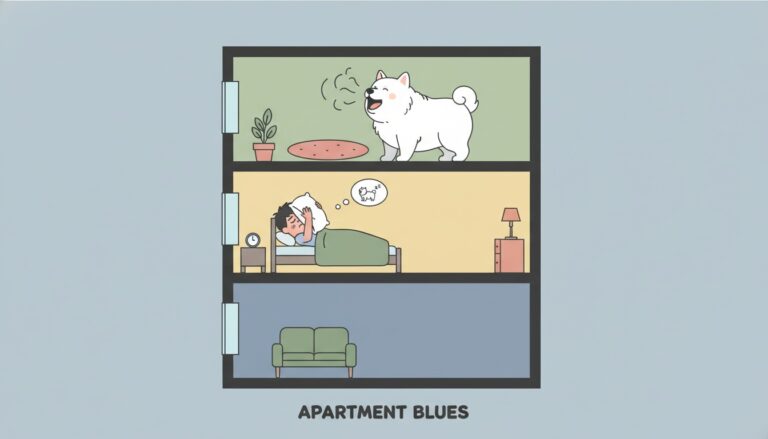
Imagine you finally moved into your dream apartment in Seoul or a cozy villa (low-rise apartment). You are ready for a good night’s sleep, but suddenly—Meong! Meong! Meong!—the neighbor’s dog starts barking non-stop. Your head hurts, but you are terrified of knocking on their door. What if you say the wrong thing and start a fight?
[Synthetic Episode Case]
Note: This story is a composite based on frequent questions received from learners living in Korean officetels and villas.
A learner named “Sarah” (Level 3 Korean) told us she endured noise for three months because the dictionary phrase “조용히 해 주세요” (Please be quiet) felt too aggressive. She wanted to express, “I love dogs, but yours is too loud at 2 AM,” but didn’t know the nuance.
In Korea, inter-floor noise (층간소음, cheungan-soeum) is a sensitive social issue. Using textbook commands can escalate situations. You need Nunchi (social sense) and indirect speech to solve the problem peacefully. Let’s learn how to complain without making enemies.
At a Glance
- Key Expressions: Stating the cause gently, expressing personal distress, asking for care.
- Safe Zone: Use with neighbors you don’t know well or building management.
- Level (B1): Intermediate. You need to combine “reason” + “request” rather than just simple sentences.
Table of Contents
- Today’s Core Expressions Deep Dive
- Textbook vs. Real Korean (The “Blame the Building” Technique)
- Unique Analysis: The Complaint Temperature Check
- Real-life Role Play: At the Front Door
- Shadowing Challenge
- FAQ
- Wrap-up & Quiz
Today’s Core Expressions Deep Dive
1. 강아지가 너무 짖어서요 (The dog is barking too much…)
- Korean: 강아지가 너무 짖어서요
- Romanization: Gangaji-ga neomu jijeoseo-yo
- Meaning: The dog is barking too much (so… implied issue).
Usage & Register:
* To whom: Neighbor or Security Guard (Gyeongbi-ajeossi).
* Tone: Use the polite Haeyo-che style. Ending with -seoyo (instead of just -seo) leaves the sentence open, softening the blow.
Tutor’s Secret Note:
Koreans rarely say “Your dog is loud.” They state the fact (“The dog barks”) and trail off. This implies, “I don’t want to fight, but this fact is causing a problem.”
Pronunciation Clinic:
* 짖어서요 (jijeoseo-yo): The bottom ‘ㅈ’ in 짖 moves to the next syllable. Pronounce it as [지저서요 / ji-jeo-seo-yo].
Examples:
1. [General] 옆집 강아지가 너무 짖어서요. (Yeopjip gangaji-ga neomu jijeoseo-yo.) – The dog next door is barking too much.
2. [To Management] 301호 강아지가 계속 짖어서요. (Sam-baek-il-ho gangaji-ga gyesok jijeoseo-yo.) – The dog in unit 301 keeps barking.
3. [Indirect] 밤마다 강아지가 짖어서요. (Bammada gangaji-ga jijeoseo-yo.) – The dog barks every night.
Alternative:
* Casual: 강아지 소리가 너무 커. (Gangaji sori-ga neomu keo.) – The dog sound is too big. (Only for close friends, not neighbors!)
* Formal: 개 짖는 소리 때문에 말씀드립니다. (Gae jinneun sori ttaemune malsseum-deurimnida.) – I am speaking to you because of the dog barking sound.
Mini Quiz (Click to see)
Fill in the blank: “The dog keeps barking.” -> “강아지가 _____ 짖어서요.” (Hint: continuously)
Answer: 계속 (gyesok)
2. 잠을 못 자고 있어요 (I haven’t been able to sleep)
- Korean: 잠을 못 자고 있어요
- Romanization: Jameul mot jago isseoyo
- Meaning: I am unable to sleep (currently/continuously).
Usage & Register:
* Strategy: Focus on YOUR suffering (I can’t sleep) rather than THEIR fault (You are noisy). This evokes empathy rather than defensiveness.
Tutor’s Secret Note:
If you say “You are noisy” (시끄러워요), the neighbor might get angry. But if you say “I’m exhausted because I can’t sleep,” they usually apologize first. It’s the “Victim Strategy.”
Pronunciation Clinic:
* 못 자고 (mot jago): The ‘ㅅ’ in 못 meets ‘ㅈ’, creating a tensed sound. Pronounce as [몯짜고 / mot-jja-go].
Examples:
1. [Emphasizing Time] 새벽에 잠을 못 자고 있어요. (Saebyeoge jameul mot jago isseoyo.) – I can’t sleep at dawn.
2. [Result] 소리 때문에 잠을 못 자요. (Sori ttaemune jameul mot jayo.) – I can’t sleep because of the noise.
3. [Soft Complaint] 며칠 동안 잠을 못 잤어요. (Myeochil dongan jameul mot jasseoyo.) – I couldn’t sleep for a few days.
Alternative:
* Stronger: 생활이 안 돼요. (Saenghwari an dwaeyo.) – I can’t function/live my daily life.
3. 조금만 주의해 주시겠어요? (Could you please be a bit careful?)
- Korean: 조금만 주의해 주시겠어요?
- Romanization: Jogeumman juihae jusigesseoyo?
- Meaning: Could you please pay a little attention/be careful?
Usage & Register:
* Why strict?: “주의하다” (to pay attention/caution) is formal but very common in housing disputes. It’s polite but firm.
Tutor’s Secret Note:
WARNING: Do not shout this! Say it with a worried face and a soft voice. If you say it aggressively, it sounds like a police warning.
Examples:
1. [Standard] 밤에는 조금만 주의해 주시겠어요? (Bameneun jogeumman juihae jusigesseoyo?) – Could you be careful at night?
2. [Asking politely] 소리 좀 안 나게 주의해 주세요. (Sori jom an nage juihae juseyo.) – Please take care so there isn’t noise.
3. [Softer Request] 신경 좀 써 주시면 감사하겠습니다. (Singyeong jom sseo jusimyeon gamsahagessseumnida.) – I would appreciate it if you could pay some attention.
Textbook vs. Real Korean
“How to blame the building, not the person”
| Context | Book Korean (Too Direct) | Real Korean (Socially Smart) |
|---|---|---|
| Complaint | 조용히 해 주세요. (Please be quiet.) | 방음이 잘 안 되나 봐요. (It seems the soundproofing isn’t good.) |
| Nuance | Sounds like a teacher scolding a student. | Blames the building construction. The neighbor feels less attacked but understands they are too loud. |
| Situation Check | Use only if they are being rude to you first. | Use this as your first opening sentence. |
Unique Analysis: The Complaint Thermometer 🌡️
How strong should your Korean be? Choose your level based on the situation.
- Level 1 (Soft / Written Note): The “Post-it” Method
- Place a Post-it on their door with a small drink (juice).
- “강아지 소리가 집 안까지 들려서요. 확인 부탁드려요.” (Gangaji soriga jip ankaji deullyeoseoyo. Hwagin butakdeuryeoyo.)
- Meaning: The dog sound is heard inside my house. Please check.
- Level 2 (Medium / Intercom): The “Concerned Neighbor”
- “혹시 무슨 일 있나요? 강아지가 계속 짖어서요.” (Hoksi museun il innayo? Gangajiga gyesok jijeoseo-yo.)
- Meaning: Is something wrong? The dog keeps barking. (Framing it as worry).
- Level 3 (Hard / Face-to-Face): The “Exhausted Victim”
- “죄송한데, 짖는 소리 때문에 너무 힘들어요. 조치 좀 취해 주세요.” (Joesonghande, jinneun sori ttaemune neomu himdeureoyo. Jochi jom chwihae juseyo.)
- Meaning: I’m sorry, but it’s too hard because of the barking. Please take some measures.
Real-life Role Play: At the Apartment Hallway
Setting: You meet your neighbor (Neighbor B) in the hallway while they are walking their barking dog.
Learner (A): (Hesitating slightly) 아, 안녕하세요. 302호 사는데요.
(A, annyeonghaseyo. Sam-baek-i-ho saneundeyo.)
Ah, hello. I live in unit 302.
Neighbor (B): 네, 안녕하세요?
(Ne, annyeonghaseyo?)
Yes, hello?
Learner (A): 다름이 아니라, 요즘 강아지가 새벽에 너무 짖어서요.
(Dareumi anira, yojeum gangaji-ga saebyeoge neomu jijeoseo-yo.)
It’s nothing else but… lately the dog barks too much at dawn.
Neighbor (B): 아, 정말요? 죄송합니다. 우리 개가 예민해서…
(A, jeongmalyo? Joesonghamnida. Uri gae-ga yeminhaeseo…)
Oh, really? I’m sorry. Our dog is sensitive…
Learner (A): 네, 제가 요즘 야근 때문에 잠을 못 자고 있어서요. 조금만 주의해 주시면 감사하겠습니다.
(Ne, jega yojeum yageun ttaemune jameul mot jago isseoseoyo. Jogeumman juihae jusimyeon gamsahagessseumnida.)
Yes, I haven’t been able to sleep because of overtime work lately. I’d appreciate it if you could be a bit careful.
Neighbor (B): 네, 알겠습니다. 신경 쓸게요.
(Ne, algesseumnida. Singyeong sseulgeyo.)
Okay, understood. I will pay attention.
Culture Tip:
Starting with “다름이 아니라” (It’s nothing else but…) is a magic phrase in Korean business and polite complaints. It signals “I have a specific/difficult topic to discuss.”
Shadowing Challenge 🗣️
Instructions: Listen (imagine the audio) and repeat this sentence 3 times. This is your “Golden Sentence” to use safely.
Script:
“방음이 잘 안 돼서 강아지 소리가 너무 크게 들려요.”
(Bangeumi jal an dwaeseo gangaji soriga neomu keuge deullyeoyo.)
(Because the soundproofing isn’t good, the dog sound is heard too loudly.)
- [ ] Attempt 1 (Slowly)
- [ ] Attempt 2 (Natural speed)
- [ ] Attempt 3 (With a polite, worried face)
Pronunciation Point:
* 안 돼서 (an dwaeseo): Make sure to open your mouth wide for ‘wae’.
FAQ (Frequently Asked Questions)
Q1: Can I just call the police (112)?
* Answer: In Korea, calling the police for dog noise is rarely effective immediately and ruins neighbor relationships permanently. It is better to talk to the Security Office (경비실 – Gyeongbisil) first. Say: “경비실이죠? 층간소음 때문에요.” (Gyeongbisil-ijyo? Cheungan-soeum ttaemuneyo.)
Q2: Can I leave a note on their door?
* Answer: Yes! Koreans often prefer non-confrontational methods. Writing a polite Post-it note is a very common and acceptable culture (See Level 1 in the Analysis section).
Q3: What if they ignore me?
* Answer: If direct requests fail, record the noise and report it to the “Inter-floor Noise Management Center” (층간소음 이웃사이센터), but this is a long process.
Wrap-up & Action Item
Today we learned how to complain about noise without being “that rude foreigner.”
Today’s Summary:
Don’t say “Be quiet!” Say “I can’t sleep because of the noise” or “The soundproofing is bad.” Blame the situation, not the person.
Mission:
If you have a noisy neighbor, try writing a draft Note in Korean on your phone today using the “Level 1” template. Even if you don’t send it, it’s great practice!
Let’s Chat:
Have you ever had a noise problem in Korea? How did you solve it? Tell me in the comments!
Final Quiz
1. Which phrase is the most polite and indirect way to start a noise complaint?
A) 조용히 하세요! (Be quiet!)
B) 그쪽 강아지 싫어요. (I hate your dog.)
C) 방음이 잘 안 되나 봐요. (It seems the soundproofing is bad.)
D) 경찰 부를게요. (I will call the police.)
2. What is the Korean word for “Inter-floor noise”?
A) 층간소음 (Cheungan-soeum)
B) 한강공원 (Hangang-gongwon)
C) 강남스타일 (Gangnam-style)
D) 한국생활 (Hanguk-saenghwal)
3. Fill in the blank:
“강아지가 너무 _____ 잠을 못 자요.”
(The dog barks too much, so I can’t sleep.)
Check Answers
- C (Blaming the building is the softest approach.)
- A (This is a key social keyword in Korea.)
- 짖어서 (jijeoseo) – meaning “barks so…”
Frequently Asked Questions (FAQ)
Q: What does "강아지가 너무 짖어서요 (The dog is barking too much...)" mean in Korean and how do you pronounce it?
A: In Korean, "강아지가 너무 짖어서요 (The dog is barking too much...)" is pronounced [see lesson guide] and means: The dog is barking too much (so... implied issue).
Q: What does "잠을 못 자고 있어요 (I haven't been able to sleep)" mean in Korean and how do you pronounce it?
A: In Korean, "잠을 못 자고 있어요 (I haven't been able to sleep)" is pronounced [see lesson guide] and means: I am unable to sleep (currently/continuously).
Q: What does "조금만 주의해 주시겠어요? (Could you please be a bit careful?)" mean in Korean and how do you pronounce it?
A: In Korean, "조금만 주의해 주시겠어요? (Could you please be a bit careful?)" is pronounced [see lesson guide] and means: Could you please pay a little attention/be careful?







