

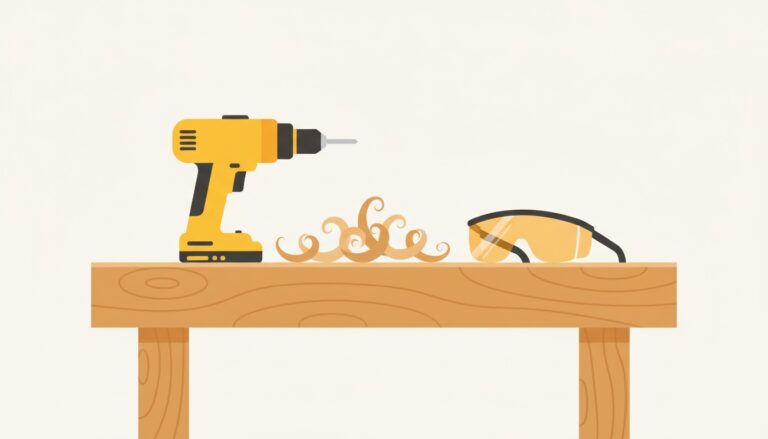
DIY & Woodworking in Korea: Don’t Call a Drill a “Gun”! 🛠️
1. Introduction
Hello, this is Daily Hangul!
Are you interested in joining a Gongbang (Workshop) one-day class in Seoul, or maybe assembling IKEA furniture with your Korean roommate? Woodworking is a fantastic hobby, but it involves sharp tools and loud noises. If you don’t know the right words, things can get dangerous—or just really awkward.
📝 Synthetic Episode: The “Gun” Incident
(Note: This is a synthetic example combining common mistakes from several English-speaking learners.)
A learner once went to a hardware store in Jongno and asked for a “Gun.” He meant a Screw Gun or a Drill. However, in Korea, the English loanword “Gun” usually refers strictly to firearms or perhaps a glue gun. The shop owner looked terrified until the student made a drilling motion with his hands.
Today, let’s learn how to speak safely and accurately in a Korean workshop environment. Let’s master the tools and the warnings!
2. Summary at a Glance
- Topic: Using an Electric Drill & Safety Commands
- Context: Furniture assembly, DIY workshops, home repairs.
- Difficulty: B1 (Intermediate) – Essential for understanding instructions and safety warnings.
- Key Expressions:
- 전동 드릴 (Electric Drill)
- 나사를 박다 (To drive a screw)
- 조심하세요 (Please be careful)
- 헛돌다 (To strip a screw / spin without traction)
3. Contents
- Today’s Key Expressions (Deep Dive)
- Textbook vs. Real Korean
- Unique Analysis: The Sound of DIY (Onomatopoeia)
- Real-Life Role Play: At the Workshop
- Shadowing Challenge
- FAQ
- Wrap-up & Quiz
4. Today’s Key Expressions Deep Dive
1) 전동 드릴 (Electric Drill)
- Pronunciation: [Jeondong deuril]
- Meaning: Electric drill (Power drill)
- Usage: Used when asking for the tool or describing the equipment.
Tutor’s Secret Note 🤫
While we understand “Drill,” adding “Jeondong” (Electric/Power) sounds much more professional. Also, never call it a “Gun” unless it’s a “Glue Gun” (글루건).Pronunciation Clinic 🗣️
Be careful with ‘ㄹ’ (l/r) in ‘드릴’. It’s not the heavy American ‘R’. It’s a light tap on the roof of your mouth, like the ‘tt’ in ‘butter’.
- Examples:
- 전동 드릴 좀 빌려주세요. (Can I borrow the electric drill?)
[Jeondong deuril jom billyeojuseyo.] - 이거 드릴로 해야 해요? (Do I have to do this with a drill?)
[Igeo deurillo haeya haeyo?] - 충전 드릴 배터리가 없어요. (The cordless drill has no battery.)
[Chungjeon deuril baeteoriga eopseoyo.]
- 전동 드릴 좀 빌려주세요. (Can I borrow the electric drill?)
2) 나사를 박다 (To drive a screw)
- Pronunciation: [Nasareul bakda]
- Meaning: To drive in a screw / To screw in
- Usage: The verb 박다 (bakda) is powerful. It implies force. Used for nails (mot) and screws (nasa).
Tutor’s Secret Note 🤫
If you use 넣다 (neoda – to put in), it sounds like you are gently placing the screw into a hole loosely. 박다 implies fixing it permanently.
- Examples:
- 여기에 나사를 박으면 될까요? (Should I drive the screw here?)
[Yeogie nasareul bageumyeon doelkkayo?] - 너무 세게 박지 마세요. (Don’t screw it in too hard.)
[Neomu sege bakji maseyo.] - 못을 벽에 박았어요. (I drove a nail into the wall.)
[Moseul byeoge bagasseoyo.]
- 여기에 나사를 박으면 될까요? (Should I drive the screw here?)
Mini Quiz: Fill in the blank
Answer: 박다 (bakda)
3) 꽉 잡으세요 (Hold it tight)
- Pronunciation: [Kkwak jabuseyo]
- Meaning: Please hold it tight / Grip it firmly.
- Usage: Crucial for safety. Used when holding wood pieces together or gripping the drill handle.
Tutor’s Secret Note 🤫
꽉 (Kkwak) is an adverb emphasizing tightness. Without “Kkwak”, “Jabuseyo” just means “hold it.” In a dangerous workshop, “Kkwak” prevents accidents.
- Examples:
- 흔들리지 않게 꽉 잡으세요. (Hold it tight so it doesn’t shake.)
[Heundeulliji anke kkwak jabuseyo.] - 드릴을 두 손으로 꽉 잡아야 해요. (You must hold the drill tight with two hands.)
[Deurireul du soneuro kkwak jabaya haeyo.] - 이거 꽉 잡아! (Hold this tight! – Casual to close friend)
[Igeo kkwak jaba!]
- 흔들리지 않게 꽉 잡으세요. (Hold it tight so it doesn’t shake.)
4) 헛돌다 (To strip / spin without traction)
- Pronunciation: [Heotdolda]
- Meaning: To spin uselessly / To be stripped (screw head) / To not catch.
- Usage: Used when the drill bit spins but the screw doesn’t move, usually stripping the screw head.
Pronunciation Clinic 🗣️
헛 (Heot) implies “in vain” or “empty.” The ‘ㅅ’ acts as a ‘t’ stop sound.
- Examples:
- 나사가 계속 헛돌아요. (The screw keeps spinning/stripping.)
[Nasaga gyesok heotdorayo.] - 비트 사이즈가 안 맞아서 헛도는 거예요. (It’s spinning because the bit size doesn’t match.)
[Biteu saijeuga an majaseo heotdoneun geoyeyo.] - 나사 머리가 망가져서 헛돌고 있어요. (The screw head is damaged, so it’s just spinning.)
[Nasa meoriga manggajyeoseo heotdolgo isseoyo.]
- 나사가 계속 헛돌아요. (The screw keeps spinning/stripping.)
5. Textbook vs. Real Korean
| Context | Textbook Korean (Book) | Real Korean (Workshop Vibe) | Use When… |
|---|---|---|---|
| Equipment | 보호 장비를 착용하십시오. [Boho jangbireul chagyonghasipsio] (Please wear protective equipment.) |
장갑 끼세요 / 고글 쓰세요. [Janggap kkiseyo / Gogeul sseuseyo] (Put on gloves / Wear goggles.) |
Actual class or working with friends. |
| Technique | 수직으로 유지하십시오. [Sujigeuro yujihasipsio] (Maintain a vertical position.) |
똑바로 세우세요. [Ttokbaro seuseyo] (Stand it up straight.) |
Correcting someone’s drilling angle. |
6. Unique Analysis: The “Sound” of DIY (Onomatopoeia)
In Korean, describing the sound is just as important as the verb. Here is the DIY Sound Translator:
- 위잉 (Wi-ing): The high-pitched sound of the drill spinning fast.
- “위잉 소리가 날 때까지 누르세요.” (Press until you hear the ‘wi-ing’ sound.)
- 드르륵 (Deureureuk): The sound of the screw being driven in, or the drill clutch engaging.
- “드르륵 하고 박혔어요.” (It drove in with a ‘deureureuk’ sound.)
- 뚝 (Ttuk): The sound of something snapping or breaking (Danger!).
- “뚝 소리가 나면 멈추세요!” (Stop if you hear a ‘ttuk’ sound!)
7. Real-Life Role Play: At the Woodworking Class
Situation: James is taking a one-day stool-making class in Mapo-gu. He is about to use the drill.
Instructor: 자, 이제 다리에 나사를 박을 거예요.
(Okay, now we are going to drive screws into the legs.)
[Ja, ije darie nasareul bageul geoyeyo.]
James: 드릴을 처음 써봐요. 조금 무서워요.
(It’s my first time using a drill. I’m a bit scared.)
[Deurireul cheoeum sseobwayo. Jogeum museowoyo.]
Instructor: 괜찮아요. 제가 도와드릴게요. 드릴을 나무와 직각으로 세우세요.
(It’s okay. I’ll help you. Stand the drill perpendicular to the wood.)
[Gwaenchannayo. Jega dowadeurilgeyo. Deurireul namuwa jikgageuro seuseyo.]
James: 이렇게요? 위잉~
(Like this? *Whirrr~)*
[Ireokeyo? Wi-ing~]
Instructor: 네, 좋아요! 이제 천천히 누르세요. 꽉 잡으시고요!
(Yes, good! Now press down slowly. And hold it tight!)
[Ne, joayo! Ije cheoncheonhi nureuseyo. Kkwak jabuseigoyo!]
James: 오! 드르륵! 다 들어갔어요!
(Oh! *Vroom! It went all the way in!)*
[O! Deureureuk! Da deureogasseoyo!]
8. Shadowing Challenge 🗣️
Imagine you are guiding a friend. Repeat this 3 times!
“움직이지 않게 꽉 잡아. 나사 헛돌지 않게 조심해!”
(Hold it tight so it doesn’t move. Be careful not to strip the screw!)
[Umjigiji anke kkwak jaba. Nasa heotdolji anke josimhae!]
- Checklist:
- [ ] Did you emphasize “Kkwak” (Tight)?
- [ ] Did you pronounce the ‘t’ stop in “Heot”?
- [ ] Did you say it with a serious/focused tone?
9. FAQ (Frequently Asked Questions)
Q1: Can I say ‘스크류’ (Screw) instead of ‘나사’ (Nasa)?
* Yes! 스크류 (Seukeuryu) is understood, especially in professional settings. However, 나사 (Nasa) or 피스 (Piseu – from ‘piece’) are extremely common in Korea. “피스 박아주세요” is often heard on construction sites.
Q2: What if I hurt my finger slightly?
* You can say: “손가락이 끼였어요” (My finger got pinched/caught) [Songaragi kkiyeosseoyo].
10. Conclusion & Action Item
Today’s Takeaway: Safety comes first! Use “꽉 잡으세요” (Hold tight) and distinguish between “박다” (Drive in) and “헛돌다” (Strip/Spin).
Today’s Mission:
If you have any tool at home (even a screwdriver), hold it and say “꽉 잡자” (Let’s hold it tight) out loud before using it.
Question for you:
Have you ever made DIY furniture in Korea? Tell me in the comments if you prefer IKEA or a custom Gongbang class!
11. Final Quiz
1. Which verb is best for “driving a screw” with force?
A) 놓다 (Noda)
B) 박다 (Bakda)
C) 칠하다 (Chilhada)
2. What does “헛돌다” mean in a drilling context?
A) The drill is broken.
B) The screw is spinning without going in (stripped).
C) The battery is full.
3. Fill in the blank: “Hold it tight!” = _____ 잡으세요!
Click to see answers
1. B) 박다 (Bakda)
2. B) The screw is spinning without going in.
3. 꽉 (Kkwak)
Frequently Asked Questions (FAQ)
Q: What does "나사를 박다 (To drive a screw)" mean in Korean and how do you pronounce it?
A: In Korean, "나사를 박다 (To drive a screw)" is pronounced [Nasareul bakda] and means: To drive in a screw / To screw in
Q: What does "꽉 잡으세요 (Hold it tight)" mean in Korean and how do you pronounce it?
A: In Korean, "꽉 잡으세요 (Hold it tight)" is pronounced [Kkwak jabuseyo] and means: Please hold it tight / Grip it firmly.
Q: What does "헛돌다 (To strip / spin without traction)" mean in Korean and how do you pronounce it?
A: In Korean, "헛돌다 (To strip / spin without traction)" is pronounced [Heotdolda] and means: To spin uselessly / To be stripped (screw head) / To not catch.






