

Hello, this is Daily Hangul!
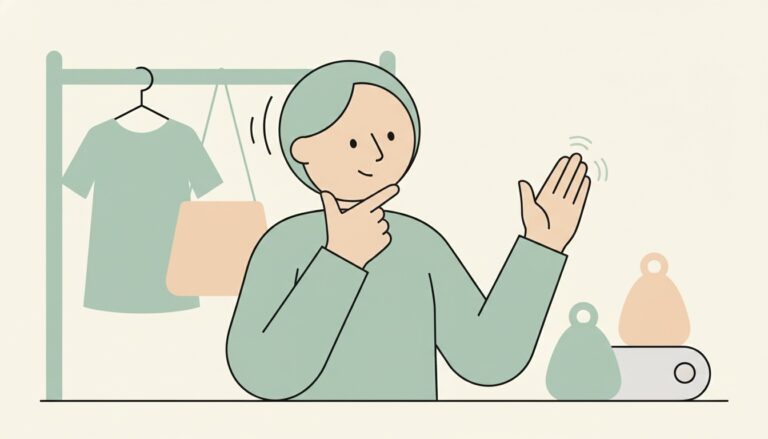
Have you ever felt trapped in a store in Korea because an enthusiastic clerk kept recommending items you didn’t really want? You probably wanted to say “No,” but “Aniyo (아니요)” felt too harsh, and silence felt awkward.
Today, we are going to learn the magic shield of Korean conversation.
Note: The following scenario is a synthetic example combining patterns observed from multiple foreign learners who visited Dongdaemun Market.
One student, “Alex,” tried to leave a clothing store. The owner asked, “Is the price too high? I’ll give you a discount.” Alex, panicked, just said “No, I don’t like it.” The air froze. The owner looked hurt, and Alex felt guilty.
In Korea, rejection is an art. We rarely say “No” directly. Instead, we say, “I’ll think about it.”
Let’s learn how to protect your wallet and your manners at the same time.
📝 At a Glance
- Today’s Key Phrase: 생각해 볼게요 (I’ll think about it)
- Best Used When: You want to leave a shop, delay a business decision, or gently reject a request.
- Difficulty: A1 (Beginner). Even if you know zero grammar, this one phrase saves you from high-pressure situations.
📑 Table of Contents
- Deep Dive: The Magic Shield “Saeng-gak-hae bol-ge-yo”
- Textbook vs. Real Korean
- Analyzer: What Koreans Really Mean
- Role Play: The Clothing Store Escape
- Shadowing Challenge
- FAQ
- Wrap-up & Quiz
💡 Core Expression Deep Dive
1. 생각해 볼게요 (Saeng-gak-hae bol-ge-yo)
Meaning:
* Literal: I will try thinking.
* Real Meaning: “Not right now,” “Let me leave,” or “Soft No.”
Usage & Register:
* To whom: Shop clerks, business partners, or acquaintances who ask for a favor.
* Tone: Polite informal (Haeyo-che). It creates a safe distance.
Tutor’s Secret Note:
When a Korean says this in a shop, 99% of the time, they are leaving and never coming back. However, it saves the clerk’s face. It implies, “Your product is good enough to require thinking, but I can’t decide now.”
⚠️ Warning: Do NOT use this if you definitely want to buy it. The seller might sell it to someone else because they assume you are rejecting it.
Pronunciation Clinic:
* Linking: [생가캐 볼께요] (Saeng-ga-kae bol-kke-yo)
* The ‘ㅎ’ in 해 often merges with the preceding ‘ㄱ’, sounding like a ‘K’ sound.
* The ‘ㄹ’ in 볼 makes the following ‘게’ sound harder, like ‘kke’.
Examples:
- Shopping (To a clerk)
- KR: 좀 더 둘러보고 생각해 볼게요.
- RR: Jom deo dul-leo-bo-go saeng-gak-hae bol-ge-yo.
- EN: I’ll look around a bit more and think about it.
- Business (To a vendor)
- KR: 팀장님과 상의하고 생각해 볼게요.
- RR: Tim-jang-nim-gwa sang-ui-ha-go saeng-gak-hae bol-ge-yo.
- EN: I’ll discuss it with my team leader and think about it.
- Social (To a friend asking for a favor)
- KR: 일정 확인해 보고 생각해 볼게.
- RR: Il-jeong hwak-in-hae bo-go saeng-gak-hae bol-ge.
- EN: I’ll check my schedule and think about it. (Note: drop ‘yo’ for close friends)
Alternatives:
* Polite/Formal: 긍정적으로 검토해 보겠습니다. (I will review it positively – Business standard)
* Casual/Direct: 나중에 할게. (I’ll do it later – To close friends)
Mini Quiz (Click to see answer)
Q. A clerk asks, “Do you want to wrap this now?” You are not sure if you want to buy it yet. What do you say?
Answer: 생각해 볼게요 (Saeng-gak-hae bol-ge-yo)
📚 Textbook vs. Real Korean
| Situation | Textbook Korean (Too Direct) | Real Korean (Socially Safe) |
|---|---|---|
| Rejecting a Purchase | 안 사요 / 싫어요 (An sa-yo / Sil-eo-yo) “I won’t buy / I hate it” |
생각해 볼게요 (Saeng-gak-hae bol-ge-yo) “I’ll think about it” |
| Leaving a Shop | 안녕히 계세요 (An-nyeong-hi gye-se-yo) “Goodbye” |
수고하세요 (Su-go-ha-se-yo) “Keep up the good work” (Acknowledges their effort despite no purchase) |
Checklist:
* Use Textbook version: Only when you are angry or need to be extremely firm (police situations).
* Use Real version: In 90% of daily interactions.
🔍 Unique Analysis: The “Hidden Meaning” Translator
Koreans often speak in “Nunchi” (reading the atmosphere) language. Here is how to translate “I’ll think about it” based on the context.
| Context | What they say | What they REALLY mean |
|---|---|---|
| Shopping | “I’ll think about it.” | “I am not buying this. Please stop talking to me.” |
| Dating (Asking out) | “I’ll think about it.” | “No. (But I don’t want to hurt your feelings).” |
| Business Proposal | “I’ll think about it.” | “It’s not a priority right now, or I need approval from higher-ups.” |
| Dinner Menu | “I’ll think about it.” | “I actually want to eat something else, but I’m waiting for you to suggest it.” |
🎭 Real-Life Role Play: Escape from Myeongdong
Situation: You are at a cosmetic store in Myeongdong. The clerk puts a cream on your hand.
Clerk: 이거 요즘 제일 잘 나가요. 1+1 행사 중이에요.
(I-geo yo-jeum je-il jal na-ga-yo. One-plus-one haeng-sa jung-i-e-yo.)
This is the best seller these days. It’s a buy-one-get-one-free event.
You: 아, 네… 괜찮아요.
(Ah, ne… gwaen-chan-a-yo.)
Ah, yes… I’m okay (No thanks).
Clerk: 진짜 싸게 드리는 건데? 오늘만 이 가격이에요.
(Jin-jja ssa-ge deu-ri-neun geon-de? O-neul-man i ga-gyeok-i-e-yo.)
I’m giving you a really cheap deal? This price is only for today.
You: 한 바퀴 돌고 와서 생각해 볼게요.
(Han ba-kwi dol-go wa-seo saeng-gak-hae bol-ge-yo.)
I’ll walk around (the block) once and think about it.
Clerk: 네, 알겠습니다~
(Ne, al-get-seum-ni-da~)
Okay, understood~ (Finally lets you go)
Culture Tip: Adding “Han ba-kwi dol-go wa-seo” (I’ll come back after walking around) makes the excuse sound much more believable and polite.
🗣️ Shadowing Challenge
Repeat this 3 times to get the rhythm right. Don’t rush!
Script:
“아, 감사합니다. 좀 더 보고 생각해 볼게요.”
(Ah, gam-sa-ham-ni-da. Jom deo bo-go saeng-gak-hae bol-ge-yo.)
“Ah, thank you. I’ll look a bit more and think about it.”
- [ ] Attempt 1 (Slowly, focusing on linking)
- [ ] Attempt 2 (Normal speed, imagine the clerk staring at you)
- [ ] Attempt 3 (Fast, while turning your body away to leave)
Pronunciation Point:
Remember: 생각해 (Saeng-gak-hae) sounds like [생가캐 (Saeng-ga-kae)].
❓ FAQ
Q1: Can I say this to my boss?
A: It’s risky. If your boss gives you a task, saying “I’ll think about it” sounds arrogant. Instead, use “확인해 보겠습니다” (Hwak-in-hae bo-get-seum-ni-da) meaning “I will check/verify it.”
Q2: What if I actually want to think about it and come back?
A: You can add a specific time. “10분 뒤에 다시 올게요.” (Sip-bun dwi-e da-si ol-ge-yo) – “I’ll come back in 10 minutes.” This shows genuine intent.
🎁 Wrap-up & Action Item
Summary: To reject politely in Korea, don’t say “No.” Say “생각해 볼게요” (Saeng-gak-hae bol-ge-yo).
Today’s Mission:
Next time you watch a K-Drama or a Korean reality show (like Single’s Inferno), try to catch the moment someone says “Saeng-gak-hae bol-ge-yo.” Does their face look like they are really thinking, or are they rejecting?
Tell me in the comments:
What is the hardest thing to say “No” to in your culture? A salesperson? Or a friend borrowing money?
📝 Final Quiz
1. Which phrase is the most natural way to leave a shop without buying anything?
A) 싫어요 (Sil-eo-yo)
B) 안 사요 (An sa-yo)
C) 생각해 볼게요 (Saeng-gak-hae bol-ge-yo)
D) 돈 없어요 (Don eops-eo-yo)
2. How is “생각해” pronounced?
A) [Saeng-gak-hae]
B) [Saeng-ga-kae]
C) [Saeng-gat-hae]
D) [San-gak-hae]
3. Fill in the blank:
To sound even more polite, you can say: “Look around more and think about it.”
= “좀 더 [ ] 생각해 볼게요.”
Answers:
1. C
2. B
3. 둘러보고 (dul-leo-bo-go) or 보고 (bo-go)
Frequently Asked Questions (FAQ)
Q: What does "생각해" mean in Korean and how do you pronounce it?
A: In Korean, "생각해" is pronounced [Saeng-gak-hae] and means: sounds like
Q: What does ""확인해 보겠습니다"" mean in Korean and how do you pronounce it?
A: In Korean, ""확인해 보겠습니다"" is pronounced [Hwak-in-hae bo-get-seum-ni-da] and means: meaning "I will check/verify it."
Q: What does ""10분 뒤에 다시 올게요."" mean in Korean and how do you pronounce it?
A: In Korean, ""10분 뒤에 다시 올게요."" is pronounced [Sip-bun dwi-e da-si ol-ge-yo] and means: - "I'll come back in 10 minutes." This shows genuine intent.







