

Introduction
Hello, this is Daily Hangul! 👋
Have you ever seen a Korean drama where two people are arguing about who is older, even though they were born in the same year? Or perhaps you’ve been in a situation where everyone asks not just your birth year, but your birth month?
Case Study (Composite Example):
This story is a synthesis of experiences from several intermediate learners attending language exchange meetups in Seoul.
A learner named ‘Mark’ (born in May 1995) met a Korean friend ‘Min-su’ (born in February 1995). Mark naturally thought, “We are same-age friends!” and suggested using Banmal (casual speech). However, Min-su hesitated. It turned out Min-su went to school with people born in 1994. If Min-su becomes friends with Mark, Min-su’s other friends (born in 1994) might get confused about how to address Mark. Suddenly, the atmosphere became awkward.
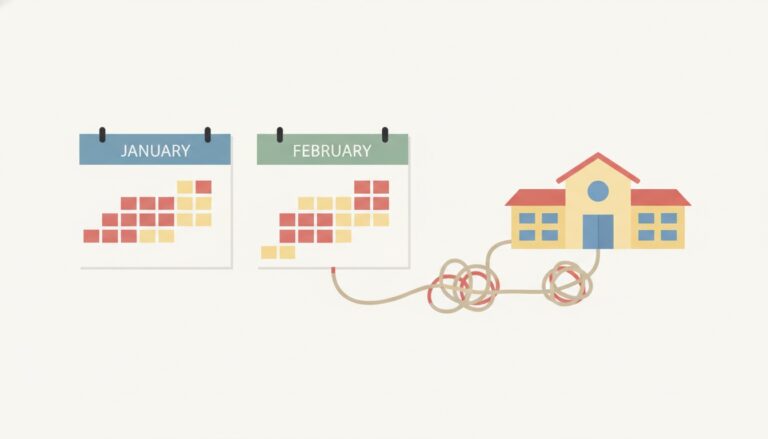
This is the infamous “Fast Birthday” (빠른 년생, Ppareun Nyeonsaeng) dilemma. It’s a unique cultural nuance that textbooks rarely explain in depth, but it dictates the entire social hierarchy in Korea. Let’s untangle this knot together!
At a Glance: Today’s Summary
- Key Expressions: 빠른 년생 (Fast Birthday), 족보가 꼬이다 (Genealogy gets twisted), 말을 놓다 (To speak casually).
- Safe Zone: Use these when clarifying relationships with close acquaintances or colleagues of similar age.
- Level (B1): Essential for understanding why Koreans are obsessed with age and school years. It helps you avoid social awkwardness.
Table of Contents
- Today’s Key Expressions Deep Dive
- Textbook vs. Real Korean
- Unique Analysis: The Hierarchy Logic
- Real-Life Role Play: The “First Meeting” Tension
- Shadowing Challenge
- FAQ
- Wrap-up & Quiz
Today’s Key Expressions Deep Dive
1. 빠른 년생 (Ppareun Nyeonsaeng)
- Meaning: “Fast Birthday” / People born in January or February who entered school a year earlier than others born in the same year.
- Usage & Register: Used when explaining your age status. Standard polite style.
- Tutor’s Secret Note: Theoretically, the “Fast Birthday” system was abolished for school entry starting in 2009. However, most adults you meet (born before 2003) still operate under this rule. If someone says they are a “Fast 90,” treat them as if they were born in 89!
- Pronunciation Clinic: [Ppa-reun] – The ‘Pp’ is a tense double consonant. Don’t breathe out air; tense your lips.
Examples:
1. (Friend) Nan ppareun 98-ya. (I’m a fast 98er.)
2. (Business) Jeoga ppareun nyeonsaeng-ira hakbeon-i hana ppallayo. (Since I have a fast birthday, my class year is one year ahead.)
3. (Casual) Ppareun-i-nikka hyeong-irago bulleo. (I’m a ‘fast’ birthday, so call me older brother.)
2. 족보가 꼬이다 (Jokboga Kkoida)
- Meaning: “The genealogy gets twisted.”
- Usage & Register: Used casually among friends or peers when age relationships become complicated.
- Tutor’s Secret Note: This happens when Person A is friends with B, B is friends with C, but A and C are not “age-friends” due to the Fast Birthday rule. It’s a headache for Koreans!
- Warning: Do not use this with very senior people or formal bosses. It sounds too casual.
- Pronunciation Clinic: [Kko-i-da] – Focus on the double ‘Kk’.
Examples:
1. (Social) Neo ttaemune jokboga kkoyeot-jana! (Because of you, the genealogy got twisted!)
2. (Explanation) Urineun jokbo kkoineun geo sileo-haeyo. (We hate it when the age hierarchy gets messy.)
3. (Self-talk) A, jokbo kkoiget-neunde… (Ah, this is going to mess up the hierarchy…)
3. 말을 놓다 (Mareul Noda)
- Meaning: “To lower one’s speech” (To start speaking casually/Banmal).
- Usage & Register: A phrase used to propose becoming friends. “Shall we speak casually?”
- Tutor’s Secret Note: This is the magic spell to break the ice. But if the “Fast Birthday” issue isn’t resolved, you can’t easily “lower your speech.”
Examples:
1. (To older/senior) Mal no-use-yo. Pyeona-ge haseyo. (Please speak casually. Be comfortable.)
2. (To peer) Uri mal no-eul-kka-yo? (Shall we drop the honorifics?)
3. (Refusal politely) Ajik mareul noki-neun jom… (I’m a bit hesitant to speak casually yet…)
Alternatives
- More Formal: Chingu-ro jinaeda (To get along as friends)
- Slang: Chingu meokda (To “eat” friend = To become buddies)
👉 Mini Quiz: Fill in the blank (Click to see)
Q. Since I was born in Feb 1995, I went to school with 1994 kids. I am a ______ 95.
Answer: Ppareun (Fast)
Textbook vs. Real Korean
| Context | Textbook Korean (Book Korean) | Real Korean (Street/Social) |
|---|---|---|
| Defining Age | “How old are you?” (Myeot sal-iseyo?) | “What year were you born?” (Myeot nyeon-saeng-iseyo?) |
| Handling Fast Birthdays | Stick to the calendar age strictly. | School Year (Hakbeon) is king. “Who did you go to school with?” |
| Conflict Resolution | Respect the older person unconditionally. | Jokbo jeongni (Sorting out the genealogy): “Let’s just all be friends.” |
Situation Checklist:
* Business/Formal: Ignore “Fast Birthdays.” Use titles (Manager, etc.) regardless of age.
* Social/Drinking: “Fast Birthdays” are very important. Verify the year immediately.
Unique Analysis: The Hierarchy Thermometer 🌡️
How do Koreans decide “friend” or “older brother/sister”? It’s not just the birth date.
| Priority | Criteria | Explanation |
|---|---|---|
| 1 (Highest) | School Entry Year (Hakbeon) | Even if you are younger, if you entered university earlier, you are “Sunbae” (Senior). |
| 2 | Fast Birthday (Jan/Feb) | You are treated as the previous year’s age group. |
| 3 | Birth Year | The standard baseline. |
| 4 | Physical Age | Least important socially. |
The “User Manual” for Foreigners:
Koreans usually give foreigners a “Free Pass.” If you are confused, just ask: “Hyeong-irago bulleo-do doeyo?” (Can I call you older brother?). They will usually laugh and say yes or no.
Real-Life Role Play: The “Jokbo” Crisis
Scenario: A casual dinner (Hoesik) where new members are introducing themselves.
Characters: Min-ji (Born May 96), Dong-hyuk (Born Feb 96 – Fast), Sarah (Foreigner, Born 96).
Dong-hyuk: Jeoneun ppareun 96-imnida. 95-nyeon-saeng-deul-hago chingu-eyo.
(I am a fast 96. I am friends with those born in 95.)
Min-ji: A, geureom je-ga ‘Oppa’-rago bulleoya ha-nayo?
(Ah, then do I have to call you ‘Oppa’ [older brother]?)
Sarah: (Confused) Wait, we are all 1996! Why is he Oppa? Min-ji, aren’t we friends?
Dong-hyuk: (Laughing) Sarah-neun oegugin-inikka, geunyang chingu-haeyo!
(Since Sarah is a foreigner, let’s just be friends!)
Min-ji: Geureom Sarah-rang Dong-hyuk-ssi-neun chingu-hago, jeoneun Dong-hyuk-ssi-hante Oppa-rago hal-ge-yo. A, jokbo kkoine!
(Then Sarah and Dong-hyuk are friends, and I’ll call Dong-hyuk ‘Oppa’. Ah, the genealogy is twisting!)
Culture Tip: In this “Twisted” situation, Sarah (the foreigner) becomes the bridge. Often, the group will decide to just “abolish titles” (Ya-ja time) to solve the headache.
Shadowing & Speaking Challenge 🗣️
Let’s practice the sentence that prevents misunderstandings from the start.
Script:
“Jeoga ppareun nyeonsaeng-ira, jokbo-ga jom kkoil su isseoyo.”
(Since I have a fast birthday, the genealogy might get a bit twisted.)
Checklist:
* [ ] Listen and repeat slowly (Focus on ‘Ppareun’ tense sound).
* [ ] Repeat at normal speed.
* [ ] Say it with an apologetic smile (Body language matters!).
FAQ: Your Burning Questions 🔥
Q1: Does this apply to people born in 2005?
A: Mostly no. The government changed the school entry rule in 2009. People born after 2003 usually enter school based strictly on their birth year. But for anyone born in the 80s, 90s, or very early 00s, this rule is alive and kicking!
Q2: As a foreigner, can I use the “Fast Birthday” rule?
A: You can, but it’s risky. If you were born in February, you can jokingly say “Jeo ppareun-ieyo!” to be treated as older. However, most Koreans prefer to keep it simple with foreigners based on just the year.
Wrap-up & Mission
Today’s Summary: “Fast Birthdays” (Jan/Feb borns) complicate Korean hierarchy. Being aware of this shows you understand the deep culture, not just the language.
Today’s Mission: Next time you ask a Korean friend’s age, ask for their “Saeng-il” (Birthday) month too. If they are Jan/Feb, ask “Hoksi ppareun-iseyo?” (By any chance, are you a fast birthday?). Watch their eyes widen in surprise! 😲
Question for you: In your culture, does being born one month earlier matter? Let me know in the comments!
Final Quiz
Click to reveal the quiz!
- Which month is typically associated with “Ppareun Nyeonsaeng” (Fast Birthday)?
a) May
b) August
c) February
d) December -
What is the Korean phrase for when the age hierarchy gets complicated and messy?
a) Jokboga Kkoida
b) Baega-gopuda
c) Gibuni Jota
d) Mareul Noda -
[Fill in the blank] To suggest speaking casually/dropping honorifics, you say: “Uri _____ no-eul-kka-yo?”
Answers:
1. c) February
2. a) Jokboga Kkoida
3. mal (Uri mal no-eul-kka-yo?)
Frequently Asked Questions (FAQ)
Q: What does "빠른 년생 (Ppareun Nyeonsaeng)" mean in Korean and how do you pronounce it?
A: In Korean, "빠른 년생 (Ppareun Nyeonsaeng)" is pronounced [Clinic: [Ppa-reun] and means: "Fast Birthday" / People born in January or February who entered school a year earlier than others born in the same year.
Q: What does "족보가 꼬이다 (Jokboga Kkoida)" mean in Korean and how do you pronounce it?
A: In Korean, "족보가 꼬이다 (Jokboga Kkoida)" is pronounced [Clinic: [Kko-i-da] and means: "The genealogy gets twisted."
Q: What does "말을 놓다 (Mareul Noda)" mean in Korean and how do you pronounce it?
A: In Korean, "말을 놓다 (Mareul Noda)" is pronounced [see lesson guide] and means: "To lower one's speech" (To start speaking casually/Banmal).







